
Reviews / COSORI Food Dehydrators
COSORI Food Dehydrator Reviews: Which Model Should You Buy?
Compare five COSORI food dehydrators to find the right fit for small batches, regular jerky making, or a garden harvest.
By KitchLit | November 23, 2026
KitchLit is reader-supported. We may earn a commission when you buy through our links.
Key takeaways
1
Start with the Premium 6-Tray
About 6.5 ft² of drying area, front-loading trays, and a 48-hour timer make it our pick for regular batches.
2
Choose the Mini for a smaller counter
The Premium Mini has slide-out steel trays in a compact cabinet. The stackable Pioneer is the budget choice for occasional use.
3
Compare both 10-tray models
The narrower model has 7.4 ft² of tray area. The Premium Pro offers 16.2 ft² and needs more room on the counter.
The best COSORI dehydrator for most kitchens
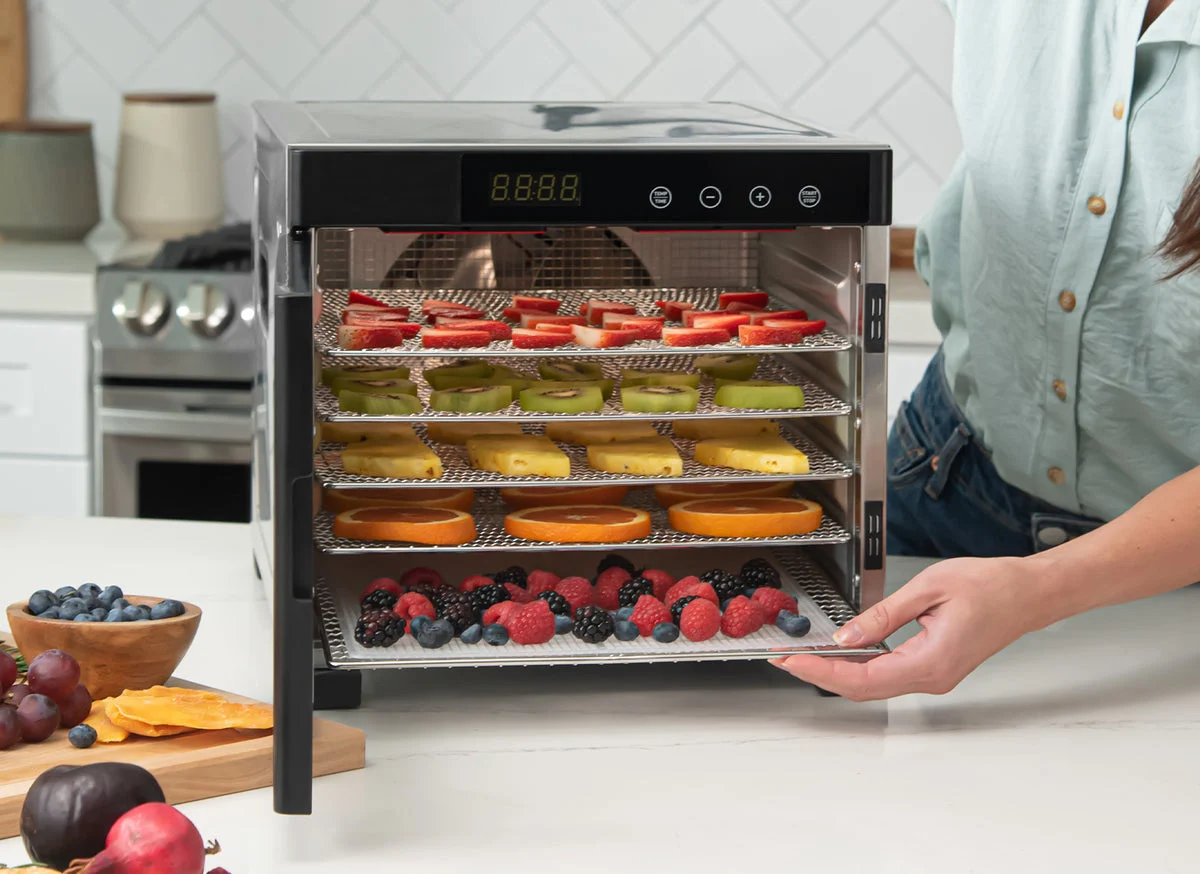
We’d start with the Premium 6-Tray Stainless Steel. It has room for a few types of produce in the same run, and the trays slide out through the front so you can check one without lifting the whole stack. For a first dehydrator you expect to use regularly, it’s the easiest size to recommend.
When to pick a different model
- Pioneer 5-Tray for occasional drying and a lower upfront cost.
- Premium Mini 5-Tray for steel trays on a small counter.
- 10-Tray, 7.4 ft² for more shelves in a narrower cabinet.
- Premium Pro 10-Tray for a large harvest or frequent bulk batches.
COSORI food dehydrators at a glance
Select a model to jump to its review. Footprints are approximate and exclude clearance for the door, lid, or vents.
| Model | Tray layout | Drying area | Footprint (W × D) | Best for |
|---|---|---|---|---|
| Premium 6-Tray | 6 slide-out steel trays | 6.5 ft² | 13.5 × 17.9 in. | Regular batches of fruit or jerky |
| Premium Mini 5-Tray | 5 slide-out steel trays | 3.1 ft² | 11.3 × 14.1 in. | Small batches in a compact cabinet |
| Pioneer 5-Tray | 5 stackable trays | Not listed | 12 × 12 in. | Occasional use on a budget |
| 10-Tray (7.4 ft²) | 10 slide-out steel trays | 7.4 ft² | 12.2 × 14.7 in. | More racks in a narrower cabinet |
| Premium Pro 10-Tray | 10 slide-out steel trays | 16.2 ft² | 16.9 × 21.3 in. | Large or frequent batches |
COSORI Premium 6-Tray Stainless Steel Food Dehydrator
Best for most kitchens. The six stainless steel trays provide about 6.5 ft² of drying space. That is enough room to make a batch of fruit chips or spread out several trays of sliced vegetables without committing to a large cabinet.
A rear fan moves air across the shelves. The 600 W model has manual digital controls, a 95–165°F temperature range, and a timer that goes up to 48 hours. A mesh screen and a fruit roll sheet are included. Plan on extra liners if you regularly dry herbs or sticky fruit across several trays.
Fresh Off The Grid reported good performance over several years, while The Purposeful Pantry found that some foods stuck to the steel trays. That makes the included liners and where you’ll run the machine worth considering.
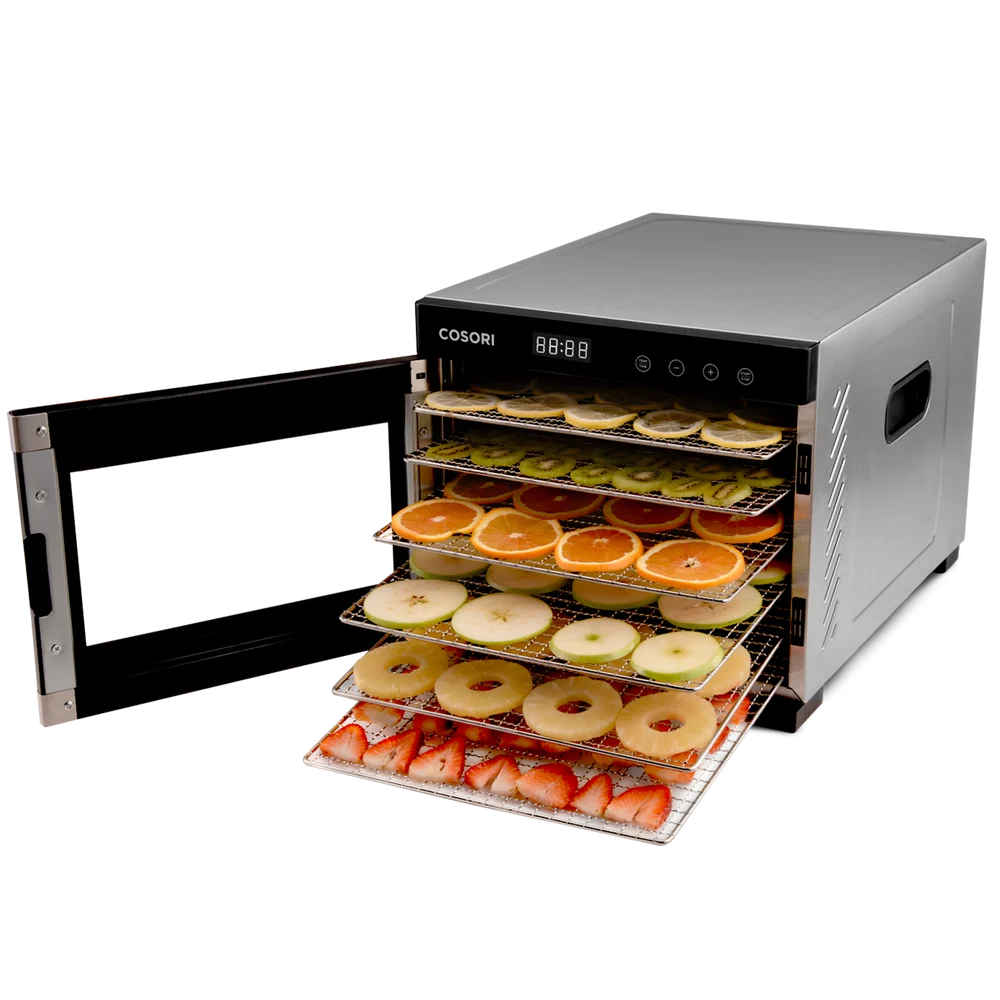
Open the glass door and pull out individual trays to check a batch.
Watch the Premium 6-Tray in use
COSORI’s demo gives you a closer look at the cabinet and how the trays load. It’s helpful if you’re deciding between a front-opening cabinet and the Pioneer’s stackable trays.
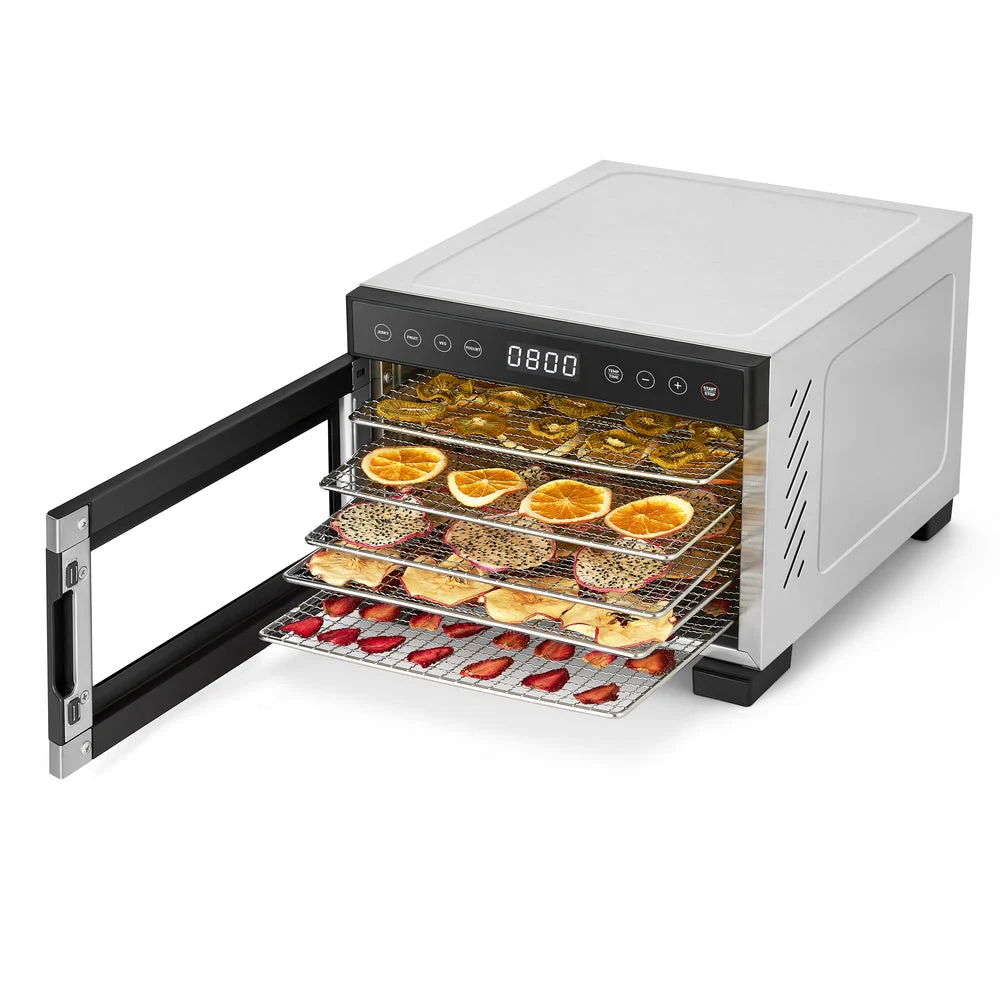
The Mini has five shallow steel shelves in a compact cabinet.
COSORI Premium Mini 5-Tray Food Dehydrator
Best compact cabinet. The Premium Mini keeps the slide-out stainless steel trays and glass door in a body that’s about 11.3 inches wide and 8.9 inches high. COSORI lists 3.1 ft² of drying area, just under half the Premium 6-Tray’s space.
Four adjustable presets cover apple chips, beef jerky, yogurt, and herbs. The box includes a mesh screen and a fruit roll sheet. Choose the Mini if you make modest batches and want to pull out a tray from the front while you work.
COSORI Pioneer 5-Tray Food Dehydrator
Best budget choice. The Pioneer uses a roughly 12 × 12 in. base and five stackable trays with adjustable height. It’s a good fit if you occasionally dry herbs or a small batch of fruit and plan to put the appliance away between uses.
You lift the lid and lift trays off the stack to reach the lower levels. Check that you have room to do that under a cabinet. COSORI lists a 350 W rating and an adjustable 95–165°F range.
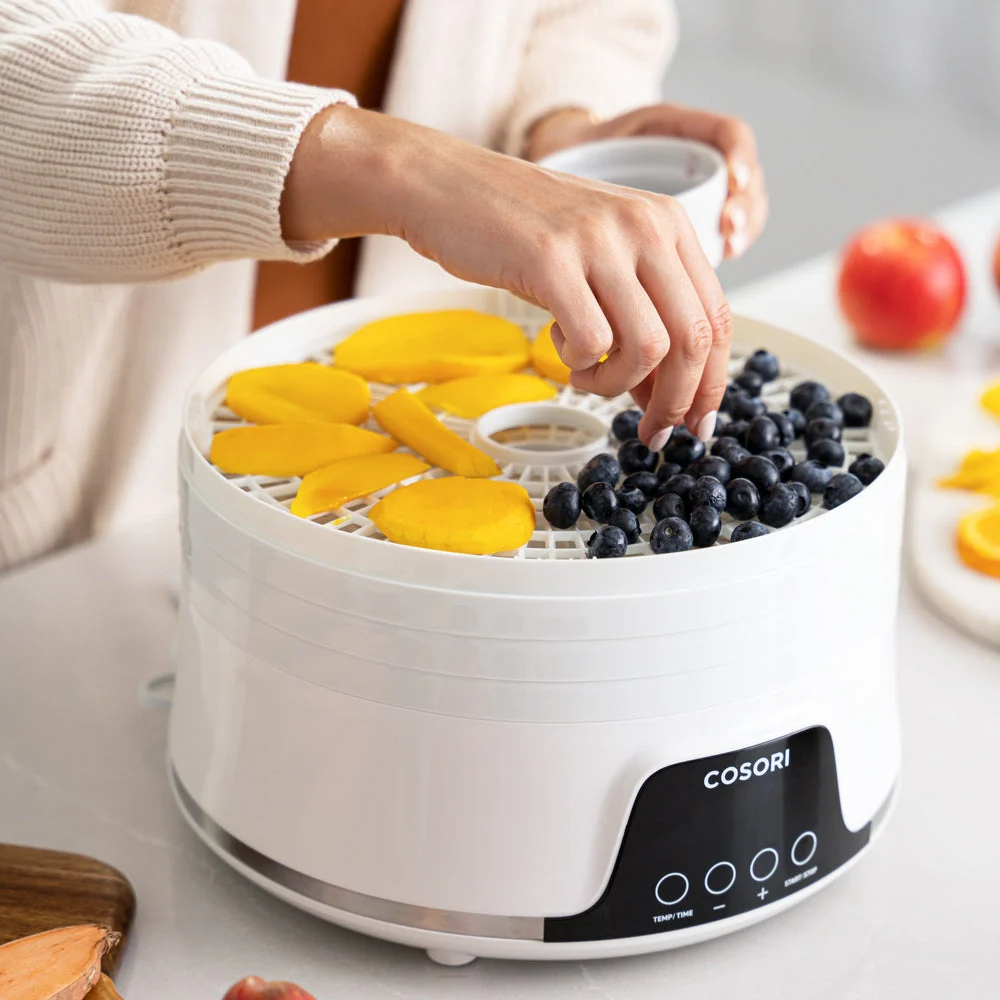
The Pioneer loads from the top. You can separate the trays to reach the lower layers.
Which COSORI 10-tray dehydrator should you buy?
Both models have ten shelves. Compare how much food you can spread out on them and how much room the cabinet needs.
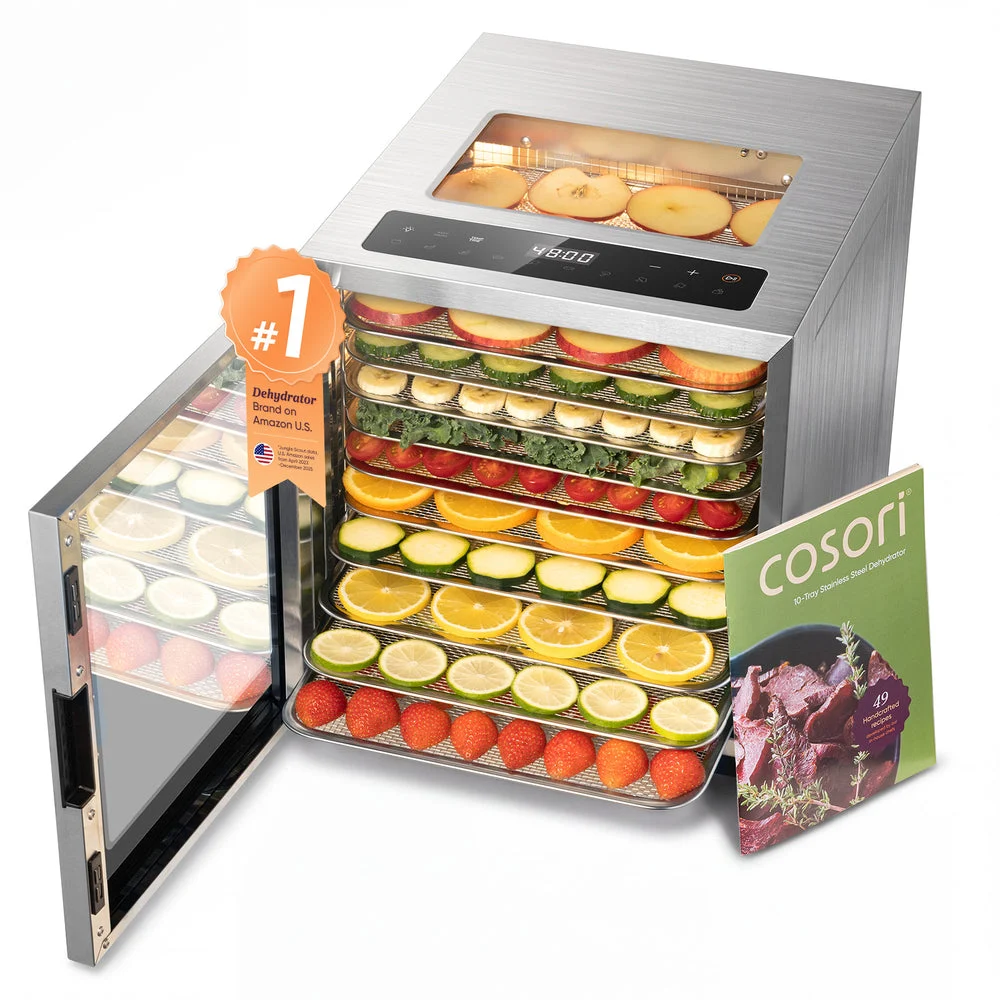
COSORI 10-Tray Stainless Steel, 7.4 ft²
Best for a narrower counter. The 7.4 ft² model is about 12.2 inches wide and 14.7 inches deep. Ten shelves give you more levels to work with, but the overall drying area is only slightly larger than the Premium 6-Tray’s 6.5 ft².
It has windows on the top and front so you can check the food without opening the door. COSORI’s product photos show ten presets and a Keep Warm function. Choose it if the narrower footprint matters and you’re happy with smaller shelves.
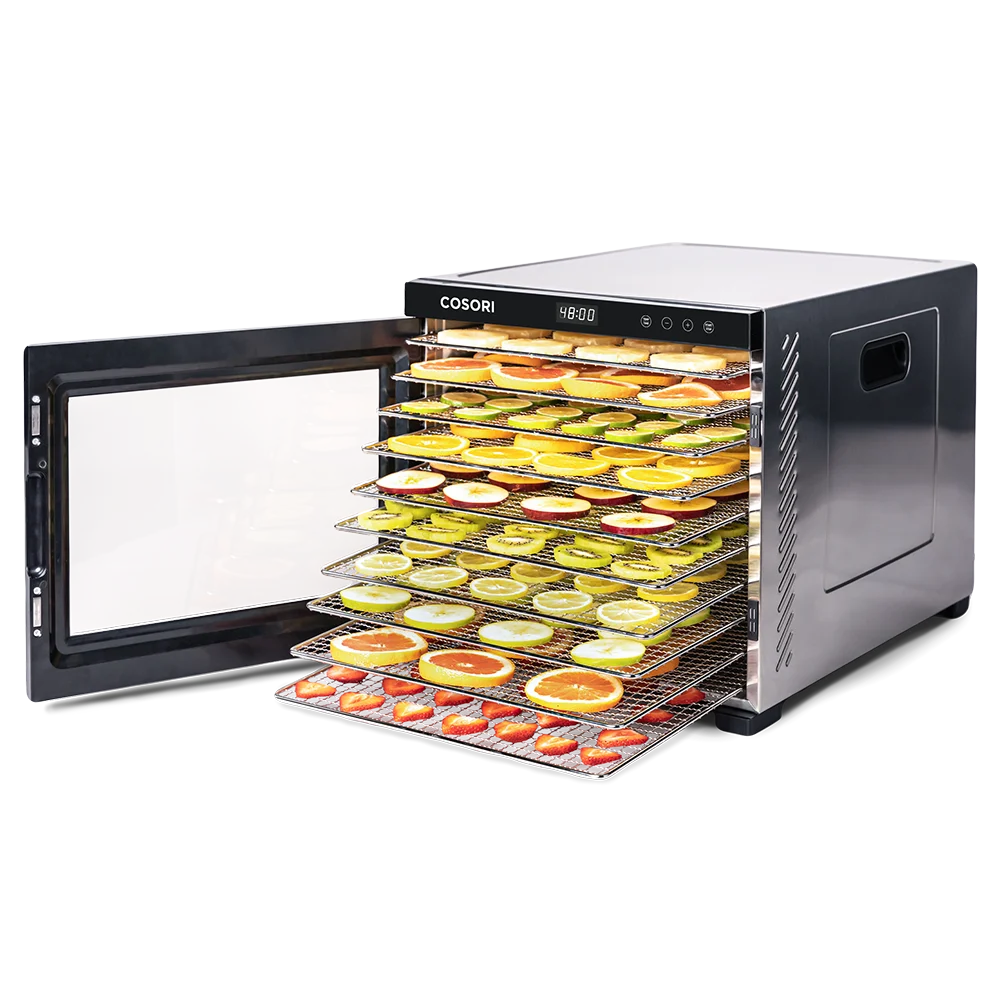
COSORI Premium Pro 10-Tray Food Dehydrator
Best for bulk batches. The Premium Pro offers 16.2 ft² across ten stainless steel trays, more than twice the drying area of the 7.4 ft² model. It’s the natural upgrade if you regularly fill a smaller unit and finish the rest in a second run.
The 1,000 W model runs from 95–165°F with a timer of up to 48 hours. It weighs about 36 lb and is 21.3 inches deep before you account for ventilation or open the door. Measure your counter if you expect to leave it set up.

A closer look at the 7.4 ft² model’s controls
The top panel has presets for foods such as apples, mushrooms, yogurt, and fruit rolls. The second viewing window is useful when you have room above the machine. If it will sit directly under a shelf, check how easily you can see and reach those controls.
What to check before you buy
Think about the batch you actually make. If you dry a handful of herbs or one tray of apple slices at a time, you’ll get more use out of a small machine you can keep close at hand. If you regularly fill every rack, compare total drying area.
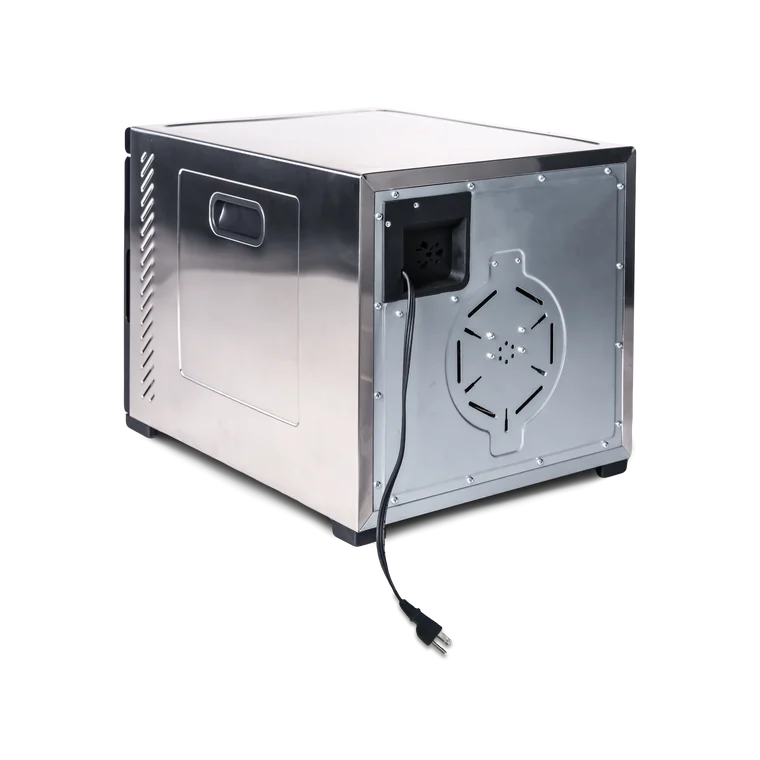
Measure the space around it
Measure the counter, then allow room for the vents and for the door or lid to open. A cabinet is easier to use when you can pull a tray all the way out and set it down next to the machine.
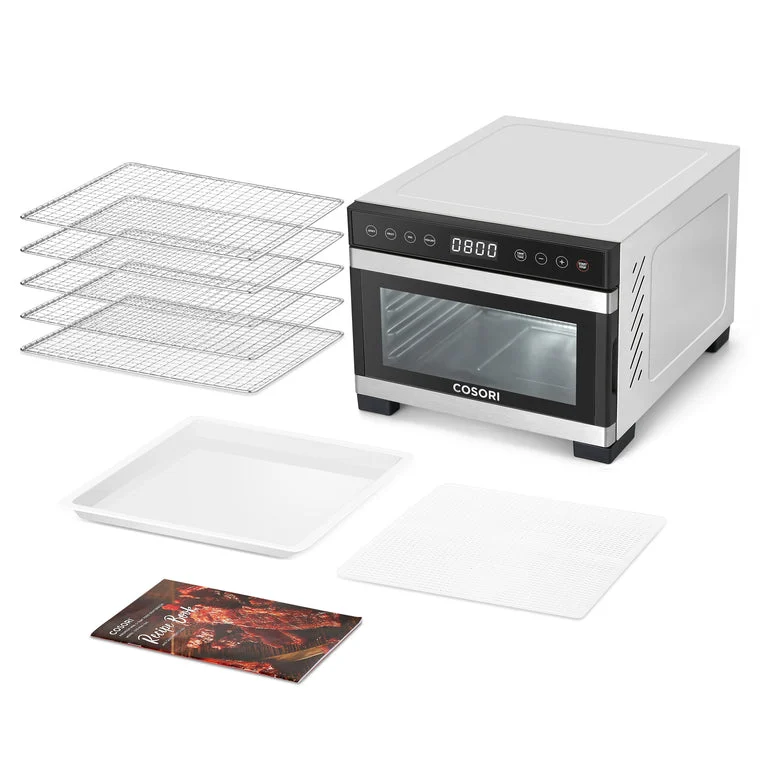
Check which liners come in the box
Mesh holds small herbs that can fall through the racks. A solid fruit roll sheet holds purée. Check what’s included and how it should be washed if either is a regular part of your routine.
COSORI food dehydrator FAQs
Which COSORI dehydrator is best for everyday use?
The Premium 6-Tray is our pick for regular batches. Its 6.5 ft² of drying area gives you room to spread food out, and the slide-out shelves make it easy to check a tray. The Premium Mini makes more sense if counter space comes first.
Are both COSORI 10-tray dehydrators the same size?
The narrower 10-tray model offers 7.4 ft² of drying area. The Premium Pro offers 16.2 ft² and is about 21.3 inches deep. Pick the Pro if you regularly run out of tray area.
Do you need to rotate the trays?
COSORI designs its rear-fan cabinets to move air across the shelves. Start with evenly cut pieces and leave a little space between them. Check more than one tray near the end and follow your model’s manual if you need to rotate them.
Can COSORI dehydrator trays go in the dishwasher?
COSORI lists the steel trays on the Premium 6-Tray and Premium Mini as dishwasher safe. Check the manual for the exact model before washing the mesh screens, fruit roll sheets, or other inserts.
Can you make jerky in a COSORI dehydrator?
Yes. USDA recommends heating meat to 160°F and poultry to 165°F before dehydrating. Check the internal temperature with a food thermometer and follow the directions for your model.
How loud is the Premium 6-Tray?
The Purposeful Pantry measured about 46 dB in its own setup. What you hear depends on where the machine sits and how close you are. If you plan to run long batches, think about whether you’ll hear it in the next room.
Do you need a dehydrator if your air fryer already has a Dehydrate setting?
An air fryer can handle occasional small batches. A dedicated dehydrator is easier to justify if you regularly want several trays at once or don’t want to tie up the air fryer for hours. Compare the basket and oven options in our COSORI air fryer reviews.
Which COSORI dehydrator would we buy?
We’d buy the Premium 6-Tray for regular fruit, herb, or jerky batches. Choose the Pioneer for occasional use, the Premium Mini if you need a compact cabinet, or the Premium Pro if your batches regularly outgrow six trays.