
Home / Dreame review / Dreame FP10
AIR PURIFIER REVIEW
Dreame FP10 Air Purifier Review
A closer look at Dreame’s pet-focused purifier: floating fur, filter care, odors, and everyday air quality.
By KitchLit · Updated November 17, 2026
KitchLit is reader-supported. We may earn a commission when you buy through our links.
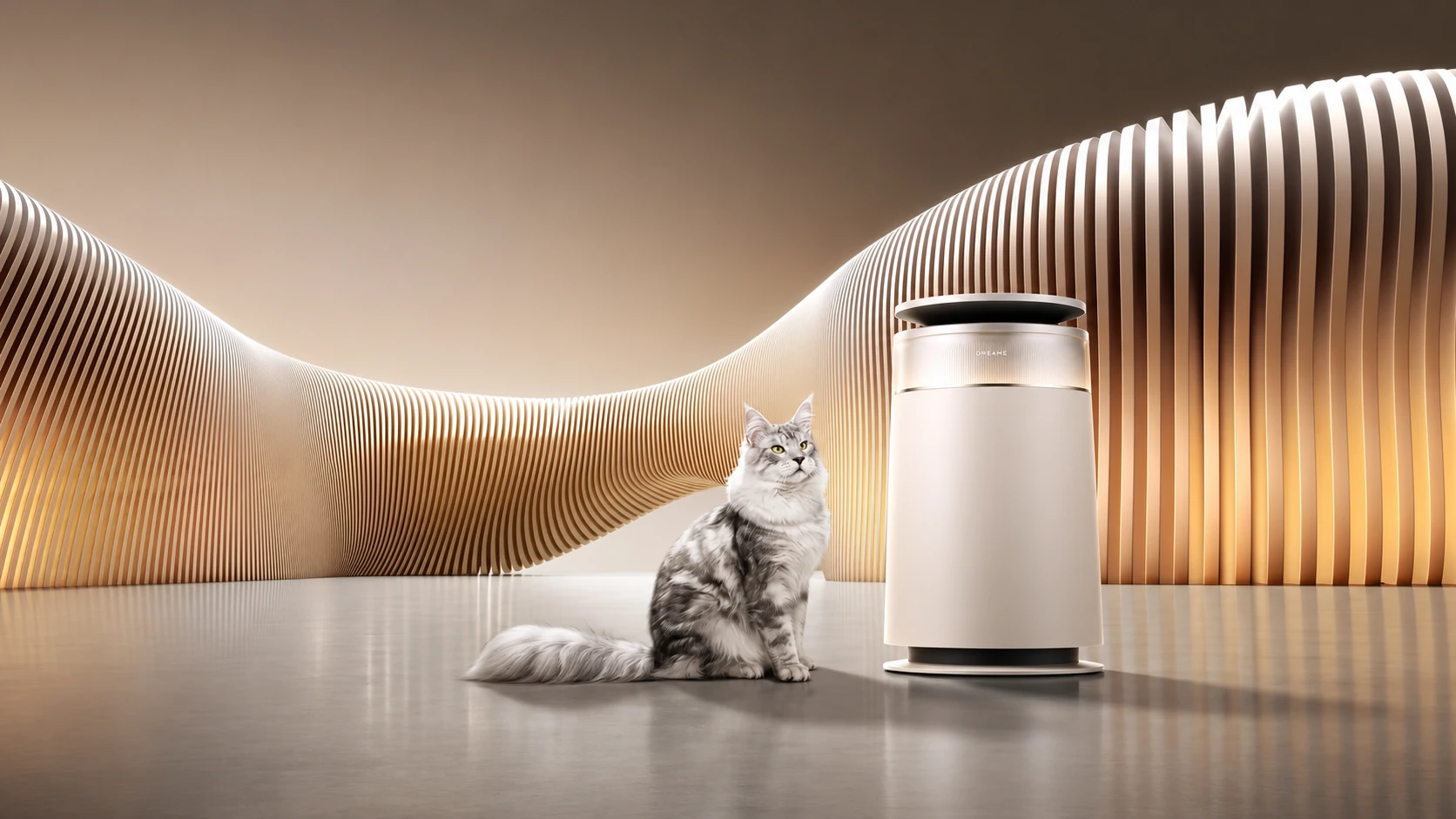
Key takeaways
1
Pet hair is the focus
An active roller clears the primary filter and moves collected fur into a sealed chamber.
2
Different layers do different jobs
The FP10 combines a primary screen, HEPA media, activated carbon, and an odor-treatment layer.
3
Self-cleaning still needs care
Empty the hair chamber and budget for the composite filter. The pet weighing tray is optional.
Explore: Self-cleaning / Filtration / Odor control / Airflow / Smart features / Specs / FAQs
Our view on the Dreame FP10
The FP10 is most interesting if you already spend time peeling pet hair off an air purifier’s pre-filter. Its roller and separate collection chamber address that specific chore, while the inner filter handles finer particles and odors.
We would shortlist it for a pet’s main living space, provided its size, noise range, and ongoing filter cost fit your home. Its case is less compelling if you simply want a small, basic purifier for a room without pets.
Review basis: This is a researched review of Dreame’s US product information and published specifications. We have not conducted hands-on performance or noise tests. Product images and technical illustrations are supplied by Dreame.
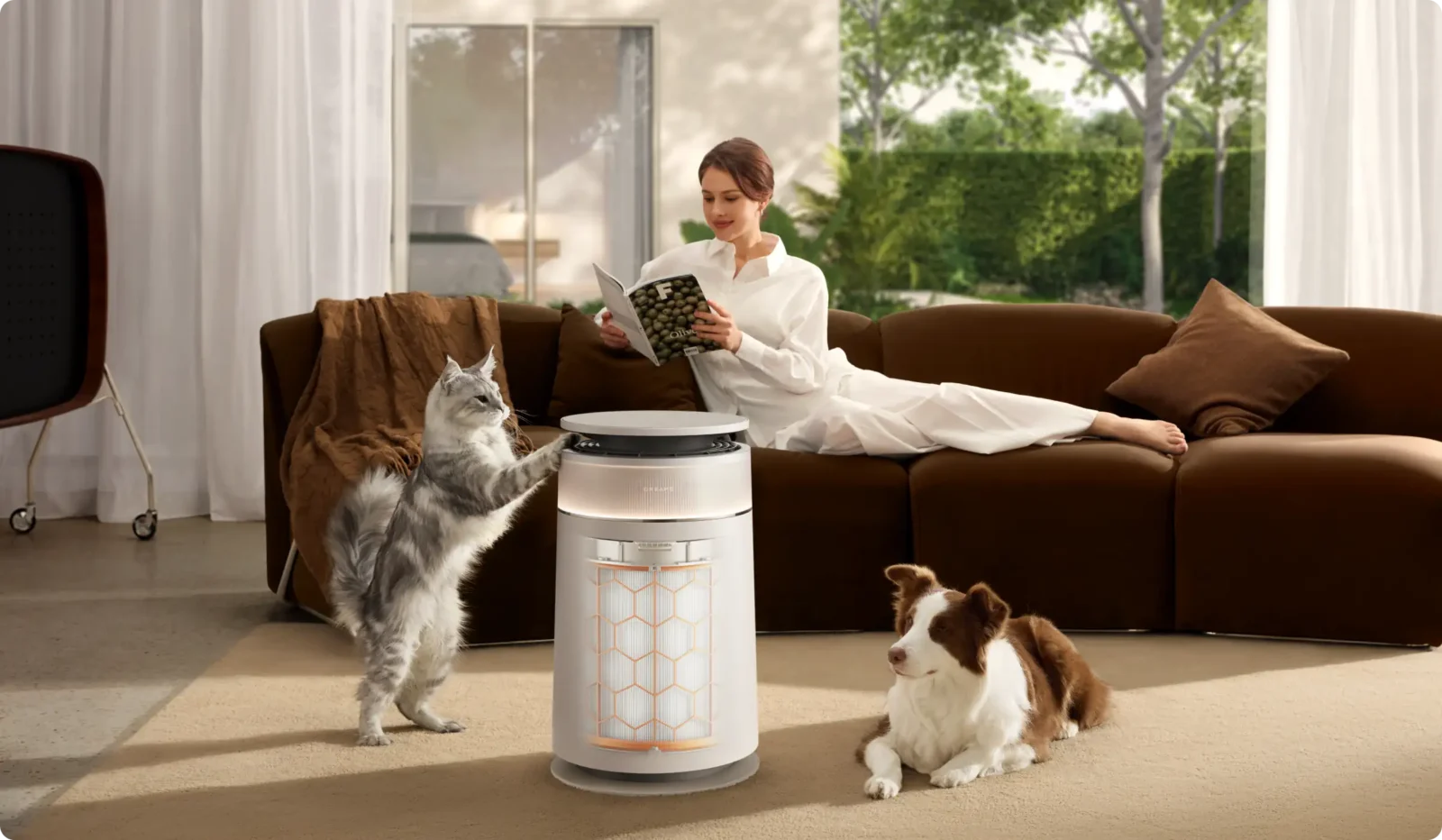
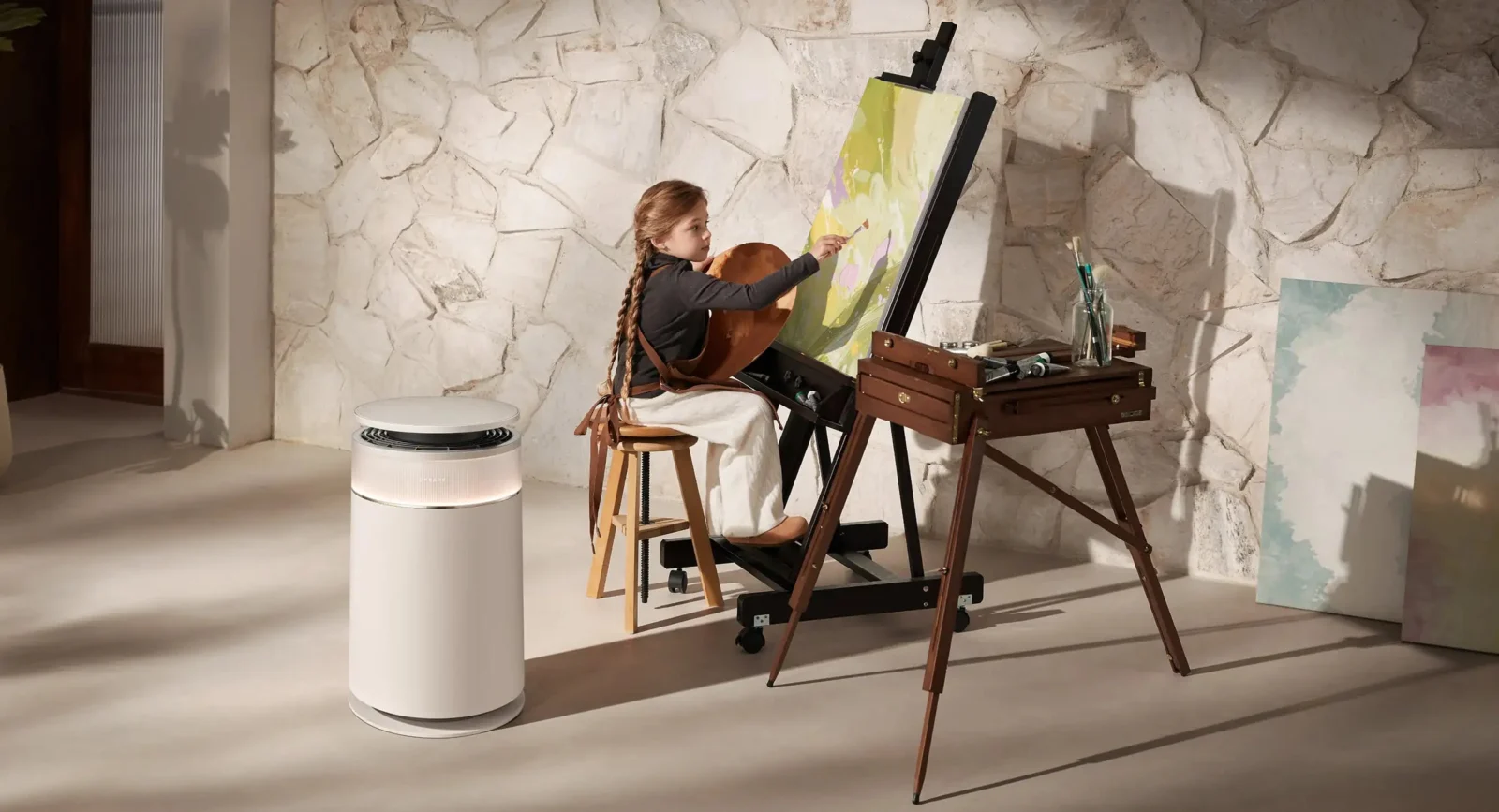
Designed around the day-to-day demands of a pet household.
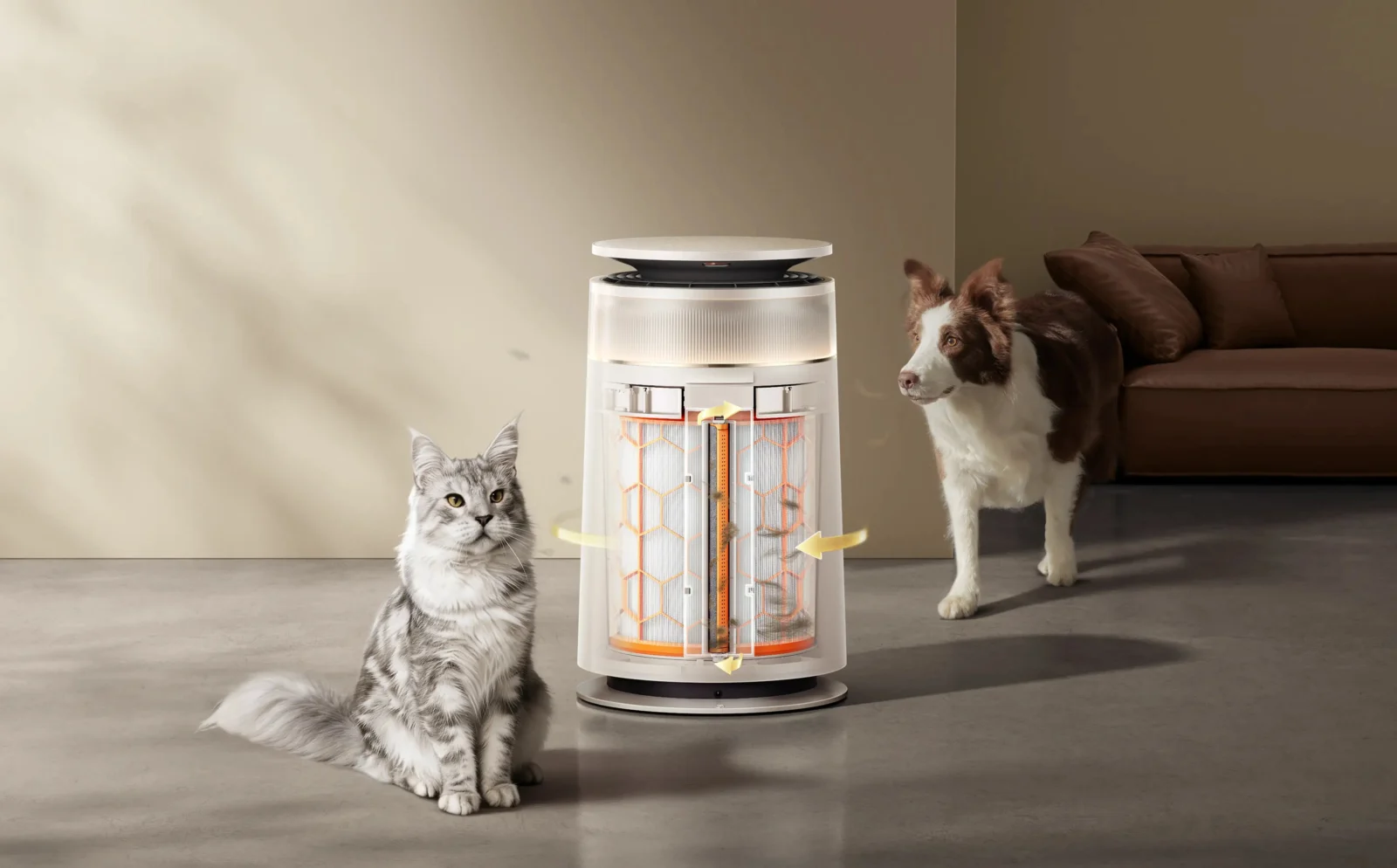
Dreame’s cutaway makes the roller and primary-filter arrangement visible.
A roller that clears fur before it builds up
Instead of leaving all the collected hair on a static screen, the FP10 pairs a rotating primary filter with an active brush. The system separates and gathers floating fur around the intake, helping keep that first stage clear for incoming air.
That is a maintenance feature as much as an air-cleaning feature: a clogged outer screen needs attention before the finer filtration layers can do their job.
What the number means: Dreame advertises a 99.5% hair-collection rate from its own laboratory testing. It is a controlled-test claim, not a promise to collect every hair in a furnished room.
Collected hair goes into a visible, sealed bin
The transparent chamber lets you see when fur has accumulated. Dreame lists a 0.12-gallon capacity, with collected material held separately from the main airflow path.
That separation is useful in a shedding season or a multi-pet home: the roller can gather hair without leaving you to pull a mat off the screen by hand. You still need to inspect and empty the chamber.
Keep expectations practical: This is for airborne fur. Hair already on a rug, sofa, or floor still needs vacuuming or brushing.
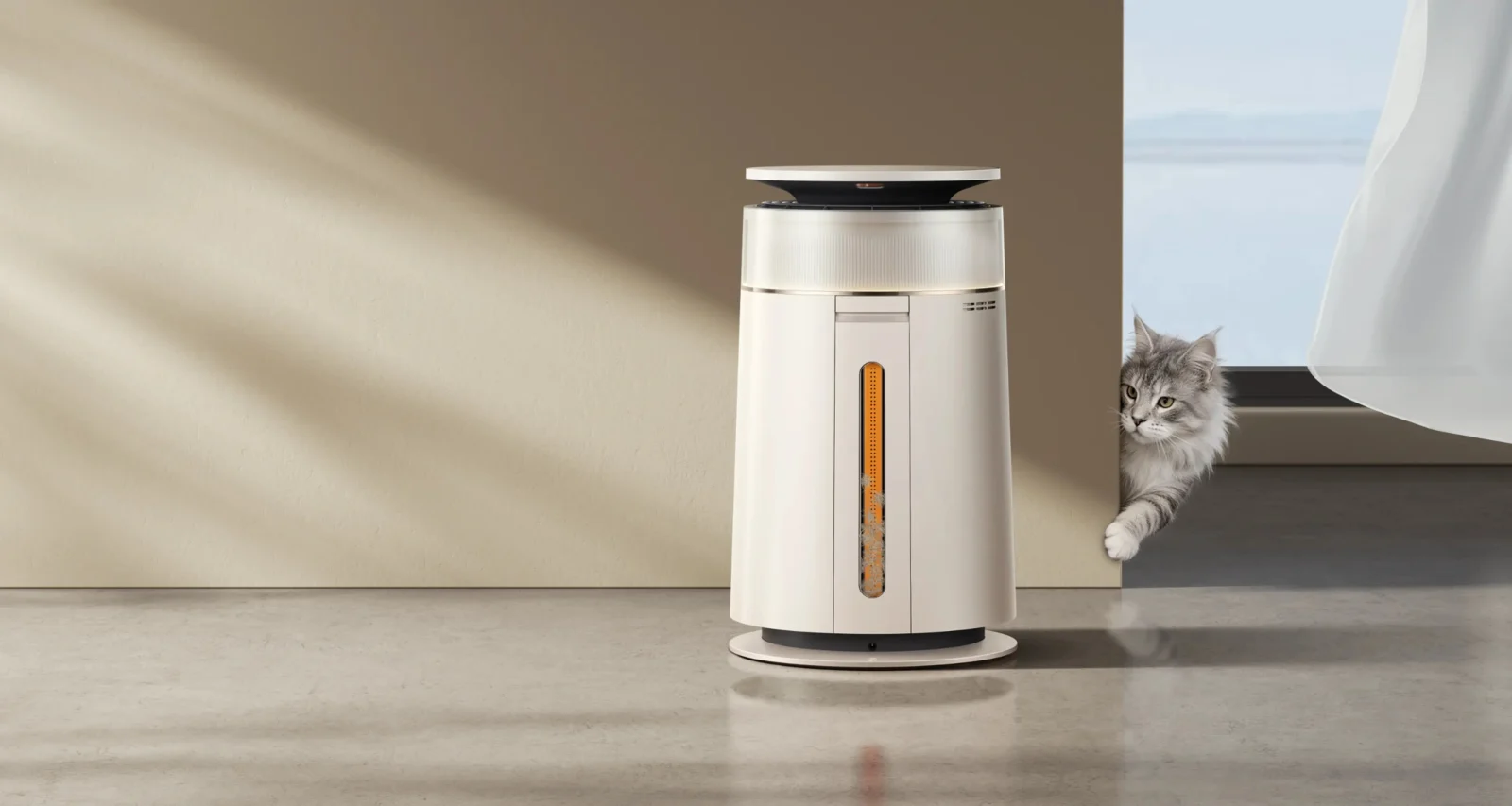
The clear chamber makes accumulated hair easier to monitor.
Less pre-filter work, with a clear limit
The self-cleaning primary filter is the FP10’s main convenience feature. It should not be read as a promise of a purifier with no ongoing upkeep.
Cleaning frequency adjusts automatically
Dreame says its control algorithm varies the self-cleaning frequency. The aim is to keep the intake clear without making regular manual hair removal part of your routine.
The composite filter still wears out
The primary screen is the self-cleaning stage. The inner HEPA and odor-control media remain consumables, and the app includes a HEPA filter-life reminder. Dreame lists a two-year HyperMatrix filter lifespan; actual replacement needs depend on use.
About the “$240 a year” saving: Dreame’s example compares the FP10 with an AP10 primary screen replaced monthly at $20 each. It is a specific comparison about the primary screen, not a guaranteed saving for every owner or a waiver of composite-filter replacement costs.
Four layers, with a different job for each
The useful distinction is between catching particles and treating gases. HEPA media and odor-control media do different work.

1. Primary screen
The first stage intercepts larger airborne material, including floating pet hair and coarse dust. The roller helps clear this surface.
2. HEPA media
Dreame lists H14-grade media and a 99.97% particle-filtration result for particles above 0.3 microns in its cited test. Filter efficiency describes air passing through the media, not how much of a whole room is cleaned instantly.
3. Activated carbon
Porous carbon adsorbs odor molecules and some gases. Dreame says the FP10 contains 2.5 times as much porous activated carbon as its PM20 in an internal comparison.
4. Odor-treatment layer
A metal functional layer is designed to chemically break down selected odor compounds. It complements the carbon layer rather than replacing the particle filter.
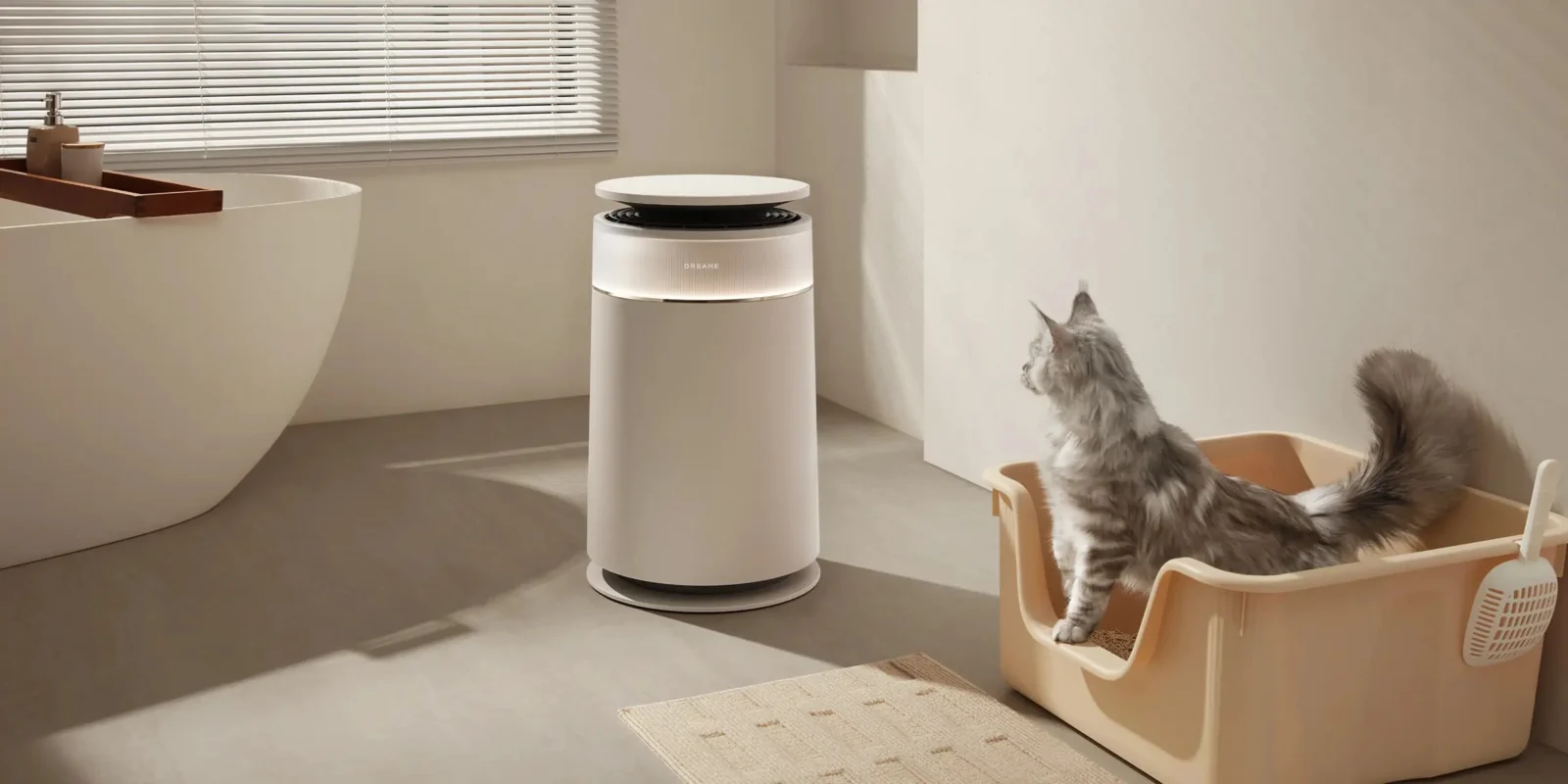
Odor control is especially relevant around the spaces your pets use most.
CataFresh: designed for persistent pet odors
Pet smells are a mix of gases, so the FP10 adds CataFresh treatment to its particle filtration. Dreame’s examples include ammonia associated with litter and urine, hydrogen sulfide, methanethiol, and trimethylamine.
The manufacturer reports up to 99.9% removal for its named pet-odor test gases. Those tests used a one-cubic-meter chamber over one hour. A home has ongoing odor sources, furniture, open doors, and much more air to move.
Use the purifier alongside litter-box cleaning, ventilation, and other source control. A gas-removal claim is not a guarantee that a room will be odor-free.
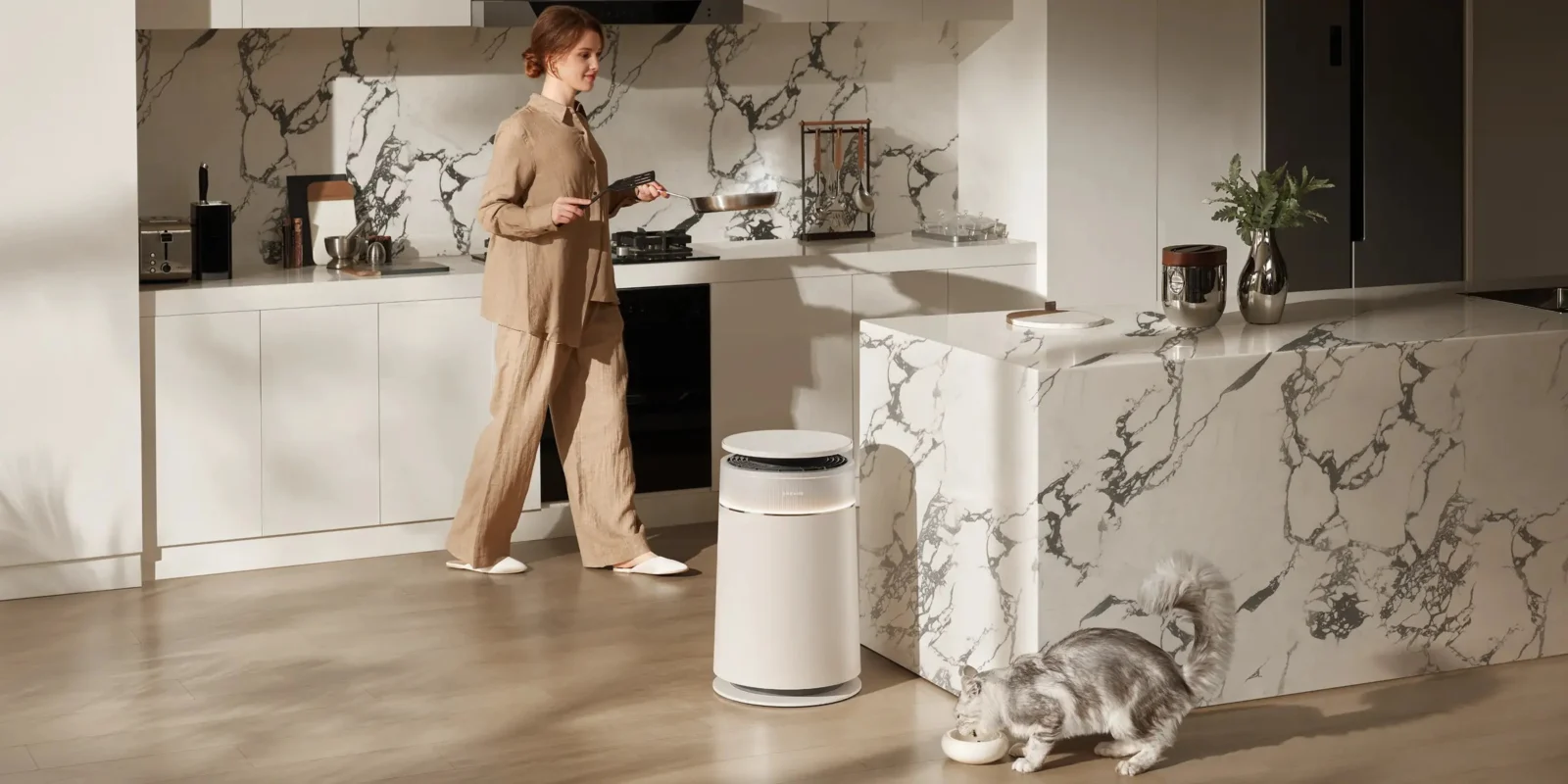
The purifier is intended to sit in the living space, with airflow kept clear.
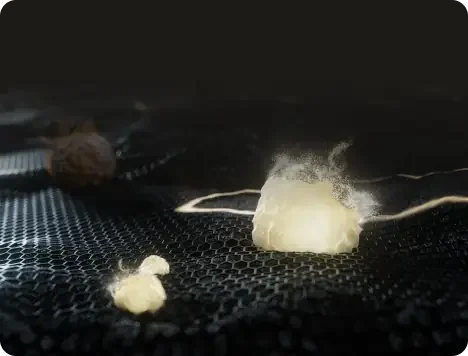
Why the treatment layers matter
A HEPA filter catches particles; it is not, by itself, an odor filter. The FP10’s separate gas-treatment stages are the relevant feature if smells are part of the problem you want to address.
LoopBoost airflow brings floating fur toward the intake
The FP10’s grille-free intake is designed to give floating hair a broad path into the purifier, while circulation moves air through the living space. Its roller then deals with the collected fur.
Dreame’s “22×” claim is a comparison with its PM10 in a 30-square-meter test chamber. It should not be interpreted as 22 times the clean-air output or the performance of every competing purifier.
For everyday placement: Keep the intake and outlet clear and use the purifier in the room where your pet spends time. An obstructed corner or a closed door changes how effectively room air reaches it.
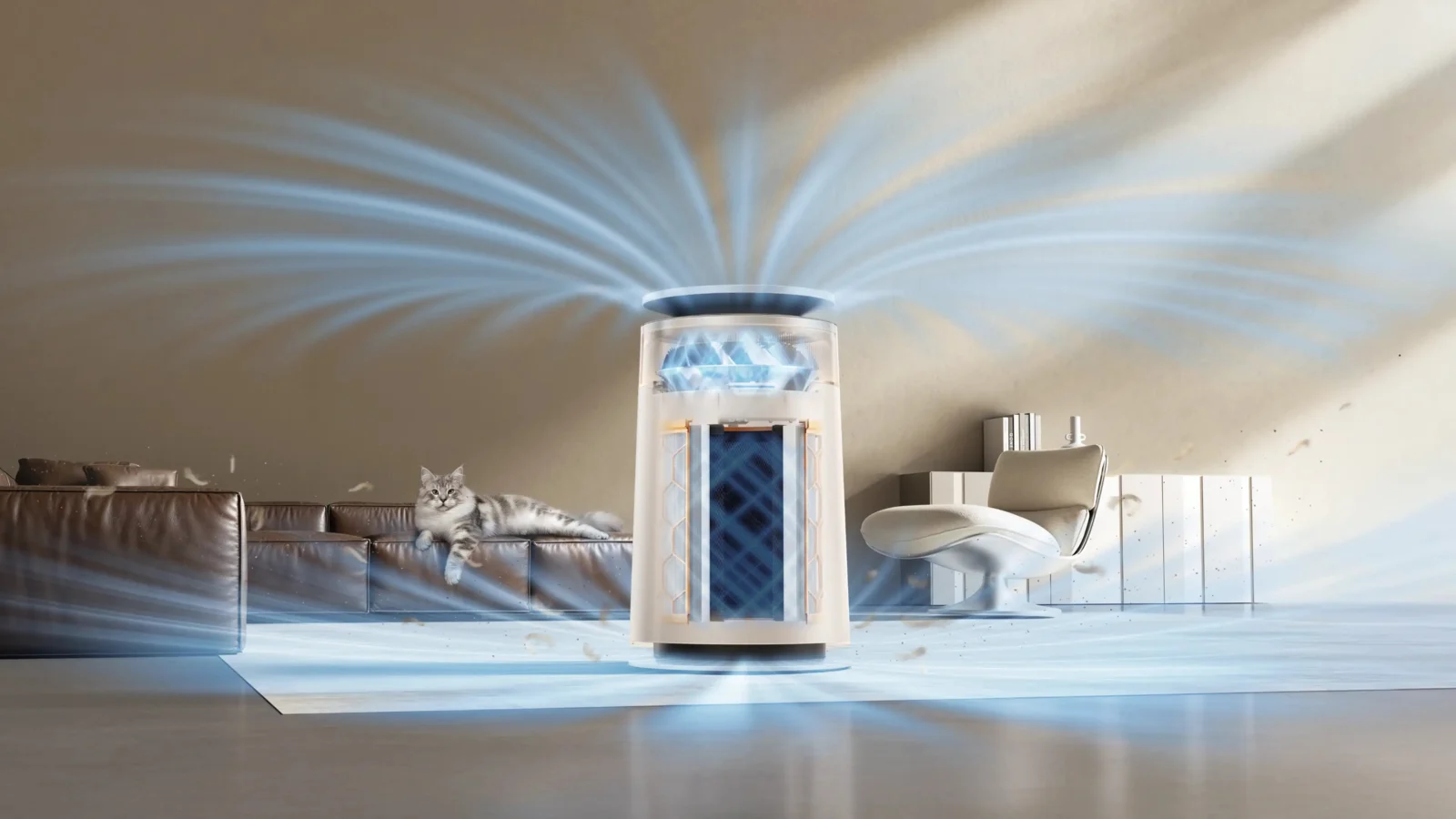
Airflow rendering supplied by Dreame; it illustrates the intended circulation pattern.
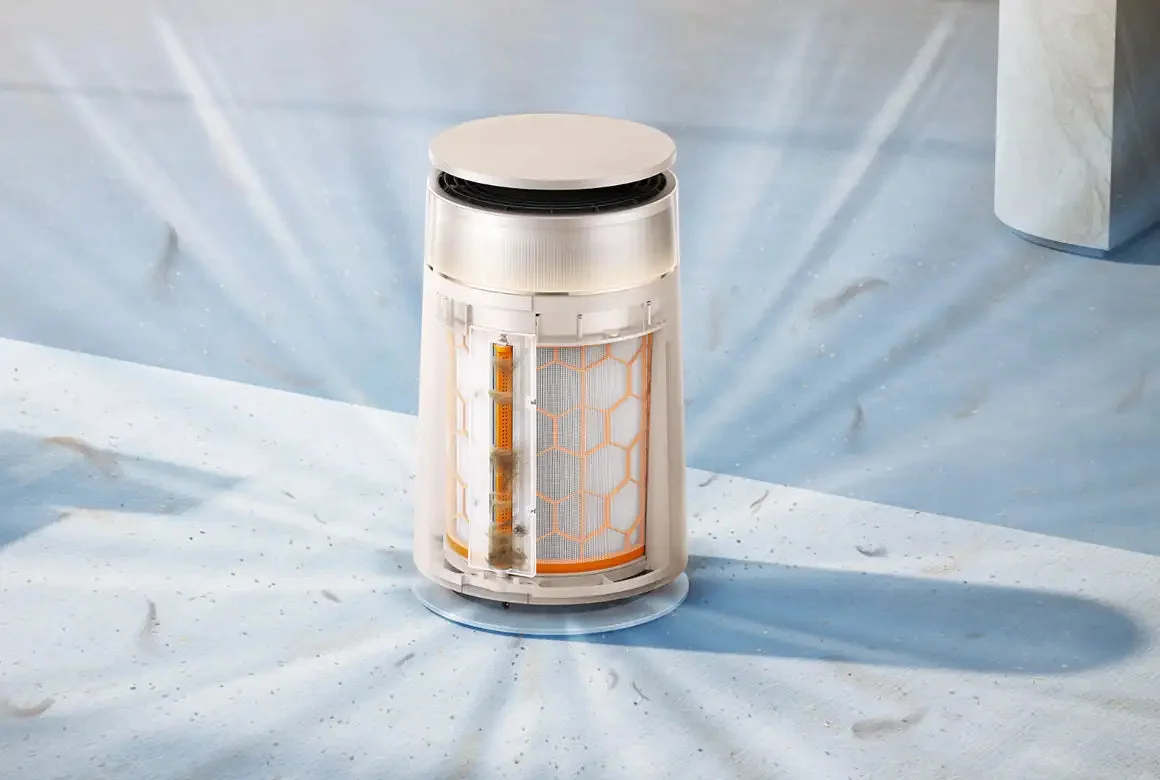
FP10’s illustrated intake
A broad, grille-free collection area with a roller that clears the primary screen.
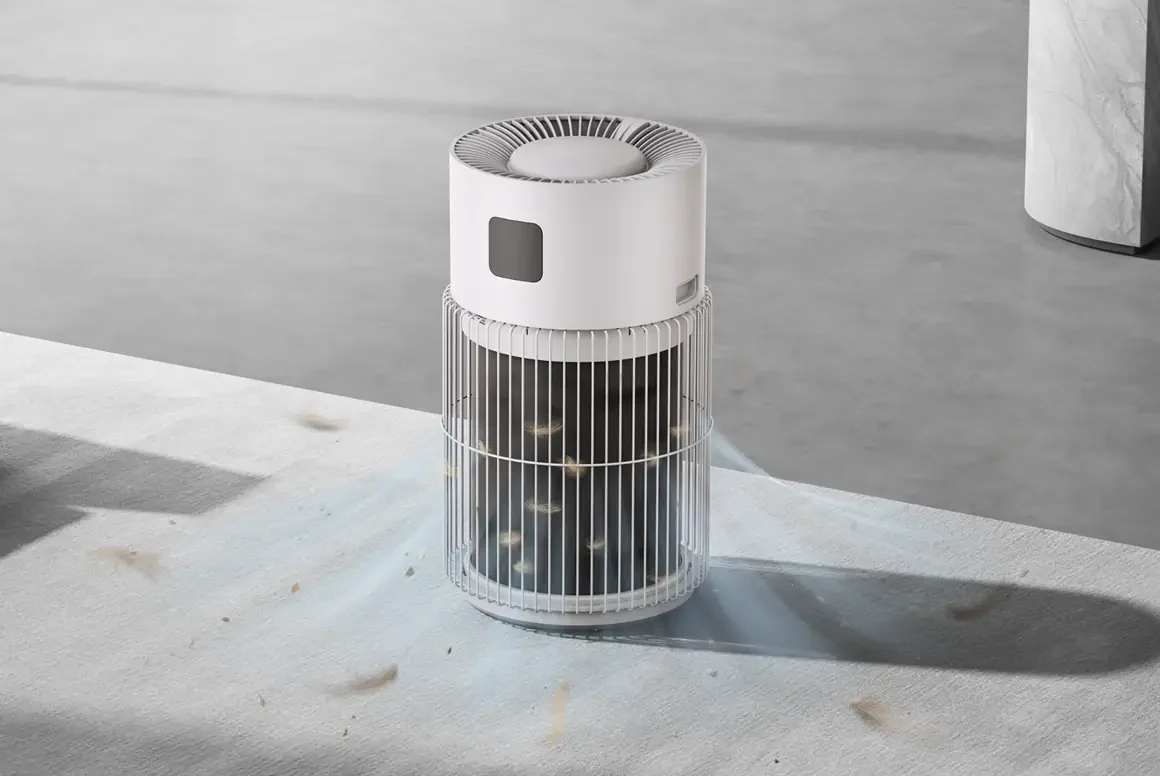
A conventional grille in Dreame’s comparison
The manufacturer contrasts this with a grille that can catch fur at its openings. It is an illustrative comparison, not a test of every rival model.
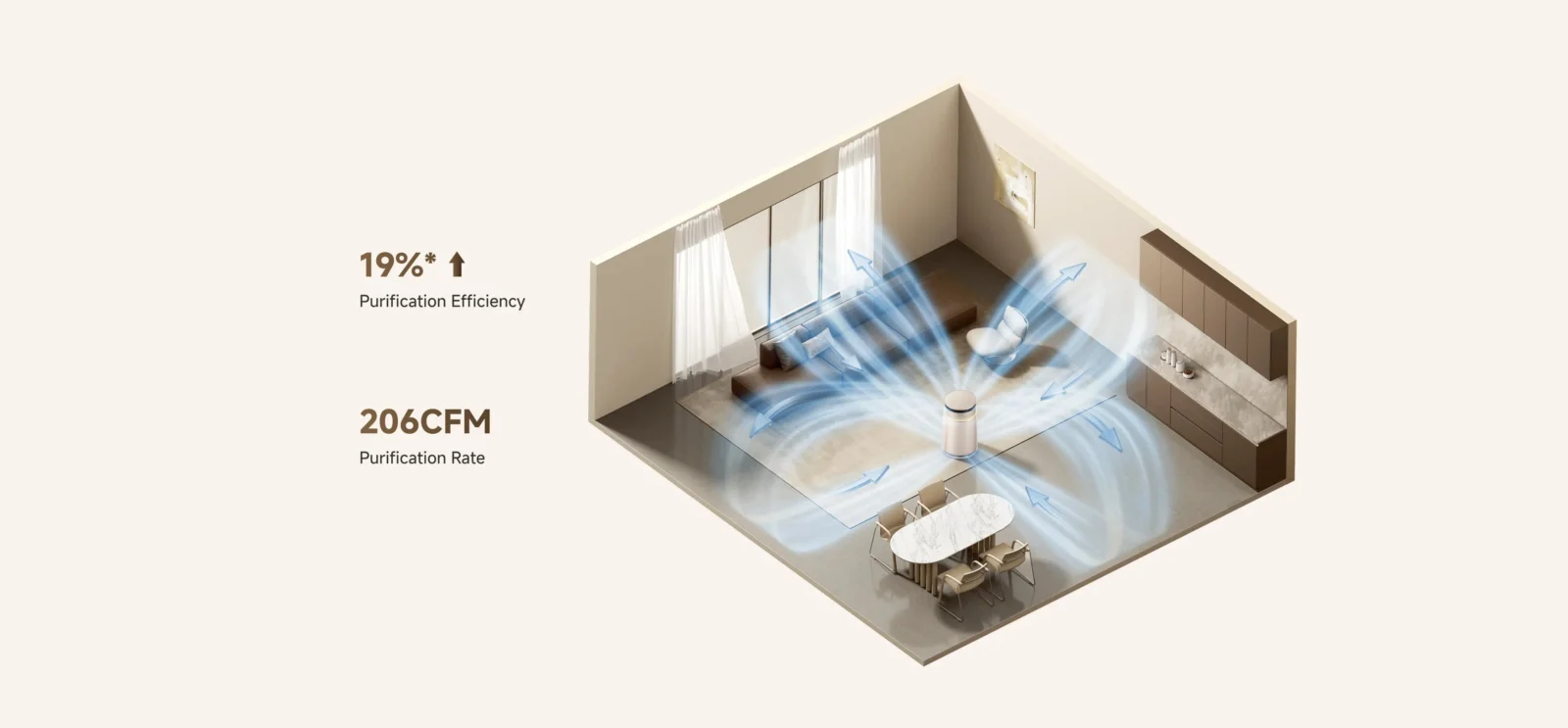
Dreame lists 350 m³/h particle CADR, approximately 206 cubic feet per minute.
Size it for a room, not an entire home
Dreame’s published particle clean-air delivery rate is 350 m³/h, or about 206 CFM. That is the more useful starting point than a hair-capture multiplier when comparing purifiers.
For context, using that airflow in an eight-foot-high room at 4.8 air changes per hour gives an estimated room area of roughly 320 square feet. This is our calculation, not an independently verified FP10 room-size rating.
Higher ceilings, an open plan, and quieter fan settings change the picture. Choose your operating room and preferred speed before assuming a large coverage number will meet your needs.
Airborne particles and household gases
The FP10 is designed to address both categories. A cleaner-looking sensor display is useful feedback, but it is not a measurement of every pollutant in a room.
Fine particles and dander
Dreame reports 99.12% cat-dander and 98.08% dog-dander removal in a 30 m³ chamber after one hour. These are manufacturer laboratory results, not evidence that the purifier will eliminate pet allergies. Settled hair and dust still need surface cleaning.
Selected gases and VOCs
Dreame also presents results for selected gases, including formaldehyde, TVOC, and butyl acetate. The carbon and treatment media are relevant here, but no portable purifier removes every gas. Control the source and ventilate when appropriate.
See the air readings and control the routine
Dreamehome brings monitoring and scheduling together, so you can check the room and adjust operation without standing beside the unit.
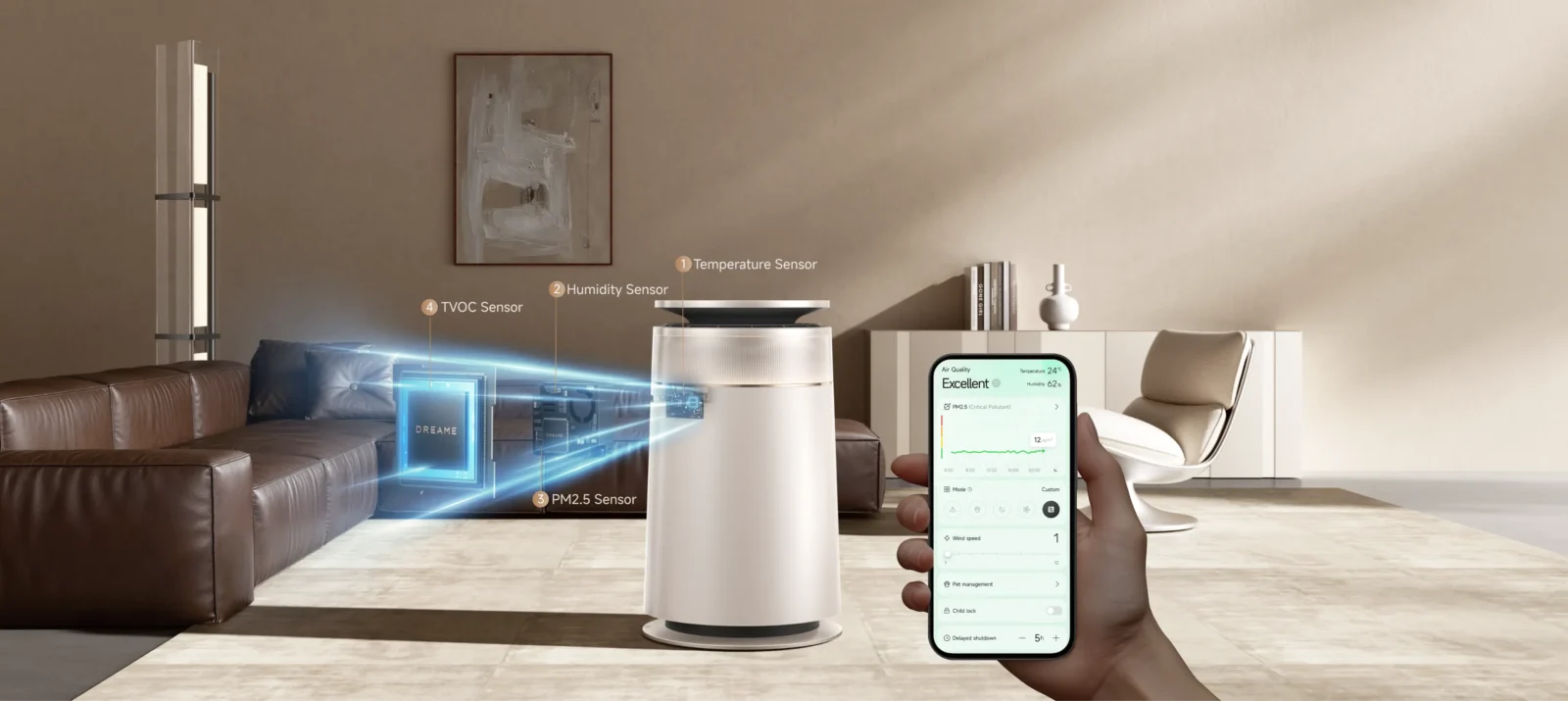
Four types of sensor feedback
Dreame lists PM2.5, TVOC, temperature, and humidity monitoring. The readings describe selected conditions around the purifier; TVOC is an aggregate signal, not an identification of each gas.
Schedules and filter reminders
The app includes an air-quality display, purification timer, and HEPA filter-life reminder. Its practical value is keeping a regular routine and knowing when the consumable filter needs attention.
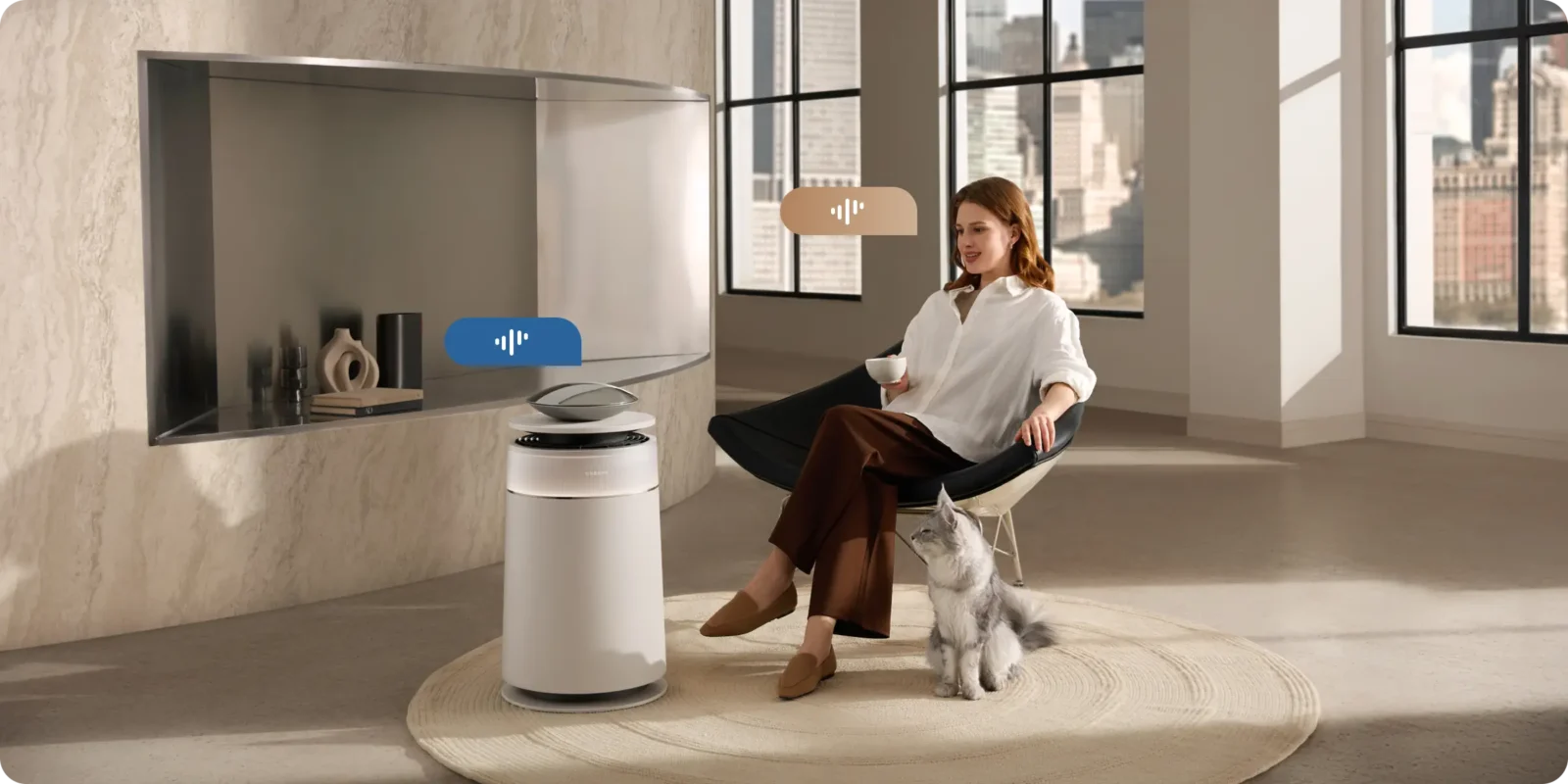
Alexa and Google voice control
Dreame lists support for Alexa and Google smart-home ecosystems. Simple commands can be convenient when your hands are occupied. App setup and a compatible connected account are needed; confirm the supported commands for your region.
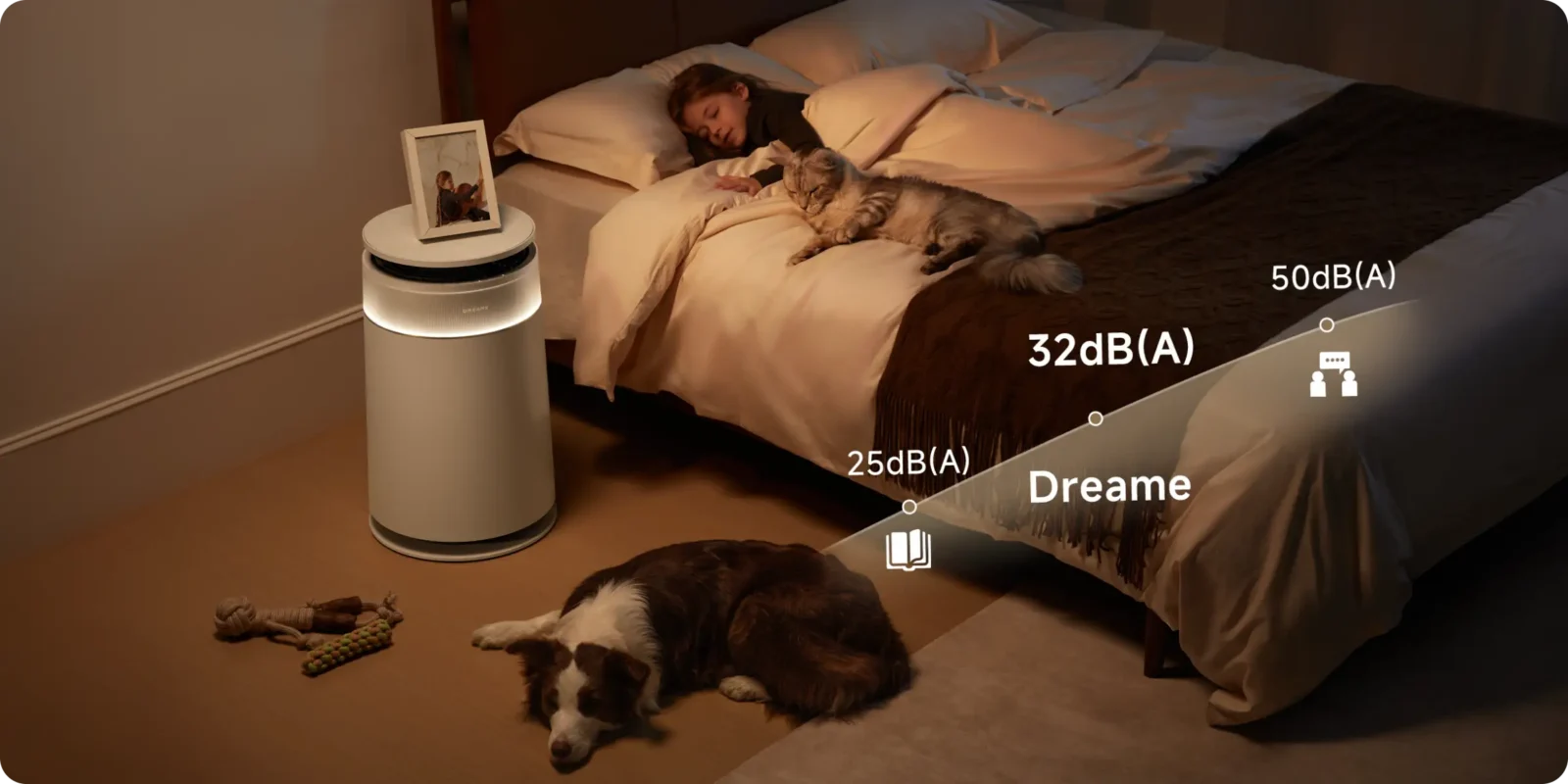
Quiet mode trades airflow for comfort
The published noise range is 32–62 dB(A). Dreame attributes the lowest figure to Sleep Mode. Expect the sound to rise with stronger airflow, and do not assume the maximum CADR applies at the quietest setting. We have not measured its sound ourselves.
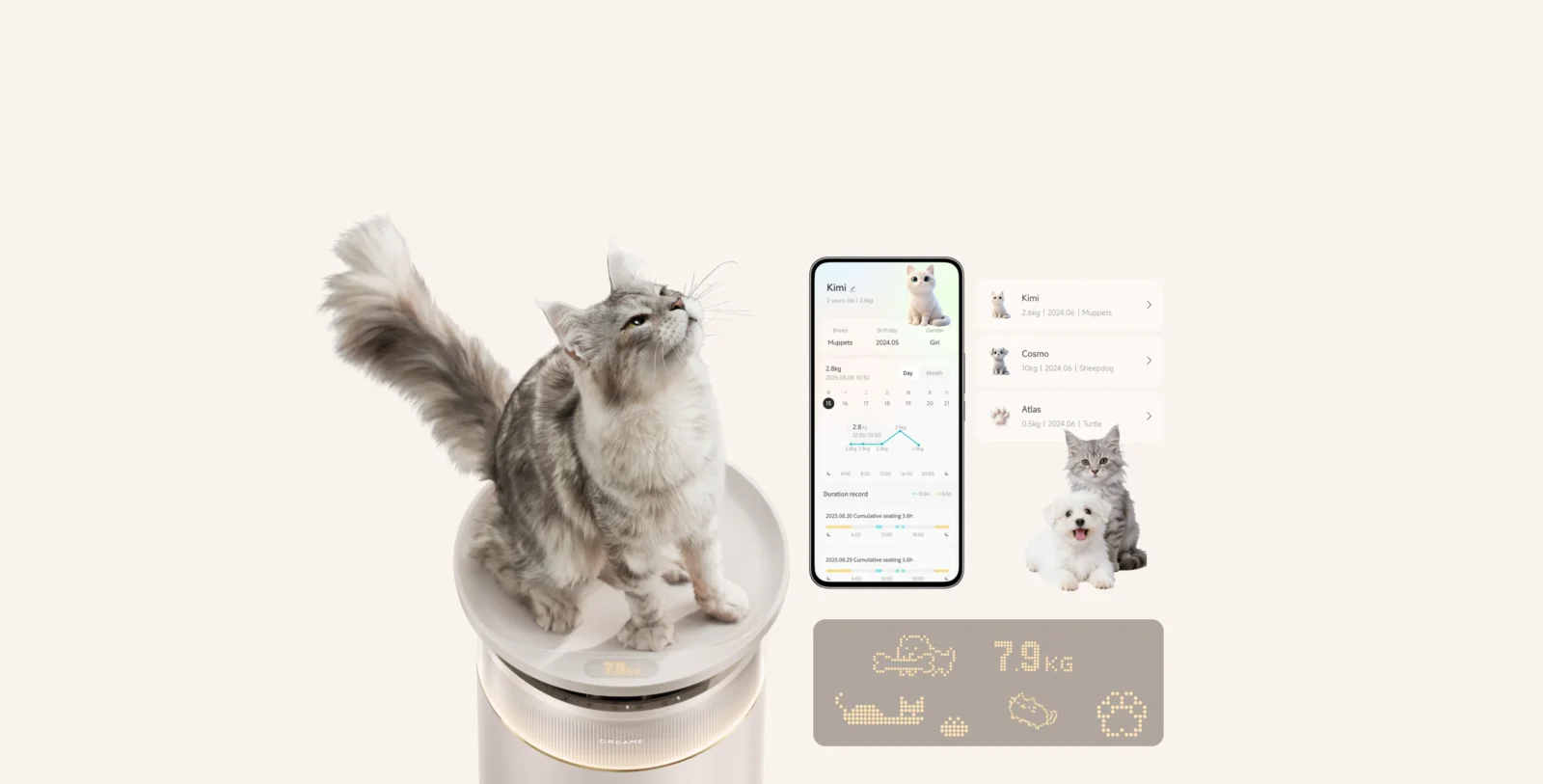
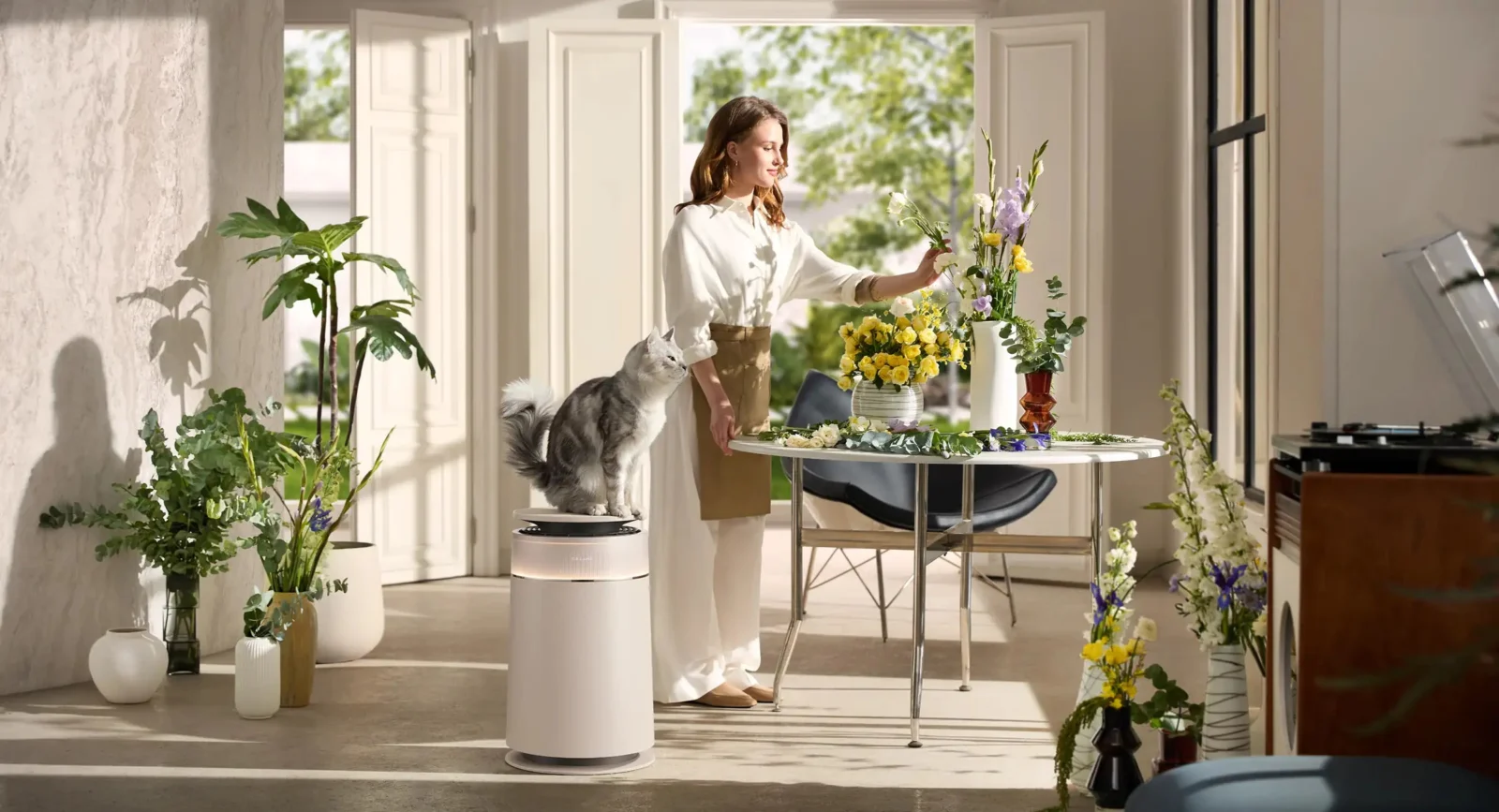
The pet weighing tray is optional; check the exact bundle before ordering.
An optional tray turns it into a pet weighing station
The tray supports pets up to 15 kg, approximately 33 lb. Dreame says it works with the app to record weights and routines and supports profiles for multiple pets.
It is an interesting add-on if your cat already likes sitting on an elevated perch. Its value depends on your pet choosing to use it, so we would treat weight tracking as a convenience rather than the main reason to buy the purifier.
Check the box you are buying: The standard purifier and the purifier-plus-tray set are different purchase options. Do not assume the tray is included with every FP10.
Details for an active pet household
The design includes features intended to reduce abrupt airflow changes and accidental operation, alongside a stable floor-standing base.
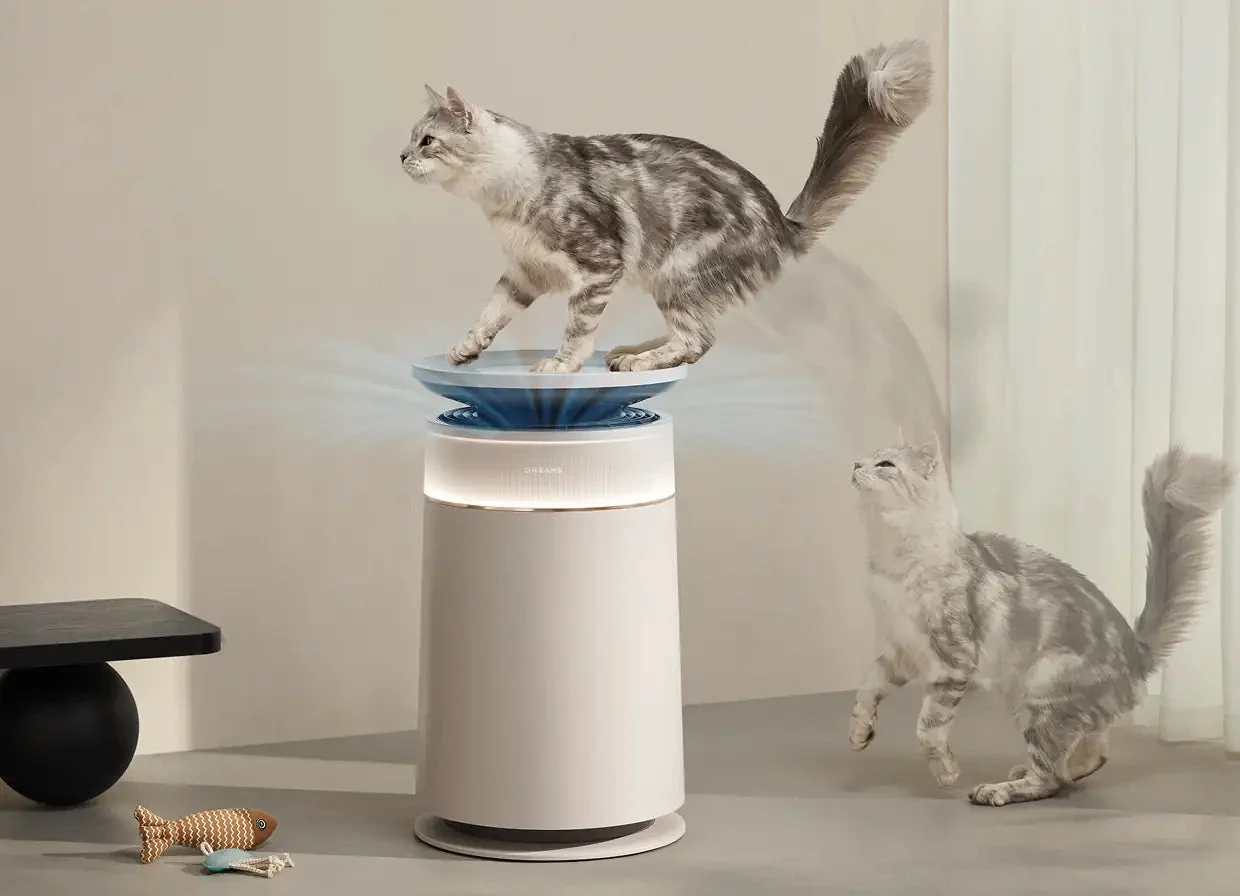
Airflow eases when a pet steps up
With Pet Mode enabled and a pet on the weighing tray, Dreame says airflow gradually reduces. It is intended to make the interaction gentler; an individual pet’s reaction will still vary.
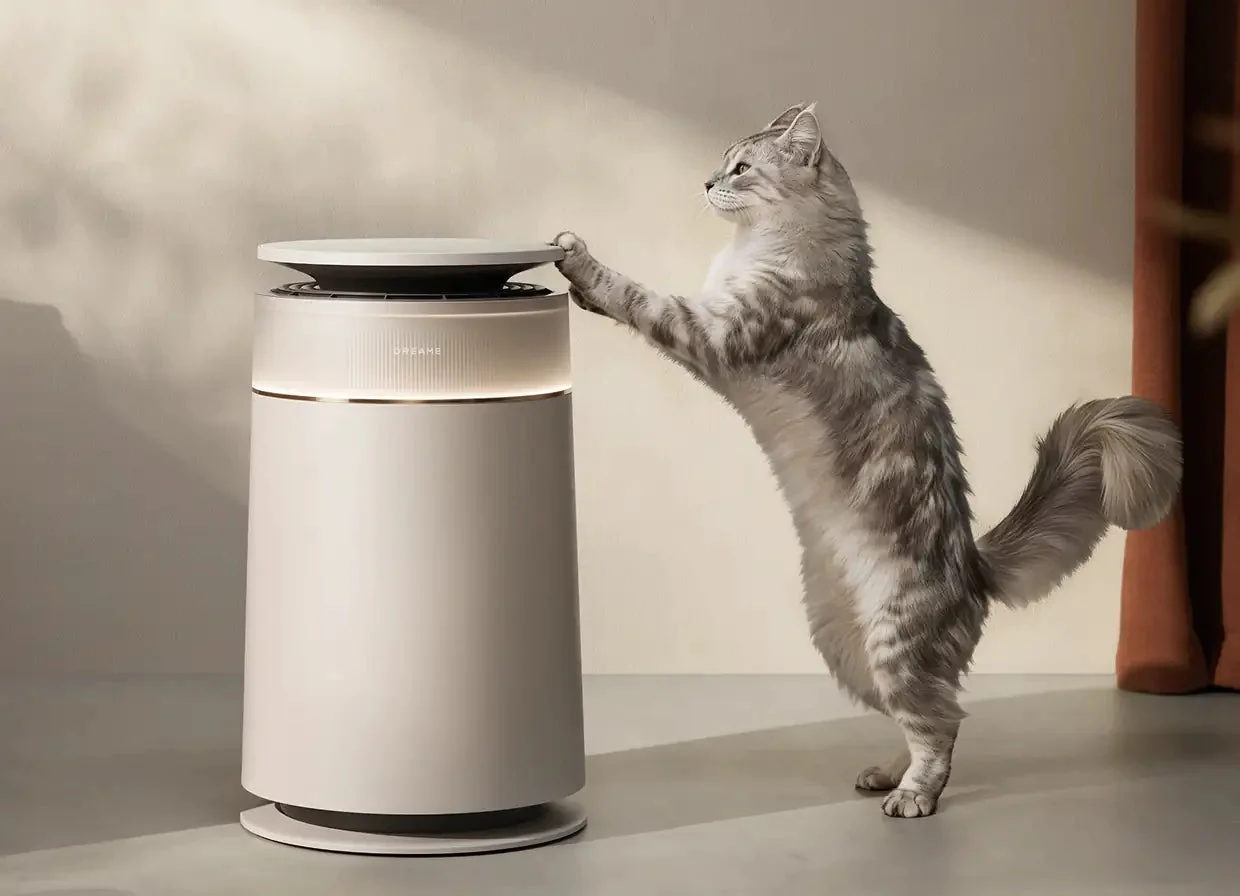
Stability and control protections
Dreame lists a reinforced base, low-voltage design, bite-resistant cord, child lock, and tip-over power-off. These are useful design details, while thoughtful placement and keeping the cord out of chewing reach still matter.
What comes in the box
Dreame lists the following items, with the filter already installed inside the main unit. The optional weighing tray is not part of the standard package.
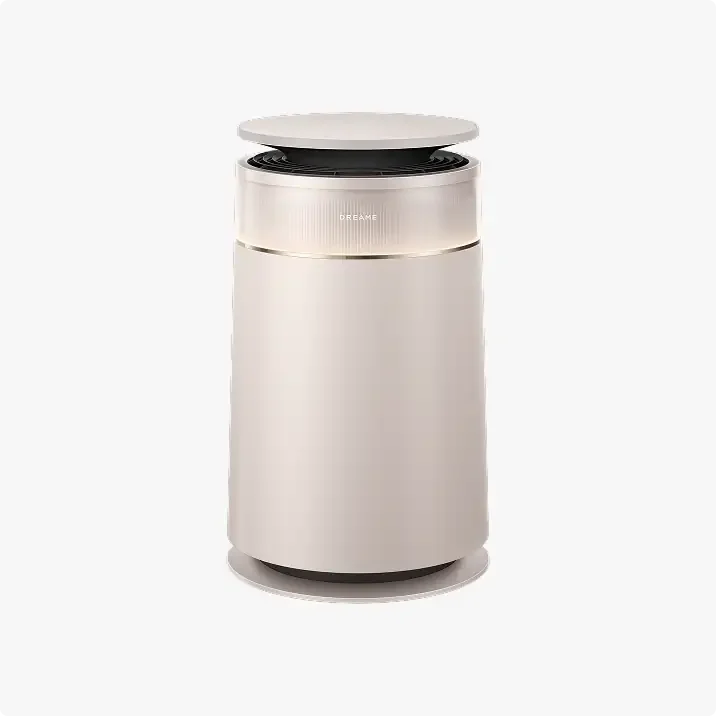
Main unit
1 × purifier
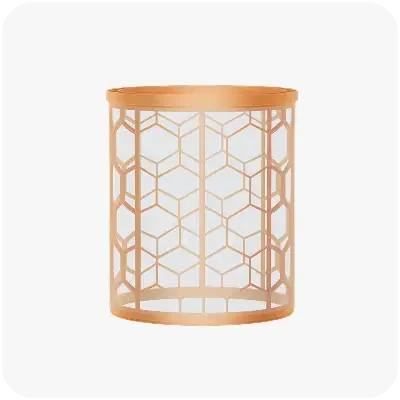
Primary filter
1 × primary screen
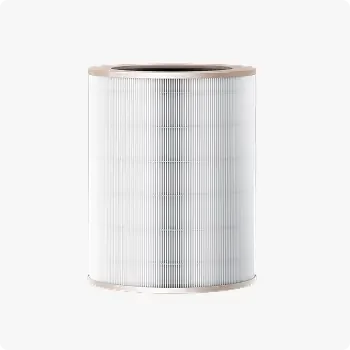
HEPA composite filter
1 × filter with activated carbon
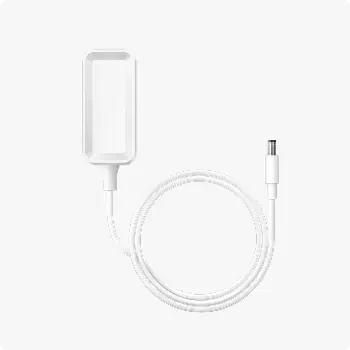
Power adapter
1 × adapter
User manual
1 × manual
Dreame FP10 specifications
US-friendly measurements are rounded conversions of Dreame’s published figures. Airflow and sound figures are manufacturer specifications.
| Specification | Dreame FP10 |
|---|---|
| Particle CADR | 350 m³/h, approximately 206 CFM |
| Dimensions | 14.6 × 14.6 × 24.4 in (370 × 370 × 620 mm) |
| Unit weight | Approximately 19.4 lb (8.8 kg) |
| Rated power | 45 W |
| Listed noise range | 32–62 dB(A) |
| Hair chamber | 0.12 US gallon, approximately 0.45 L |
| Filter media grade | H14, as listed by Dreame |
| Listed composite-filter life | Two years; actual service life varies |
| Particle cumulative clean mass | 40,000 mg (PCCM), as listed by Dreame |
| Optional tray limit | Approximately 33 lb (15 kg) |
FP10 vs. AP10: what the upgrade changes
Dreame positions the FP10 above the AP10 on filter upkeep and monitoring. Here are the practical differences in its own comparison.
| Feature | FP10 | AP10 |
|---|---|---|
| Outer-filter care | Active roller self-cleaning | Manual cleaning |
| Filtration | Four stages; H14-grade media | Three stages; H12-grade media |
| Listed sensors | PM2.5, TVOC, temperature, humidity | PM2.5 |
| Rated power | 45 W | 68 W |
| Noise range | 32–62 dB(A) | 32–66 dB(A) |
| App control | Yes | Yes |
| Separate hair chamber | 0.12 gallon | Not listed in this comparison |
| Weighing tray | Optional | Not supported |
This comparison uses Dreame’s published specifications, not a side-by-side KitchLit test. Filter grade alone does not establish which unit cleans a given room faster; room-level airflow still matters.
What we like
- The roller addresses a specific pet-owner chore: clearing fur from the primary screen.
- A visible hair chamber makes accumulated material easier to monitor.
- Particle filtration and odor treatment are handled by different media.
- App controls, sensor readings, and an optional weighing tray add flexibility.
What to weigh up
- It is a floor-standing unit weighing about 19.4 lb.
- The inner composite filter still needs replacement.
- Maximum airflow and the quietest sound level are different operating conditions.
- The weighing tray costs extra unless your chosen bundle includes it.
- Headline percentages and multipliers come from controlled manufacturer tests.
Price, filters, and the bundle
Dreame changes US promotions and bundle offers. Compare the purifier-only price with the tray set, check the replacement-filter price and availability, and review the current return and warranty terms before ordering. The US product page currently advertises a 30-day return policy and a two-year warranty; eligibility and conditions apply.
Getting it ready for everyday use
A short setup check can make a bigger difference than switching between marketing modes.
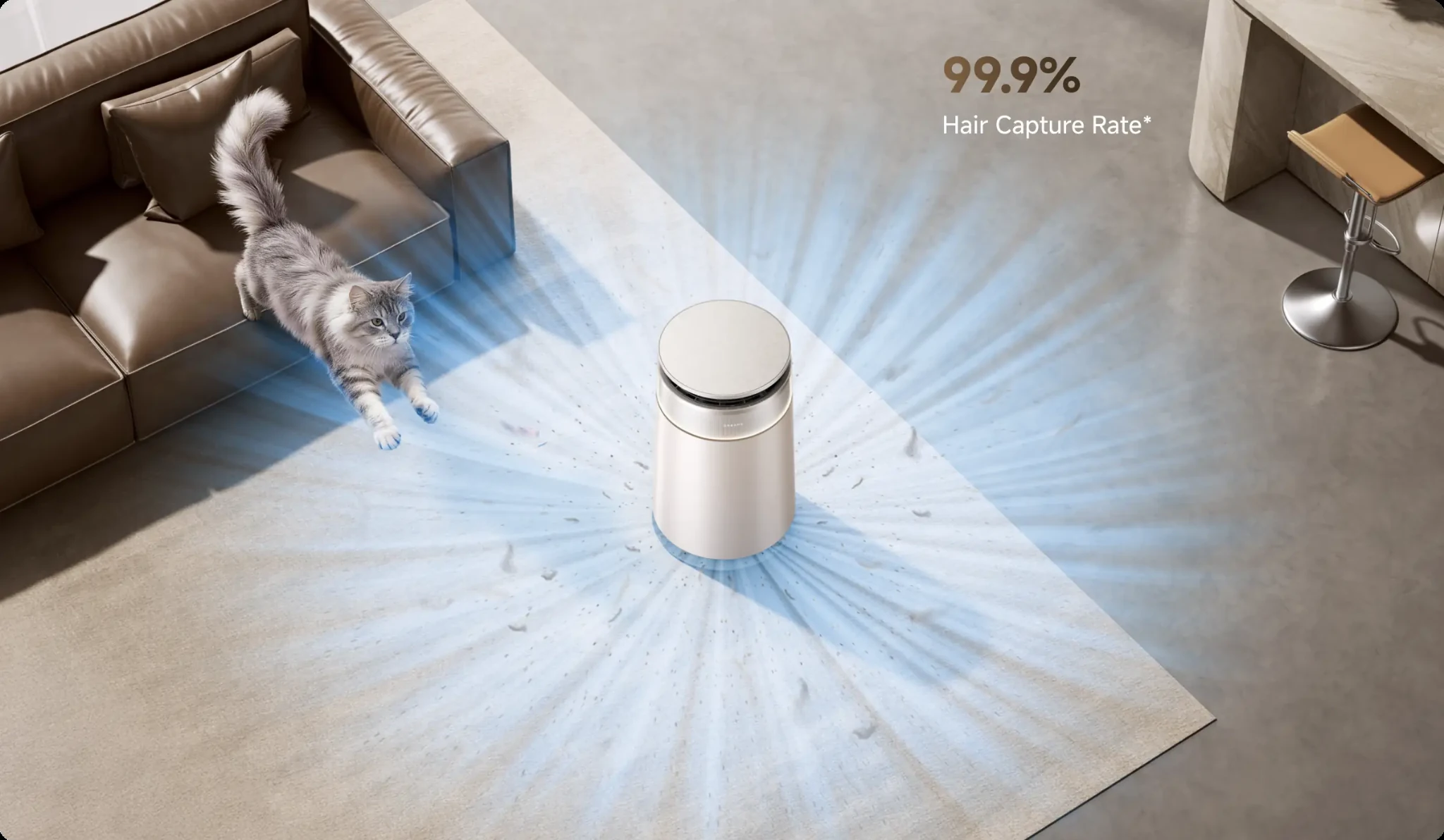
Manufacturer illustration. The 99.9% shown is a laboratory claim; actual hair capture varies with room conditions.
Unpack, position, and run
- Remove the filter’s shipping packaging before first use.
- Follow the manual to fit the top unit and align its direction mark with the hair chamber.
- Place the purifier where your pet spends time, with unobstructed airflow.
- Try Pet Mode when floating fur is the priority, then choose a fan setting you can comfortably keep running.
Connect and keep an eye on it
- Use the Dreamehome app and a 2.4 GHz Wi-Fi network for setup.
- Set a schedule suited to the room’s daily use.
- Check the visible hair chamber and follow the manual’s emptying instructions.
- Watch the HEPA filter-life reminder and inspect the unit if performance changes.
Frequently asked questions
Does the Dreame FP10 need replacement filters?
Yes. The primary screen is the self-cleaning part, while the HEPA composite filter remains a replacement item. Dreame lists a two-year HyperMatrix filter lifespan and provides a HEPA filter-life reminder in the app. Use conditions affect the service interval.
Will it pick up hair from the floor or sofa?
It is designed to collect hair suspended in the air and drawn toward the intake. It does not vacuum a room. Continue cleaning rugs, upholstery, and other surfaces where fur has settled.
Does it help with litter-box odors?
Its activated carbon and CataFresh treatment are designed for selected pet-odor gases, including ammonia. Dreame’s removal figures are laboratory results; room performance depends on airflow, the odor source, and filter condition. Continue cleaning the litter box.
How large a room can it handle?
Dreame lists 350 m³/h particle CADR, approximately 206 CFM. Using that figure with eight-foot ceilings and 4.8 air changes per hour gives our estimate of roughly 320 sq. ft. This is a calculation rather than an independently verified room-size certification. Lower fan speeds reduce the air cleaned.
Is the pet weighing tray included?
It is optional. Choose a bundle that explicitly includes it, or buy it separately if available. The listed pet limit is 15 kg, approximately 33 lb.
Does it work with Alexa or Google?
Dreame lists Alexa and Google voice-control support alongside the Dreamehome app. Check current setup instructions, account compatibility, and supported commands for the US version.
Why might hair pickup seem weak?
Check that filter packaging was removed, the intake is unobstructed, and the unit is in the room your pet uses. Dreame recommends Pet Mode for stronger floating-hair collection. Follow the manual if the chamber or filter needs attention.
Why do sensor readings change or look inaccurate?
Dreame says its PM2.5 and TVOC readings can vary by about ±10% and respond to environmental conditions. Keep the unit away from moisture and allow readings to stabilize. The display is a consumer monitoring aid, not a measurement of every pollutant.
Why is it louder than expected?
The listed range runs from 32 to 62 dB(A). Higher fan settings produce more airflow and sound. Try Sleep Mode or a lower custom speed when quietness matters, while recognizing that the cleaning rate also changes.
What should I check if Wi-Fi pairing fails?
Start with a 2.4 GHz network, the correct password, and a location near the router. Dreame’s troubleshooting also recommends a separate 2.4 GHz band during setup and checking the app and router configuration. Follow the current manual or contact support if pairing still fails.
A focused choice for homes with shedding pets
The FP10’s strongest argument is the way its roller, primary screen, and sealed chamber work together. If pre-filter hair buildup is already part of your routine, that design deserves a closer look.
Choose it for the job it is designed to do, with realistic expectations about room size, noise, odor sources, and filter replacement. The optional tray adds a pet-care feature, but the core buying decision is still about everyday air cleaning.