
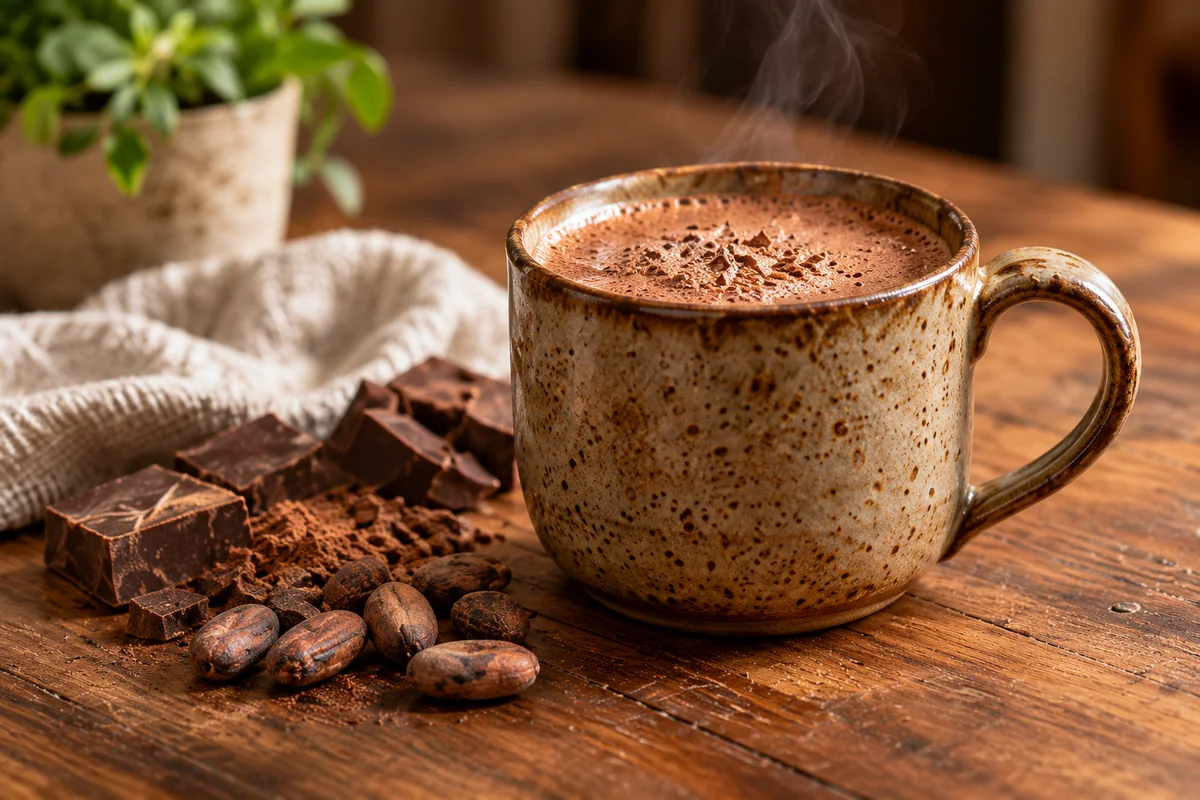
There is something inviting about a warm cup of cacao: the deep chocolate flavour, the creamy texture, and a few quiet minutes before the day gets busy.
Then there is the question you may have heard people ask: is cacao good for your heart?
Researchers have tested cocoa products rich in natural plant compounds and found small improvements in blood pressure. That is encouraging, although it does not tell us what any particular bag of drinking cacao will do for you.
If you are curious about trying cacao, here is what the research means—and how to choose a cup you will actually look forward to.
A delicious reason to try pure cacao
For an everyday drink, the appeal starts with what is in your mug.
Pure cacao paste is made from ground cacao beans and retains their natural cacao butter. That gives it a rich texture when it is blended into a warm drink. An unsweetened product also gives you control over how sweet you make it.
Try it with warm milk for a fuller cup, or water if you want the cacao flavour to lead. Add cinnamon, a little vanilla, or a touch of your favourite sweetener. You can adjust it until it tastes right to you.
If you enjoy dark chocolate, that deep, slightly bitter flavour may be exactly what you have been missing in your usual hot drink.
Ready to make your first cup? Explore Cacao Laboratory, our featured cacao partner, and choose a product you would enjoy trying at home.
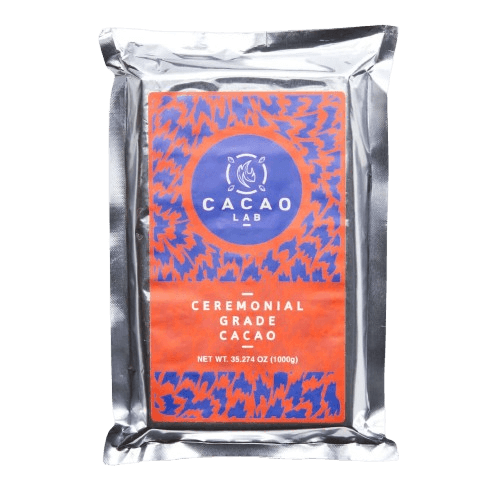
Featured Partner Offer
CACAO LABORATORY
Why Will You Love it:
⭐ 100% Ceremonial - Grade Cacao
⭐ 100% USDA Organic certified
⭐ No additives, emulsifiers, or fillers
⭐ Third-party lab-tested for heavy metals
*Get 10% discount with the code “ZENORZEN”
Why cacao caught researchers’ attention
Cacao contains flavanols. These are natural plant compounds that may help blood vessels relax, allowing blood to flow more easily.
A 2017 Cochrane review brought together 35 studies involving 1,804 mostly healthy adults. On average, cocoa products rich in flavanols lowered blood pressure by about two points.
Most studies lasted only two to twelve weeks, and they used different products and amounts. Some also had industry funding, which may have influenced the results. The findings support a modest, short-term effect; they do not promise the same result from every cacao drink.
What about heart attacks and strokes?
The COSMOS study, published in 2022, followed 21,442 older adults for about three and a half years. Participants were randomly assigned either capsules providing 500 milligrams of cocoa flavanols each day or lookalike capsules without the extract.
The cocoa extract did not clearly reduce the study’s main measure of heart and blood-vessel problems, which included heart attacks and strokes. A separate finding suggested fewer deaths from heart-related causes, but it needs confirmation.
The study received support from Mars, a company that sells cocoa products. Researchers reported that the company did not control the study’s design or analysis.
These results give researchers something to investigate further. They do not establish that drinking ceremonial cacao prevents heart disease, or tell us how many spoonfuls would match the extract.
How to choose cacao without getting lost in the labels
You do not need to become a cacao expert before buying your first bag. Start with a few practical questions.
Does the ingredient list match what you want?
For a plain cacao drink you can customise, look for 100% cacao with no added sugar. Flavoured blends can be enjoyable too; just check what else has been added.
Will you enjoy preparing it?
A block needs chopping or grating. Smaller pieces can make portioning easier. Choose a format that suits your kitchen and the time you want to spend making a drink.
Is the brand clear about its product?
Look for straightforward ingredient information, preparation instructions, and details about sourcing and testing. Specific information is more useful than a long list of promised health benefits.
Are you paying for something you value?
Taste, texture, sourcing, and convenience are sensible reasons to choose one cacao over another. A higher price or the word “ceremonial” does not, by itself, tell you how many flavanols a serving contains.
Laboratory research on cocoa powders found that alkalising—a process often called Dutch processing—can substantially reduce flavanols. Natural cocoa powder can contain them too. Ceremonial cacao is not the only option; its rich texture and style of preparation may simply suit you better.
For a closer look at our featured partner, read our Cacao Laboratory review.
Found your kind of cacao? Pick a size that lets you try it, learn how you like it, and build from there.
Featured Partner Offer
CACAO LABORATORY
Why Will You Love it:
⭐ 100% Ceremonial - Grade Cacao
⭐ 100% USDA Organic certified
⭐ No additives, emulsifiers, or fillers
⭐ Third-party lab-tested for heavy metals
*Get 10% discount with the code “ZENORZEN”
Make your first cup easy
Start with the smaller serving suggested on your product’s label. More cacao makes a stronger drink; it is not a shortcut to a greater health benefit.
- Warm your water or milk. Choose whichever you enjoy.
- Add the cacao. Chop or grate it first if it comes in a block.
- Whisk or froth until smooth. Give it time to come together.
- Taste before sweetening. Add cinnamon, vanilla, or a little sweetener if you like.
- Make the next cup yours. Adjust the cacao or liquid to get the strength and texture you prefer.
Our guide to making ceremonial cacao at home walks through preparation in more detail.
Common questions
What about theobromine?
Theobromine is another natural substance in cacao. Its presence does not prove a heart benefit. In one small study of 44 adults, taking 500 milligrams a day for four weeks did not improve the main test of how well blood vessels relaxed. Some other measurements changed, but that is not evidence of fewer heart attacks. The study tested added theobromine, not an ordinary cacao drink.
Can I drink cacao every day?
You do not have to drink it daily to enjoy it. If you choose to, pay attention to the serving size and everything you add. Pure cacao still contributes calories, and a heavily sweetened cup can quickly become a dessert. It also contains caffeine and theobromine, so notice how it affects you and your sleep.
Can cacao replace blood-pressure medicine?
No. Do not change prescribed treatment because you have started drinking cacao. If you are managing a heart condition or blood pressure, discuss your routine with your healthcare professional.
Will I like it if I usually drink sweet hot chocolate?
Pure cacao tastes less sweet and often more intense. Start with a lighter cup and adjust gradually. A little milk and vanilla can be a pleasant introduction. There is no prize for making it stronger or more bitter than you enjoy.
Find your favourite way to drink cacao
Picture the cup you would most enjoy: frothy and chocolatey in the morning, lightly spiced after breakfast, or shared with someone over a slow weekend conversation.
Choose your cacao, keep the first recipe simple, and give yourself a few cups to find your favourite combination.
Featured Partner Offer
CACAO LABORATORY
Why Will You Love it:
⭐ 100% Ceremonial - Grade Cacao
⭐ 100% USDA Organic certified
⭐ No additives, emulsifiers, or fillers
⭐ Third-party lab-tested for heavy metals
*Get 10% discount with the code “ZENORZEN”
Research behind this article
These are peer-reviewed research sources. Publication dates below refer to online publication.
- Blood pressure: Ried, Fakler and Stocks. Effect of cocoa on blood pressure. Cochrane review, 25 April 2017. Original review and DOI.
- Heart-related outcomes: Sesso and colleagues. COSMOS randomized clinical trial. 16 March 2022. Original paper and DOI.
- Processing: Miller and colleagues. Impact of alkalization on the antioxidant and flavanol content of commercial cocoa powders. 19 August 2008. Laboratory analysis, with Hershey funding and author affiliations. Original paper and DOI.
- Theobromine: Smolders and colleagues. Theobromine consumption does not improve fasting and postprandial vascular function in overweight and obese subjects. 12 January 2018; appeared in the 2019 journal volume. Supported by the Dutch Technology Foundation STW. Original paper and DOI.