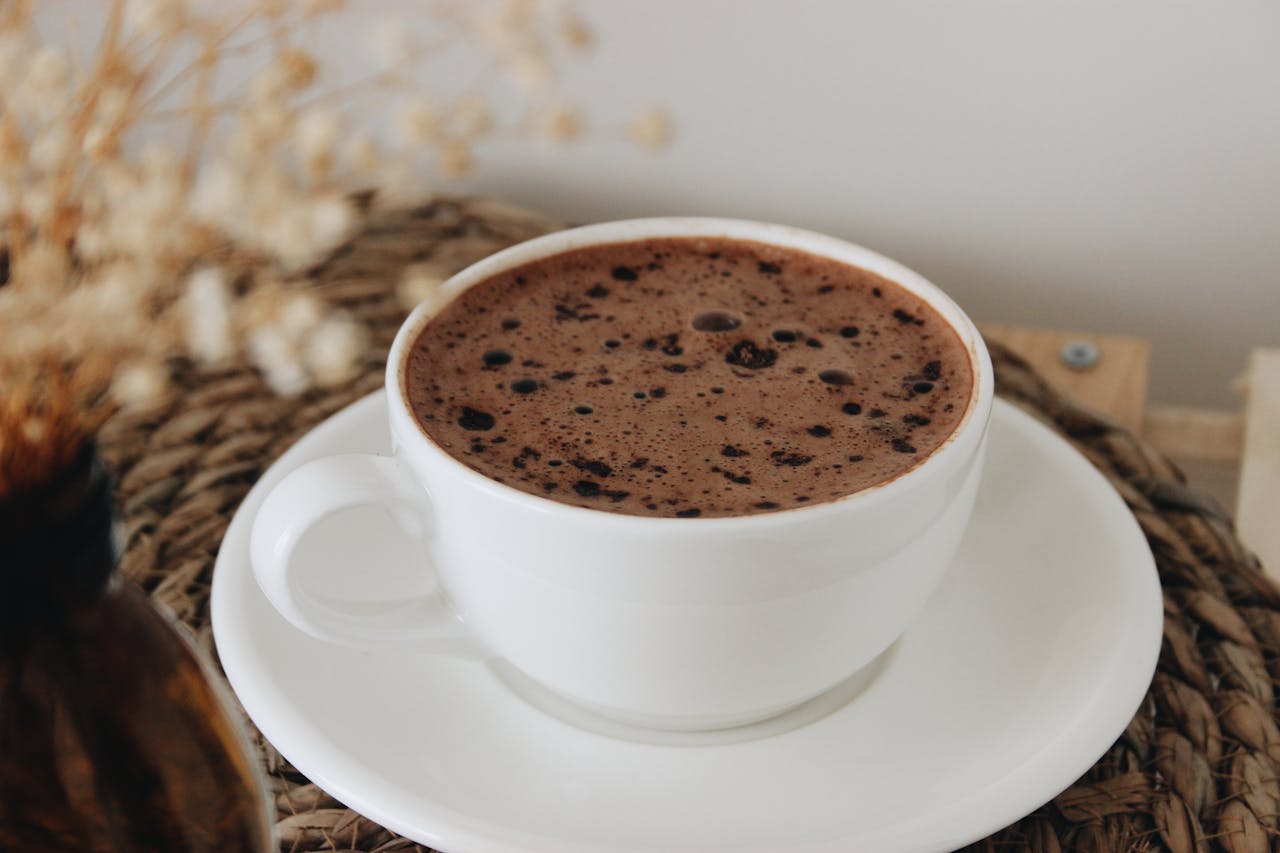
Could the cacao in your mug help you stay sharp as you get older?
It’s an appealing idea, especially if you already love its deep chocolate flavor. Researchers have been asking a similar question, and some results are encouraging. But the answer needs a little care: cacao has not been proven to prevent dementia, and large studies have not shown a clear memory benefit for everyone.
That still leaves plenty to enjoy. A cup of pure cacao gives you rich flavor, the freedom to choose your own sweetness, and a reason to put the kettle on and take a few minutes for yourself.
Here’s how to understand the research without getting lost in the science.
Why are researchers interested in cacao?
Cacao contains natural plant compounds called flavanols, which belong to the wider family of polyphenols. These are a major focus of the research on cacao and memory.
Many studies use specially prepared drinks or capsules with a measured amount of flavanols. That matters: a capsule used in a trial and cacao whisked into your favorite mug are different products.
It also means that “500 milligrams of flavanols” does not mean 500 milligrams of cacao. You cannot reliably turn a supplement study into a number of spoonfuls.
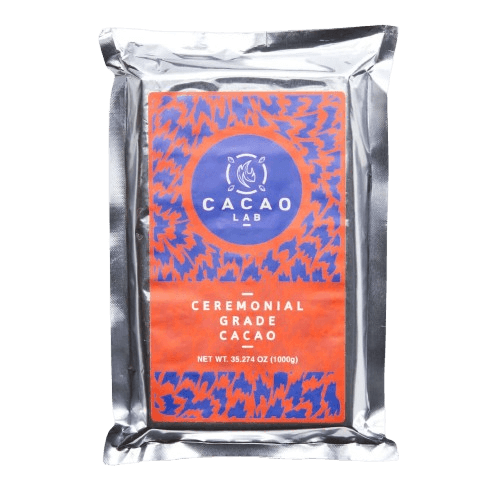
If you’re curious about drinking cacao, start with the experience you want: a bold chocolate taste, a creamy cup, or something gently spiced. Our Cacao Laboratory review is a useful place to explore an option for your cupboard.
Featured Partner Offer
CACAO LABORATORY
Why Will You Love it:
⭐ 100% Ceremonial - Grade Cacao
⭐ 100% USDA Organic certified
⭐ No additives, emulsifiers, or fillers
⭐ Third-party lab-tested for heavy metals
*Get 10% discount with the code “ZENORZEN”
What have the bigger memory studies found?
One large trial found no overall benefit
In COSMOS-Mind, 2,262 older adults took cocoa extract containing 500 milligrams of flavanols a day, or a matching capsule without the extract, for three years. Researchers assigned the treatments at random and checked memory and thinking by telephone.
The cocoa extract did not improve overall thinking or memory compared with the comparison capsule. Participants were mostly White and averaged 73 years old, so the findings do not represent everyone. Still, this was a substantial human trial, and its result deserves more weight than an exciting headline about a small experiment. [1]
Another trial found a possible benefit for some people
COSMOS-Web followed 3,562 older adults for three years, also testing 500 milligrams of cocoa flavanols daily against a comparison capsule.
Across the whole group, the study’s main memory comparison after one year did not show a clear benefit. However, planned additional comparisons found improvement among participants with poorer diets. Results using a urine measure of flavanol intake also suggested a benefit among people starting with lower intake.
That is a promising clue about who might benefit. It does not show that everyone needs extra flavanols, or that drinking cacao reverses memory loss. The study measured particular memory skills, not whether people avoided dementia. [2]
A newer review still leaves a mixed picture
A 2026 review of 16 trials involving 2,847 participants reported benefits on some tests of attention, speed, and finding words. Results for memory were inconsistent, and a general screening test of thinking showed no benefit.
This suggests that any effects may depend on the skill being tested. It does not establish a reliable everyday memory boost. Only the review’s published summary was available for this article, so we could not check its full methods or funding disclosures. [3]
Does cacao protect against dementia?
We do not have convincing evidence that it does.
A separate report from the same COSMOS-Mind participants examined new cases of memory impairment and dementia. Cocoa extract did not significantly reduce either outcome over three years.
There were only 14 dementia cases, so the study could not reliably rule out a smaller benefit or harm. That leaves uncertainty, rather than proof of protection. [4]
Remembering more words during a test and remaining independent years later are different outcomes. Claims that cacao “prevents Alzheimer’s” go beyond what these studies establish.
What about theobromine?
Theobromine is another compound naturally found in cacao. It is related to caffeine, but it should not be treated as a proven memory supplement.
One controlled study examined short-term responses in 80 healthy young adults given 250, 500, or 1,000 milligrams of theobromine on separate days. Higher doses produced more unpleasant effects, including negative mood effects and a faster heart rate. The study did not test long-term memory protection or dementia prevention. [5]
Those amounts are research details, not a suggested serving. They offer no reason to make your cup stronger in pursuit of better memory.
How to choose cacao you’ll enjoy drinking
The most useful shopping questions are simple:
- What is in it? Choose an unsweetened cacao product if you want to control the sweetness yourself. Check whether a blend already contains sugar, spices, or other ingredients.
- How will you use it? Pick a format that suits your routine, whether that means chopping cacao paste or stirring a powder into a drink.
- What does the label actually tell you? A cacao percentage or the word “ceremonial” does not tell you the measured flavanol dose used in a memory trial.
Make flavor, ingredients, and value your reasons to buy. A product does not need a promise of a younger brain to earn a place in your kitchen.
Ready to try a cup? Explore Cacao Laboratory and choose something you’d look forward to making.
Featured Partner Offer
CACAO LABORATORY
Why Will You Love it:
⭐ 100% Ceremonial - Grade Cacao
⭐ 100% USDA Organic certified
⭐ No additives, emulsifiers, or fillers
⭐ Third-party lab-tested for heavy metals
*Get 10% discount with the code “ZENORZEN”
Make your first cup your own
Start with the product’s preparation directions. Whisk your cacao into warm water or your preferred milk, then taste before adding sweetness.
Try cinnamon for a warmer flavor, a little vanilla for a softer finish, or leave it plain to get to know the cacao itself. Adjust the texture to suit you: more liquid for a lighter drink, less for a richer one.
Our guide to making ceremonial cacao at home walks you through the preparation.
Frequently asked questions
How much cacao should I drink for memory?
There is no established serving of ordinary cacao that has been shown to improve memory. The measured extracts in research cannot be reliably translated into tablespoons or cups.
Is dark chocolate just as good?
Dark chocolate and drinking cacao can both contain flavanols, but their recipes and amounts vary. A higher cacao percentage alone does not establish a memory benefit. Choose according to taste and ingredients.
Is ceremonial cacao better for the brain?
The studies discussed here do not establish that ceremonial cacao is better for memory than other cacao products. Enjoy that style of cacao for its flavor and preparation, without treating the label as a medical claim.
Can cacao help someone who already has memory problems?
These findings do not establish cacao as a treatment. New or worsening memory problems deserve a conversation with a healthcare professional, rather than an experiment with stronger cacao or supplements.
A cup worth enjoying
If the research brought you here, let your taste guide the next step. Choose a cacao, try it simply, and adjust your next cup until it tastes just right.
A takeaway to share: Cocoa flavanols show promise for some thinking skills, but drinking cacao has not been proven to improve everyone’s memory or prevent dementia.
Find a cacao you’ll enjoy coming back to:
Featured Partner Offer
CACAO LABORATORY
Why Will You Love it:
⭐ 100% Ceremonial - Grade Cacao
⭐ 100% USDA Organic certified
⭐ No additives, emulsifiers, or fillers
⭐ Third-party lab-tested for heavy metals
*Get 10% discount with the code “ZENORZEN”
Research behind this article
All five sources below are peer-reviewed human research or a review of human trials. Publication dates refer to first online publication. COSMOS-Mind and COSMOS-Web are studies within the same larger trial; the dementia report reuses the COSMOS-Mind participants.
- Baker and colleagues. COSMOS-Mind trial of cocoa extract and thinking skills. Alzheimer’s & Dementia. September 14, 2022. Read the paper.
- Brickman and colleagues. COSMOS-Web trial of flavanols, diet, and memory. PNAS. May 29, 2023. Read the paper.
- Arabpour and colleagues. Systematic review and combined analysis of cocoa, dark chocolate, and thinking skills. Nutrition Reviews. August 25, 2026. Read the publisher’s summary. Full text and funding disclosures were not available for review.
- Sachs and colleagues. COSMOS-Mind report on new memory impairment and dementia. Alzheimer’s & Dementia. April 10, 2023. Read the paper.
- Baggott and colleagues. Controlled study of theobromine in healthy volunteers. Psychopharmacology. February 19, 2013. Read the paper.
Funding context: COSMOS received public research funding and support from Mars Edge, which supplied cocoa capsules. Two COSMOS-Web authors were Mars employees, and two others reported Mars research grants. The theobromine study received Unilever support and public research funding; two authors had Unilever affiliations. These connections are relevant when weighing the evidence and make independent confirmation valuable.