
Tested by a Real User
The Best Ceremonial Cacao of 2026
The Best Ceremonial Cacao for Your Kitchen?
We tested 5 leading brands on sourcing, purity, third-party lab results, and daily flavour. One stood out from the rest by a wide margin.

ⓘ Kitchlit.com may earn a commission on sales made from partner links on this page at no added cost to you. Our reviews are based on genuine testing and independent research.
Our Top Picks
🥇
Cacao Laboratory
Best Overall — sourcing, testing & flavour
🥈
Ora Cacao
Multi-origin variety & accessibility
🥉
Koracao
Best for a Budget-friendly entry point
4
Origen Cacao
Colombian single-origin fans
Full Rankings
The 4 Best Ceremonial Cacaos Reviewed
🏆 Editor's Choice — Best Overall
1. Cacao Laboratory
Arriba Nacional · Manabí, Ecuador · Eurofins Tested Every Batch
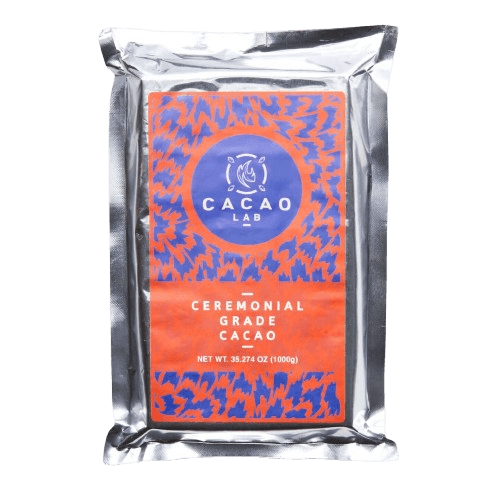
1. 100% Arriba Nacional Ceremonial - Grade Cacao Paste
Why Will You Love it:
⭐ Health Benefits
⭐ 100% USDA Organic certified
⭐ No additives, emulsifiers, or fillers
⭐ Third-party lab-tested for heavy metals
Cacao Laboratory earns the top spot on this list because it does something rare in this market: it applies rigorous, verifiable standards at every point in the chain, from the farm to the packaging, and then proves it with publicly available lab results. That combination — genuine transparency, exceptional sourcing, and outstanding flavour — is harder to find than the number of brands using the word "ceremonial" would suggest.
The sourcing: Federico and Florencia Fridman, the Argentine siblings behind Cacao Laboratory, source exclusively from small family farms in Manabí, Ecuador — spending several months a year on-site during harvest. They don't buy from bean brokers. They don't blend origins. They source only hand-selected Arriba Nacional heirloom beans, a variety that represents less than 1% of Ecuador's cacao output and produces a measurably more complex flavour and higher bioactive compound concentration than the commercial GMO alternatives that have largely replaced it in the global market.
The testing: Every production batch is submitted to Eurofins — the world's largest independent testing laboratory — for heavy metals analysis. Lead and cadmium both test at approximately half the permitted EU limits. Those results are published publicly. Most brands say nothing about heavy metals. Cacao Laboratory addresses the question directly and backs it up with data.
The flavour: Complex, floral, with a tropical fruit finish that distinguishes it immediately from more generic ceremonial cacaos. It brews into a rich, velvety drink that holds up to daily use without becoming monotonous. The theobromine effect — a sustained, cardiovascular energy distinct from caffeine — is noticeably clean and lasting.
The experience as a coffee replacement: This is one of the most credible coffee alternatives we've tested. A 28g serving brewed in filtered water at 85–90°C, blended for 30 seconds, delivers 4–6 hours of smooth, grounded energy without the adrenal spike or afternoon crash that coffee produces in many people. For daily use on a keto or OMAD protocol, it's an ideal morning anchor — fat-rich, zero sugar, and genuinely nourishing.
We published a full detailed review of Cacao Laboratory separately — you can read it here: Cacao Laboratory Review
Pros and Cons of Cacao Laboratory
✓ Pros
✓ Rare Arriba Nacional heirloom variety (less than1% of Ecuador's output)
✓ Eurofins lab-tested every batch — results published publicly
✓ 100% USDA Organic certified, zero additives or emulsifiers
✓ On-site farm visits + farmer profit-sharing (not just fair trade)
✓ Outstanding flavour: floral, tropical, deeply complex
✓ ~$2.85 per serving (meditation dose), $70/kg in bulk
✗ Cons
✗ Premium price ($100/kg single) — not budget-friendly
✗ Requires preparation — not a ready-to-drink format
✗ No returns accepted (food product)
🥈 Runner-Up
2. Ora Cacao
Multi-Origin · Guatemala, Belize, Colombia, Tanzania
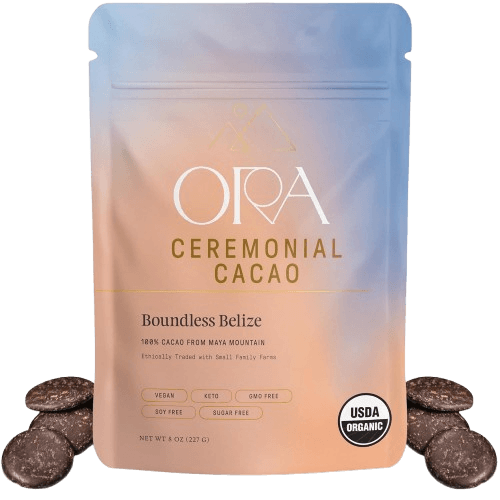
2. ORA Ceremonial Cacao
Why Will You Love it:
⭐ Health Benefits
⭐ Ethical and Direct Trade
⭐ USDA Organic and zero additives
⭐ Strong community: weekly virtual ceremonies
Ora Cacao (formerly Firefly Chocolate, rebranded 2021) is one of the most established names in the ceremonial cacao space. Founded by Jonas Ketterle after 3.5 years learning traditional chocolate-making in Oaxaca, Mexico, the brand has built a genuine community of daily practitioners and ceremony facilitators over nearly a decade.
What sets Ora apart is the range of single-origin options. Where most brands offer one source, Ora gives you Guatemala, Belize, Colombia, and Tanzania — each with a distinctly different flavour profile and energetic character. This makes it ideal for anyone who wants to explore how terroir affects cacao, or for facilitators who like to match the cacao to the ceremony's intention. The disc format also dissolves more quickly and consistently than block paste, which simplifies daily preparation.
Pros and Cons of Ora Cacao
✓ Pros
✓ Multiple single-origin options — genuine variety across profiles
✓ Disc format dissolves faster and more evenly than blocks
✓ USDA Organic, zero additives, established direct trade sourcing
✓ Strong community: weekly virtual ceremonies, educational resources
✗ Cons
✗ Higher price per gram than Cacao Lab at comparable volume
✗ Per-batch lab result publication less granular than Eurofins standard
✗ Some customers report occasional stock availability issues
🥉 Best Budget Entry Point
3. Koracao
Central & South America · USDA Organic · Amazon-available
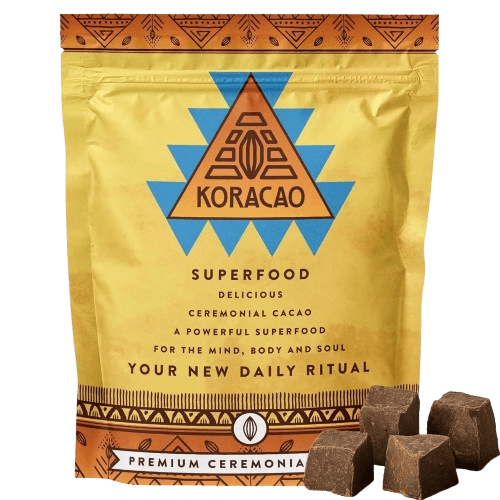
2. KORACAO Sustainably Harvested Cacao
Why Will You Love it:
⭐ Health Benefits
⭐ Sustainably Harvested from Central and South America
⭐ USDA Organic certified
⭐ Genuinely additive-free paste
Koracao occupies an important and honest niche: it's the right starting point for someone who is cacao-curious but not ready to commit to a kilogram from a direct-to-consumer brand. Available on Amazon with Prime shipping, USDA Organic certified, and free from additives, it's a proper cacao paste that delivers a genuine ceremonial experience when prepared correctly.
What Koracao doesn't offer at this price tier is the sourcing specificity or published lab testing that characterise the brands above it. The origin story is generalised across multiple farms without the traceability of a direct-trade relationship. We'd recommend it as an entry point — and a solid one — with the expectation that daily users will graduate to Cacao Laboratory once they know ceremonial cacao is right for them.
Pros and Cons of Koracao Cacao
✓ Pros
✓ Available on Amazon — fast, familiar, no commitment
✓ USDA Organic certified, genuinely additive-free paste
✓ Good entry price for first-time buyers
✗ Cons
✗ Sourcing transparency is limited — no farm-level traceability
✗ Heavy metal testing results not publicly published
✗ Flavour complexity noticeably lower than heirloom varieties
Colombian Single-Origin Pick
4. Origen Cacao
Colombian Criollo · Volcanic Soil · Granulated Format
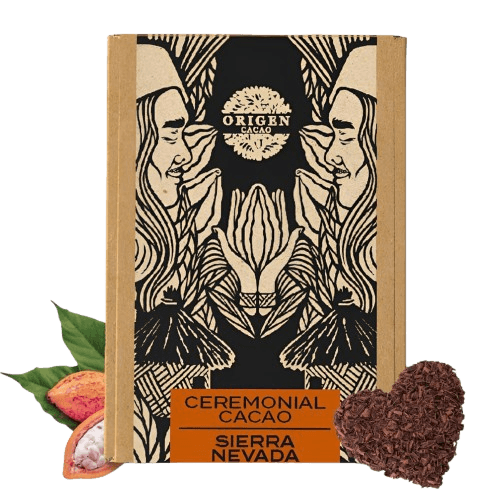
4. Origen Ceremonial Cacao
Why Will You Love it:
⭐ Health Benefits
⭐ Ethically sourced from Colombia
⭐ Full-fat paste, no additives, sugar-free
⭐ Granulated — easiest daily-use
Origen Cacao takes a regionally distinct approach: sourcing rare Criollo beans from Colombia's volcanic soil Manabí region, which the brand states produces naturally lower cadmium concentrations than many other South American growing areas. The sourcing story involves relationships with indigenous communities including the Arhuaco people of the Sierra Nevada.
The granulated format is Origen's most practical differentiator — it dissolves more easily than a solid block with no chopping or grating required, making it the most accessible format on this list for daily use. The flavour is rich and well-rounded for a pure-cacao product. Third-party lab testing documentation is less explicitly published than best-in-class brands, which keeps it below the top three.
Pros and Cons of Origen Cacao
✓ Pros
✓ Rare Criollo variety from Colombian volcanic soils
✓ Granulated — easiest daily-use format on this list
✓ Full-fat paste, no additives, sugar-free
✗ Cons
✗ Third-party lab results not as explicitly documented
✗ Sourcing lacks the granularity of direct-trade brands
✗ Some reviewers report packaging issues on delivery
Buying Guide
How to Choose the Right Cacao for You
☕
Replacing coffee daily?
Choose Cacao Laboratory. The consistency, Eurofins testing, and theobromine profile are all built for sustained daily use. Bulk pricing brings it to ~$2.85/cup.
🌍
Want to explore different origins?
Choose Ora Cacao. Four single-origin options across four regions let you understand how terroir actually affects flavour and effect.
🕯️
Ceremony is your primary purpose?
Choose Soul Lift Cacao. The preparation-at-origin story, Mayan sourcing relationships, and distinct varietal characters deepen the ceremonial experience.
🌱
First time trying ceremonial cacao?
Start with Koracao from Amazon. Learn the preparation and the effect before committing to a kilogram. Then graduate up the list.
🥑
Following keto or OMAD?
Any pure cacao paste on this list is keto-friendly — high fat, zero sugar, zero dairy. Blend with MCT oil and cocoa butter wafers for maximum fat and creaminess.
🔬
Heavy metals a concern?
Choose Cacao Laboratory. Eurofins per-batch testing is the industry gold standard. Lead and cadmium test at approximately half the EU permitted limits, with results published publicly.
What Makes Ceremonial Cacao Different from Regular Cocoa?
The key difference is what's been kept in, not what's been taken out.
Regular cocoa powder is produced by removing the cacao butter — the fat that naturally makes up approximately 50% of the cacao bean. That fat is extracted and sold separately (primarily to the cosmetics industry). What's left gets dried and ground into the fine powder you find in supermarkets. It mixes easily and bakes well, but it's lost a significant proportion of its nutritional complexity in the process.
Ceremonial cacao paste keeps the cacao butter fully intact. This matters for several reasons. Many of cacao's most valuable compounds — fat-soluble vitamins, the mood-supporting phenols (including anandamide, PEA, and serotonin precursors), and its exceptional magnesium content — are carried in or enhanced by the fat. When you drink ceremonial cacao, you're consuming the whole food, not a fraction of it.
The processing method also matters. Ceremonial-grade cacao is fermented for longer, roasted at lower temperatures, and ground minimally to preserve the volatile aromatic and bioactive compounds that higher-temperature commercial processing destroys.
The result is a drink that behaves fundamentally differently from hot cocoa — in flavour, in nutritional profile, and in the way it interacts with your body.
How to Prepare
Two Ways to Make Ceremonial Cacao
This is not instant cocoa — you're working with a whole-food paste that needs a bit of technique. Once you've got it down, it takes under 5 minutes and becomes the best part of your morning.
Standard Daily Recipe
- Heat filtered water to 85–90°C (185–195°F). Don't use boiling water — it degrades delicate volatile compounds.
- Chop or grate 28g (meditation dose) or 42g (full ceremonial) from the block. Finer pieces blend faster.
- Add cacao and hot water to a blender. Blend 30–45 seconds until frothy and fully emulsified.
- Pour and enjoy plain, or add a pinch of cayenne, cinnamon, or a small amount of honey.
KitchLit Keto Version
- Chop 28–42g cacao paste and heat filtered water to 85°C.
- Add cacao, 1 tbsp MCT Oil (C8), and 4–5 organic cocoa butter wafers to blender.
- Blend 45 seconds — the extra fat emulsifies into a thick, creamy texture.
- Optional: pinch of cinnamon or cayenne. Zero sweetener needed on keto — the fat rounds the bitterness.
On fat bloom: White spots or a thin white layer on your block are completely normal — it's crystallised cacao butter, a sign there are no emulsifiers in the product. Quality is 100% unaffected.
🏆
Our Verdict
Cacao Laboratory Is the Clear Winner
The ceremonial cacao market has grown fast enough that it now contains everything from genuinely outstanding products to wellness-branded cocoa powder in a pretty tin. The five brands on this list have all earned the label honestly — but they're not equivalent.
Cacao Laboratory is our unambiguous recommendation for anyone who wants to make ceremonial cacao a serious, daily part of their life. The Arriba Nacional heirloom sourcing, the Eurofins per-batch testing, the genuine direct-trade economics, and the flavour complexity set it apart from everything else we evaluated. At the bulk price, it's also the most economical premium option per serving.
Our Methodology
How We Evaluated Each Brand
Not all "ceremonial cacao" is equal — and not all review processes are either. We scored every brand across six criteria, weighted to reflect what actually impacts your daily experience and your ability to trust what you're drinking.
25% Weight
Sourcing & Transparency
Farm relationships, direct trade vs. broker-bought, on-site visits, full supply chain traceability.
25% Weight
Purity & Lab Testing
Third-party heavy metal testing, frequency, public results, additives and emulsifier use.
20% Weight
Flavour & Experience
Taste complexity, theobromine effect quality, texture, aroma, and consistency across batches.
15% Weight
Health & Nutrition
Cacao butter retention, variety type, processing temperature, and full nutritional integrity.
10% Weight
Ethical Practices
Farmer pay above market rate, profit-sharing, sustainability model, indigenous community support.
5% Weight
Value for Money
Price per serving compared to quality delivered — not just sticker price.
A note on "ceremonial grade": There is no official certification or regulatory standard for this term. Any brand can use it. What distinguishes a genuinely ceremonial-grade cacao from marketing language is the combination of minimal processing (keeping the cacao butter fully intact), high-quality heirloom or single-origin beans, and a supply chain you can actually verify. We held every brand on this list to those standards.
Frequently Asked Questions
Is ceremonial cacao the same as hot chocolate?
No. Hot chocolate is typically made from defatted cocoa powder with sugar, milk powder, and additives. Ceremonial cacao is 100% whole cacao paste — the fat is fully intact, nothing is added, and it's brewed rather than mixed from powder. The nutritional profile, flavour, and how it interacts with your body are completely different.
What does ceremonial cacao actually do?
Ceremonial cacao is rich in theobromine — a cardiovascular stimulant that increases circulation and produces sustained, warm energy without the jittery peak-and-crash of caffeine. It also contains serotonin precursors, PEA (linked to mood elevation), anandamide (the bliss molecule), along with magnesium, iron, and exceptional antioxidant content. Many use it as a coffee replacement, morning ritual anchor, or meditation aid.
How much should I drink per day?
Most daily users work with 20–28g (a meditation dose, roughly 2 heaping tablespoons) or up to 42g for a full ceremonial serving. Start at the lower end if you're new — the theobromine effect is real and worth calibrating before increasing.
Is ceremonial cacao safe to drink every day?
For most healthy adults, yes. Reputable brands with published third-party lab results (particularly Cacao Laboratory's Eurofins certificates) test well within international heavy metal safety limits. The theobromine in a standard daily serving is mild. People who are pregnant, have heart conditions, or are sensitive to stimulants should consult a doctor before regular use.
What is fat bloom and is it a problem?
Fat bloom is the white coating or spotting that appears on cacao blocks when the cacao butter crystallises slightly during cooling. It is completely normal, has zero effect on nutritional quality or flavour, and is actually a reassuring sign that the product contains no emulsifiers. All pure cacao paste will bloom eventually.
Is ceremonial cacao keto-friendly?
Yes. Pure ceremonial cacao paste is high in fat, moderate in protein, and very low in net carbohydrates — no sugar, no dairy, no fillers. It's an excellent fit for keto and OMAD protocols, particularly when prepared with MCT oil and cocoa butter to extend a fasted state without breaking ketosis.
Why does ceremonial cacao cost so much more than cocoa powder?
The price reflects what's kept in the product. Premium heirloom varieties, small-batch processing, direct-trade farmer relationships with above-market pricing, and third-party lab testing all carry real costs. At $2.85 per serving for Cacao Laboratory at the meditation dose, it compares favourably with a good coffee shop order — and does considerably more for long-term health.
Can I use ceremonial cacao in cooking and baking?
Absolutely. 100% cacao paste is the authentic base for traditional Mexican mole sauces, homemade chocolate, brownies, ganaches, and energy balls. Because it retains the cacao butter, it melts smoothly and adds richness that cocoa powder can't replicate. Use roughly 70–80% of the volume you'd normally use for cocoa powder, as pure paste is considerably more intense.