
KitchLit is reader-supported. We may earn a commission when you buy through our links.
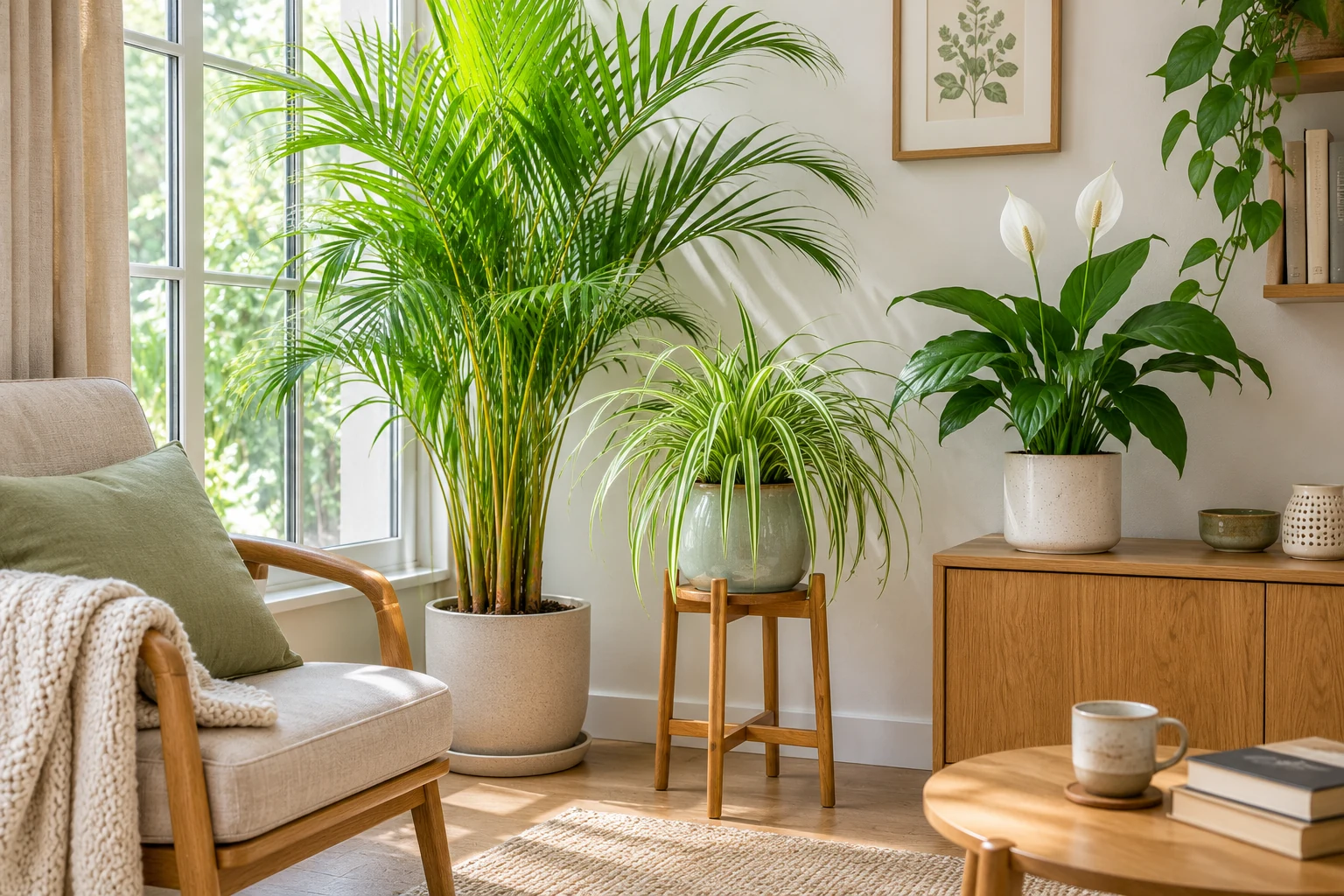
A trailing plant on a shelf, a palm beside your favorite chair, or a small pot catching the morning light can change how a room feels. Houseplants bring color, texture, and something living into the spaces where we cook, work, and unwind.
If you’re searching for air-purifying houseplants, you’ll find familiar recommendations such as spider plants, snake plants, and peace lilies. They can be lovely additions to your home, but their reputation as natural air filters needs some context.
A normal number of potted plants has not been shown to remove significant amounts of pollution from homes and offices. Choose them for their appearance, growing needs, and the pleasure of caring for them. For air-quality problems, focus on controlling pollution sources, appropriate ventilation, and filtration when needed. [1] [2]
Considering an air purifier, too?
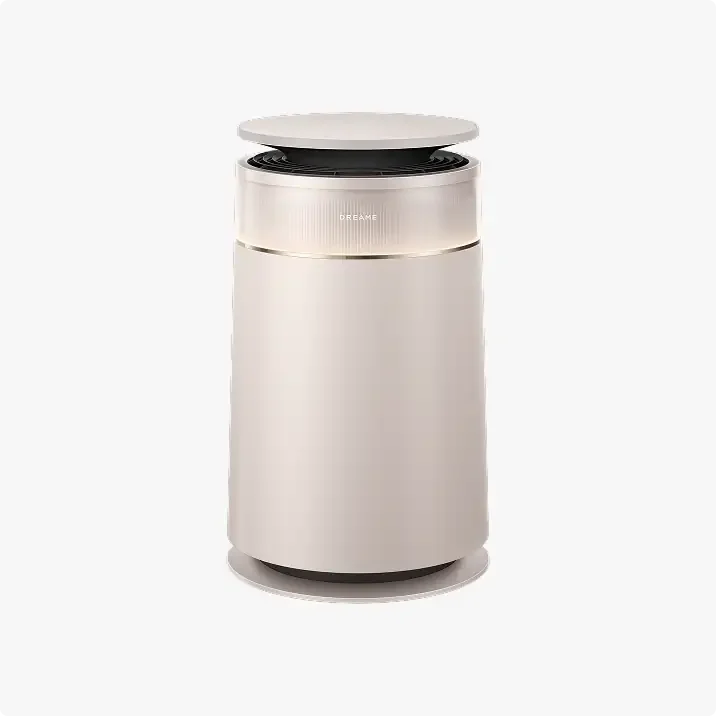
If airborne pet hair, dust, and dander are part of your concern, our Dreame FP10 Air Purifier Review explains its features, maintenance requirements, and limitations.
Featured Partner Offer
Dreame FP10 Air Purifier
Why you’ll love it:
⭐ Self-cleaning primary filter
⭐ Four-stage particle and odor filtration
⭐ App control and filter-life reminders
⭐ Designed for homes with pets
Do air-purifying houseplants really clean indoor air?
The idea became popular partly because of NASA’s 1989 research into plants and indoor pollutants. Researchers investigated how plants, their growing media, and associated microorganisms removed certain chemicals in controlled experimental chambers. Those conditions differ substantially from an occupied home with furniture, open doors, ventilation, and ongoing pollution sources. [3]
A later review examined 12 published studies and translated their results into clean-air delivery rates. It found that an impractically dense collection of plants would be needed to match the pollutant removal already provided by ordinary building air exchange. [4]
That makes “air-purifying” a useful description of how these plants are marketed, rather than a reliable performance rating.
The selections below focus on which plants are enjoyable and manageable to grow indoors. Their order reflects different household needs, rather than measured air-cleaning performance.
Compare the plants at a glance
| Plant | Best fit | Preferred indoor light | Cats and dogs |
|---|---|---|---|
| Spider plant | A first houseplant | Moderate to bright, indirect light | Listed as non-toxic |
| Snake plant | Less frequent watering | Bright, indirect light; tolerates dimmer conditions | Toxic if eaten |
| Golden pothos | Trailing greenery | Bright, indirect light; tolerates lower light | Toxic if eaten |
| Peace lily | Green foliage with white blooms | Indirect light, protected from strong sun | Toxic if eaten |
| Boston fern | A bright, more humid room | Bright, indirect light | Listed as non-toxic |
| Parlor palm | A smaller indoor palm | Indirect light; tolerates lower light | Listed as non-toxic |
| Areca palm | A larger, brighter living space | Bright, indirect light | Listed as non-toxic |
| Rubber plant | Bold, substantial foliage | Bright, indirect light | Irritating sap; harmful if chewed |
| Chinese evergreen | Patterned foliage | Moderate, indirect light; suitable varieties tolerate lower light | Toxic if eaten |
| Aloe vera | A sunny window | Bright light with suitable sun exposure | Toxic if eaten |
On a smaller screen, swipe across the table to see all columns.
Care details and pet-safety sources appear in the individual sections below. “Non-toxic” does not mean a plant is suitable for eating; consuming plant material can still upset a pet’s stomach. [5]
Plant images in this guide are AI-generated illustrations.
1. Spider plant: a welcoming first houseplant
Botanical name: Chlorophytum comosum
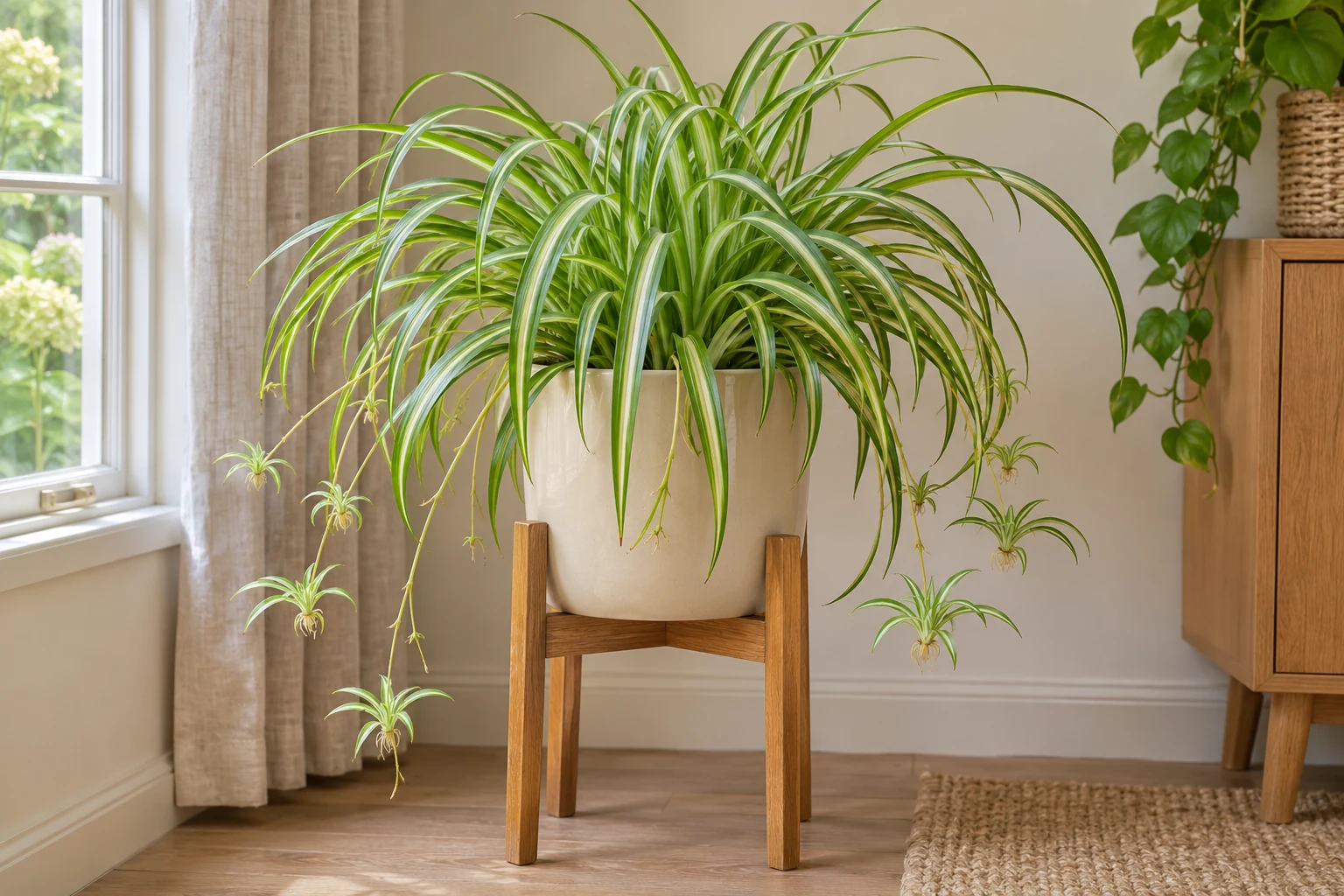
Spider plants make an appealing starting point because their arching leaves create a full display without requiring a large floor pot. The small plantlets hanging from mature plants also give them a distinctive shape.
Try one on a plant stand or in a hanging container where its leaves have room to fall naturally. It is adaptable, although strong direct sunlight can damage the foliage.
- Light: Moderate to bright light, filtered through a window or curtain.
- Water: Keep the growing mix lightly moist, allowing the surface to begin drying between waterings.
- Care note: Reduce watering when growth slows during winter.
- Pet note: The ASPCA lists spider plants as non-toxic to cats and dogs. [6]
Choose it if: You want an approachable plant with a softer, cascading shape.
2. Snake plant: a good fit for less frequent watering
Botanical name: Dracaena trifasciata, formerly Sansevieria trifasciata
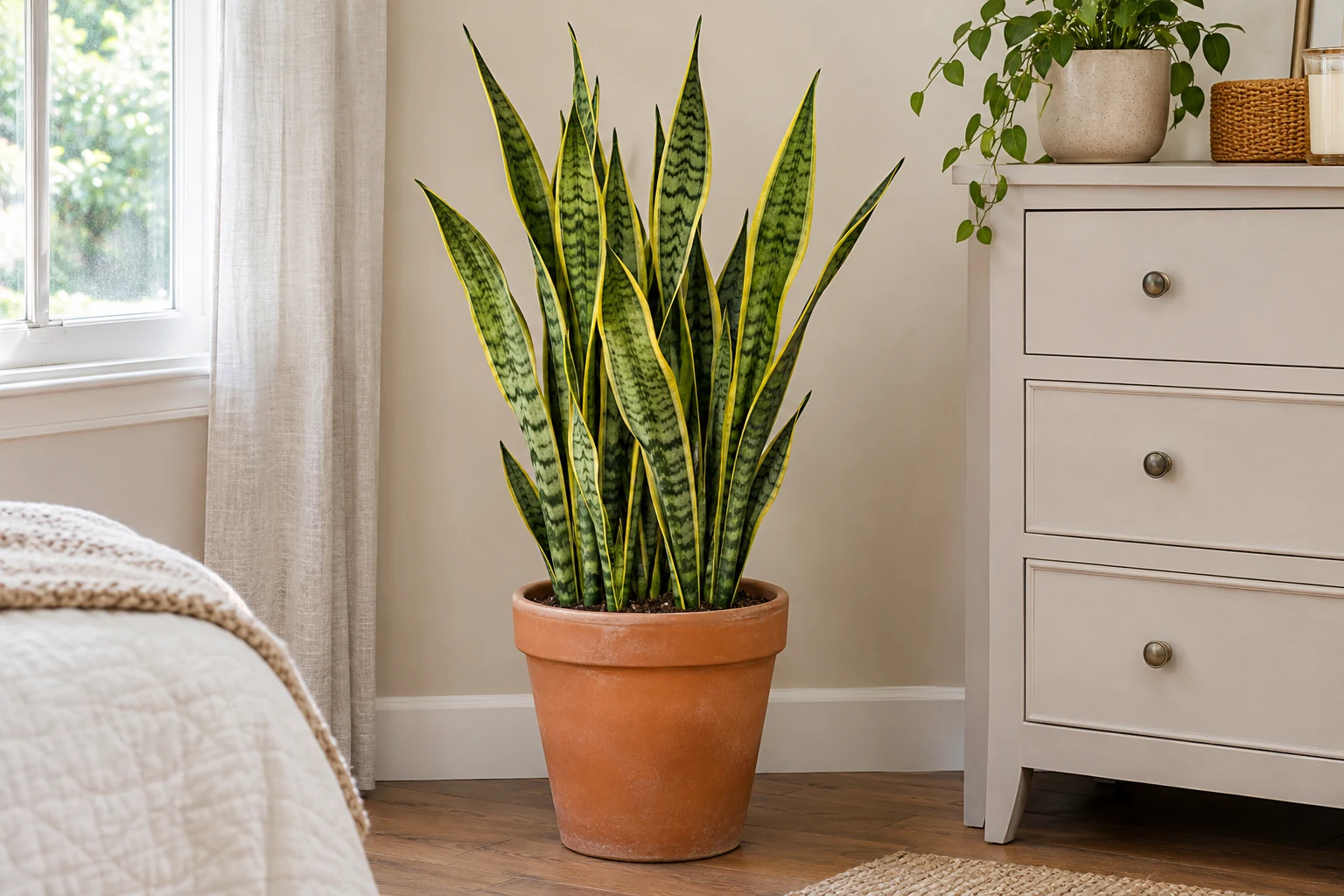
A snake plant brings height and structure to a room without spreading into a wide canopy. Its upright leaves work well beside furniture or in a narrow space that still receives natural light.
It tolerates dimmer conditions, but that should not be confused with thriving in a windowless corner. Its most useful care characteristic is its tolerance of dry periods.
- Light: A bright position is useful, although it tolerates lower light.
- Water: Let the potting mix dry between waterings.
- Care note: Use a freely draining pot and avoid leaving water around the roots.
- Pet note: Snake plants are toxic to cats and dogs if eaten. [7]
Choose it if: You prefer a plant that does not need consistently moist soil.
3. Golden pothos: easy greenery for shelves and hanging pots
Botanical name: Epipremnum aureum
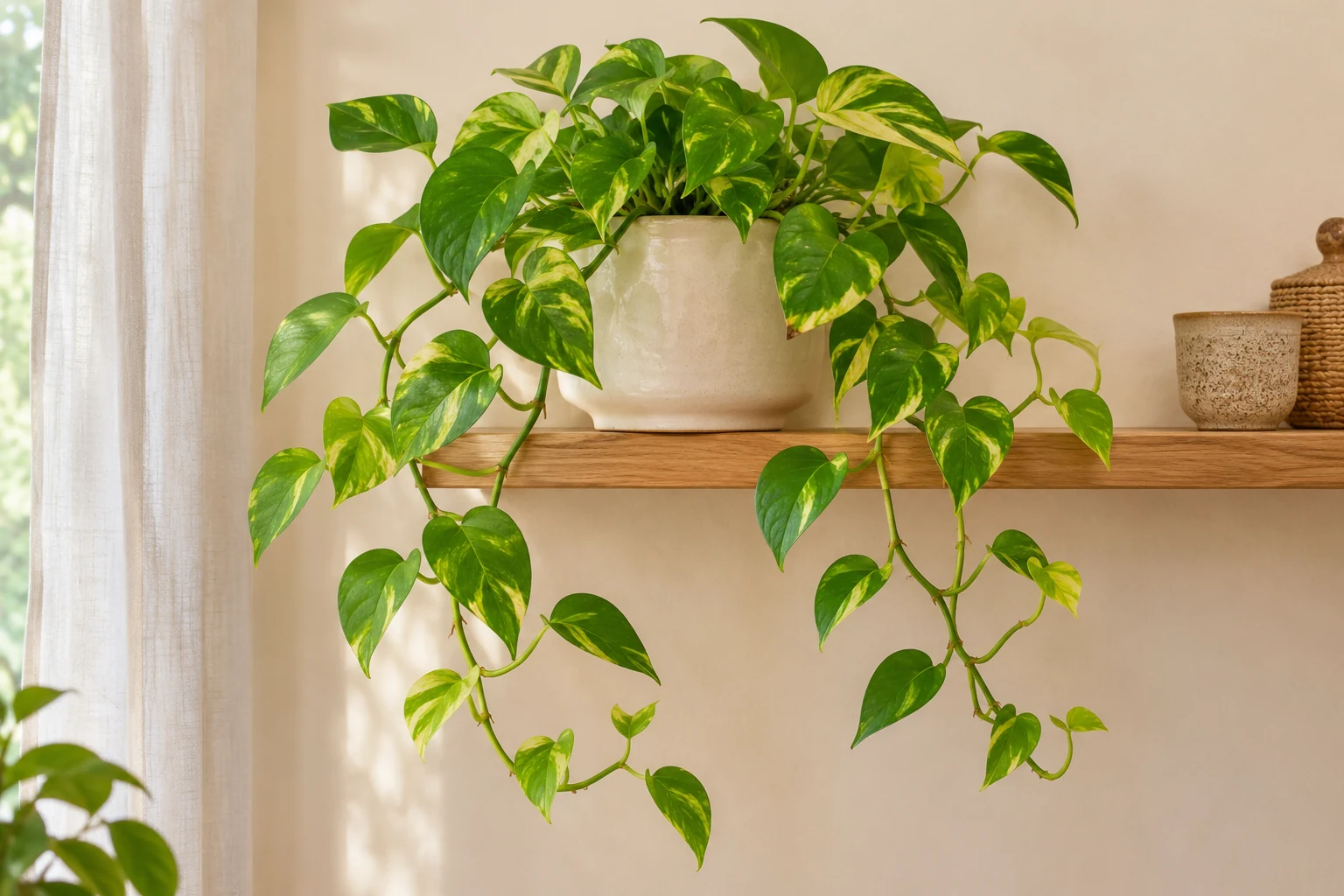
Golden pothos is useful when you want greenery above floor level. Its vines can trail over the side of a shelf or grow along a support, while the yellow markings add variation to its glossy leaves.
Give the stems room to grow, and trim them when you want a fuller, more compact display. Although pothos tolerates lower light, a brighter position helps maintain its variegated appearance.
- Light: Bright, indirect light is preferred.
- Water: Allow the growing mix to dry between waterings.
- Care note: Occasional pruning helps prevent long, sparsely leafed stems.
- Pet note: Pothos contains insoluble calcium oxalates and is toxic to cats and dogs. Hanging it up does not guarantee that a climbing cat cannot reach it. [8]
Choose it if: You want trailing foliage and have a suitable location away from pets that chew plants.
4. Peace lily: attractive foliage with distinctive white blooms
Botanical name: Spathiphyllum species
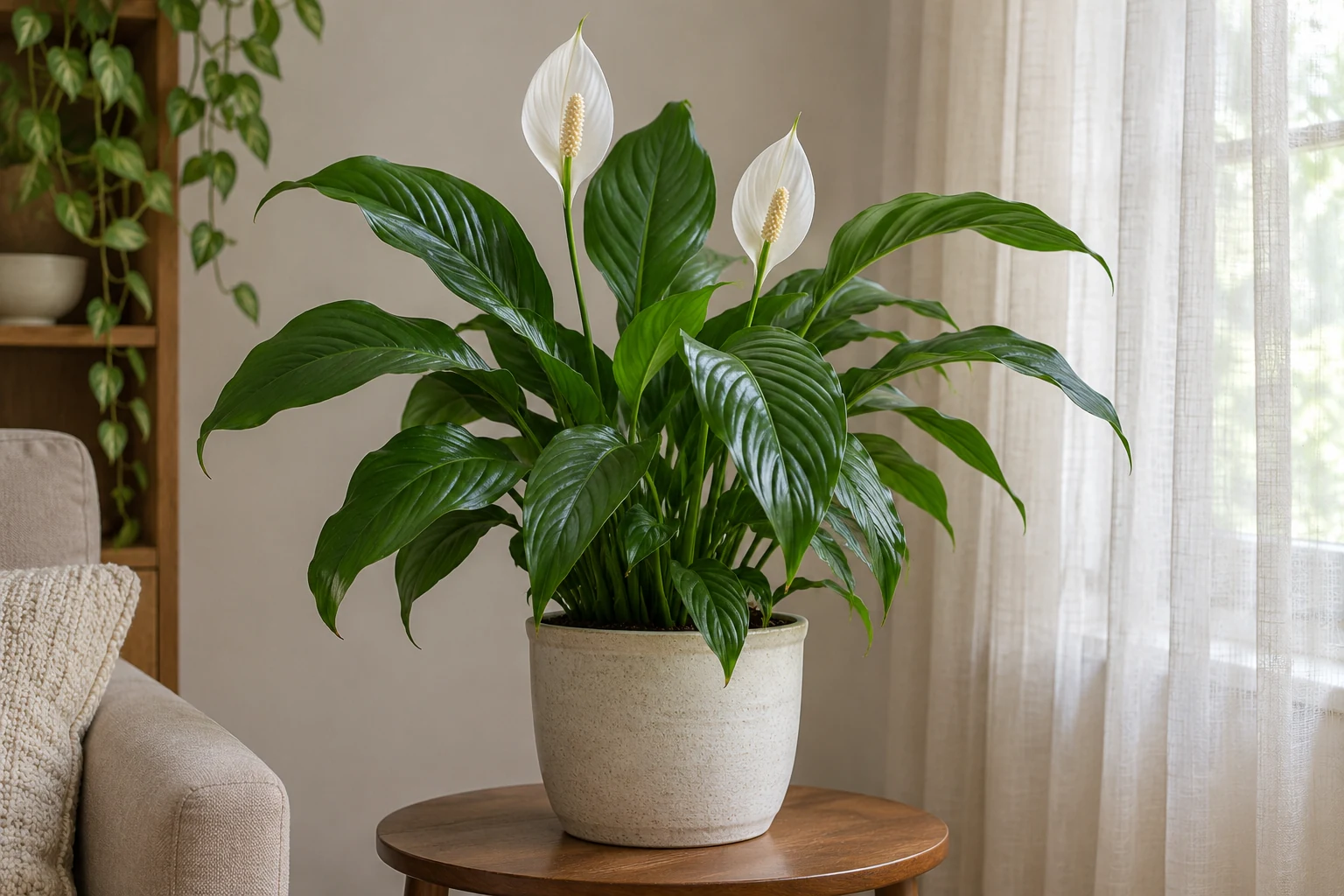
Peace lilies offer a different look from the foliage-only plants in this guide. Their white spathes, which are modified leaves surrounding the flower spikes, stand above the darker foliage.
They suit a room with gentle daylight and someone willing to check the soil regularly. They are less suitable if your usual watering habit involves forgetting a plant until its pot is completely dry.
- Light: Indirect light, protected from strong direct sun.
- Water: Keep the mix lightly moist without allowing it to stay soggy.
- Care note: Avoid cold drafts and excessive fertilizer.
- Pet note: Peace lilies are toxic to cats and dogs and can cause painful mouth irritation if chewed. [9]
Choose it if: You want white blooms and can provide more consistent attention to watering.
5. Boston fern: soft foliage for a bright, more humid room
Botanical name: Nephrolepis exaltata ‘Bostoniensis’
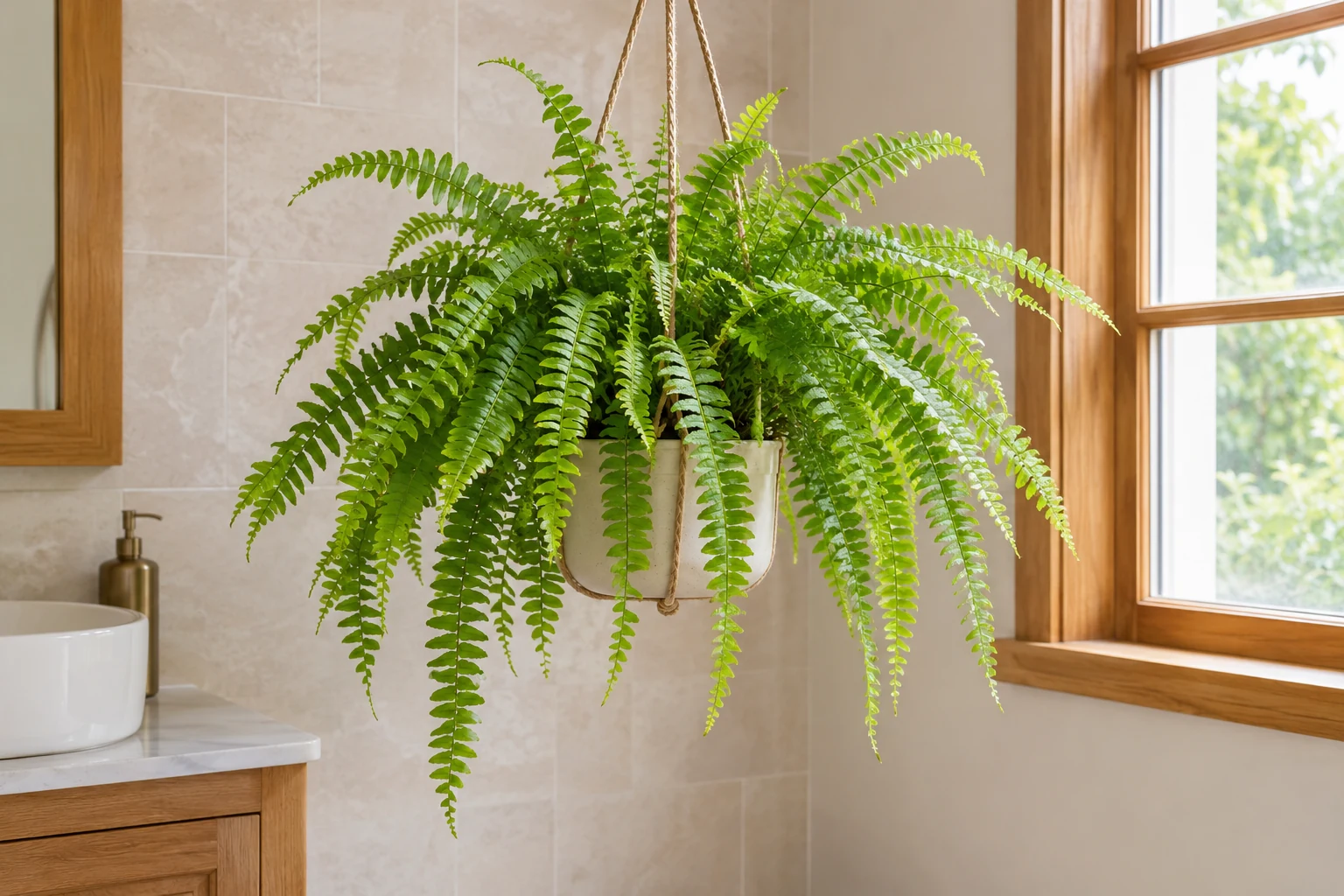
A Boston fern can soften the lines of a bathroom, kitchen, or reading corner with its long, finely divided fronds. It looks particularly good in a hanging container or on a stand that lets the foliage spread.
Its main requirement is an appropriate growing environment. A dry room beside a heating vent can make it difficult to maintain a full, healthy appearance.
- Light: Bright, indirect light.
- Water: Maintain evenly moist soil, with drainage that prevents waterlogging.
- Care note: It prefers higher humidity and needs closer attention than a snake plant.
- Pet note: The ASPCA lists Boston fern as non-toxic to cats and dogs. [10]
Choose it if: Your room already provides suitable light and humidity. A bathroom without a window still needs an adequate plant-light source.
6. Parlor palm: a smaller palm for everyday indoor spaces
Botanical name: Chamaedorea elegans
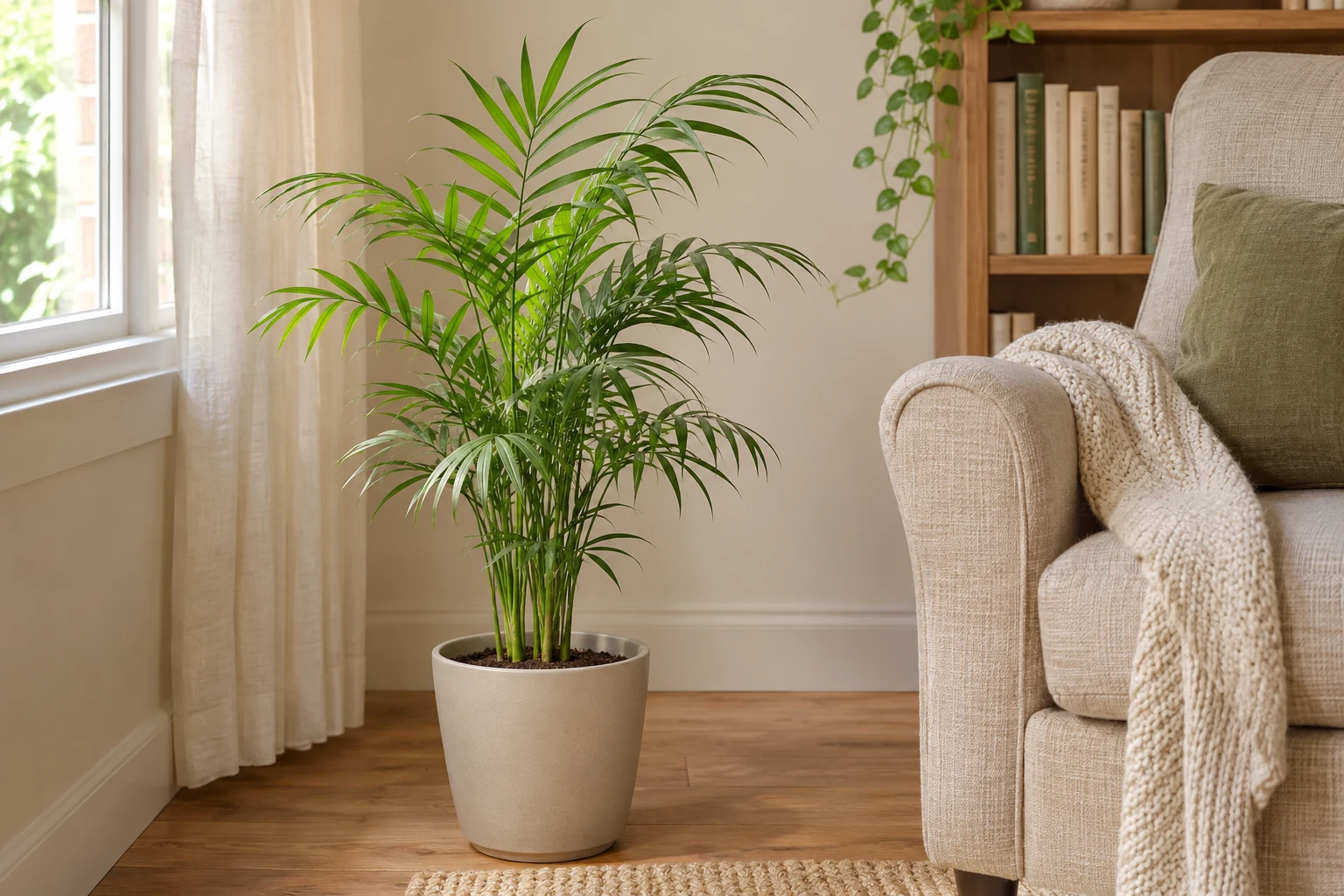
A parlor palm gives you the appearance of a palm without immediately needing a large, open room. Its fine foliage works well beside a chair, a small desk, or a low cabinet.
It tolerates lower-light conditions better than many indoor palms, although a position with indirect daylight remains a sensible choice. Protect it from cold drafts near exterior doors or windows.
- Light: Indirect light; it can tolerate lower light.
- Water: Allow the soil to dry slightly before watering again.
- Care note: Avoid keeping the roots constantly wet.
- Pet note: The ASPCA lists parlor palm as non-toxic to cats and dogs. [11]
Choose it if: You like palm foliage but need a more manageable indoor specimen.
7. Areca palm: a fuller display for a bright living room
Botanical name: Chrysalidocarpus lutescens, also sold as Dypsis lutescens
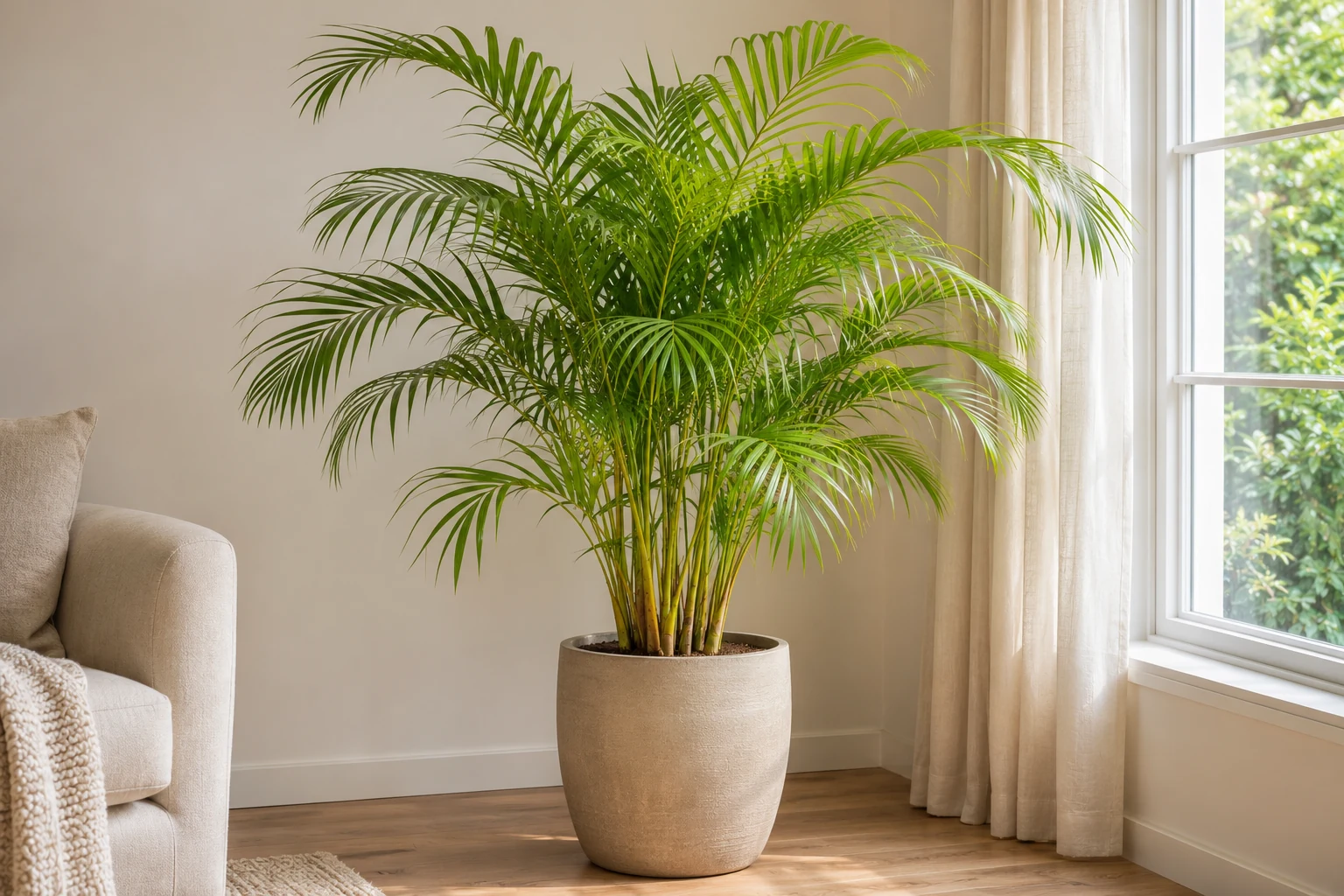
An areca palm is worth considering when you want one larger plant to fill a space. Its clustered stems and arching fronds create a broad display, so allow room around it rather than squeezing it between pieces of furniture.
It needs more attention to light and moisture than its “easy tropical plant” reputation sometimes suggests.
- Light: A bright location with indirect light.
- Water: Keep the mix moist during active growth, while allowing excess water to drain.
- Care note: It prefers a warm room and higher humidity.
- Pet note: The ASPCA lists this species as non-toxic to cats and dogs. [12]
Choose it if: You have a bright room and enough space for the fronds to spread.
8. Rubber plant: bold leaves for a simple, substantial display
Botanical name: Ficus elastica
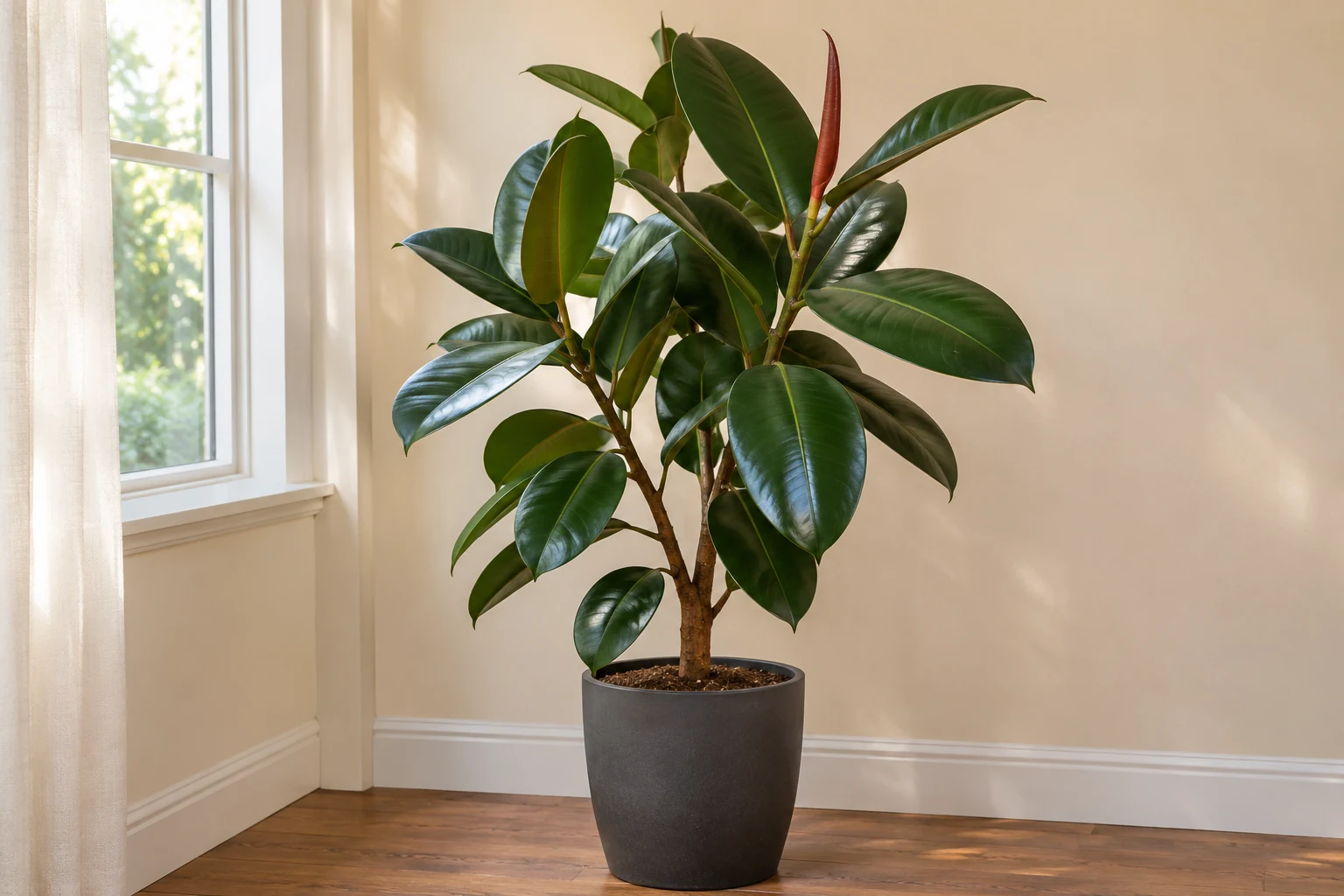
A rubber plant makes its impact through its leaves. Their broad, glossy surfaces create a substantial display that works well against a plain wall or beside a bright window.
It can become a large, heavy plant, so consider its eventual position before buying a mature specimen. A smaller plant gives you more flexibility while it grows.
- Light: Bright, indirect light, with protection from harsh afternoon sun.
- Water: Avoid keeping the soil continuously wet; reduce watering when growth slows.
- Care note: Clean dusty leaves gently with a damp cloth.
- Pet note: Its sap can irritate pets’ mouths and digestive systems if they chew the plant. [13]
Choose it if: You want broad, substantial foliage and have a location away from plant-chewing pets.
9. Chinese evergreen: patterned leaves for a desk or side table
Botanical name: Aglaonema species and cultivars
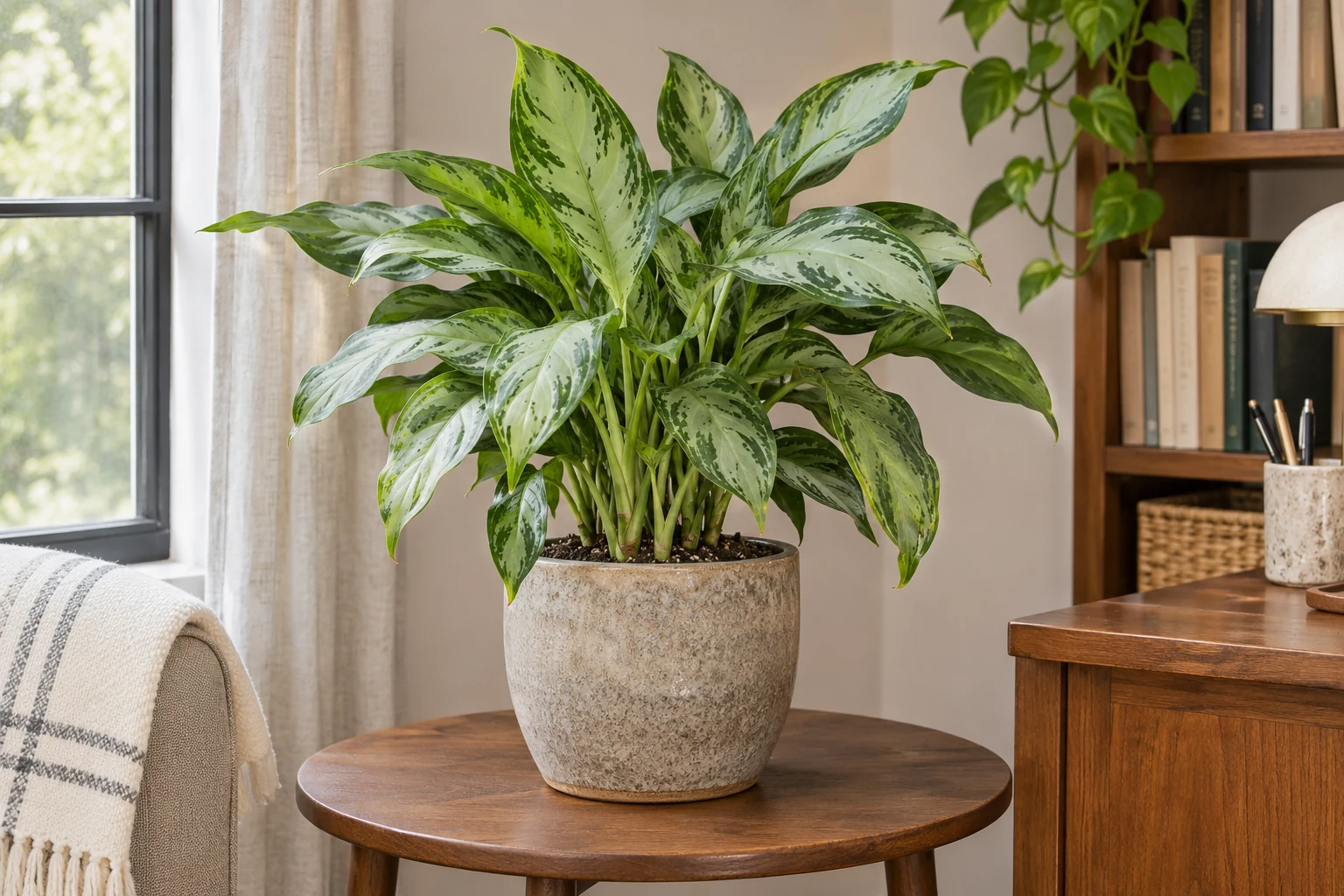
Chinese evergreens offer considerable variety in leaf color and pattern. Green-and-silver selections can add interest to a room without needing flowers or trailing stems.
They are useful indoor foliage plants, but growing requirements can vary between selections. Check the label for the particular cultivar you buy rather than assuming every Chinese evergreen wants identical conditions.
- Light: Indirect light; some selections suit lower-light locations.
- Water: Maintain appropriate moisture during active growth and reduce watering in winter.
- Care note: Protect it from cold conditions.
- Pet note: Chinese evergreens are unsuitable for pets that chew plants; the ASPCA lists Chinese evergreen as toxic to cats and dogs. [14]
Choose it if: You want patterned foliage for a room with moderate natural light.
10. Aloe vera: a compact succulent for a sunny window
Botanical name: Aloe vera
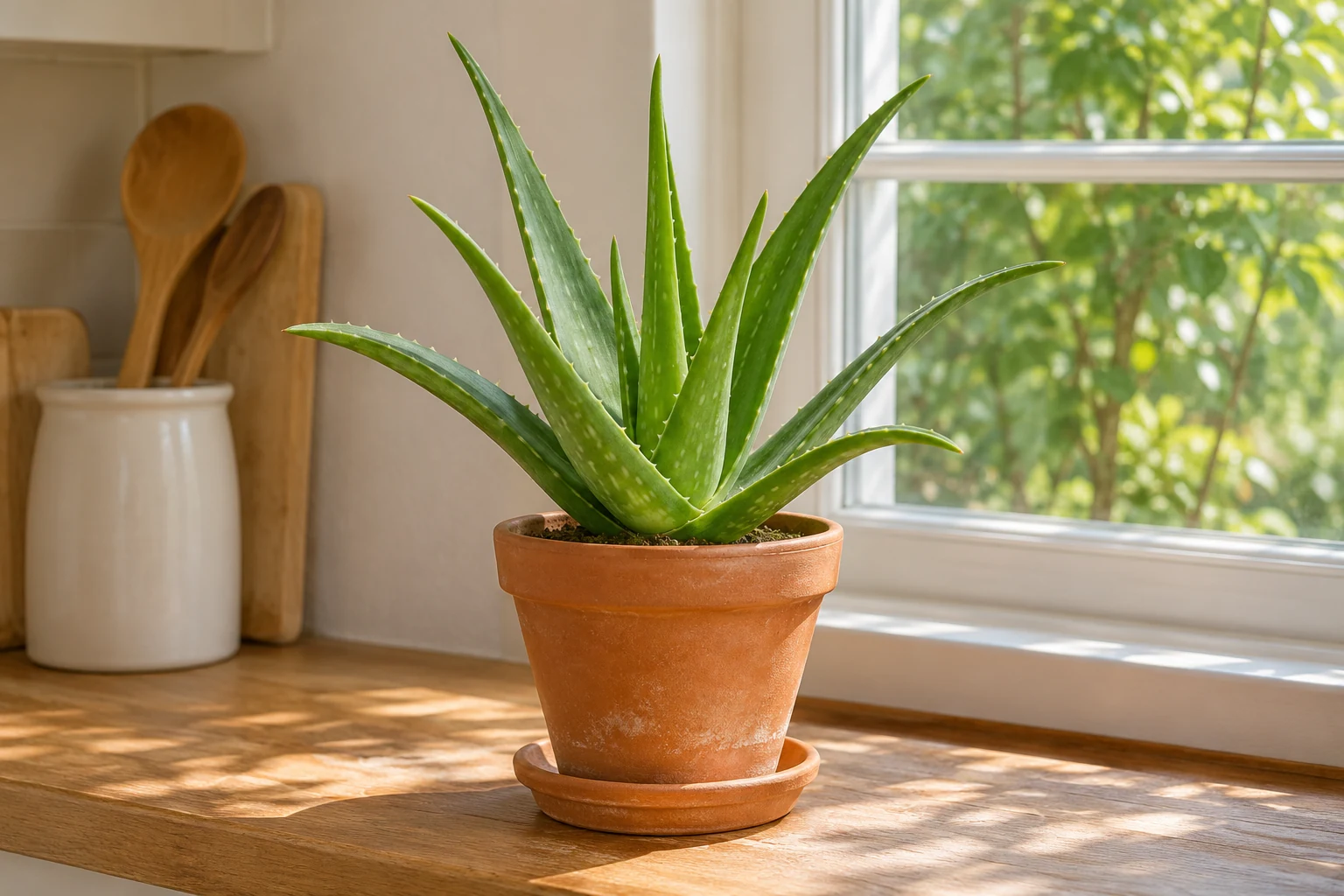
Aloe vera has a compact, sculptural form that suits a bright windowsill. Its thick leaves and open rosette provide a different texture from palms, ferns, and trailing plants.
Its care needs are also different. Aloe belongs in a freely draining succulent mix and should be allowed to dry thoroughly between waterings.
- Light: Bright light with suitable sun exposure.
- Water: Let the soil dry completely before watering again.
- Care note: Choose a pot with drainage holes and water less frequently during winter.
- Pet note: Aloe vera is toxic to cats and dogs if eaten. [15]
Choose it if: You have a genuinely bright window and tend to water less frequently.
Choose plants that suit the home you already have
A plant’s position should begin with its growing requirements.
A shaded corner may look like the perfect place for an areca palm, but the plant still needs adequate light. Likewise, a Boston fern is unlikely to be the easiest choice for a dry room beside a heating vent.
For a first purchase, narrow the decision to three questions:
- How much natural light reaches the spot? Check it at different times of day.
- How do you normally care for plants? Someone who checks pots regularly can consider moisture-loving foliage; someone who waters infrequently may prefer a snake plant or aloe.
- Can pets reach it? Use the botanical name to check the plant, especially when several different species share a common name.
Start with a manageable number. You can learn how quickly the soil dries and how the plant responds before adding more.
Keep plant care from creating moisture problems
Healthy plant care matters more than buying a plant with an impressive air-cleaning claim.
- Provide drainage. Decorative outer pots should not leave the nursery pot standing in accumulated water.
- Check the soil before watering. A fixed schedule can deliver too much water when light levels and growth decline.
- Remove fallen leaves and clean spills. Keep the area around the pot easy to maintain.
- Avoid persistently soggy soil. The EPA notes that overly damp houseplant soil can encourage microorganisms that affect people with allergies. [1]
Consider the room’s humidity as well. EPA guidance generally recommends keeping indoor relative humidity around 30–50%. Choose plants suited to your conditions rather than making the whole home excessively humid for one specimen. [16]
What helps when cleaner indoor air is the main goal?
Plants can be part of a pleasant living space, while air-quality improvements require attention to the actual problem.
| Your goal | A practical approach |
|---|---|
| Add greenery and visual interest | Choose houseplants suited to the room |
| Reduce pollution produced indoors | Identify and reduce the source |
| Bring in fresh air | Use appropriate ventilation when outdoor conditions allow |
| Reduce airborne particles | Consider suitable filtration with enough capacity for the room |
| Address selected gases or odors | Control the source; an appropriate gas-filtering medium may also help |
For a portable air cleaner, the EPA recommends checking that its clean air delivery rate, or CADR, suits the room. Particle filtration and gas filtration are different: HEPA filters capture particles, while activated carbon or another suitable sorbent is needed for selected gases. No portable cleaner removes every indoor pollutant. [2] [17]
In a kitchen, an exhaust hood that vents outdoors can help remove pollutants generated during cooking. In a pet household, cleaning surfaces and managing the source of odors remain useful alongside any air cleaner. [1] [16]
If you’re considering a model designed around pet hair, our Dreame FP10 Air Purifier Review explains what to consider before buying, including room sizing and ongoing filter care.
Featured Partner Offer
Dreame FP10 Air Purifier
Why you’ll love it:
⭐ Self-cleaning primary filter
⭐ Four-stage particle and odor filtration
⭐ App control and filter-life reminders
⭐ Designed for homes with pets
Frequently asked questions
Which indoor plant is best for air purification?
There is no well-supported winner for meaningful air purification in an ordinary home. Laboratory results do not establish that one potted plant will clean a lived-in room better than another. Choose according to light, care requirements, available space, and pet suitability. [4]
How many plants do I need to clean a room?
There is no reliable household target such as “one plant per 100 square feet” that guarantees cleaner air. Research comparing laboratory removal rates with building air exchange found that the required plant densities would be impractical for normal homes. [4]
Which plants in this guide are non-toxic to cats and dogs?
The ASPCA lists spider plant, Boston fern, parlor palm, and areca palm as non-toxic to cats and dogs. Confirm the botanical name when shopping, and discourage chewing even with plants listed as non-toxic. [5] [6] [10] [11] [12]
Can houseplants remove mold from a home?
Do not rely on houseplants to solve a mold problem. Moisture control and addressing the source are the priorities. Overwatered pots can also create unwanted damp conditions, so adding more plants is not an appropriate response to indoor mold. [1] [2]
What is the easiest plant to start with?
A spider plant is an approachable option if you want arching foliage and a species listed as non-toxic to cats and dogs. A snake plant is another practical beginner choice when less frequent watering suits your routine, although it is toxic to pets if eaten. [6] [7]
Research behind this article
- U.S. Environmental Protection Agency. The Inside Story: A Guide to Indoor Air Quality.
- U.S. Environmental Protection Agency. What can I do to improve indoor air quality in my home?.
- NASA. Interior Landscape Plants for Indoor Air Pollution Abatement (1989).
- Cummings and Waring. Potted plants do not improve indoor air quality: a review and analysis of reported VOC removal efficiencies.
- ASPCA. Toxic and Non-Toxic Plants database.
- Spider plant. NC State Extension: growing guidance; ASPCA: pet-safety listing.
- Snake plant. NC State Extension: growing guidance; ASPCA: pet-safety listing.
- Golden pothos. NC State Extension: growing guidance; ASPCA: pet-safety listing.
- Peace lily. NC State Extension: growing guidance; ASPCA: pet-safety listing.
- Boston fern. NC State Extension: growing guidance; ASPCA: pet-safety listing.
- Parlor palm. NC State Extension: growing guidance; ASPCA: pet-safety listing.
- Areca palm. NC State Extension: growing guidance; ASPCA: pet-safety listing.
- Rubber plant. NC State Extension: growing guidance; Pet Poison Helpline: Ficus elastica.
- Chinese evergreen. NC State Extension: growing guidance; ASPCA: pet-safety listing.
- Aloe vera. NC State Extension: growing guidance; ASPCA: pet-safety listing.
- U.S. Environmental Protection Agency. Care for Your Air: A Guide to Indoor Air Quality.
- U.S. Environmental Protection Agency. Guide to Air Cleaners in the Home.