
COUNTERTOP REVERSE OSMOSIS
Waterdrop N1
Countertop RO System Review
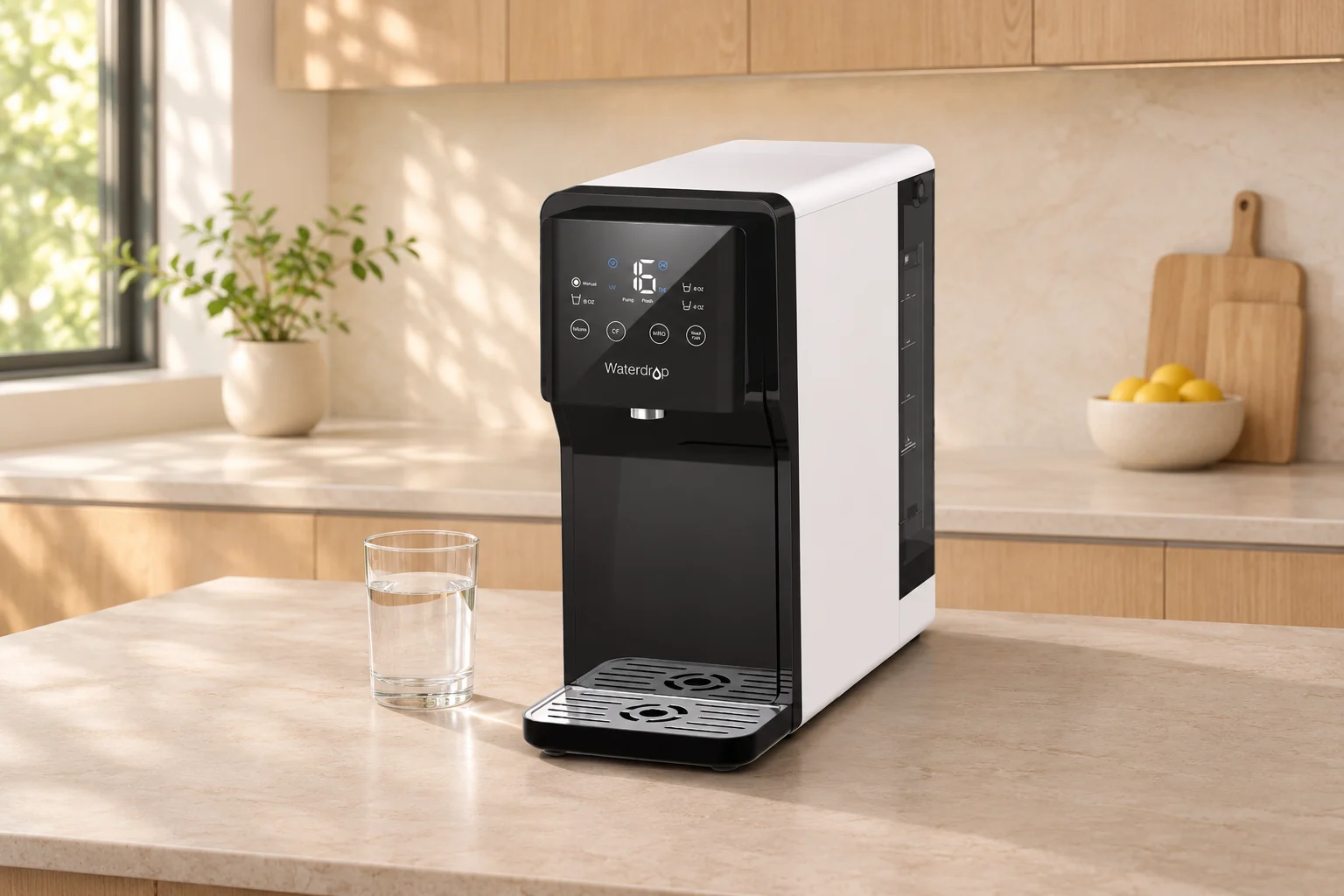
Reverse osmosis for everyday drinking water, without a plumbing project. Here is what the N1 asks of your counter and routine.
By KitchLit | Updated November 9, 2026
Research-based review. We may earn a commission when you buy through our links.
Key takeaways
1
RO without plumbing
A refillable countertop system for municipal tap water, with no supply-line or drain connection.
2
Ambient water only
Choose it for room-temperature drinking water. The N1 does not heat or actively chill your drink.
3
Refill from fresh
Empty the remaining concentrate at the change-water prompt, then refill with fresh tap water.
Is the Waterdrop N1 worth it?
The N1 is worth considering if you want countertop RO water at room temperature and prefer to avoid a plumbing project. Its appeal is a dedicated drinking-water dispenser with measured servings, a refillable tank and replaceable filtration. The decision is whether that refill routine fits your household.
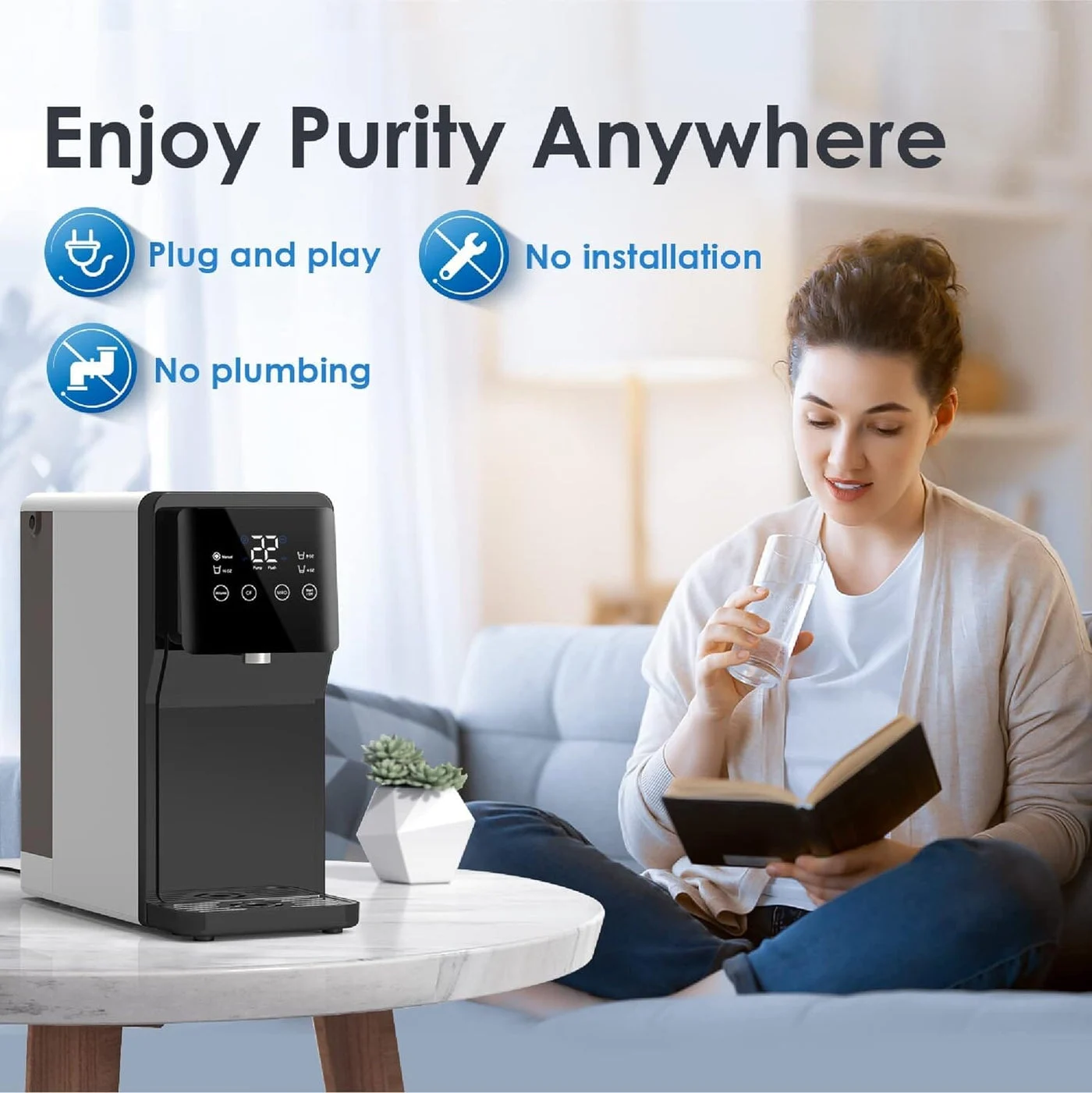
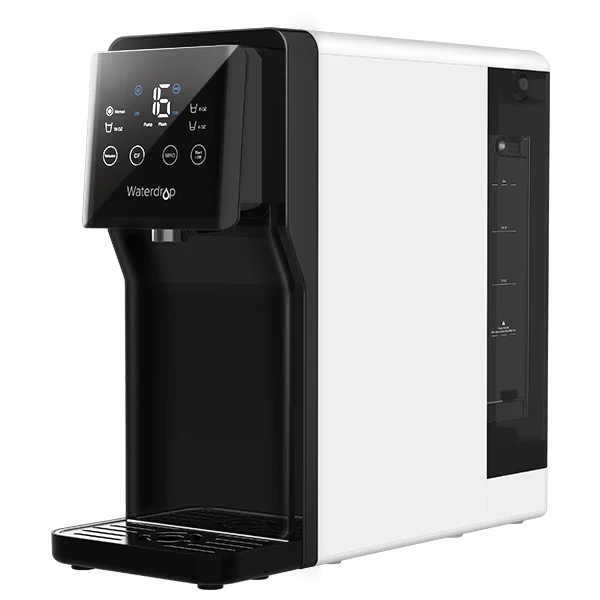
Waterdrop N1, model WD-N1-W. Manufacturer lifestyle image.
A straightforward countertop RO routine
We would shortlist the N1 for a rental kitchen, home office or smaller drinking-water station where a permanent water connection is inconvenient. You can place it near a suitable outlet and move it when your living arrangements change.
The compromise is hands-on water management. You will carry the feed tank to the sink, discard the concentrated water when prompted and keep track of two filter schedules. Picture those jobs in your kitchen before deciding.
What we like
- No plumbing connection or countertop drilling.
- 4-, 8- and 16-ounce servings, plus manual dispensing.
- TDS display and separate filter-life reminders.
What to weigh
- Ambient water only, with no heating or chilling.
- Regular refills, concentrate disposal and cleaning.
- Two replacement cartridges and a need to check model-specific reduction evidence.
What this review is based on
We reviewed Waterdrop’s N1 product listing, the WD-N1-W instruction manual, the N1-CF and N1-MRO replacement information, and the manufacturer’s comparison materials. This is an editorial assessment of the documented features and ownership routine. We have not conducted original contaminant, flow-rate, noise or taste testing.
At Waterdrop
Waterdrop N1 at a glance
Compare the tank, dispensing controls and filtration ratings separately. Each describes a different part of using the machine.
| Feature | Waterdrop N1 | What it means in your kitchen |
|---|---|---|
| Format / installation | Refillable countertop reverse osmosis; WD-N1-W | No supply-line connection or drain fitting. It needs electricity and manual filling. |
| Water temperature | Ambient water | It does not heat or actively chill water. Compare the A1 if temperature controls matter. |
| Filtration | Two cartridges; four-stage system with UV | N1-CF handles prefiltration; N1-MRO contains the reverse osmosis membrane. |
| Feed-water tank | 135 fl oz, approximately 4 litres | This is the tap-water capacity, not the quantity of purified water available to pour. |
| Serving controls | 4, 8 or 16 fl oz, plus manual dispensing | The manual mode has a 50-fl-oz maximum per run. Use a suitable vessel. |
| Rated RO production | 75 gallons per day under rated conditions | A membrane production rating is different from how quickly a glass fills. |
| Purified-to-drain ratio | Advertised 3:1 | About three parts purified water per part concentrate under rated conditions; flushing adds water use. |
| Published dimensions | 17.1 in L × 7.0 in W × 17.8 in H | Current product listing. An older manual lists a different height; confirm the exact unit and lifting clearance. |
| Source water / temperature | Municipal tap water; 41–100°F (5–38°C) | Use the approved water source. The UV feature is not a reason to use untreated or unknown water. |
| Power supply | AC 100–240 V input; DC 24 V output | A suitable outlet is required. This is not a battery-powered dispenser. |
| CF replacement | WD-N1-CF: up to 6 months or 550 gallons | Follow the indicator and current instructions; water quality and use affect life. |
| RO replacement | WD-N1-MRO: up to 18 months or 1,650 gallons | The longer membrane schedule does not extend the separate CF schedule. |
| Warranty | One-year limited manufacturer warranty | Check current coverage, registration and maintenance conditions before ordering. |
← Slide right & left to see the full table →
Check the height before ordering: the current product listing gives 17.8 inches, while an older N1 manual gives 15.6 inches. Confirm the dimensions of the exact unit and allow extra room to lift the tank.
Your glass of water, from refill to pour.
The N1’s useful features centre on a simple sequence: fill the feed tank, let the system make purified water, then select a serving. Understanding what happens between those steps helps set realistic expectations.
Choose a glass, not a temperature
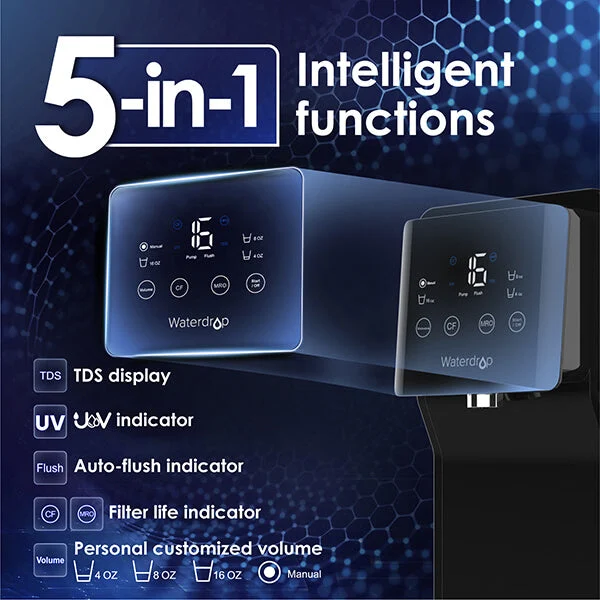
Select 4, 8 or 16 fl oz for a familiar cup, or use manual dispensing when you want to control the amount yourself. The manual lists a 50-fl-oz maximum for a manual run. Leave enough room in the vessel and stop dispensing when needed.
The N1 delivers ambient water. If you want a hot mug or a chilled drink directly from the appliance, our Waterdrop A1 review covers that different type of countertop dispenser.
The 135-ounce tank is a starting point
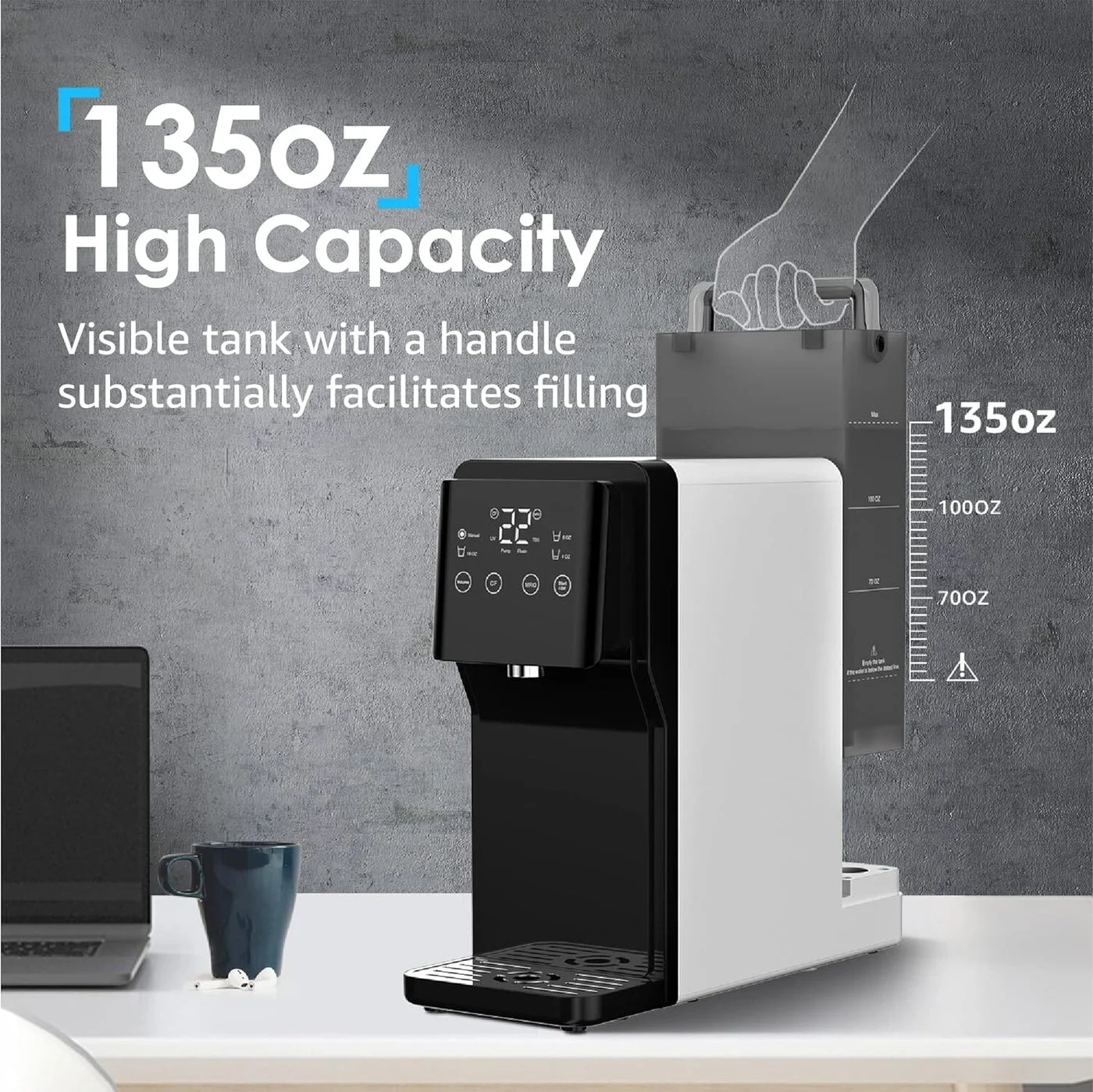
Waterdrop advertises a 135-fl-oz feed tank, approximately four litres. That is the tap-water capacity. Some of the water becomes concentrate during reverse osmosis, so a full feed tank does not provide the same volume of drinking water.
On the N1, concentrated water returns to the feed tank as filtration proceeds. When the change-water prompt appears, remove the tank, pour out what remains and refill with fresh water. Continually topping it up allows the dissolved-solids concentration to build.
The L1 prompt matters
L1 tells you to change the feed water. The prompt can appear before the tank looks completely empty. Follow it by discarding the remaining water and refilling, rather than trying to extract every last drop.
A TDS number has limits
The display is useful for watching dissolved-solids trends. It cannot identify every substance in your water or prove that the water is microbiologically safe. Match your concerns to a water report and the exact model’s supporting evidence.
Allow for refill pauses
The manual describes a 99-second countdown when the internal purified-water reserve needs replenishing. The 75-GPD figure is a rated membrane-production figure, not a promise of instant, uninterrupted pouring.
Before you give it a place on the counter
Choose a location that makes both drinking and maintenance convenient: enough room above the tank, a short route to the sink and a suitable electrical outlet.
1. Check the space above the tank
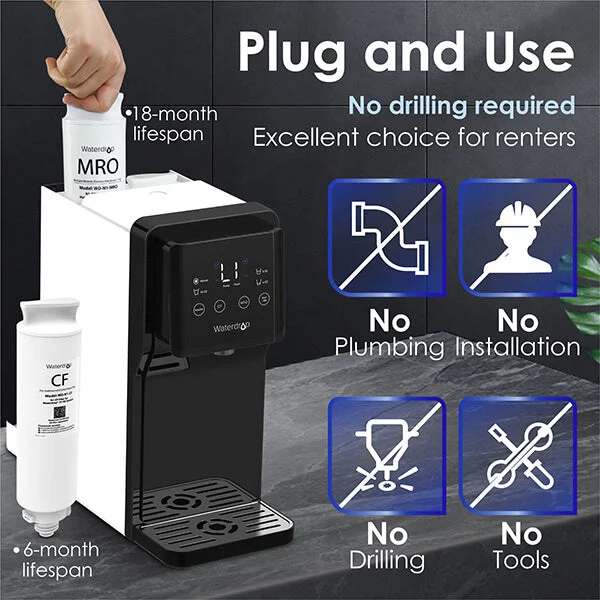
The listed seven-inch body width is only part of the space you need. Check the counter depth, the height beneath any cabinets and the room required to remove the feed tank and reach the filters.
Waterdrop’s published height differs between the current listing and an older manual. Confirm the dimensions of the version you are ordering before fitting it into a tight alcove.
2. Flush before your first drink
Setup includes fitting the drip tray and cartridges, filling the tank, connecting power and completing the initial flushing procedure. Have another drinking-water source available while you do this, and discard the flushing water.
Follow the instructions supplied with your unit through the full process. The manual discusses additional flushing and multiple tankfuls where needed; a quick first rinse is not the complete procedure.
3. Build a fresh-water refill habit
The advertised 3:1 purified-to-drain ratio means roughly three parts purified water per part concentrate under the stated operating conditions. It is a recovery claim, not a guarantee for every water supply. Initial flushing, replacement-filter flushing and cleaning add to the water you use.
Keep the tank and drip tray clean, and follow the manual’s emptying and flushing routine after an extended period without use. The N1 is intended for municipal tap water within its operating limits. Its UV feature does not make an unknown source suitable.
What does the N1 filter, and how strong is the evidence?
Consider the jobs performed by the cartridges, Waterdrop’s testing claims and the scope of any certification separately. A large stage count or a low TDS reading cannot answer every water-quality question.
Carbon and RO do different jobs
Waterdrop describes a four-stage system using two cartridges. The CF stage contains sediment-filtering material and carbon; the MRO cartridge contains the reverse osmosis membrane. Those functions address particles, taste-related substances and dissolved constituents at different points in treatment.
RO also reduces dissolved minerals. The standard N1 configuration does not advertise a dedicated remineralization stage, which matters if you prefer the taste of mineral-rich water.
UV is a supporting feature
The N1 includes an automatic UV feature that Waterdrop promotes for managing microbial growth within the system. We would treat it as part of the appliance’s documented design, alongside regular tank care and fresh-water refills.
Use the approved source water and maintenance procedure. We would not buy it as an emergency treatment device for untreated well water or an unknown supply based on a UV marketing claim alone.
Testing and certification differ
Waterdrop promotes SGS testing against NSF/ANSI test standards in its N1 materials. Testing to a standard and certification of a complete system are different claims. The manufacturer’s comparison FAQ does not mark the N1 as having the NSF/ANSI 58 and 372 certifications shown for some other models.
If a particular contaminant is the reason for your purchase, request the current N1-specific report and applicable certification listing. We have not independently verified its full-lifespan reduction performance.
Two cartridges, two replacement schedules
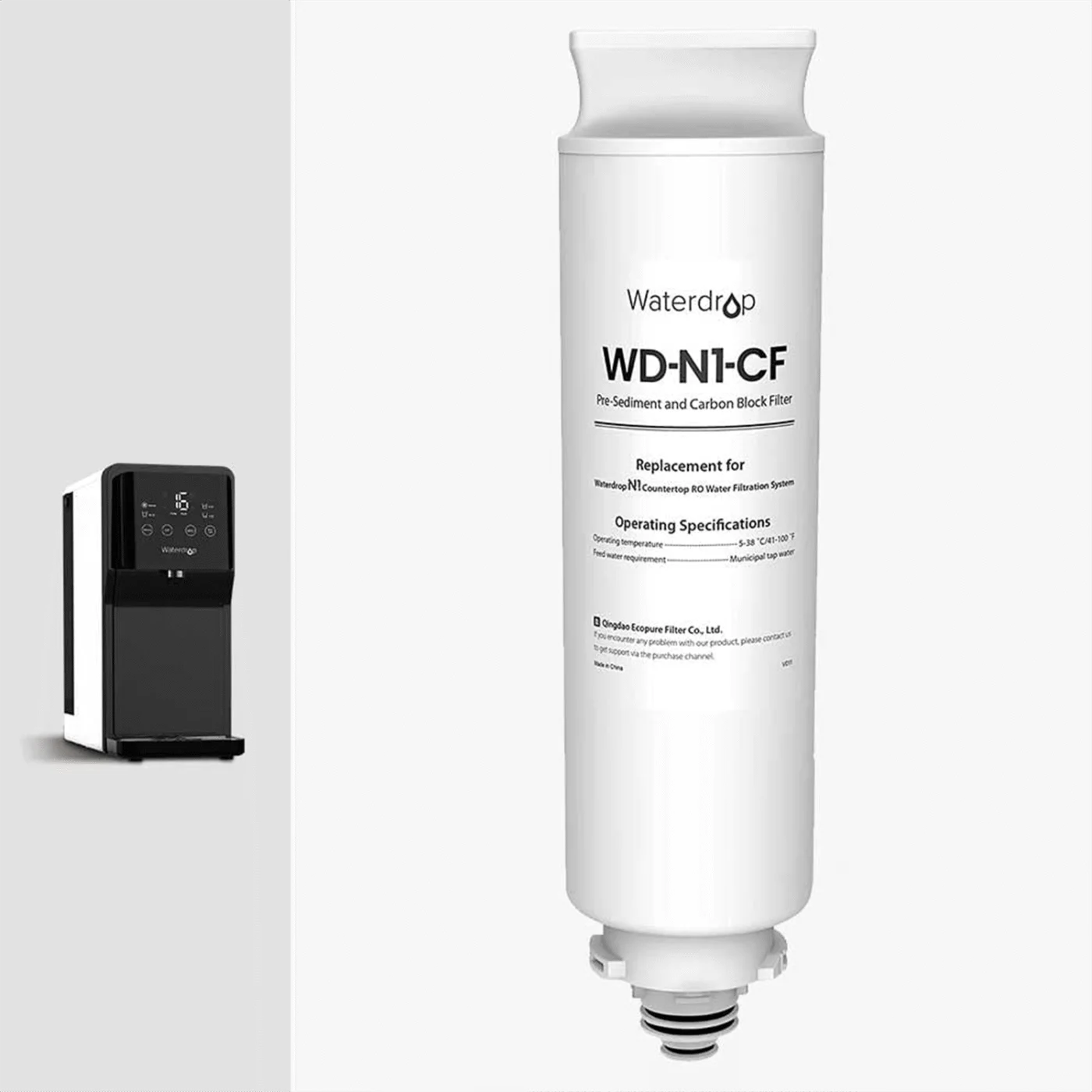
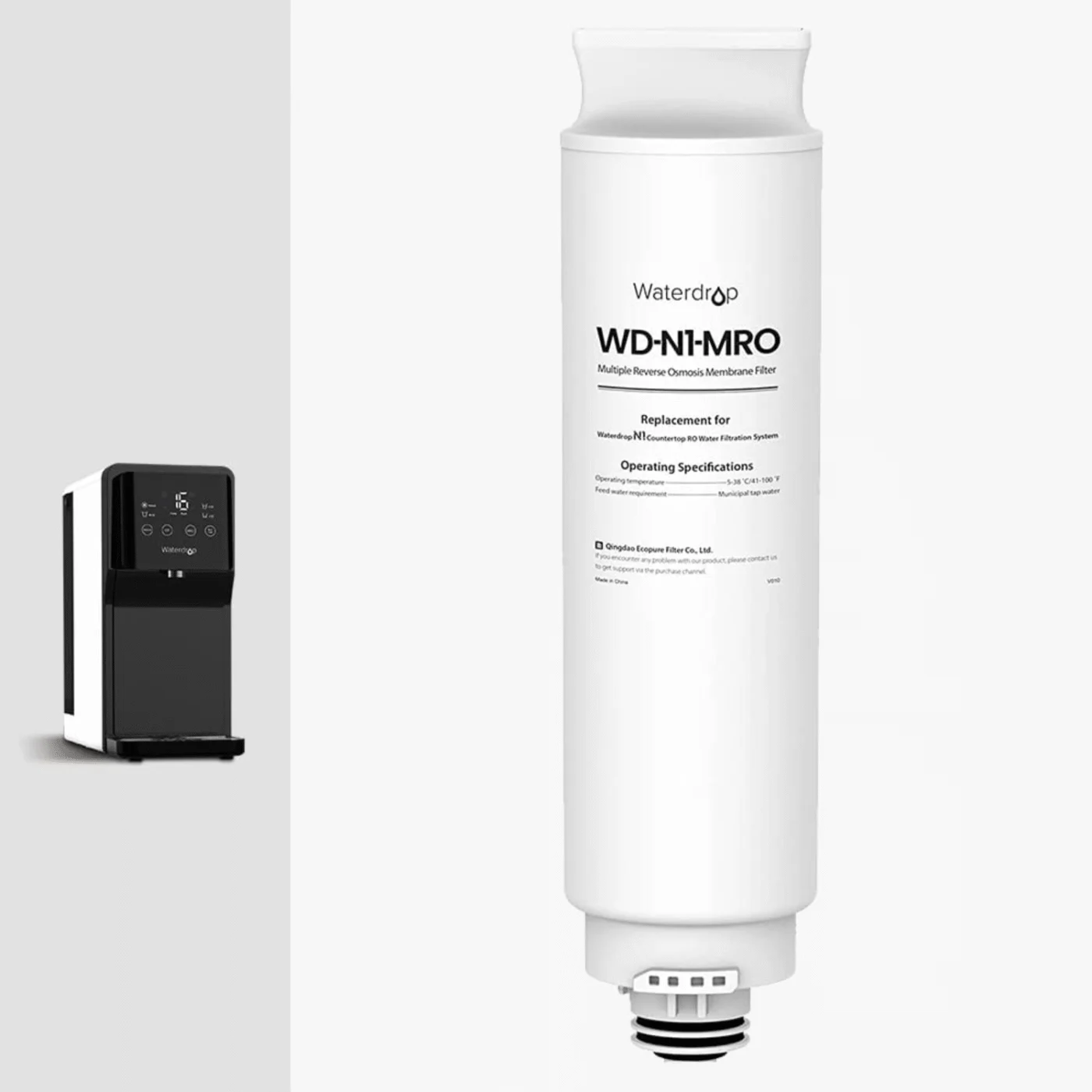
The N1 uses WD-N1-CF and WD-N1-MRO cartridges. Order the exact N1 replacements rather than assuming that an A1 or under-sink Waterdrop cartridge will fit. Keep the two reminders separate.
N1-CF: sediment and carbon
Waterdrop lists up to six months or 550 gallons for N1-CF. Follow the replacement indicator and current instructions; the water supply and the amount you use affect actual service life.
N1-MRO: the RO membrane
The listed limit is up to 18 months or 1,650 gallons. This longer membrane schedule does not extend the separate CF schedule. Replace and flush each cartridge as instructed.
After changing a cartridge, reset its matching filter-life reminder and complete the required flush. At the change-water prompt, discard the concentrated feed water and refill before normal use. Check current replacement availability when comparing the total ownership commitment.
Who should buy the Waterdrop N1?
A good fit: a refillable RO routine
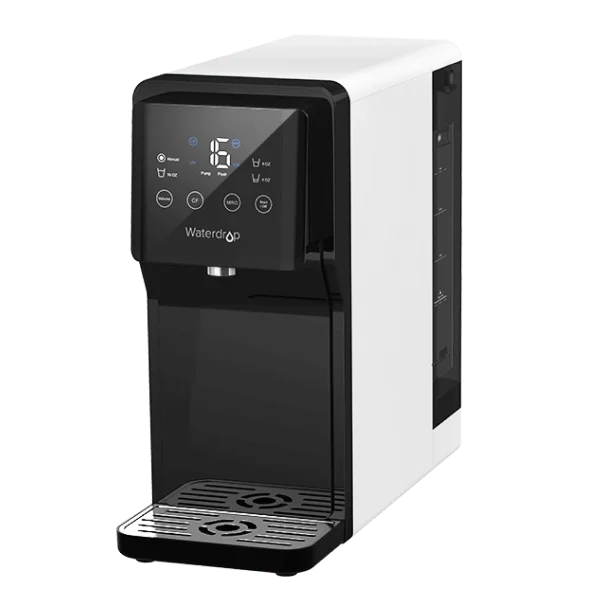
Consider the N1 if you want ambient RO drinking water, have suitable municipal tap water and prefer an appliance you can set up without plumbing. A convenient sink-to-tank route and a place it can stay ready to use make the proposition stronger.
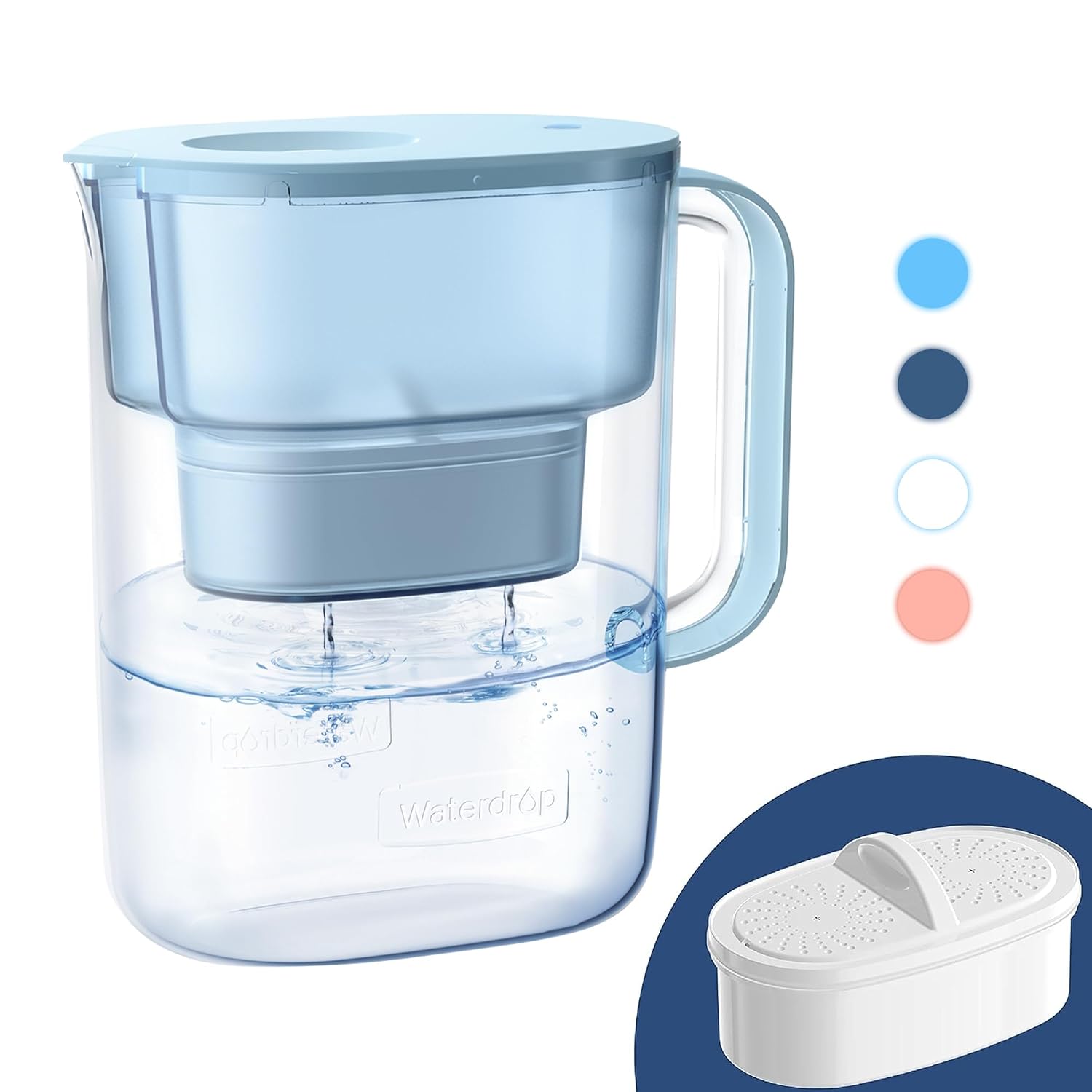
Prefer a simpler pitcher?
For an occasional glass and a simpler refill routine, compare a pitcher with the specific reductions you need. Our best water filter pitchers guide includes options with different treatment approaches.
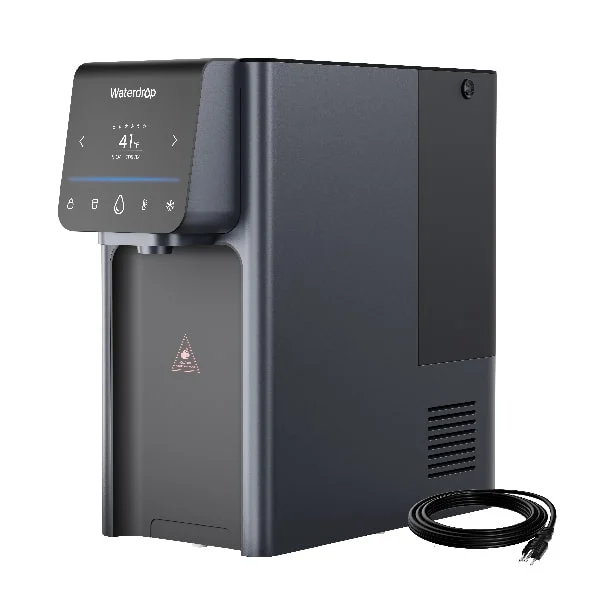
Need hot and chilled water?
Compare the Waterdrop A1 if temperature control is central to your routine. For a plumbed format that avoids carrying a refill tank, explore the under-sink options in our Waterdrop water filters review.
THE KITCHLIT TAKE
Buy it for convenient ambient water.
The N1 has a clear role: countertop reverse osmosis for a household that wants room-temperature drinking water and prefers to avoid modifying the plumbing. Preset servings and a status display make that role easy to understand.
Its value depends on how comfortably you can live with the feed-tank routine, cleaning and cartridge replacements. If those jobs fit your kitchen, it deserves a place on the shortlist. If you want hot and chilled dispensing or a continuous plumbed supply, compare those formats before ordering.
At Waterdrop. Check the exact model, included filters and current return terms.
Frequently asked questions
The practical details to check before choosing the Waterdrop N1.
Does the Waterdrop N1 need plumbing?
No supply-line or drain connection is required. It is a manually filled countertop RO dispenser. You still need a suitable electrical outlet, the initial setup and the full flushing procedure.
Does the N1 make hot or chilled water?
The N1 dispenses ambient water. It does not heat or actively chill it. Compare the Waterdrop A1 if you want temperature-controlled dispensing.
How much water does the N1 tank hold?
Waterdrop advertises a 135-fl-oz feed tank, roughly four litres. This is the tap-water capacity, not the amount of purified water you can pour from one refill. Some water remains as concentrate.
What does the 3:1 pure-to-drain ratio mean?
The advertised ratio describes approximately three parts purified water for one part concentrate under rated conditions. The N1 recirculates concentrate into its feed tank. Flushing and real operating conditions affect overall water use.
What should I do when the N1 shows L1?
Remove the feed tank, discard the remaining concentrated water and refill with fresh tap water as instructed. Avoid simply topping up the water already in the tank.
How often do N1 filters need replacing?
The current replacement listings give up to six months or 550 gallons for N1-CF and up to 18 months or 1,650 gallons for N1-MRO. Follow the indicator and instructions for the earlier applicable limit; water quality and use affect life.
Is the Waterdrop N1 NSF certified?
Waterdrop advertises SGS testing to NSF/ANSI standards, while its comparison FAQ does not identify the N1 with the NSF/ANSI 58 and 372 certifications shown for some other models. Request the current model-specific test report and certification listing for the claim you need.
Can I use the N1 with well water?
The listed source is municipal tap water, and Waterdrop does not recommend well water for this system. An unknown or untreated source needs an appropriate water assessment and treatment plan; the N1’s UV feature does not change its approved feed-water requirements.
Does the N1 add minerals back to the water?
The standard N1 materials describe CF and MRO cartridges with no dedicated remineralization stage. RO reduces dissolved minerals as well as other dissolved constituents, so consider another configuration if mineral taste is important to you.
What warranty comes with the N1?
Waterdrop lists a one-year limited manufacturer warranty. Check the current terms, registration instructions, exclusions and maintenance requirements for your order. Routine replacement cartridges are a separate ownership expense.
Sources and research notes
Research checked November 9, 2026. Sources included the Waterdrop N1 product listing, the WD-N1-W instruction manual, the WD-N1-CF and WD-N1-MRO replacement listings, and Waterdrop’s product-comparison FAQ. Waterdrop’s filter finder can help locate compatible cartridges.
Specifications and claims belong to the manufacturer. We distinguish published features from certification and have not carried out original contaminant-reduction, flow, noise or taste testing. Product reference images are supplied by Waterdrop; the hero shows an illustrative kitchen setting. The older manual and current listing give different heights; confirm the exact unit before buying for a restricted space.