
WATER FILTER REVIEW
Waterdrop Water
Filters Review
From a simple pitcher to whole-house filtration, find the Waterdrop system that fits your water, kitchen and routine.
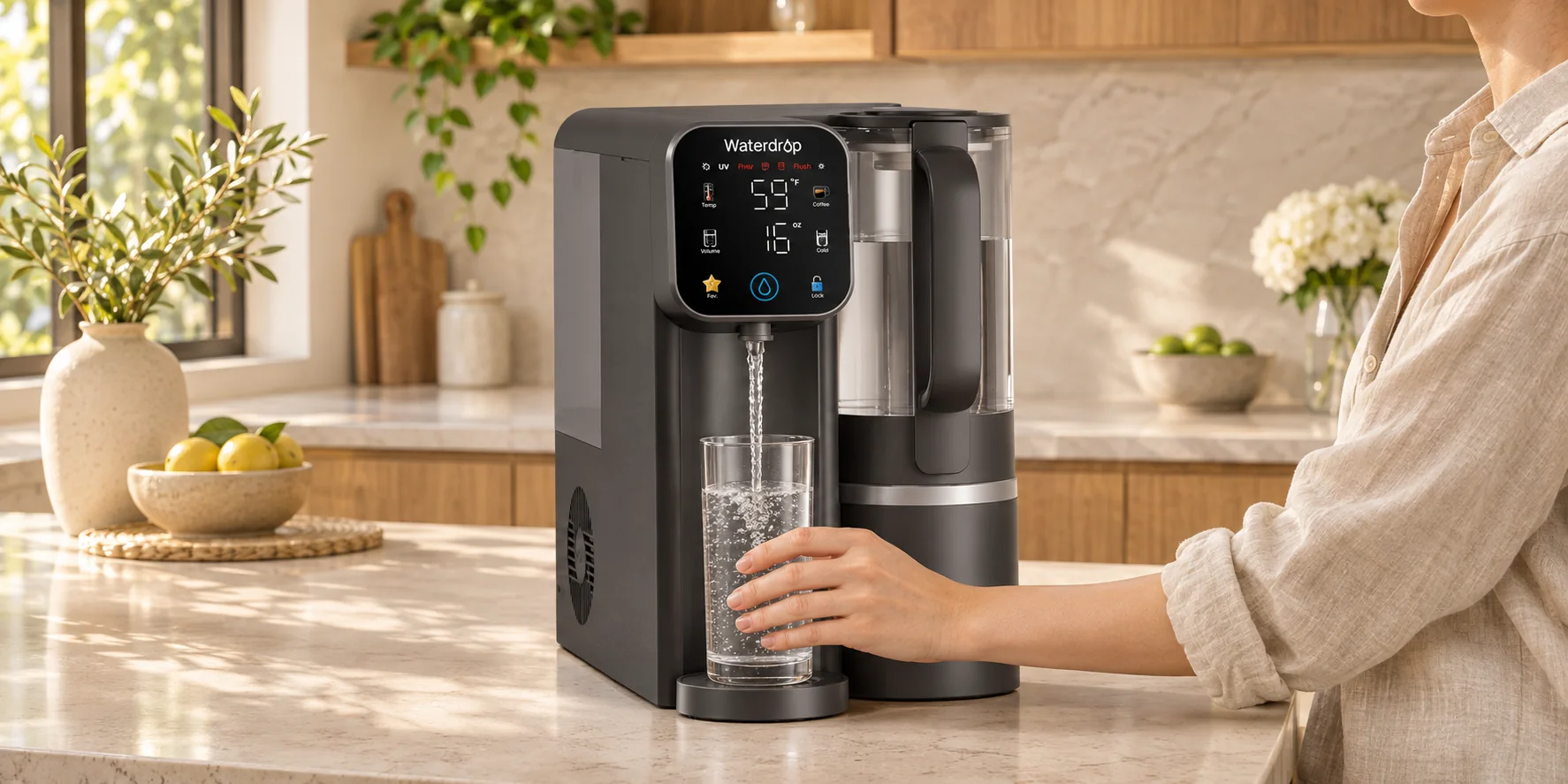
By KitchLit · Updated November 9, 2026
Research-based review. We may earn a commission when you buy through our links.
Key takeaways
1
Match the treatment
Start with your water report or test, then check the exact model’s reduction claims.
2
Choose the installation
G3P600 installs under the sink; M6CG, ED01 and PT-07 work from refillable vessels.
3
Plan for the cartridges
Model names, filter families and replacement schedules matter as much as the purchase price.
On this page
Find your everyday fit

At the kitchen sink
Compare G3P600 RO with the simpler WD-10UA direct-connect filter.
On the kitchen counter
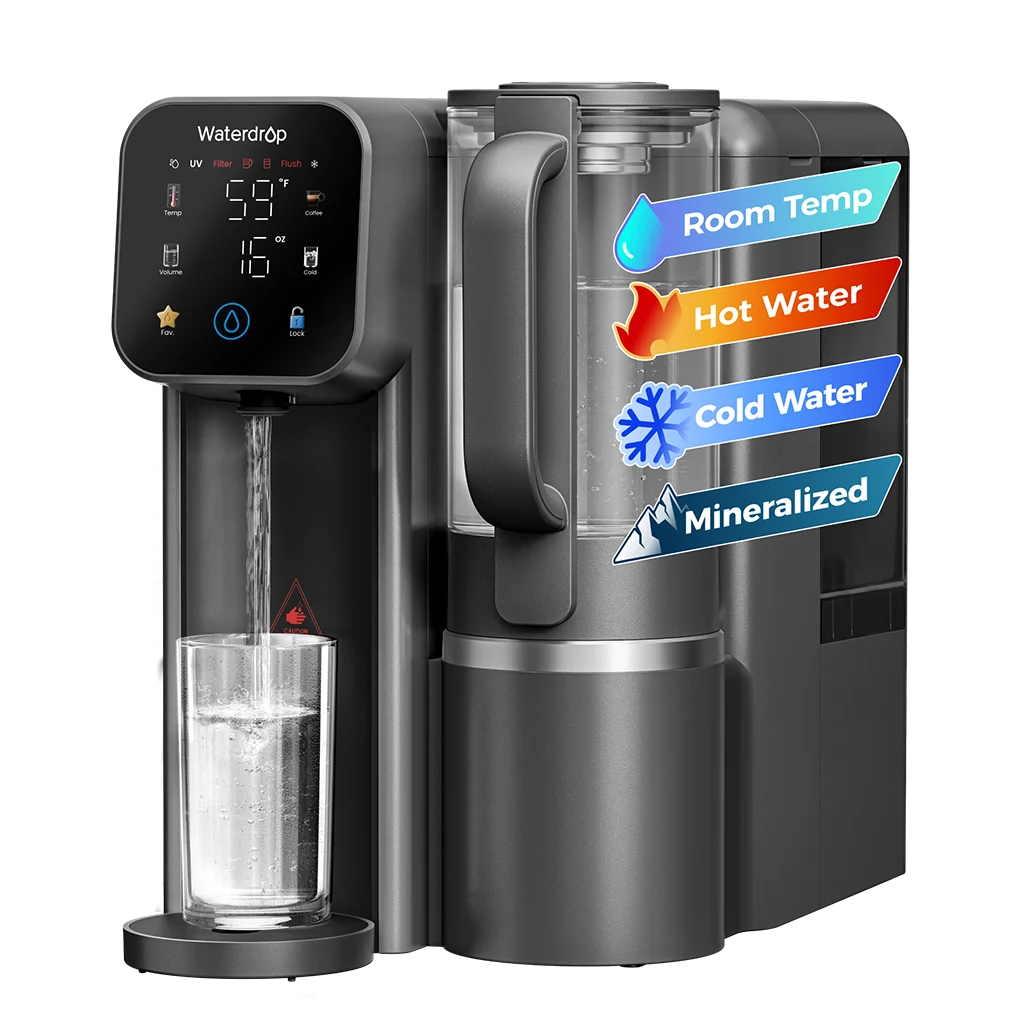
Choose M6CG RO, an ED01 electric dispenser or a traditional PT-07 pitcher.
At the home’s water entry
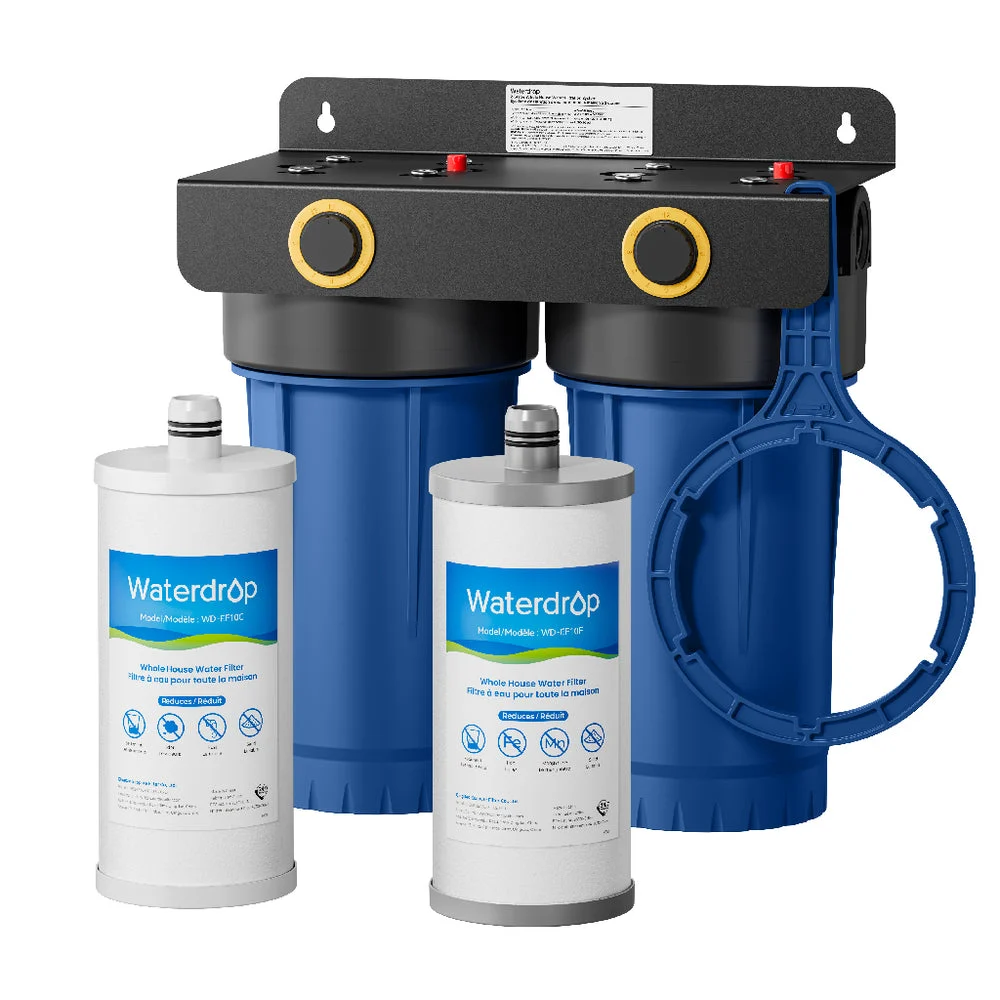
WHF2E-FC targets a whole-house well-water application, with different installation needs.
Compare the Waterdrop range
Six useful formats, with different capacities, installation needs and daily chores.
| Product | A useful fit for | Format | Capacity / output | Keep in mind |
|---|---|---|---|---|
| Waterdrop G3P600 | A permanent filtered-water faucet | Tankless under-sink RO | 600 GPD rated output* | Permanent installation; produces reject water |
| Waterdrop M6CG | RO without changing the sink plumbing | Countertop RO + minerals | 40 oz carafe / 75 GPD* | Counter space, tank refills and reject water |
| Waterdrop WD-10UA | A simpler filter using the existing faucet | Non-RO direct-connect filter | 0.75 GPM rated flow | Connection compatibility; different purpose from RO |
| Waterdrop ED01 | Push-button serving without a plumbing connection | Electric non-RO dispenser | 15-cup reservoir | Manual refills and battery charging |
| Waterdrop Lucid PT-07 | A straightforward pour-and-store routine | Gravity pour-through pitcher | 10-cup pitcher | Batch filtration; check current availability |
| Waterdrop WHF2E-FC | Treatment at the home’s water entry | Whole-house non-RO system | Up to 15 GPM | Main-line work; match treatment to well test results |
← Swipe left or right to compare →
* GPD is rated RO production in gallons per day, not water stored in a vessel. GPM is flow in gallons per minute. Cup and carafe figures describe vessel capacity. Ratings depend on operating conditions.
Explore the Waterdrop water filters
Our recommendations cover six different jobs. Choose a format first, then confirm its claims and replacement filters.
01
Under-sink reverse osmosis
Tankless under-sink RO / 600 GPD rated output*
Waterdrop G3P600
The G3P600 is our starting point for a permanent kitchen RO setup. It keeps the main unit below the sink and delivers water through a dedicated smart faucet. Choose it if you want to avoid lifting a refill tank and are willing to make the water, drain and electrical connections.
Capacity / output
600 GPD rated output*
Format
Tankless under-sink RO
Setup
Supply, drain & outlet
What works
+ Tankless format saves storage-tank space
+ Dedicated faucet with status display
+ Replaceable prefilter, carbon filter and RO membrane
Keep in mind
− Needs an outlet and suitable faucet position
− Installation and three cartridge schedules add cost
More about this filter
Waterdrop lists 600 gallons per day and a 2:1 purified-to-drain ratio under rated conditions. Neither is a guarantee of your actual tap performance, and 600 GPD is production capacity rather than stored water. Measure the unit’s 18.11 × 5.67 × 17.73-inch footprint plus service clearance. The standard G3P600 differs from remineralization bundles, UV add-ons and the G3P800.
Waterdrop lists NSF/ANSI 42, 58 and 372. Check the G3P600 performance sheet for the specific certified reductions.
At Waterdrop
02
Countertop RO with hot & cold water
Countertop RO + minerals / 40 oz carafe / 75 GPD*
Waterdrop M6CG
The M6CG brings RO filtration, remineralization and hot or cold dispensing to the countertop. It suits a kitchen where you can give a machine a permanent spot but prefer to keep the sink plumbing as it is. Its removable glass carafe is useful for serving water or carrying it to the stove.
Capacity / output
40 oz carafe / 75 GPD*
Format
Countertop RO + minerals
Setup
Outlet; manual refill
What works
+ Heating and cooling in one countertop unit
+ Removable 40-ounce glass carafe
+ Separate feed-water and reject-water tanks
Keep in mind
− Needs electricity and counter clearance
− You still refill water and empty reject water
More about this filter
Waterdrop rates the M6CG at 75 GPD with a 3:1 purified-to-drain ratio; these are operating ratings, not carafe capacity. The 135-ounce feed tank and 50-ounce reject tank need regular attention. Allow space around its 15.9 × 9.3 × 14.5-inch body and for tank removal. Choose the M6CG specifically if cooling matters; other M6 models have different temperature and mineral features.
Waterdrop lists NSF/ANSI 58 and 372. Remineralization changes the water’s mineral profile; it is not a reason to assume extra health benefits.
At Waterdrop
03
Direct-connect under-sink filter
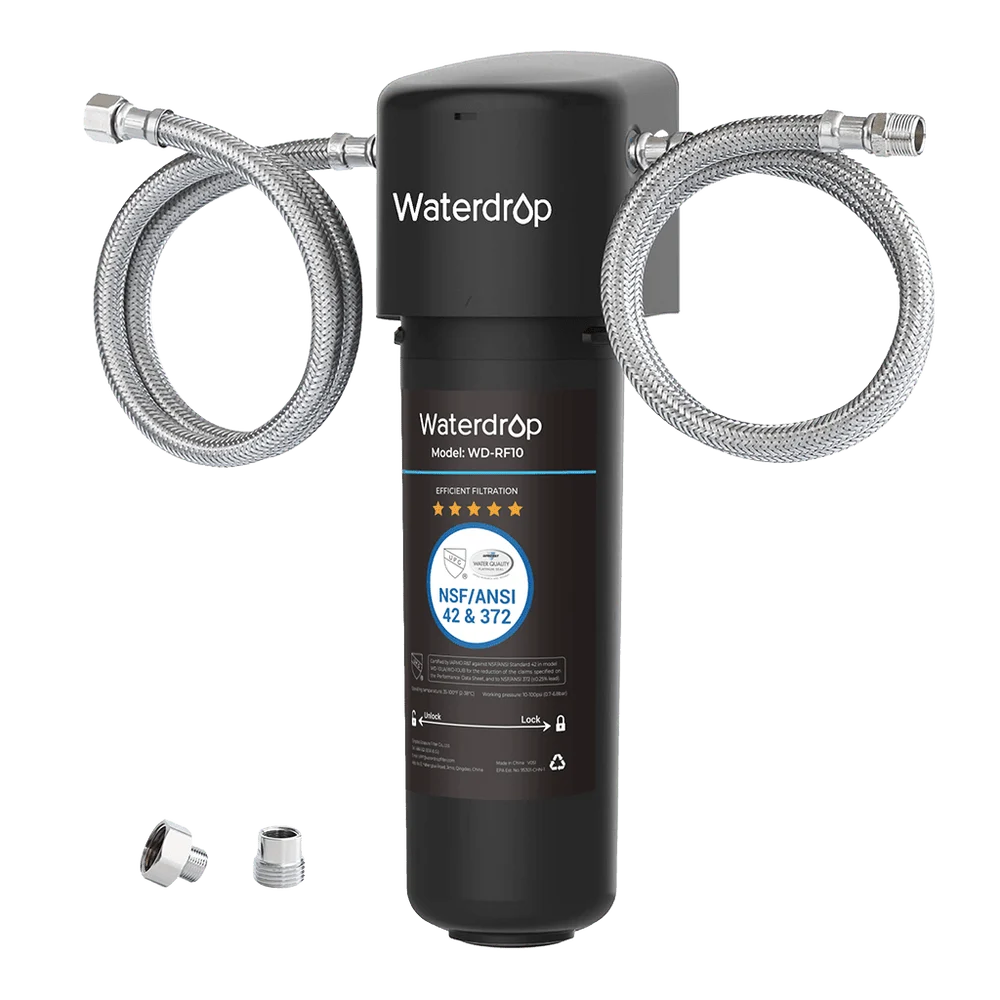
Non-RO direct-connect filter / 0.75 GPM rated flow
Waterdrop WD-10UA
The WD-10UA is the simpler under-sink route in this review. It connects to the existing cold-water faucet supply, so there is no separate RO tap or countertop reservoir to manage. It is worth considering when your filtration needs match its documented claims and you want a compact installation.
Capacity / output
0.75 GPM rated flow
Format
Non-RO direct-connect filter
Setup
Cold-water connection
What works
+ Uses the existing kitchen faucet
+ No electrical outlet or RO drain line
+ Compact twist-and-lock cartridge format
Keep in mind
− Not designed to reduce TDS like an RO system
− Confirm the cold-water hose connections before buying
More about this filter
This review covers the WD-10UA carbon-filter version. Waterdrop also sells larger 15UA and 17UA options, dedicated-faucet models and separate UF versions. They are not interchangeable descriptions. The current 10UA listing states an 11,000-gallon capacity and 0.75 GPM flow. Choose the matching RF10 cartridge and follow its current replacement instructions rather than using the larger models’ ratings.
The listing specifies NSF/ANSI 42 and 372. Treat the exact certified claims as the guide; 372 concerns component lead content.
At Waterdrop
04
Countertop electric dispenser
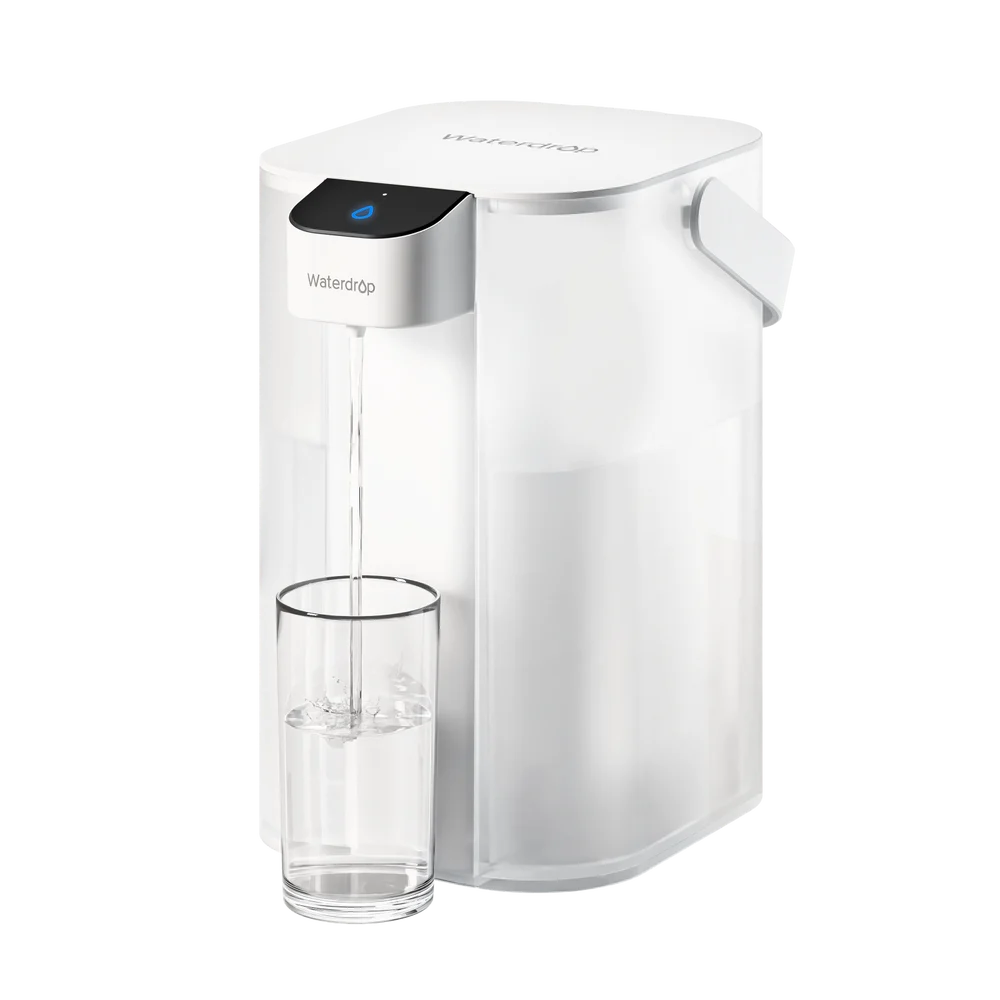
Electric non-RO dispenser / 15-cup reservoir
Waterdrop ED01
The ED01 offers a useful middle ground between a pour-through pitcher and a countertop RO machine. Fill its 15-cup reservoir, then use the button to dispense filtered water into a glass or bottle. Choose it for convenient serving when you want to avoid both plumbing work and a larger RO appliance.
Capacity / output
15-cup reservoir
Format
Electric non-RO dispenser
Setup
Refill & USB charging
What works
+ Push-button dispensing from a 15-cup reservoir
+ No plumbing connection or RO reject tank
+ Filter-status indicator and USB-C charging
Keep in mind
− Needs refilling, charging and cleaning
− Electric dispensing does not mean hot or chilled water
More about this filter
Waterdrop lists certification by IAPMO R&T to NSF/ANSI 42, 53 and 401 for the claims on its performance sheet, plus 372 for lead content. That is more useful than relying on a broad contaminant count. The EDF cartridge’s limit is 200 gallons or three months, whichever comes first. Confirm the ED01 and its specified cartridge when comparing similarly named ED-series dispensers.
Check the ED01 performance sheet for the named reductions; certification claims apply to the exact system and cartridge.
At Waterdrop
05
Traditional 10-cup pitcher
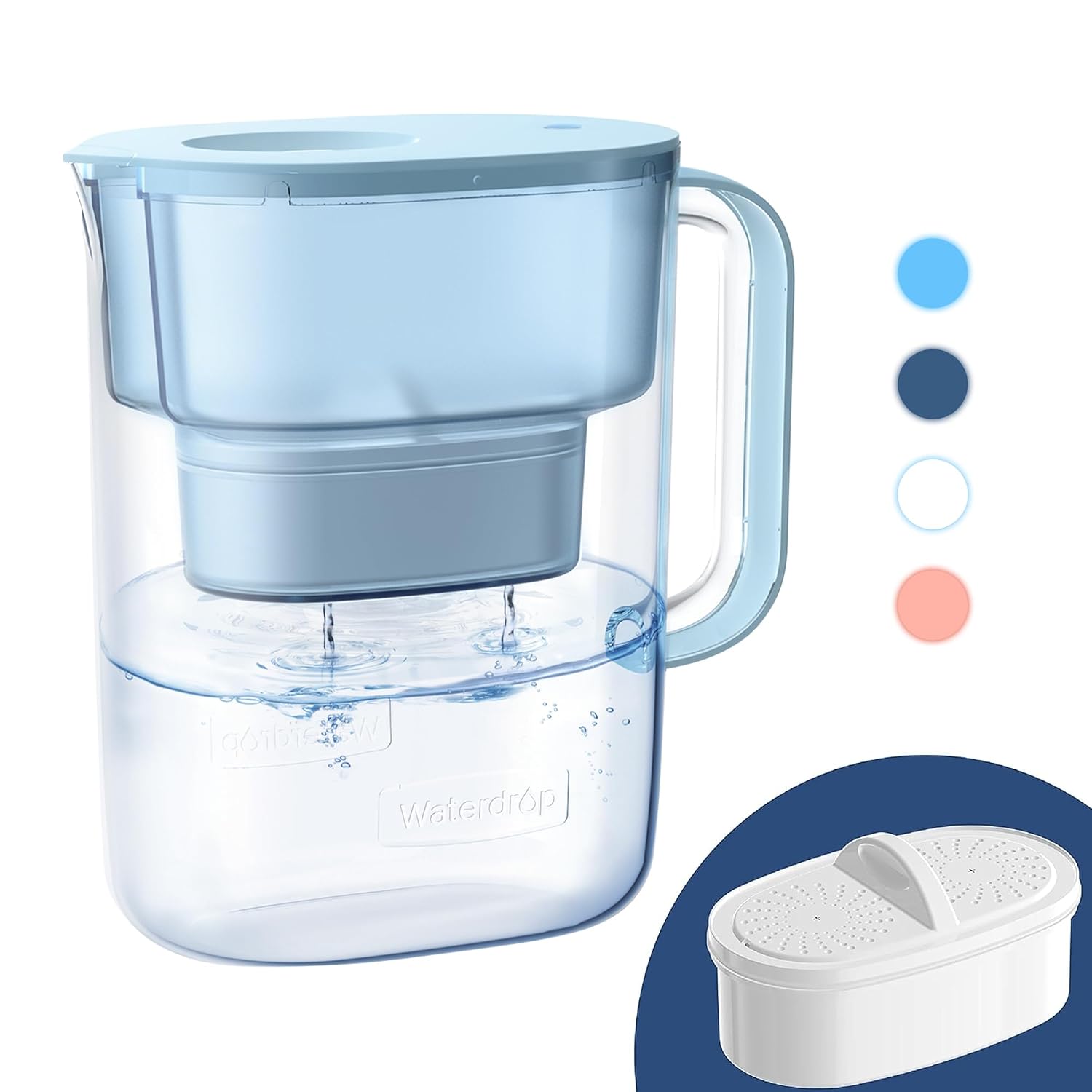
Gravity pour-through pitcher / 10-cup pitcher
Waterdrop Lucid PT-07
The Lucid PT-07 is the familiar pitcher option: fill the upper reservoir, let water pass through the cartridge, and pour from the lower vessel. It is the most straightforward format here for someone who wants a portable pitcher and is comfortable filtering water in batches.
Capacity / output
10-cup pitcher
Format
Gravity pour-through pitcher
Setup
Fill, filter & pour
What works
+ Filtration without an outlet or pump
+ Portable 10-cup pitcher format
+ Replacement filter family is clearly identified
Keep in mind
− Batch filling and regular vessel cleaning
− Direct-store availability is currently limited
More about this filter
Waterdrop’s page lists NSF/ANSI 42 certification for chlorine, taste and odor, and 372 for lead content. Its PF-01A replacement family is different from the electric dispenser’s EDF cartridge. The advertised 200-gallon or three-month cartridge life is separate from the pitcher’s 10-cup vessel size. Check the dimensions against your fridge shelf before ordering.
The current direct-store color variants were unavailable when checked November 9, 2026. Use the button to check for changes.
At Waterdrop
Direct-store colors were unavailable when checked November 9, 2026.
06
Whole-house filter for well-water applications
Whole-house non-RO system / Up to 15 GPM
Waterdrop WHF2E-FC
The WHF2E-FC belongs in a different part of the home. Waterdrop markets this two-housing system for well-water filtration at the incoming supply. Consider it when your water test supports this type of treatment and you want to address a concern throughout the house, rather than at one drinking-water tap.
Capacity / output
Up to 15 GPM
Format
Whole-house non-RO system
Setup
Main-line installation
What works
+ Treats the incoming supply across the home
+ Replaceable cartridges with a date-tracking feature
+ Manufacturer rates flow up to 15 GPM
Keep in mind
− Needs suitable main-line plumbing and service access
− Well-water treatment may require additional equipment
More about this filter
Waterdrop describes five-stage media and up to 50,000 gallons or six months of service. Actual life depends on source water and use. Its stated NSF/ANSI 372 certification concerns lead content in the product, not proof that it removes lead or every advertised contaminant. It is not a complete well-water disinfection system or a substitute for a properly selected softener. Match treatment to test results.
Ask about contaminant-specific performance at your water conditions before choosing a whole-house system.
At Waterdrop
RO or a simpler filter?
The right question is what you need the system to reduce, then how you want to live with it.
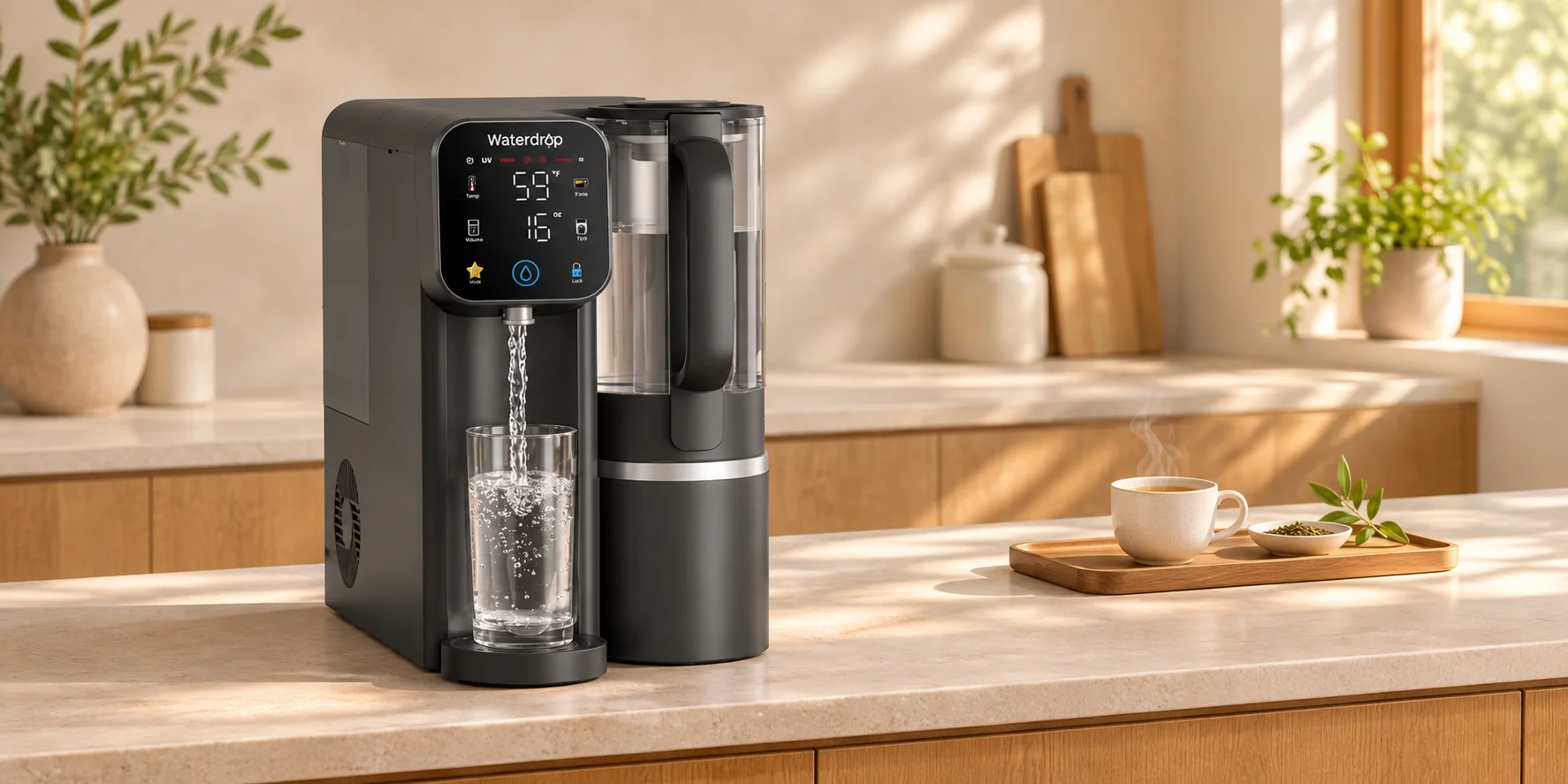
RO: for the reductions you need
G3P600 and M6CG use reverse osmosis to lower dissolved solids. Compare the specific contaminant claims for the exact model with your water concerns. RO produces reject water, and these two systems also need electricity.
G3P600 supplies a fixed faucet; M6CG adds hot and cold dispensing from a refillable countertop machine. Remineralization is a feature of the M6CG and some separate RO bundles, not every Waterdrop filter.
For more countertop choices, read our Waterdrop N1 review if you want ambient water, or our Waterdrop A1 review if hot and chilled dispensing matter to your routine.
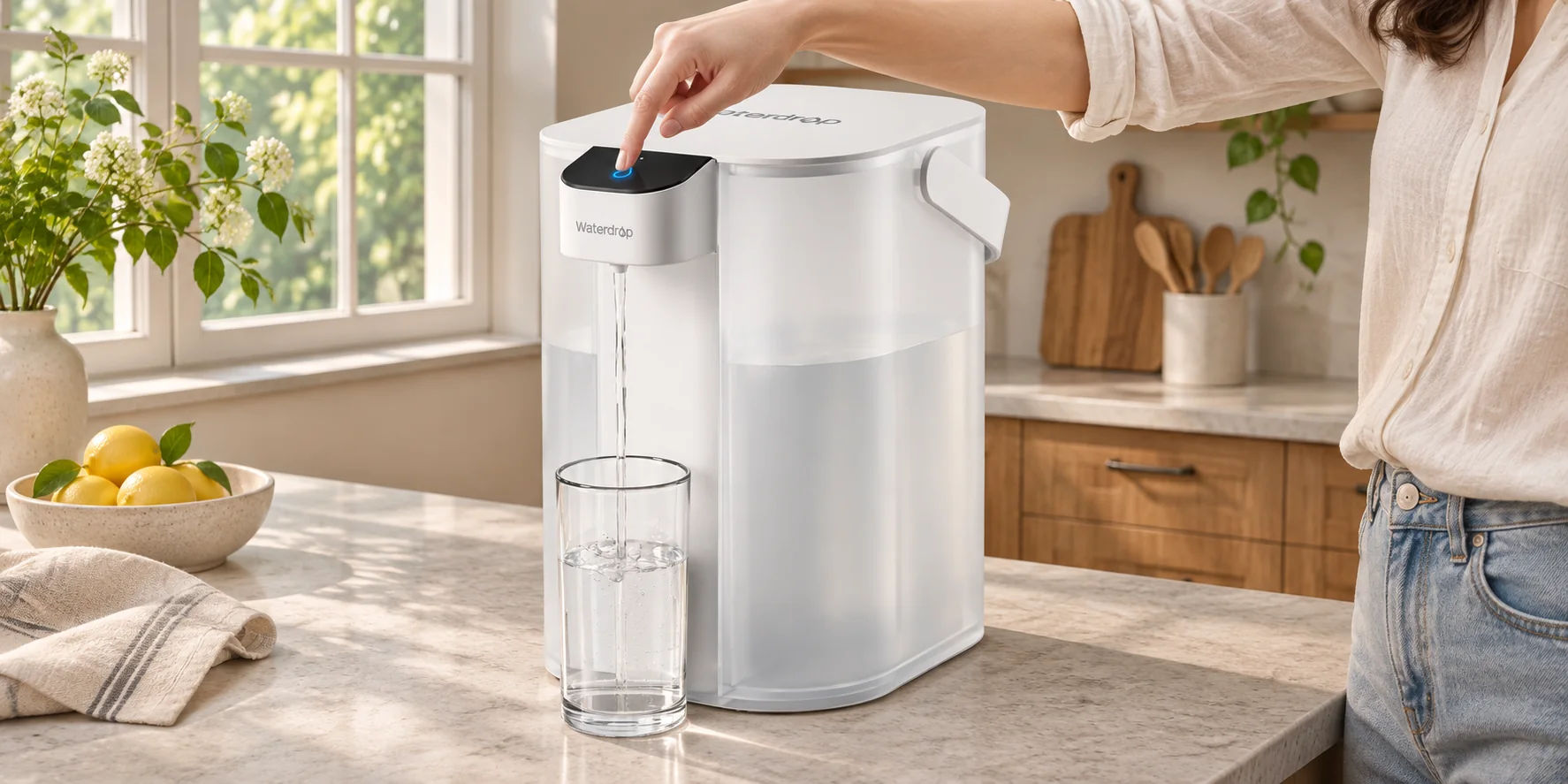
Non-RO: match the named claims
WD-10UA, ED01 and PT-07 avoid an RO reject-water stream, but they do not share the same filtration claims. ED01’s listed NSF/ANSI 53 and 401 claims should not be assumed to apply to a standard pitcher or the UA carbon filter.
Choose by the model’s evidence, then decide between a cold-water connection, push-button dispensing or a pour-through pitcher. A filter that leaves TDS largely unchanged can still serve a specific, documented purpose.
Before you buy
Three checks make the product list easier to narrow.
Know your source water
Review your municipal water report or obtain appropriate testing for a private well. Decide which substances you want to address, then look for those exact reductions. Taste, appearance and a TDS display cannot establish drinking-water safety.
Measure the whole setup
For G3P600, allow for a faucet, outlet, drain connection and cartridge access. For M6CG, measure tank-removal clearance as well as the footprint. For a whole-house installation, check pipe connections, water conditions and space to service the housings.
Plan the daily routine
Think about who will refill a dispenser, clean the vessel, charge the ED01 or empty the M6CG reject tank. Installed systems reduce refill chores but still need inspections and cartridge changes. Pick the tasks your household will actually keep up with.
Whole-house filtration is a separate decision. WHF2E-FC treats water at the home’s entry. Its stated lead-content certification does not verify every advertised reduction, and the system is not a complete well-water disinfection solution. Choose treatment around test results and the manufacturer’s operating limits.
The filter is part of the price
Start with the correct cartridge family, then compare service intervals and current replacement prices.
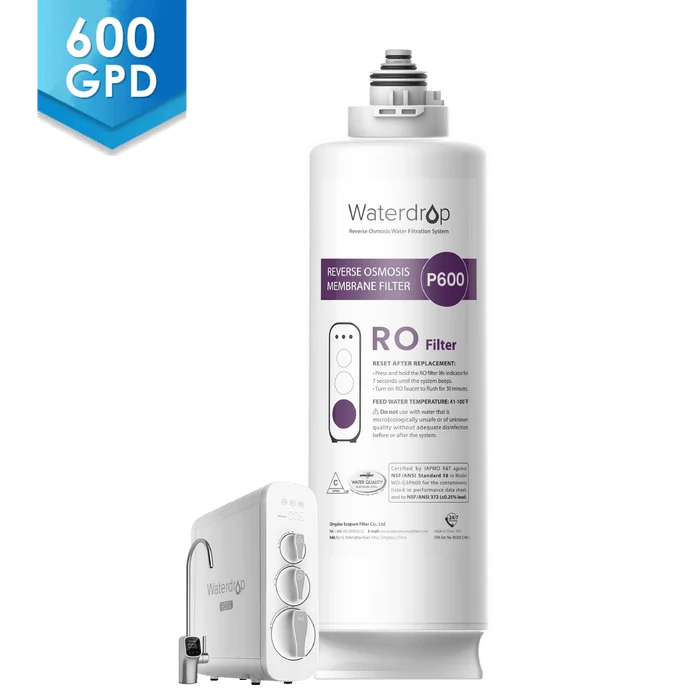
G3P600: three schedules
The CF, CB and RO cartridges have different service limits.
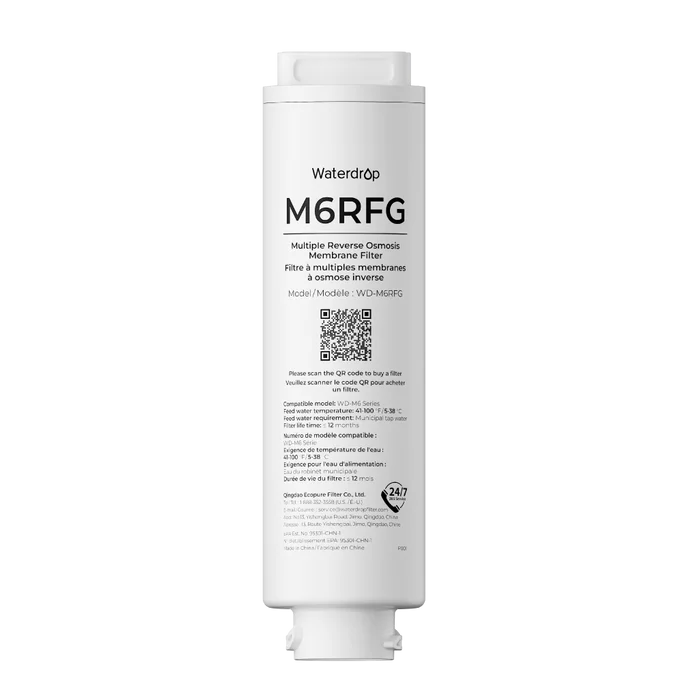
M6CG: M6RFG cartridge
Check M6CG compatibility rather than buying another M6 cartridge by name alone.
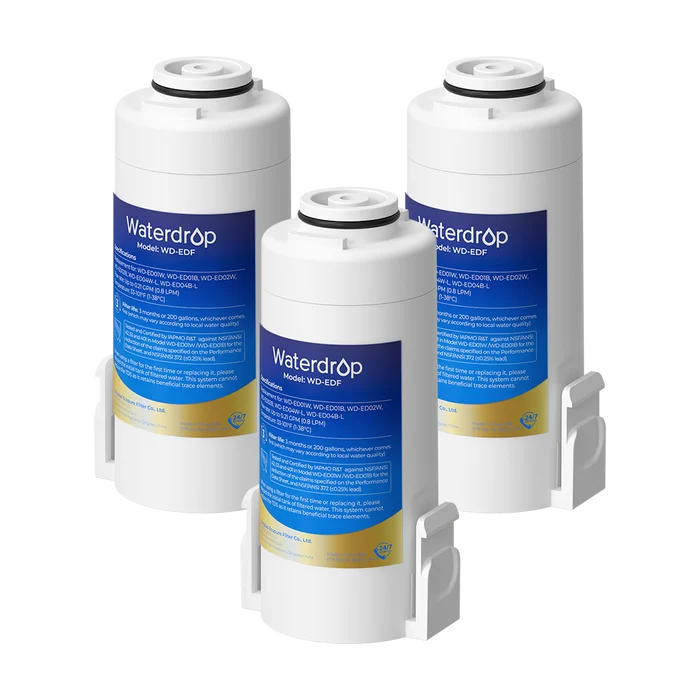
Portable filters differ
ED01 uses the specified EDF family; PT-07 uses compatible PF-01A filters.
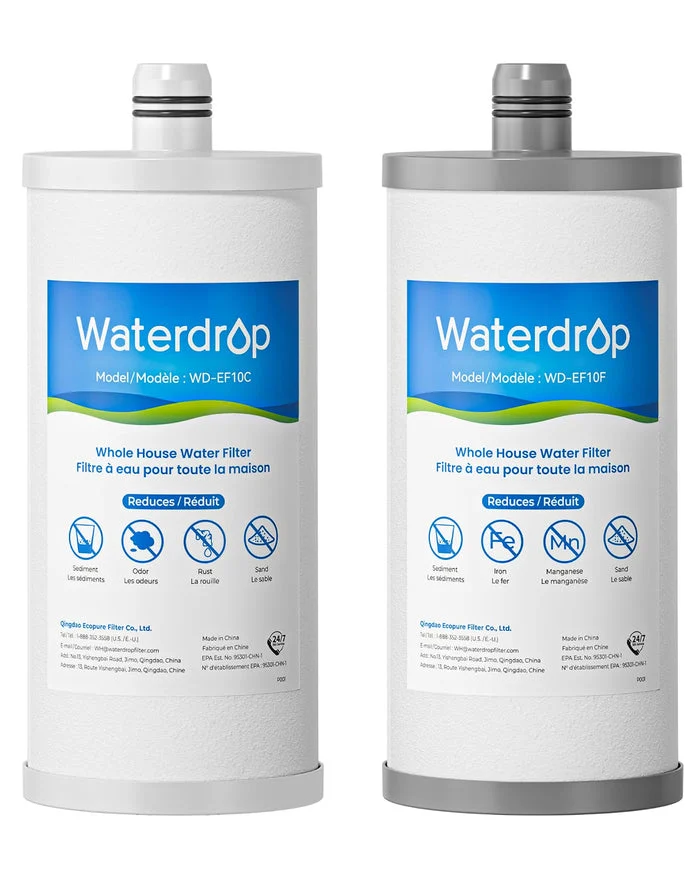
Whole-house cartridge set
Confirm the EF10FC set, service access and source-water conditions.
| Model | Correct filter family | Published replacement guidance | What to budget for |
|---|---|---|---|
| G3P600 | G3-N1CF + G3-N3CB + G3P600-RO | CF: up to 6 months / 550 gal; CB: 12 months / 1,100 gal; RO: 24 months / 2,200 gal | Three separate replacement schedules; include installation. |
| M6CG | M6RFG | Up to 12 months or 1,100 gallons | One combined cartridge, plus electricity and tank care. |
| WD-10UA | WD-RF10 for the carbon-filter 10UA | Up to 12 months; follow the current RF10 capacity and instructions | One cartridge type; larger UA and UF models use different versions. |
| ED01 | WD-EDF specified for ED01 | Up to 200 gallons or 3 months, whichever comes first | Plan for the three-month limit as well as actual water use. |
| Lucid PT-07 | PF-01A family; confirm PT-07 compatibility | Up to 200 gallons or 3 months | Cartridge price, calendar limit and water use all matter. |
| WHF2E-FC | EF10FC replacement set | Up to 50,000 gallons or 6 months | Cartridge sets, installation, servicing and source-water conditions. |
← Swipe left or right to compare →
Published limits are maximum guidance, not a promise of actual life. Replace at the earlier applicable time or capacity limit and follow the model’s instructions. Heavy use and source-water conditions can shorten service life.
Compare ownership cost: include the system, installation, replacement cartridges and routine care. A larger advertised gallon rating does not automatically make a filter cheaper for your household. Use Shop Filters above to find matching cartridges and check current replacement pricing.
Why consider
Waterdrop?
A broad range is useful when the differences are explained clearly.
Our view: Waterdrop is worth comparing for the choice of installation formats and replaceable filter systems. Choose a specific model for a specific water need; a brand name alone cannot make that decision.
Useful differences between the models
The range spans a compact direct-connect cartridge, portable pitchers and dispensers, tankless under-sink RO, hot-and-cold countertop RO and whole-house filtration. That gives readers several ways to balance installation, serving style and maintenance.
Evidence attached to an exact system
Several selected models have published certification information, including G3P600, M6CG and ED01. Read the performance sheet for the named system and filter. NSF/ANSI 42 concerns aesthetic effects; 53 covers specified health-related reductions; 58 covers RO systems; and 401 addresses specified emerging compounds.
What the certification does not say
NSF/ANSI/CAN 372 concerns lead content in product components. It is not a claim that the filter removes lead from water. A certification number also does not mean every possible contaminant is reduced. This distinction is especially important when comparing WHF2E-FC with the drinking-water systems.
How we reviewed the range
We compared manufacturer specifications, published certification statements, replacement-filter compatibility, installation needs and everyday upkeep. This is a research-based review and does not include original laboratory results or hands-on test findings. Prices, bundles and availability can change.
Frequently asked questions
The details to clear up before choosing a system.
Which Waterdrop water filter should I choose?
Choose G3P600 for a permanent under-sink RO faucet, or M6CG for countertop RO with hot and cold dispensing. Compare WD-10UA for simpler direct-connect filtration, ED01 for push-button serving and PT-07 for a traditional pitcher. WHF2E-FC serves a whole-house application. Start with your water needs, then compare the format.
Are all Waterdrop filters reverse osmosis systems?
No. G3P600 and M6CG are RO systems. WD-10UA, ED01, PT-07 and WHF2E-FC use other filtration approaches. The word “countertop” describes where a system sits, not the treatment method it uses.
Does Waterdrop remove lead or PFAS?
Check the exact model, cartridge and performance data sheet for the substance you want to reduce. Do not apply one model’s claims to the whole brand. In particular, NSF/ANSI/CAN 372 relates to lead content in components, not lead reduction from the water.
Does a low TDS reading mean the water is safe?
No. Total dissolved solids is a combined measurement rather than a list of contaminants. Follow the manufacturer’s intended use for its display or meter, but use water reports or appropriate testing to investigate a specific concern. A normal TDS value cannot rule out every contaminant.
Do I need plumbing work or electricity?
G3P600 needs a supply connection, drain connection, outlet and suitable faucet position. M6CG uses an outlet and refillable tanks. WD-10UA connects to the cold-water faucet supply without an RO drain line. ED01 needs charging and refilling; PT-07 filters by gravity. WHF2E-FC installs into the incoming water line.
Does the ED01 make water hot or cold?
The ED01’s electric function is water dispensing and filtration. It does not offer the M6CG’s heating and cooling controls. If temperature settings are the reason you are buying, compare the exact hot-and-cold model.
How often do Waterdrop filters need replacing?
Intervals vary widely. G3P600 has separate CF, CB and membrane schedules; M6CG uses the M6RFG cartridge; and ED01 and PT-07 have different cartridge families. See the replacement table above, then follow the applicable time, capacity and operating guidance for your exact model.
Can the WHF2E-FC make any well water safe?
Do not assume that it can. Waterdrop markets it for well-water filtration, but the suitable treatment depends on test results and operating conditions. Microbial contamination or other concerns may need separate treatment. Follow local drinking-water guidance and arrange appropriate testing before selecting a whole-house system.
Is remineralization a reason to choose M6CG?
It may matter to you as a taste or water-profile preference. Compare it with the other features and replacement-filter cost. We would not choose it on the assumption that adding minerals automatically creates a health benefit.
Where can I compare Waterdrop with other brands?
See our best water filters guide for other formats and brands, or our water filter pitcher comparison if you prefer a portable vessel. Our Culligan review covers ZeroWater and MaxClear options.
Sources and research notes
Product research checked November 9, 2026. We reviewed Waterdrop G3P600 specifications; Waterdrop M6CG specifications; Waterdrop WD-10UA specifications; Waterdrop ED01 specifications; Waterdrop Lucid PT-07 specifications; Waterdrop WHF2E-FC specifications. Manufacturer replacement-filter pages and model comparisons were used to check cartridge families and service intervals. Product photographs are from Waterdrop’s manufacturer materials; lifestyle scenes illustrate the setups discussed.
General selection guidance draws on NSF’s explanations of home water treatment standards, NSF/ANSI 58 and NSF/ANSI/CAN 372, and CDC guidance on choosing home water filters. Certification claims should be checked against the current report for the exact system and cartridge.