The most common instruction for iced ceremonial cacao is: make your drink as normal, then pour it over ice.
Do not do this.
A 28g serving of ceremonial cacao prepared in 280ml of water, poured over a glass of ice, produces roughly 450ml of liquid — 60% of which is melted ice. You’ve just made a pale, diluted, lukewarm shadow of the drink you started with, and the cacao butter has started congealing into small fatty globules as the temperature drops unevenly through the glass.
Iced ceremonial cacao is genuinely excellent. It’s one of the most underexplored summer drinks in the wellness space, and when it’s made correctly it rivals cold brew coffee for sustained, clean energy — while adding the nutritional depth of whole cacao that cold brew simply can’t match. But it requires a different approach from hot preparation, because the fat behaves differently at cold temperatures, dilution is a real technical problem, and the flavour profile shifts in ways that reward specific recipe adjustments.
This is the guide that covers all of it. Four methods, ranked honestly. Six recipe variations. A keto iced cacao section. Batch prep instructions. And the single technique — the concentrate method — that solves every problem at once.
The Core Technical Problem: What Cold Does to Cacao Fat
Before the recipes, you need to understand why iced cacao requires different handling from iced coffee or iced tea.
Cacao butter — the fat that makes ceremonial paste so nutritionally distinct from cocoa powder — melts at 34–38°C. Below that temperature, it begins to resolidify. In a properly hot-prepared cacao drink, the fat is suspended throughout the liquid in fine droplets — this is the emulsification that blending achieves. When that hot drink meets ice, two things happen simultaneously:
First: Dilution. A standard glass of ice contains roughly 150–200ml of water equivalent. Add your 280ml cacao drink and you’re at 430–480ml total — a drink that’s 35–45% ice melt by volume. The flavour, the theobromine concentration, and the nutritional profile are all correspondingly diluted.
Second: Fat resolidification. As the temperature drops rapidly, the emulsified cacao butter begins to crystallise. In a poorly prepared iced cacao this shows as a fatty film on top, small waxy globules through the drink, or a gritty, unpleasant mouthfeel. The drink that was silky at 80°C becomes oily and separated at 5°C.
Both problems are solvable — and the solutions are different for each method. What follows is a clear framework for each approach.
Method Rankings at a Glance
| Method | Quality | Time | Equipment | Best For |
|---|---|---|---|---|
| 1. Concentrate + Ice | ⭐⭐⭐⭐⭐ | 6 min | Blender, kettle | Daily iced ritual, keto |
| 2. Blended Frappé | ⭐⭐⭐⭐⭐ | 5 min | High-speed blender | Richest texture, most indulgent |
| 3. Cocktail Shaker | ⭐⭐⭐⭐ | 4 min | Shaker, kettle | Fastest, no blender needed |
| 4. Cold Brew (Overnight) | ⭐⭐⭐⭐ | 12–16h passive | Mason jar, strainer | Batch prep, deepest flavour |
Method 1: The Concentrate Method — The One That Changes Everything
Verdict: The best daily iced cacao technique. Solves dilution, preserves emulsification, works for keto and non-keto.
The principle is simple: make your cacao twice as strong as normal using half the water, then pour over ice. The melting ice dilutes the concentrate back to the correct drinking strength — no watery, flavourless result.
This is how good café iced coffee is made (Japanese-style ice brew), and it translates perfectly to ceremonial cacao.
Step-by-Step
Step 1 — Weigh your cacao as usual 28g for a meditation dose. Don’t increase the cacao — increase the concentration by decreasing the water.
Step 2 — Use half the water at double temperature precision Heat 140ml of filtered water to exactly 85°C. This is your concentrate water. Half the volume means you need the temperature and technique to be precise — there’s less thermal mass to work with.
Step 3 — Blend concentrate first Add cacao and 140ml water to a blender. Blend 45 seconds on high. You’ll have a thick, very strong, almost espresso-like cacao concentrate with a rich foam on top. At this stage it should taste intensely bitter and strong — that’s correct.
Step 4 — Fill glass with ice Use a tall glass filled generously with ice. Large cubes melt slower than crushed ice — use the largest ice you have.
Step 5 — Pour concentrate over ice in a slow, steady stream Pour from a height if possible — this introduces air and helps maintain some of the foam texture. The concentrate hits the ice and cools instantly while the dilution from the melting ice brings it to correct drinking strength over the first 2–3 minutes.
Step 6 — Stir once gently and drink A single gentle stir integrates the layers. Drink through a wide straw or directly from the glass. The drink holds its texture for 8–10 minutes before the ice melt pushes it into diluted territory.
Why this works for fat emulsification
The key insight: you’re emulsifying at high temperature (where fat suspends easily), then rapidly chilling through contact with ice. The rapid temperature drop “locks in” the emulsion before the fat has time to resolidify into globules. This is why the concentrate method produces a noticeably creamier result than making a full hot serving and letting it cool gradually.
Method 2: The Blended Frappé — Richest, Most Indulgent
Verdict: The best texture of any method. Closest to a luxury chocolate frappuccino, without the sugar load. Excellent for sharing.
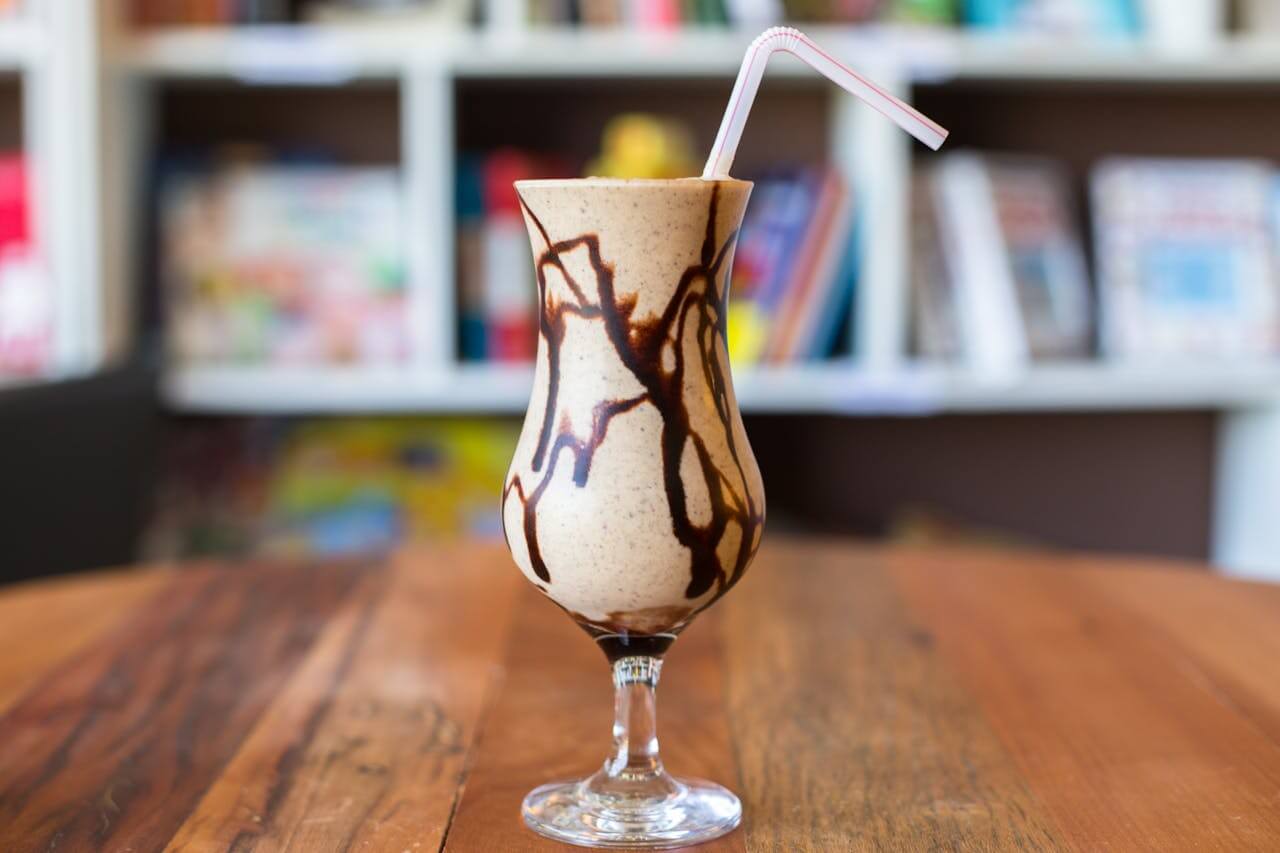
This method blends the hot concentrate directly with ice in the blender — the fat emulsification and the chilling happen simultaneously in the high-speed blending environment. The result is a thick, creamy, uniform cold drink with no separation and a genuinely impressive texture.
Step-by-Step
Step 1 — Make concentrate exactly as in Method 1 28g cacao, 120ml water at 85°C, blend 30 seconds. The concentrate is your base.
Step 2 — Add ice to blender immediately Without pausing, add 200–250g of ice (roughly 1.5 cups) directly to the blender containing the hot concentrate.
Step 3 — Add any fat or liquid additions For a pure version: nothing else. For a latte-style: add 100ml cold unsweetened plant milk. For keto: add 1 tbsp MCT oil (which will emulsify beautifully in the blending action).
Step 4 — Blend on high for 45–60 seconds Start on medium to break the ice, then increase to high. The friction heat from the blender keeps the fat emulsified while the ice brings the temperature down simultaneously. The result is a thick, smooth, cold-froth-topped drink.
Step 5 — Pour immediately into a chilled glass A glass kept in the freezer for 5 minutes is ideal. The frappé will hold its texture for 5–8 minutes before the ice melts and the texture loosens.
Keto Frappé Variation
28g cacao + 120ml water (85°C) + 200g ice + 1 tbsp MCT oil + 3 cocoa butter wafers + pinch salt → blend 60 seconds. Zero added sugar, approximately 22g fat, 2g net carbs. Tastes like a very good chocolate frappuccino. The MCT oil in cold frappé form is particularly effective — the blending creates a stable emulsion that holds even as the ice melts.
Method 3: The Cocktail Shaker Method — Fastest, No Blender Required
Verdict: The minimalist method. Great for travel, camping, or any situation where a blender isn’t available. Requires arm work but produces a surprisingly good result.
The cocktail shaker approach mirrors how bartenders make shaken espresso drinks — the ice both chills and aerates the liquid simultaneously. The vigorous shaking action does a reasonable job of maintaining emulsification, and the temperature drop through the metal shaker is rapid and even.
Step-by-Step
Step 1 — Prepare a thin paste in a mug Place 28g of finely chopped or grated cacao in your mug. Add 60ml of 85°C water. Stir vigorously with a spoon for 2 minutes until you have a smooth, thick paste. The small amount of water forces thorough dissolution before chilling.
Step 2 — Add remaining liquid Add 120ml room-temperature water (or cold plant milk) to the mug and stir to combine. Let this sit 60 seconds — you want it hot-warm, not boiling, before it goes into the shaker.
Step 3 — Add to cocktail shaker with ice Pour the liquid into a cocktail shaker filled with ice. Seal immediately.
Step 4 — Shake vigorously for 30–45 seconds Hard shaking — the metal shaker will become very cold on the outside, confirming the drink is chilling rapidly. The shaking action aerates and helps keep the fat in suspension.
Step 5 — Double-strain into a glass over fresh ice Strain through the shaker’s built-in strainer into a fresh glass over new ice. The straining removes any small undissolved particles. Drink immediately.
What to expect: Less foam than the blender methods, slightly more body than simply pouring over ice. The texture is comparable to a good shaken espresso drink — not thick, but smooth and cold with a slight froth on top.
Method 4: Cold Brew Ceremonial Cacao — The Overnight Method
Verdict: The most sophisticated preparation. Completely different flavour profile from hot-then-chilled methods. Makes a week’s worth in one step. Requires planning.
Cold brewing extracts cacao’s flavour compounds at low temperature over a long time, rather than at high temperature over a short time. This produces a fundamentally different drink — smoother, less bitter, with the fruity and floral notes of high-quality cacao more prominent, and the intense theobromine bitterness more muted.
The important distinction from all other iced methods: Cold brew does not require — and actually cannot use — emulsification. Because no heat is involved, the cacao butter from paste does not fully dissolve into the liquid. Cold brew works best with ceremonial cacao that has been grated into a very fine texture, or with cacao nibs (though nibs produce a lighter, less rich result).
Step-by-Step (Paste Method)
Step 1 — Grate your cacao very finely Use the fine side of a box grater. You need maximum surface area for cold extraction. For a 750ml batch: 56–70g of finely grated ceremonial cacao paste.
Step 2 — Combine in a mason jar or French press Add grated cacao to a 1-litre mason jar or a large French press. Pour 750ml of cold filtered water over the cacao. Stir gently to ensure all the cacao is wet.
Step 3 — Cover and refrigerate 12–16 hours Overnight is ideal. The cold extraction is slow — less than 12 hours produces a weak, underdeveloped flavour. More than 18 hours can introduce astringency as tannins extract more aggressively.
Step 4 — Strain carefully Pour through a fine-mesh strainer lined with cheesecloth, or press through a French press plunger. The cacao solids will be left behind. The resulting liquid will be dark brown, slightly cloudy, and notably less thick than a hot-prepared drink.
Step 5 — Store the concentrate The strained cold brew cacao concentrate keeps for up to 5 days refrigerated in an airtight container. This is your base.
Step 6 — Serve over ice Pour cold brew concentrate over ice at a 1:1 ratio with cold water, or 1:1 with plant milk for a creamier version. Because cold brew is a concentrate, dilution is built into the serving.
What cold brew cacao tastes like
This surprises most people who try it for the first time. Without the heat extraction, cacao’s volatile bitter compounds are less aggressive. The result is noticeably smoother than any hot-then-chilled preparation — with the origin-specific flavour characteristics (fruit, flowers, earth) more distinct and the theobromine bitterness in the background rather than the foreground. Arriba Nacional cacao cold brewed is almost wine-like in its aromatic complexity.
The theobromine content is lower than hot-prepared cacao. Cold water extracts theobromine less efficiently than hot water. Expect roughly 60–70% of the theobromine content of a comparable hot-prepared serving. For the energetic effect, the concentrate method or frappé method delivers more theobromine per cup.
6 Iced Cacao Recipes
Recipe 1: Classic Iced Cacao (Pure, No Additions)
The baseline. Understand the drink before you modify it.
- 28g ceremonial cacao paste, finely chopped
- 140ml filtered water at 85°C
- Large glass of ice
Blend concentrate 45 seconds. Pour over ice. Drink within 8 minutes.
Tasting notes: Earthy, bitter, complex. The cold temperature suppresses bitterness perception by approximately 30% compared to the same dose served hot — you may be surprised how approachable pure iced cacao is without any sweetener.
Recipe 2: KitchLit Keto Iced Cacao
Our daily summer OMAD protocol. Zero carbs added, deeply satisfying.
- 28g ceremonial cacao paste (Cacao Laboratory)
- 120ml filtered water at 85°C
- 1 tbsp MCT oil (C8)
- 3 cocoa butter wafers (~15g)
- 1 pinch Himalayan salt
- Large glass of ice
Blend all together (hot concentrate + fats) for 45 seconds. Pour over ice. The MCT oil emulsifies into the fat-rich concentrate in a way it cannot in a water-only drink — the blended result is notably creamier than plain concentrate. Approximately 23g fat, 2g net carbs. Sustains 4–6 hours of fasted energy without insulin response.
Recipe 3: Iced Cacao Latte
Accessible, creamy, great entry point for cacao beginners.
- 28g ceremonial cacao paste
- 100ml filtered water at 85°C
- 150ml unsweetened oat milk (cold)
- 1 tsp raw honey or maple syrup
- Pinch cinnamon
- Large glass of ice
Make concentrate with water only (100ml, blend 30 seconds). Add cold oat milk and sweetener, blend 15 seconds more. Pour over ice. The oat milk’s beta-glucan content creates a slightly thicker, more café-style texture. Note: oat milk adds carbohydrates — not suitable for keto/fasting protocols.
Recipe 4: Spiced Iced Cacao (Mesoamerican Tradition, Cold)
The traditional spice combination translates beautifully to cold.
- 28g ceremonial cacao paste
- 140ml filtered water at 85°C
- ¼ tsp Ceylon cinnamon
- 1 tiny pinch cayenne pepper
- 1 pinch Himalayan salt
- 1 tsp raw honey (optional)
- Ice
Blend all ingredients with hot concentrate for 45 seconds. Pour over ice. The cayenne’s vasodilatory effect works identically at cold temperatures — the heat from cayenne is a chemical reaction, not a temperature sensation. The cold drink with a warm spice finish is a genuinely unusual and excellent flavour contrast.
Recipe 5: Iced Cacao Agua Fresca
Light, refreshing, barely-there chocolate. Perfect for the hottest days.
- 15g ceremonial cacao paste (lighter dose)
- 200ml filtered water at 85°C
- Juice of ½ lime
- 1 tsp agave or honey
- Pinch salt
- 4–6 fresh mint leaves
- Plenty of ice, topped with sparkling water
Make a lighter concentrate (15g in 200ml water). Blend 30 seconds. Add lime juice, sweetener, salt. Stir to combine. Pour over ice in a tall glass and top with 100ml cold sparkling water. Add mint leaves. This is closer to a Mexican agua de chocolate — light, citrus-forward, refreshing. The lime amplifies the fruity origin notes of high-quality cacao in a way nothing else does.
Recipe 6: Cold Brew Cacao + Espresso (Iced Mocha)
The summer mocha, made with real ingredients.
- 150ml cold brew cacao concentrate (Method 4)
- 1 shot espresso, cooled to room temperature
- 100ml cold unsweetened almond milk
- 1 pinch salt
- Ice
Combine cold brew concentrate, espresso, and almond milk over ice. Stir gently. The theobromine from the cold brew and the caffeine from the espresso interact in the same way documented in hot cacao-coffee combinations — the theobromine counteracts caffeine’s blood pressure elevation, producing a smoother energy curve than espresso alone. See our ceremonial cacao vs. coffee breakdown for the science.
The Temperature–Flavour Shift: Why Iced Cacao Tastes Different
This is worth understanding because it affects how you tune your recipes.
Cold suppresses bitterness. Temperature has a significant effect on bitter taste perception. The same 28g of ceremonial cacao paste tastes noticeably less bitter cold than hot. This is why the pure iced version (Recipe 1) is so much more approachable than pure hot cacao to new drinkers. The bitter compounds are present in the same quantity — your perception of them is reduced.
Cold also suppresses sweetness. Ice cream needs more sugar than room-temperature pudding to taste equally sweet — the same principle applies here. If you typically drink your hot cacao with a touch of honey, you may want slightly more sweetener in an iced version, or you may find you need none at all as the reduced bitterness no longer needs balancing.
Cold accentuates acidity and fruitiness. High-quality single-origin cacao has subtle fruity notes — tropical fruit in Ecuadorian Arriba Nacional, berry-like notes in some Guatemalan varieties, wine-adjacent characteristics in certain Tanzanian origins. These notes are more noticeable cold than hot, because cold reduces the intensity of the dominant flavours (bitterness, roasted depth) that mask them in a hot drink.
Practical implication: An iced cacao made with genuinely good heirloom cacao (like Cacao Laboratory’s Arriba Nacional) will showcase origin characteristics that you might not notice in the hot version. This is an argument for using your best cacao for iced preparation, not saving it for winter.
Batch Prep: Making a Week of Iced Cacao at Once
For daily iced cacao drinkers, batch preparation is a genuine game-changer. Here are two approaches:
Option A: Concentrate Batch (Best for quality)
Make a 5-day concentrate in one session:
- 140g ceremonial cacao paste (5 × 28g daily doses)
- 700ml filtered water at 85°C
Chop paste finely. Blend in batches (your blender jug may not hold all at once) at 45 seconds per batch. Combine in a 1-litre glass jar. Allow to cool to room temperature (do not seal while hot — condensation creates a pressure risk). Once at room temperature, seal and refrigerate.
Storage life: 4–5 days refrigerated. The emulsion will separate in the fridge — this is normal and expected. The cacao butter will rise to the top and the liquid will appear separated. Before each serving: shake the jar vigorously for 20–30 seconds to re-emulsify, then pour your day’s concentrate portion over fresh ice.
Serving from concentrate: Each day, measure 140ml from the batch into a glass over ice. You have your morning iced cacao in 30 seconds rather than 6 minutes.
Option B: Cold Brew Batch (Best for convenience)
Follow Method 4 (overnight cold brew) with 112g of grated paste in 1.5 litres of cold water. Steep 14–16 hours. Strain. Store up to 5 days. This produces a lighter, ready-to-pour drink that requires no daily prep at all — pour over ice each morning.
The Ice Makes a Difference Too
Worth a brief note: the quality and format of ice noticeably affects iced cacao.
Large cubes: Melt slowest, least dilution per minute of drinking time. Best for the concentrate method where you want the drink to last 10–15 minutes at good flavour.
Crushed ice: Melts fastest, creates maximum dilution quickly. Best for the agua fresca recipe (Recipe 5) where you want a very light, rapidly refreshing drink.
Frozen cacao cubes: The best upgrade. Prepare your cacao concentrate, pour into an ice cube tray, freeze. Use your own cacao cubes instead of water ice — zero dilution, flavour only intensifies as the cubes melt. A single batch of cacao ice cubes lasts 2–3 weeks in a sealed freezer bag and transforms every iced cacao you make.
Making cacao ice cubes: Prepare concentrate using Method 1 technique. Let cool completely to room temperature. Pour into silicone ice cube trays. Freeze minimum 4 hours. The cacao butter will solidify in the cubes, which is fine — it melts and re-emulsifies when you pour liquid over the cubes or blend them.
Frequently Asked Questions
Does iced cacao have the same nutritional benefits as hot?
Yes, with one exception. The theobromine, magnesium, iron, and flavonoids in ceremonial cacao are heat-stable and survive cooling without significant degradation. The exception is the cold brew method — cold water extracts theobromine approximately 30–40% less efficiently than hot water, so a cold-brewed serving delivers less theobromine per gram than a hot-then-chilled preparation. All heat-prepared methods (concentrate, frappé, shaker) retain the full nutritional profile.
Why does my iced cacao separate and look greasy?
This is the cacao butter resolidifying at cold temperatures. It’s not a flaw in your cacao — it’s a physics problem. Solve it by: using the concentrate method (rapid temperature drop locks emulsification), adding MCT oil or coconut oil (these act as natural emulsifiers at cold temperatures), or re-blending the chilled drink briefly before drinking. A small pinch of sunflower lecithin (a natural emulsifier) added during blending also prevents separation effectively.
Can I make iced cacao the night before?
Yes, using the concentrate batch method. Make your concentrate, cool fully, refrigerate in a sealed jar. The next morning, shake the jar to re-emulsify and pour 140ml over fresh ice. Takes 30 seconds. The concentrate keeps 4–5 days.
Is iced cacao still fasting-compatible?
Yes, for ketosis and OMAD protocols — the same logic applies as for hot cacao. The fat-dominant macros, minimal net carbs, and negligible insulin response are unchanged by serving temperature. For strict caloric fasting, the 75 calories of a 28g serving remain 75 calories cold. See our full breakdown in the ceremonial cacao fasting guide.
Can I use cacao powder instead of paste for iced cacao?
You can, but the result is fundamentally different. Cacao powder is defatted — the cacao butter has been removed. This means the main challenge of iced cacao (fat emulsification at cold temperatures) disappears, but so does the velvety texture, the fat-based satiety, and the nutritional richness of the whole food. Powder-based iced cacao is closer to iced hot chocolate — fine as a lighter alternative but not ceremonial in character. See our ceremonial cacao vs. cocoa powder comparison for the full breakdown.
What’s the best cacao for cold preparation?
Heirloom varieties with distinct origin character — specifically, ones with fruity or floral notes — benefit most from cold preparation, as cold accentuates these characteristics. Cacao Laboratory’s Arriba Nacional from Ecuador is our top recommendation year-round, but it’s particularly compelling cold — the natural tropical fruit notes that can be subtle in the hot version become noticeably more prominent.
Can I add alcohol to make a cacao cocktail?
Yes — iced ceremonial cacao makes an excellent cocktail base. The fat-rich, bitter-complex character pairs particularly well with: dark rum (tropical origin affinity with the cacao), mezcal (smoky, earthy complement), or bourbon (vanilla and caramel notes balance the bitterness). Use cold brew cacao as your base, treat it like a strong chocolate bitters. The cocktail application is worth its own dedicated guide — it’s a genuinely unexplored space.
The Bottom Line
Iced ceremonial cacao is not hot cacao poured over ice. It’s a different preparation discipline, and when done correctly it’s one of the most compelling summer drinks in the functional beverage space — complex, satisfying, genuinely energising, and completely free of the sugar load that makes most iced café drinks nutritionally empty.
The method hierarchy is simple:
- Daily driver: Method 1 (concentrate) — 6 minutes, consistently excellent
- Weekend indulgence: Method 2 (blended frappé) — thickest, richest, most impressive
- Travel and minimalism: Method 3 (shaker) — no blender, still very good
- Batch prep and nuance: Method 4 (cold brew) — make Sunday, drink all week, different flavour character
For the cacao itself: Cacao Laboratory is our recommendation for all four methods. The consistent theobromine profile means your concentrate ratios work reliably day to day, and the Arriba Nacional origin character genuinely shines in cold preparation.
🌿 Shop Cacao Laboratory — Our Year-Round Pick
Related reading: How to Make Ceremonial Cacao at Home — All 4 Hot Methods · Does Ceremonial Cacao Break a Fast? · Ceremonial Cacao vs. Coffee · Ceremonial Cacao vs. Cocoa Powder · Cacao Laboratory Full Review