
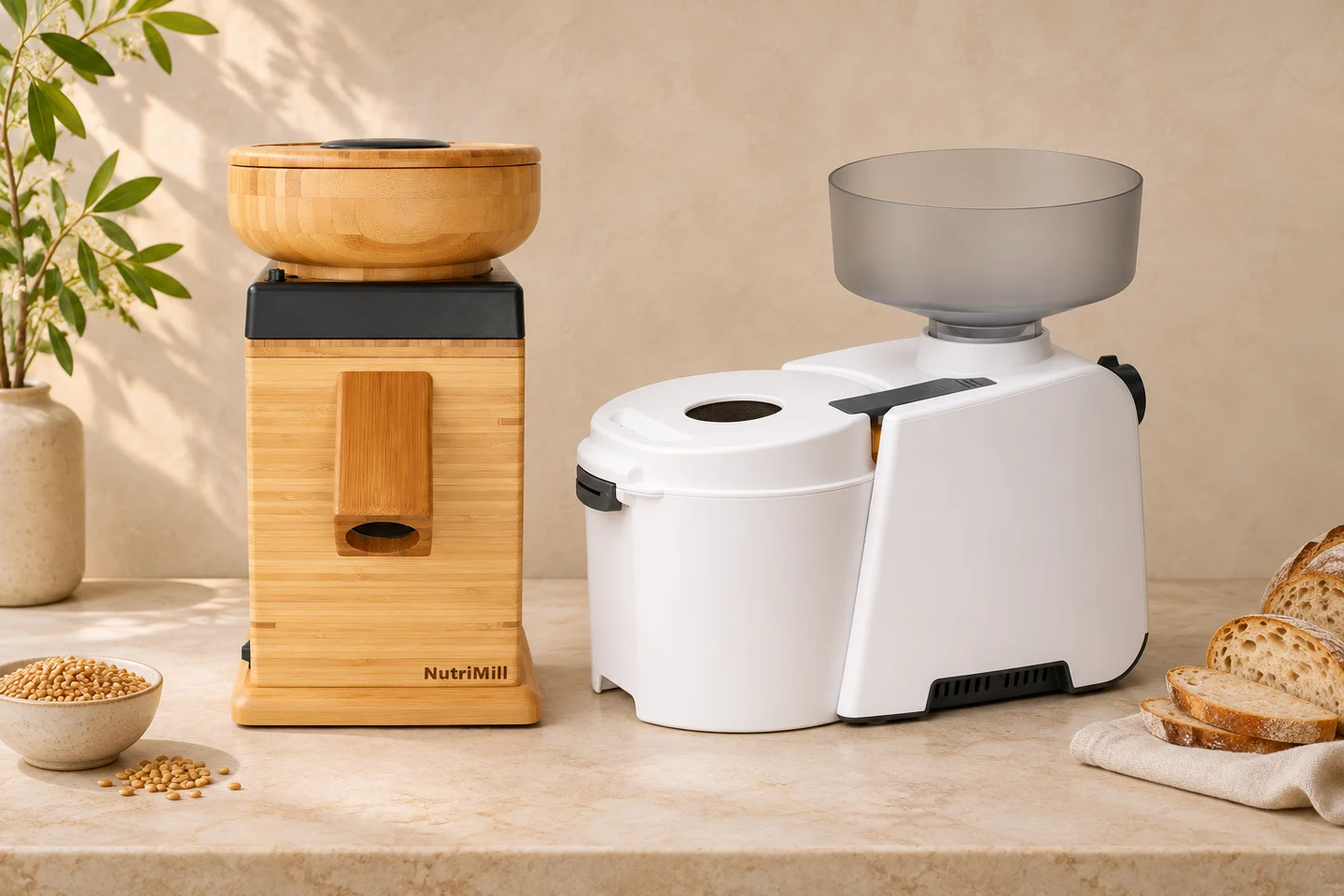
The NutriMill Harvest and NutriMill Impact can both mill a wide variety of dry, non-oily grains and legumes into flour. That includes wheat for bread, rice for gluten-free baking, and some beans for adding to recipes. The main differences are how you adjust the grind and how each mill handles larger ingredients.
BEST FOR VERSATILITY

NutriMill Harvest
Stone grain mill
✓ Corundum milling stones
✓ Fine flour to cracked grain
✓ Natural bamboo body
At NutriMill
BEST FOR BREAD BAKING
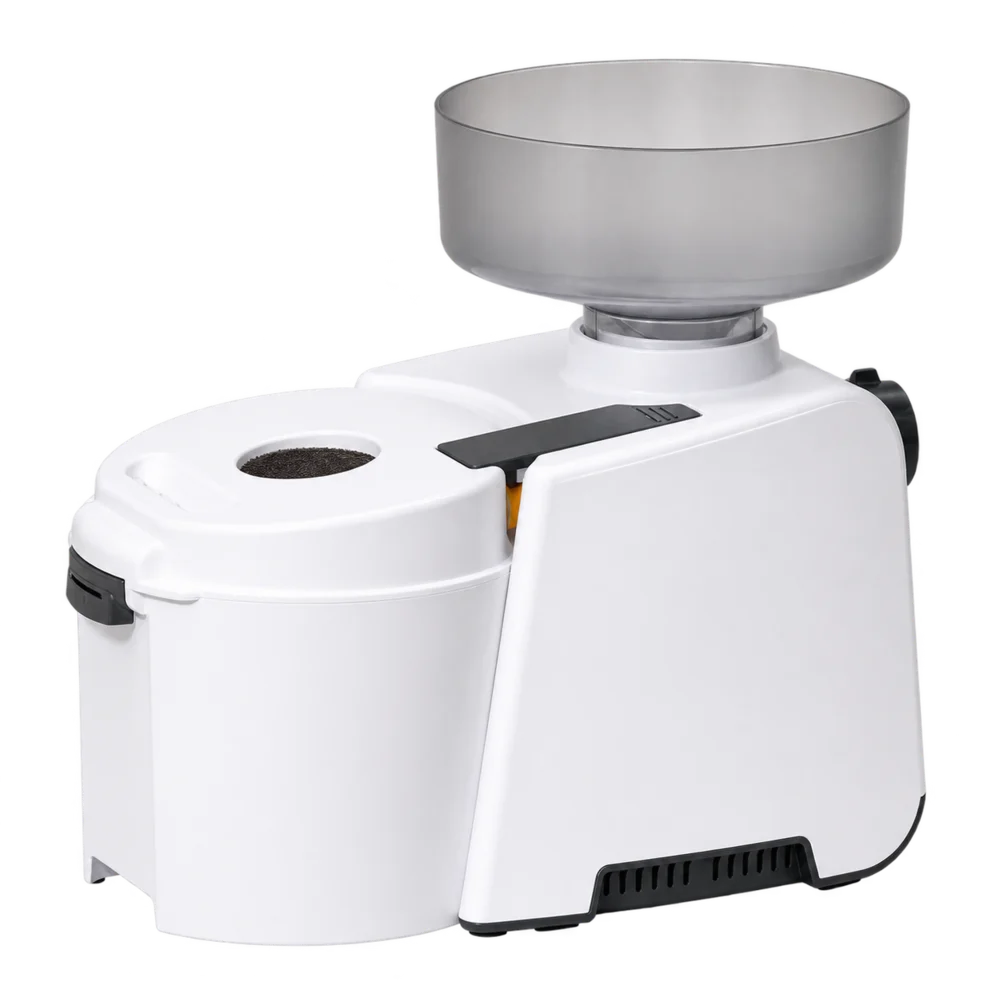
NutriMill Impact
High-speed grain mill
✓ Stainless steel impact heads
✓ Covered flour canister
✓ Parts nest for easy storage
At NutriMill
Whole grains for bread and baking
Both mills can grind hard and soft wheat, rye, spelt, barley, Khorasan wheat (Kamut), farro, triticale, emmer, and einkorn.
Hard wheat is a common choice for bread flour, while soft wheat works well for cakes, pastries, and other tender baked goods. Rye, spelt, and ancient grains can add different flavors and textures to breads.
Gluten-free grains
Both mills can grind white and brown rice, oat groats, millet, sorghum, buckwheat, quinoa, amaranth, teff, and dried sweet corn. Use these flours in recipes designed for them or combine them in a flour blend.
Use whole oat groats for oat flour. If you’re milling for someone with celiac disease, keep in mind that grain and equipment can come into contact with gluten.
Beans and legumes
Both mills can handle certain dry legumes, including lentils, chickpeas, mung beans, split peas, baby lima beans, black beans, and pinto beans. Use legume flour in recipes that call for it, such as cooked batters or soups.
For large legumes approved for the Harvest, NutriMill recommends a first pass on the coarsest setting and a second pass at a finer setting. Some large beans may not feed through the Impact. Check the guide for your model before milling a new variety.
What’s the difference between the Harvest and Impact?
The Harvest uses stones and a texture knob. Choose it if you want to make fine flour for baking and coarser grain for recipes such as porridge.
The Impact uses stainless steel impact heads. Its knob controls how quickly the grain feeds into the mill. A slower feed generally produces finer flour, while a faster feed produces a coarser result. Larger grains may need a higher setting to feed in the first place.
If you’re choosing between the two, see our NutriMill Harvest vs. Impact comparison.
What shouldn’t you grind?
Keep wet or oily ingredients out of both mills. Nuts, flaxseed, sunflower seeds, and coffee beans can leave residue or clog the mill. Stick to the dry grains and legumes listed in the guide for your model.
Tips for getting the grind you want
- Use clean, dry ingredients. Check the grain before you fill the hopper.
- Start with a small batch. See how the grain feeds and feel the flour before milling the rest.
- Adjust gradually. A setting that works for wheat may give a different result with rice or quinoa.
- Follow your model’s cleaning instructions. The Harvest’s stones and the Impact’s milling heads have different care instructions.
Frequently asked questions
Can the Harvest and Impact grind wheat berries?
Yes. Both can mill hard and soft wheat berries. Hard wheat is a common choice for bread, while soft wheat is often used for pastries and cakes.
Can either mill grind rice into flour?
Yes. Both can grind dry white and brown rice into flour.
Can the mills grind corn?
Both support dried sweet corn. Check the guide for your exact model if you want to mill a specific variety such as popcorn or dent corn.
Can I grind flaxseed or nuts?
Keep flaxseed and nuts out of both mills because of their oil content. Use a grinder designed for seeds or nuts.
Which mill is better for coarser grain?
Choose the Harvest if you regularly want cracked grain or a coarse grind for porridge. The Impact can produce coarser flour by increasing the feed rate.