
KITCHLIT PRODUCT REVIEW
NutriMill Impact Grain Mill Review
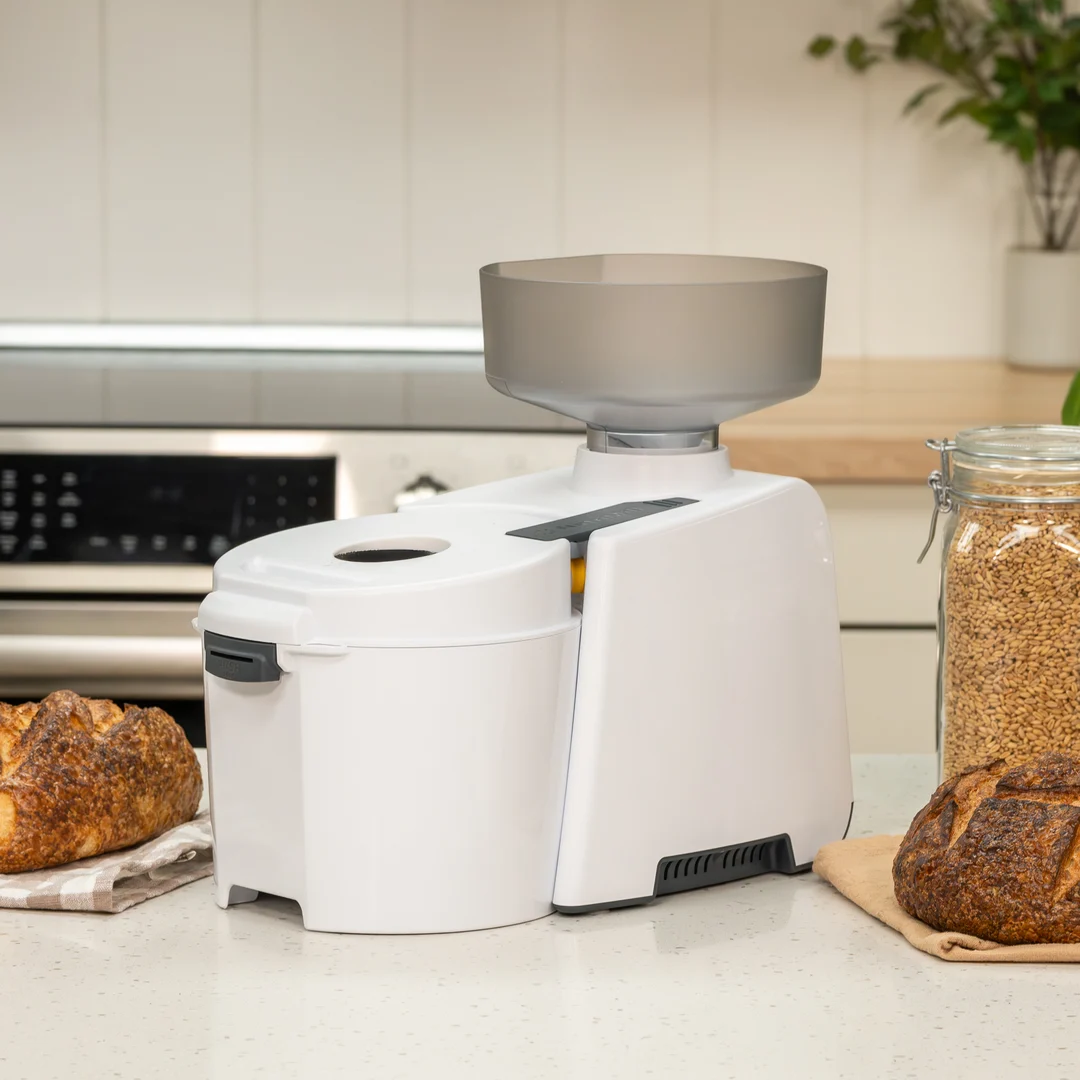
The Impact is a good fit for bread bakers who want to mill flour right before mixing dough. It grinds dry grains into a covered canister, has one dial for adjusting texture, and packs away with its parts nested together.
We may earn a commission if you buy through this link.
1,200 W
Motor
7 cups
Grain hopper
Up to 11 cups
Flour per batch
5 years
Mill warranty
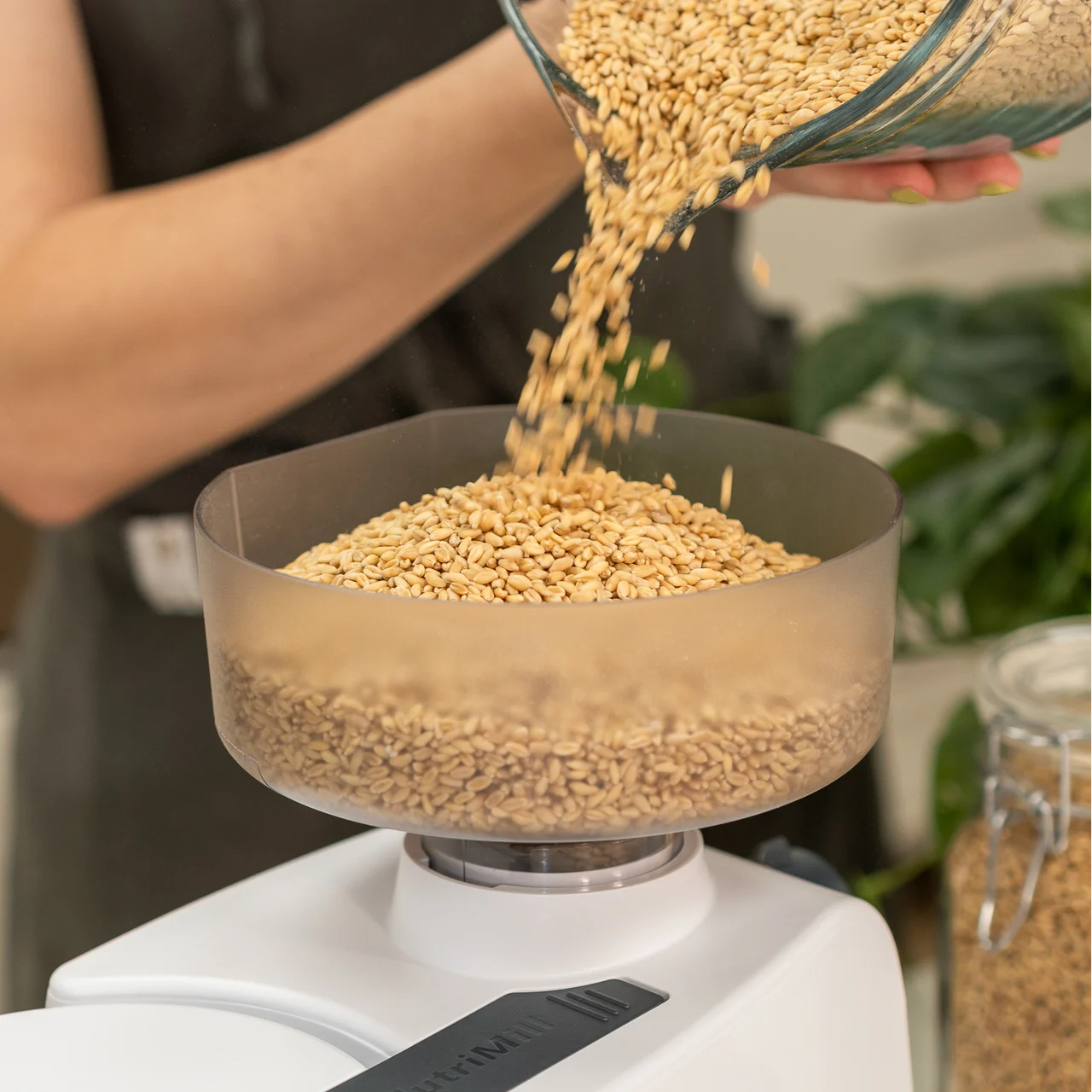
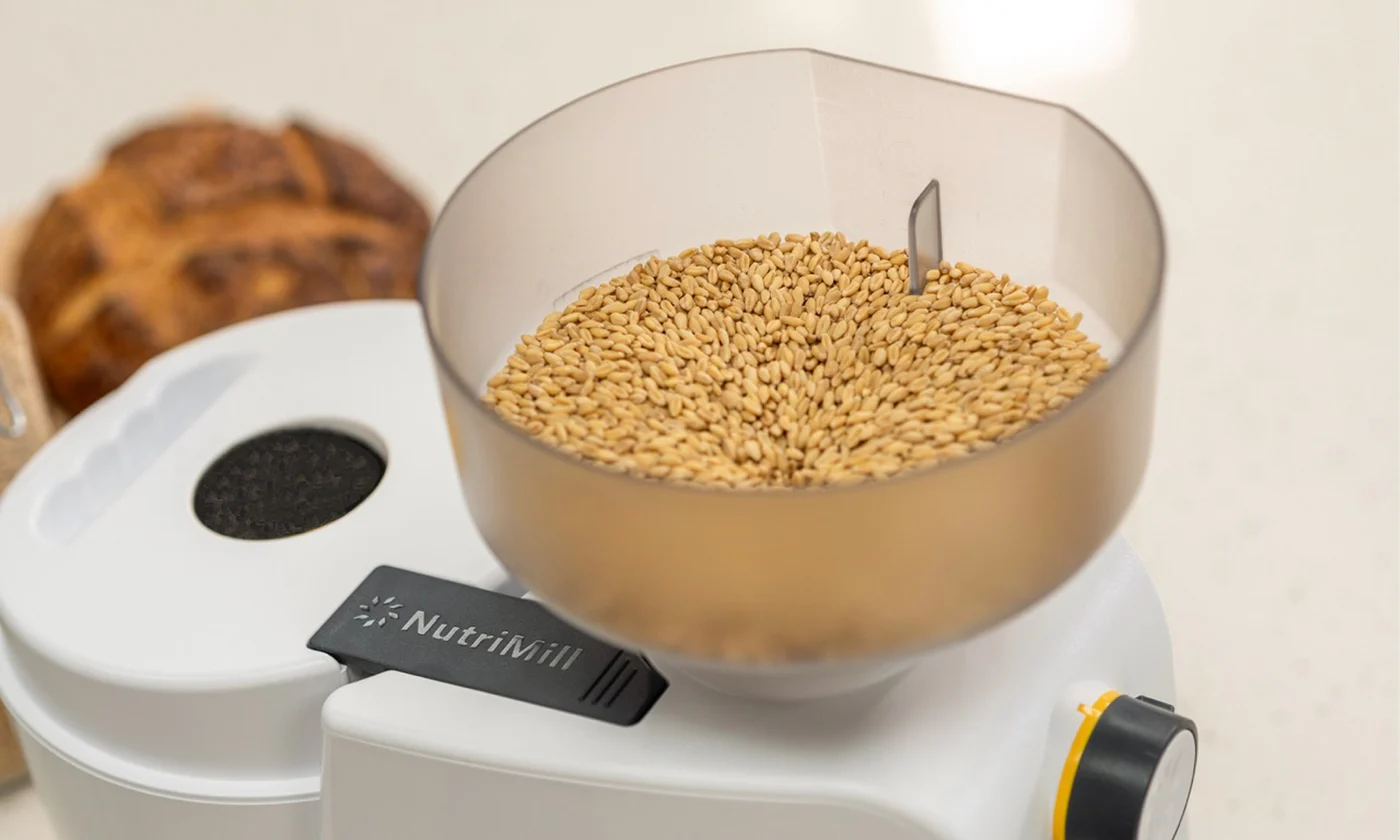
Loading wheat berries into the Impact’s hopper. Product photos by NutriMill.
THE MILLING WORKFLOW
How the Impact mills flour
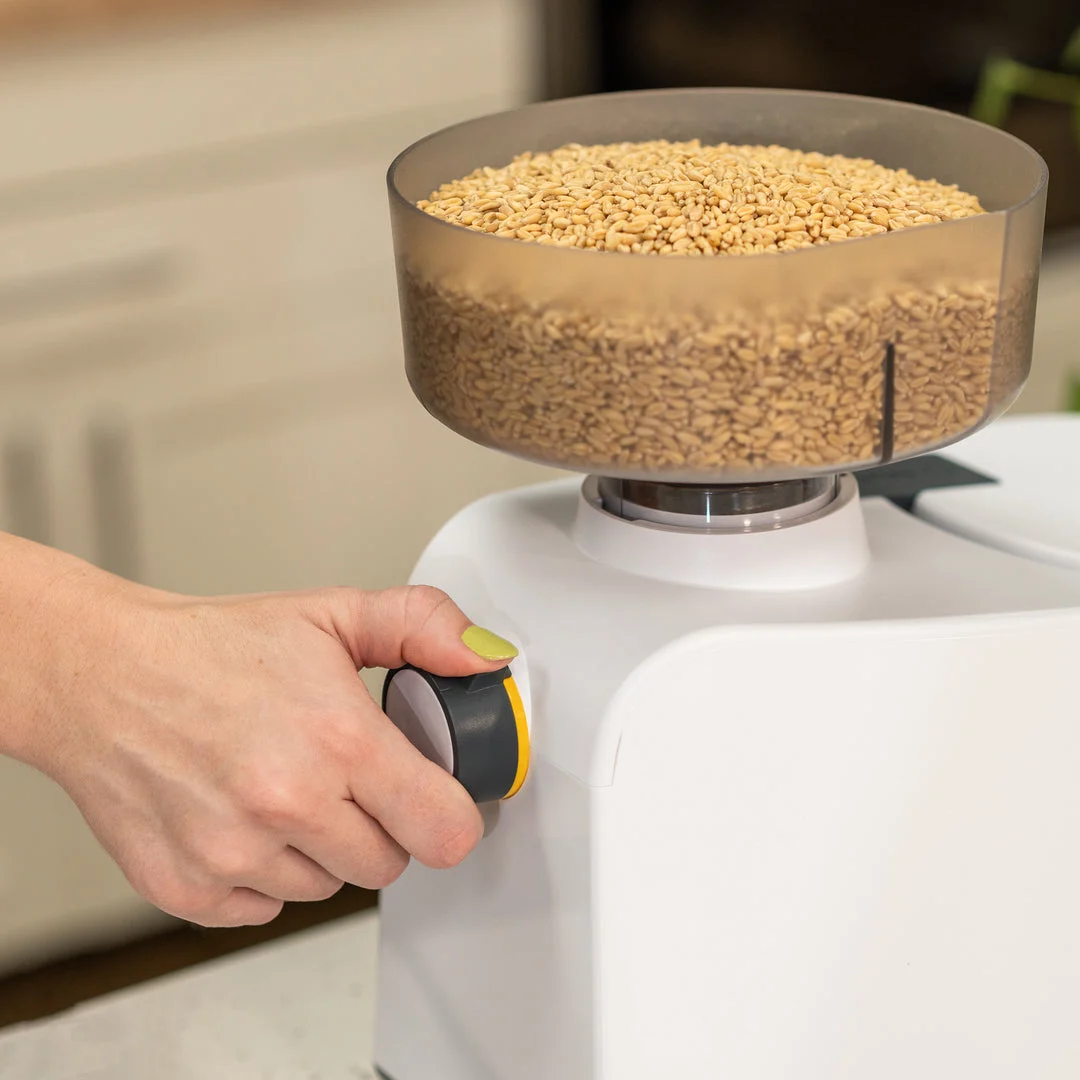
Grain drops from the hopper into stainless steel impact heads, which break it into flour and send it into the canister. The feed dial changes how quickly grain enters the mill. Slower feed generally gives a finer flour, while faster feed gives a coarser meal.
Start with the lowest setting that lets your grain feed steadily. NutriMill says wheat typically starts feeding around setting 2 or 3. For a repeat bake, jot down the setting with the grain variety and weigh the flour you use. Volume can change with the grind.
The Impact handles dry wheat, rice, corn, oats, and suitable legumes such as chickpeas. At 16 × 8¼ × 12⅞ inches and 10.3 pounds, it’s worth measuring the cupboard where you plan to store it.
A closer look at the NutriMill Impact
Photos by NutriMill.
On the counter
Feed-rate dial
Attaching the canister
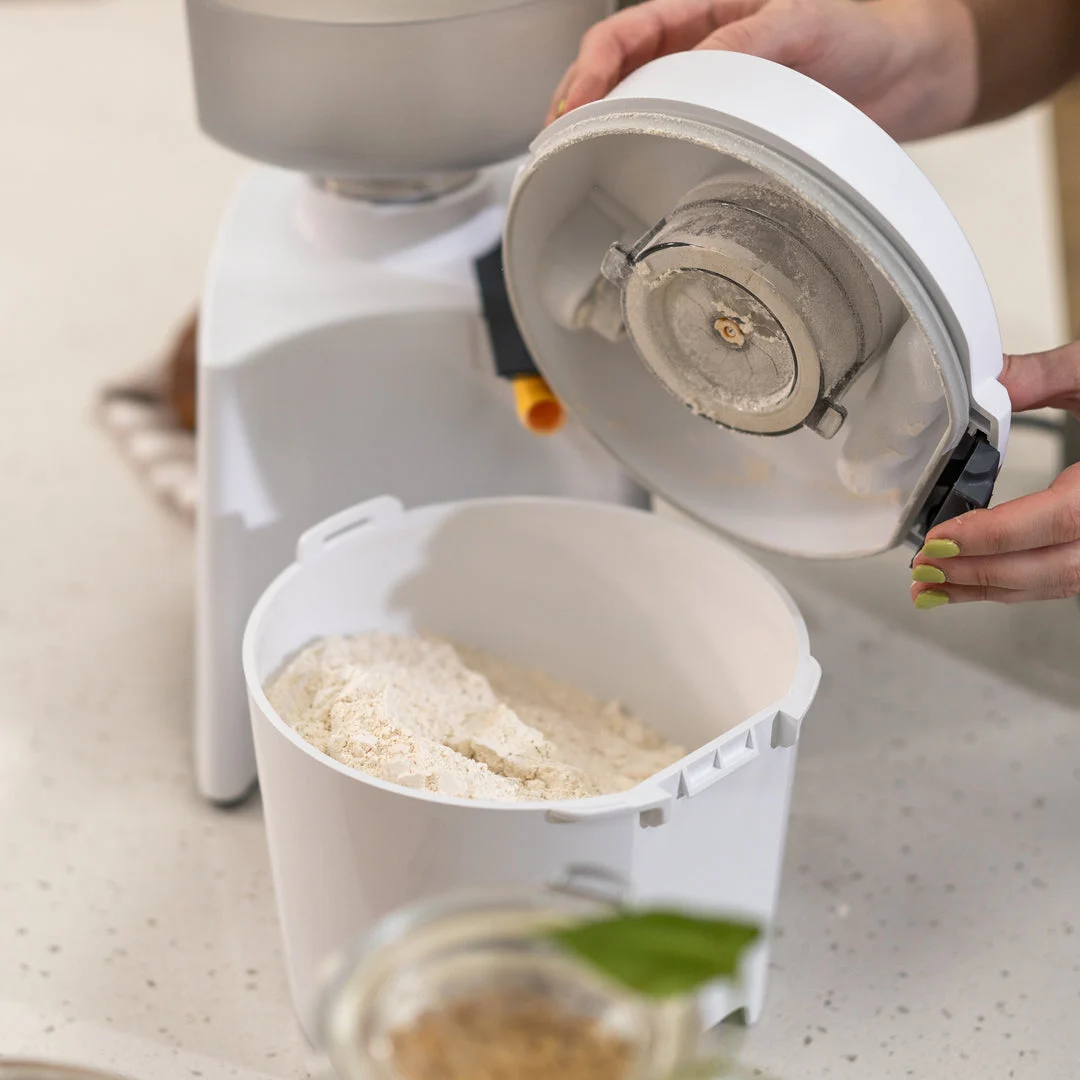
Freshly milled flour
Inside the NutriMill Impact
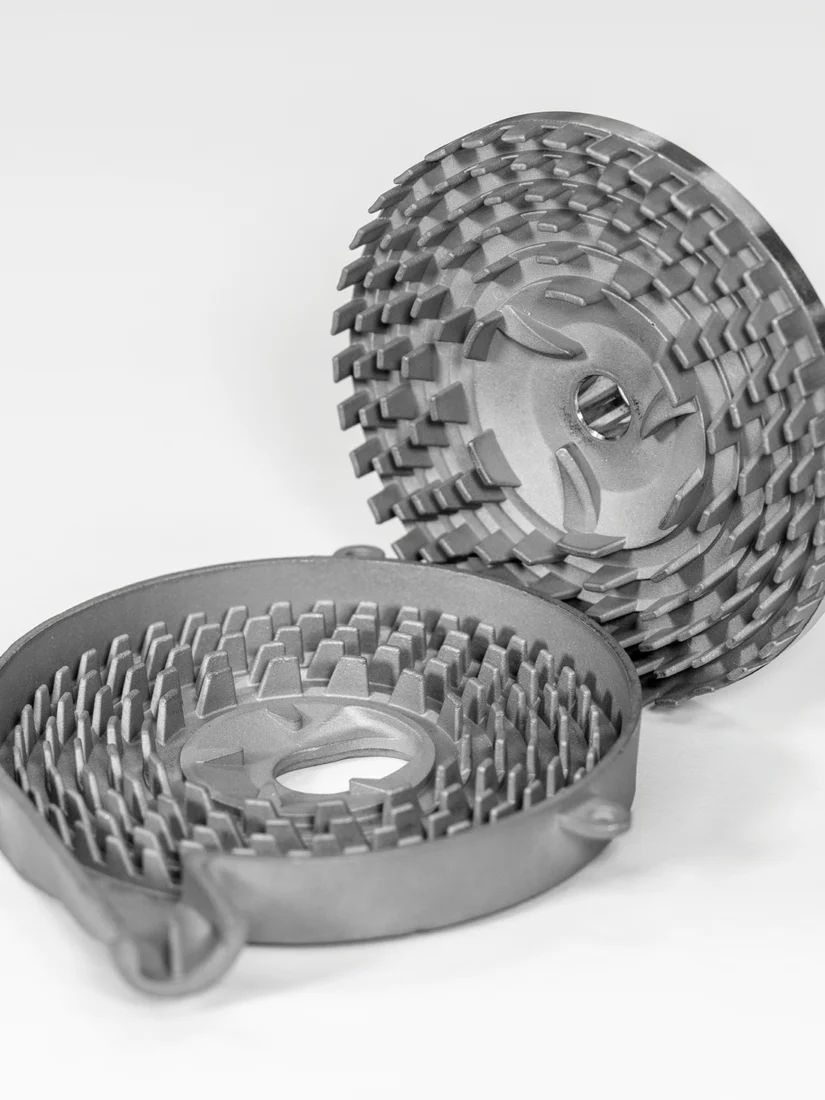
Stainless steel impact heads. Photo by NutriMill.
1. Impact Milling Heads
The stainless steel heads break up kernels at high speed to make flour and meal. NutriMill’s limited lifetime warranty covers the milling heads and motor.
2. Effortless Milling
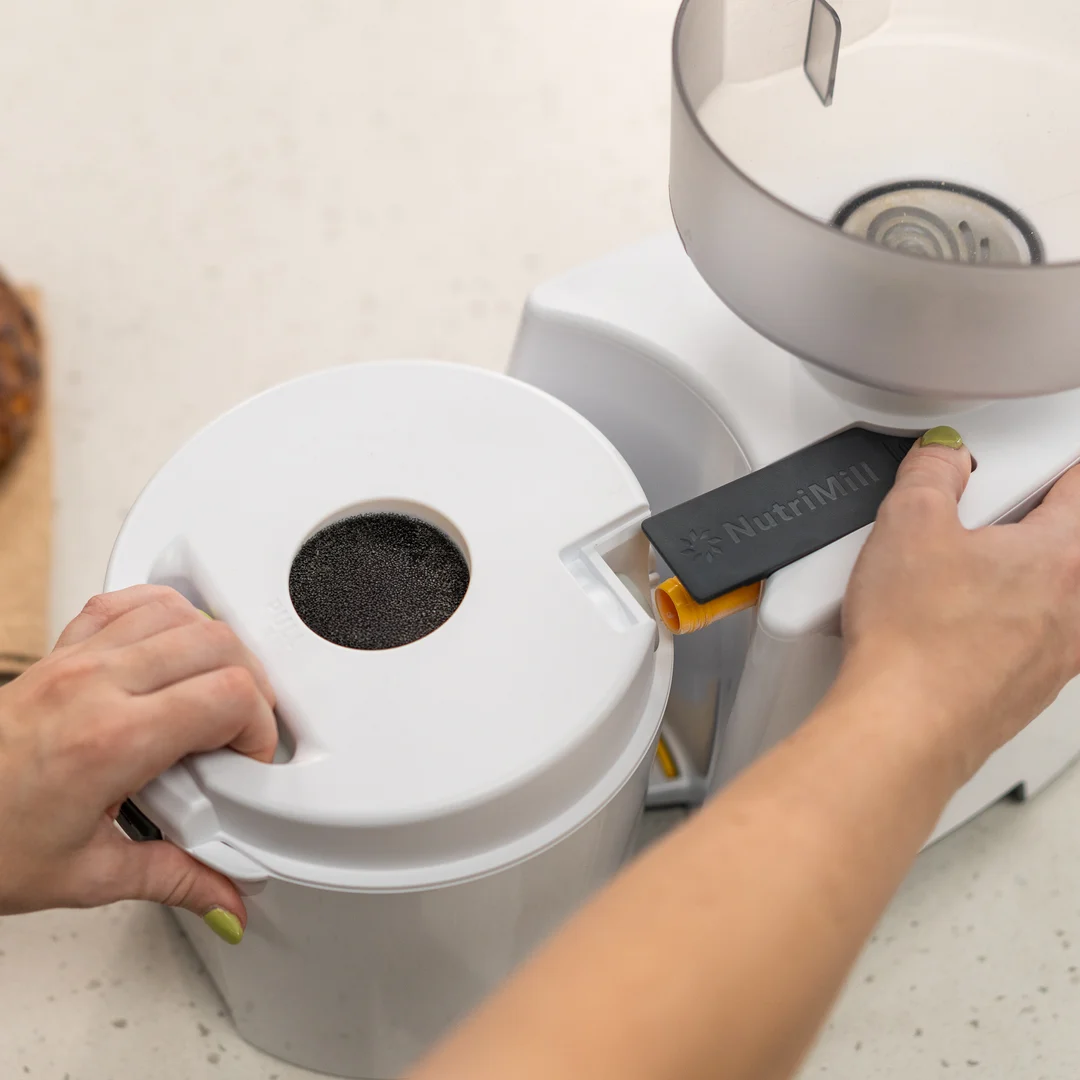
Flour collects in a covered canister while the cyclone filtration system keeps air flowing through the mill. When the batch is done, remove the canister to pour the flour into a bowl or weigh it for a recipe.
3. Feed Rate
The dial controls how fast grain enters the mill. NutriMill suggests setting 1 for fine quinoa flour and 2–3 for fine wheat flour. Try setting 4 or higher for a coarser wheat grind.
Mill any of the following
- Bread grains. Hard wheat berries, spelt, and rye.
- Other grains. Brown rice, oat groats, dry corn, and quinoa.
- Legumes. Dried lentils, split peas, and chickpeas.
Use dry, non-oily ingredients. Extra-large legumes may be too big for the feed opening.
Homeground
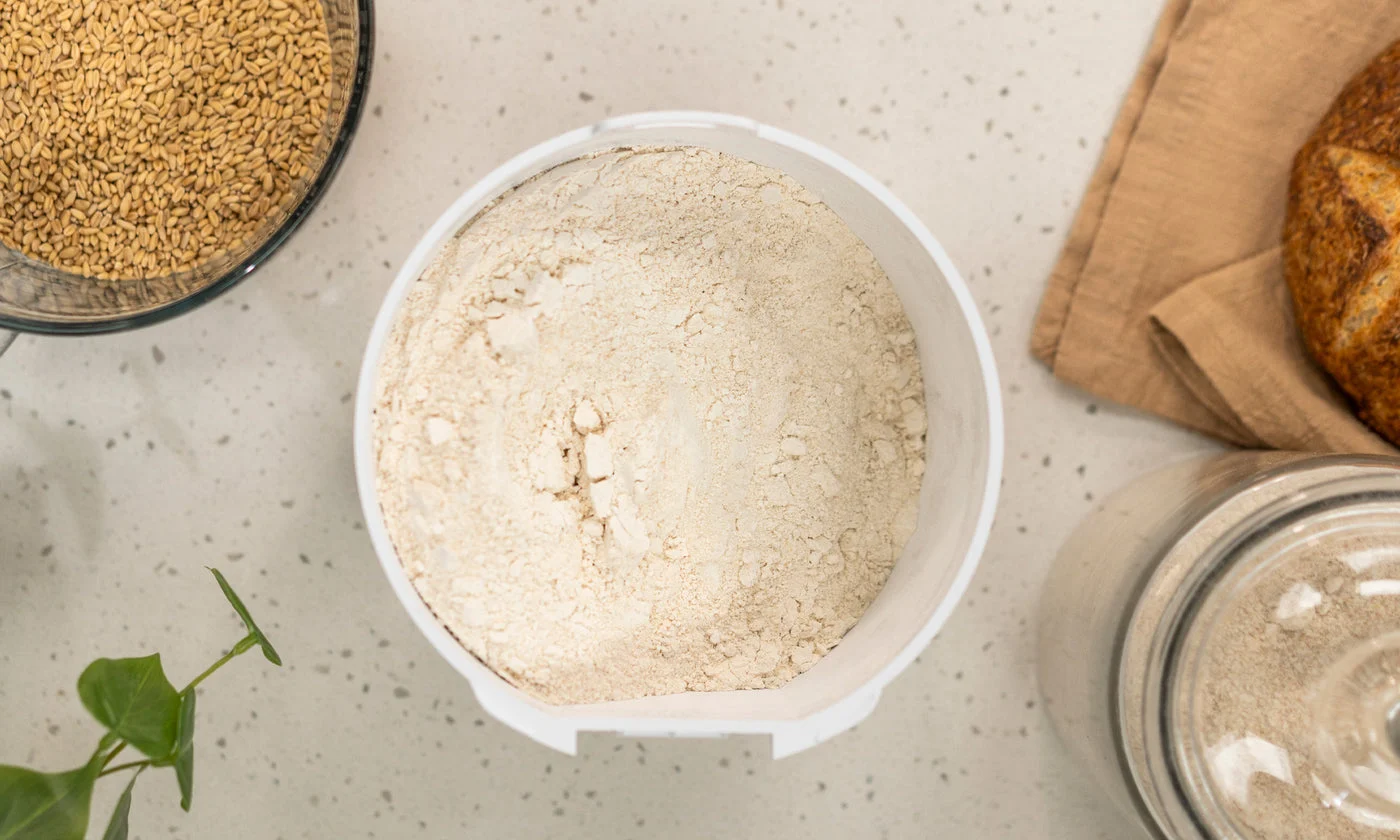
Before and after milling wheat berries. Photos by NutriMill.
Before milling
After milling
What works well and where it falls short
What works well
- Flour stays contained. The canister collects flour under a lid, so you can mill ahead of mixing and carry the batch to the bowl.
- Room to scale a batch. You can mill a cup of grain for a recipe or fill the hopper for a larger bake.
- Removable parts. The hopper, canister, and lid can go on the dishwasher’s top rack.
Where it falls short
- Settings take practice. The same dial number can give different results with different grains.
- Dry ingredients only. Use the grains and legumes on NutriMill’s list. Keep oily nuts and seeds out of the hopper.
- Flour and meal are its strength. If you also make cracked-grain cereal, see the texture range in our NutriMill Harvest review.
CUSTOMER REVIEWS
What owners say
4.9 out of 5
NutriMill’s listing showed 148 reviews when we checked.
Good results with wheat. Laurie K. reported successful first loaves with both hard red and hard white wheat. Gary S. found the mill easy to use and clean.
Some trial and error. Melissa D. wanted clearer guidance on settings for wheat berries. Dee R. wanted a finer grind, and one owner reported flour dust escaping at the filter.
FROM NUTRIMILL
See the Impact in use
NutriMill’s beginner’s guide shows how to assemble the mill, adjust the feed rate, and clean it after milling.
NutriMill Impact FAQ
Can I mill a small batch?
Yes. NutriMill confirms that a one-cup batch works. You can load up to 7 cups of grain, and flour volume varies with the grain and setting.
How do I clean it?
The hopper, lid, canister, cyclone cup, and filter holder can go in the dishwasher. Hand-wash the filter, wipe the motor base, and let the parts dry before milling again.
Does it mill rice and chickpeas?
Yes. NutriMill lists dry rice and chickpeas among the supported ingredients. Larger legumes may struggle to feed. Start with the manufacturer’s grain list if you’re trying a new ingredient.
What does the warranty cover?
NutriMill provides five years of coverage for defects in materials or workmanship, with a limited lifetime warranty on the motor and milling heads.
THE VERDICT
Who should buy the Impact?
The Impact makes the most sense if you bake bread regularly and want to keep whole grain on hand to mill by the batch. If you’re starting out, try a familiar loaf first so you can judge what the fresh flour changes.
We may earn a commission if you buy through this link.