
Home / Waterdrop water filters / A1 review
COUNTERTOP WATER FILTER REVIEW
Waterdrop A1
Review
Hot tea, cold drinking water and reverse osmosis filtration, without a permanent kitchen installation.
By KitchLit · Updated November 9, 2026
Research-based review. We may earn a commission when you buy through our links.
Key takeaways
Best for hot-and-cold routines
A compelling option if you want RO drinking water, chilled glasses and hot drinks from one appliance.
Measure the usable space
The body is narrow, but ventilation and lifting the refill tank require more room than the footprint suggests.
Keep upkeep in mind
Refills, wastewater, cleaning and two replacement-filter schedules are part of ownership.
Is the Waterdrop A1 worth it?
Our verdict: the A1 makes the most sense when you will use both its hot and cold dispensing every day. Its value comes from bringing those routines together with RO filtration. If you mainly want a room-temperature glass of filtered water, much of what you are paying for may go unused.
If ambient RO water is all you need, our Waterdrop N1 review covers a countertop alternative without the A1’s heating and cooling functions.
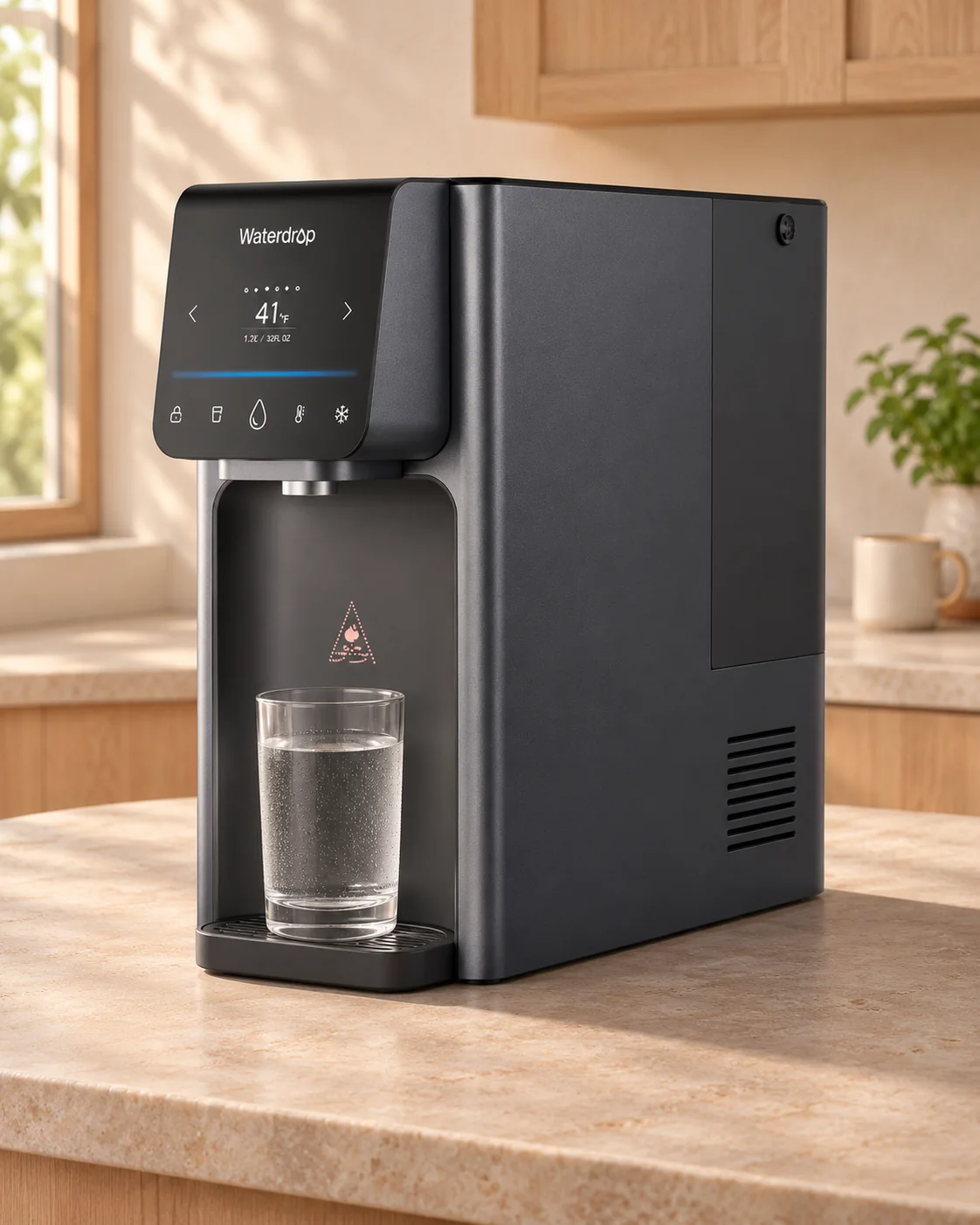
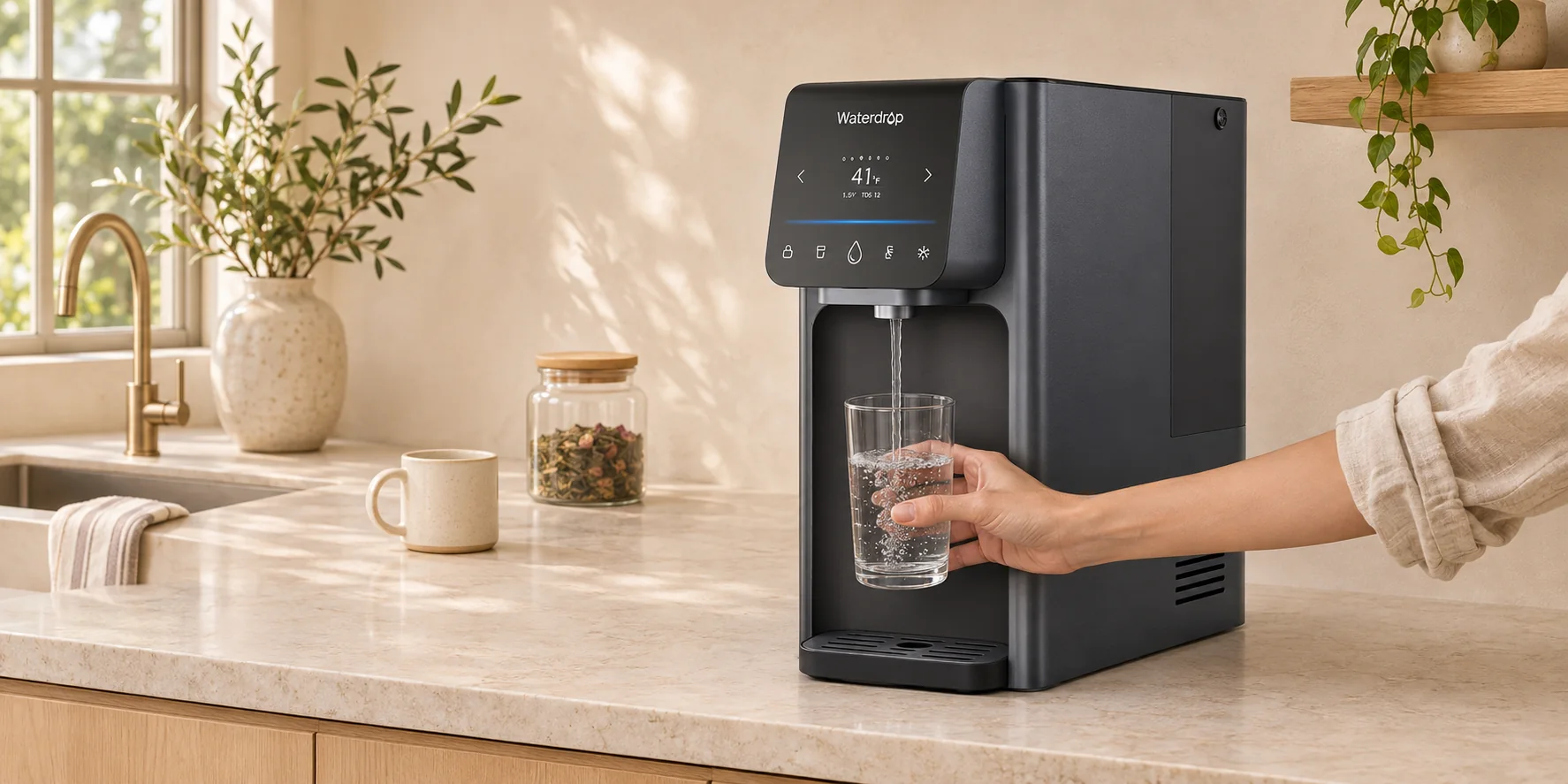
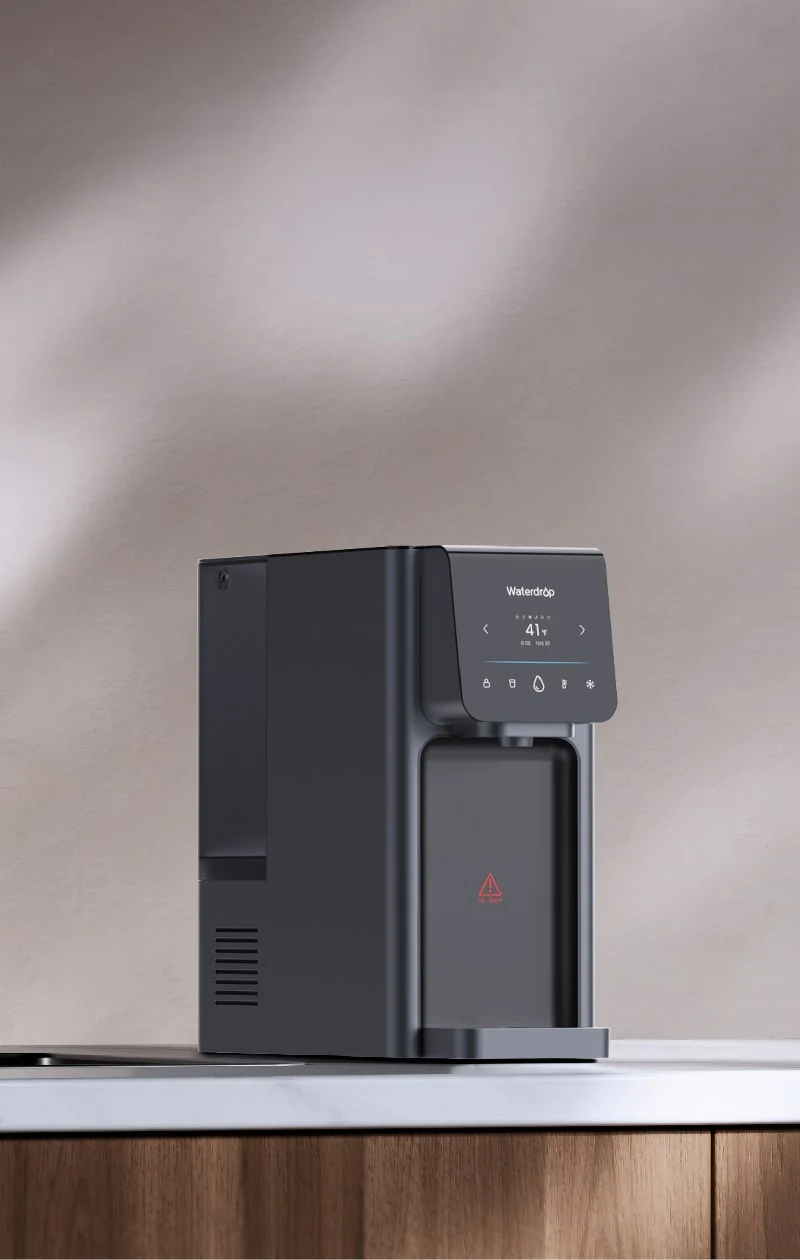
Waterdrop A1 · Hot and cold countertop RO dispenser.
Convenience with a few daily chores
We would shortlist it for a rental kitchen, home office or household that wants filtered water without changing the plumbing. Before buying, picture where you will fill the tank, empty the concentrate and leave the machine ventilated.
That routine matters more than the number of filtration stages. A dispenser you find easy to refill is more useful than one that looks compact online but is awkward to live with.
What we like
- No water-line connection or countertop drilling.
- Chilled, ambient and hot-water selections.
- Preset serving sizes and filter-life reminders.
What to weigh
- A heavy appliance with clearance requirements.
- Manual filling and wastewater emptying.
- Cold-water recovery and ongoing filter costs.
What this review is based on
We reviewed Waterdrop’s current A1 listing, the WD-A1 user manual, the A1 reduction-results sheet and the two replacement-filter listings. Our verdict is an assessment of those documents and the practical tradeoffs they reveal. We have not performed our own A1 water-quality, noise, temperature or long-term durability tests.
At Waterdrop
Waterdrop A1 at a glance
The ratings below describe the A1 model. Keep storage volume, filtration production and dispensing speed separate when comparing it with other systems.
| Feature | Waterdrop A1 | What it means in your kitchen |
|---|---|---|
| Filtration / format | Countertop reverse osmosis; two replaceable cartridges | A refillable appliance, with no supply-line or drain connection. |
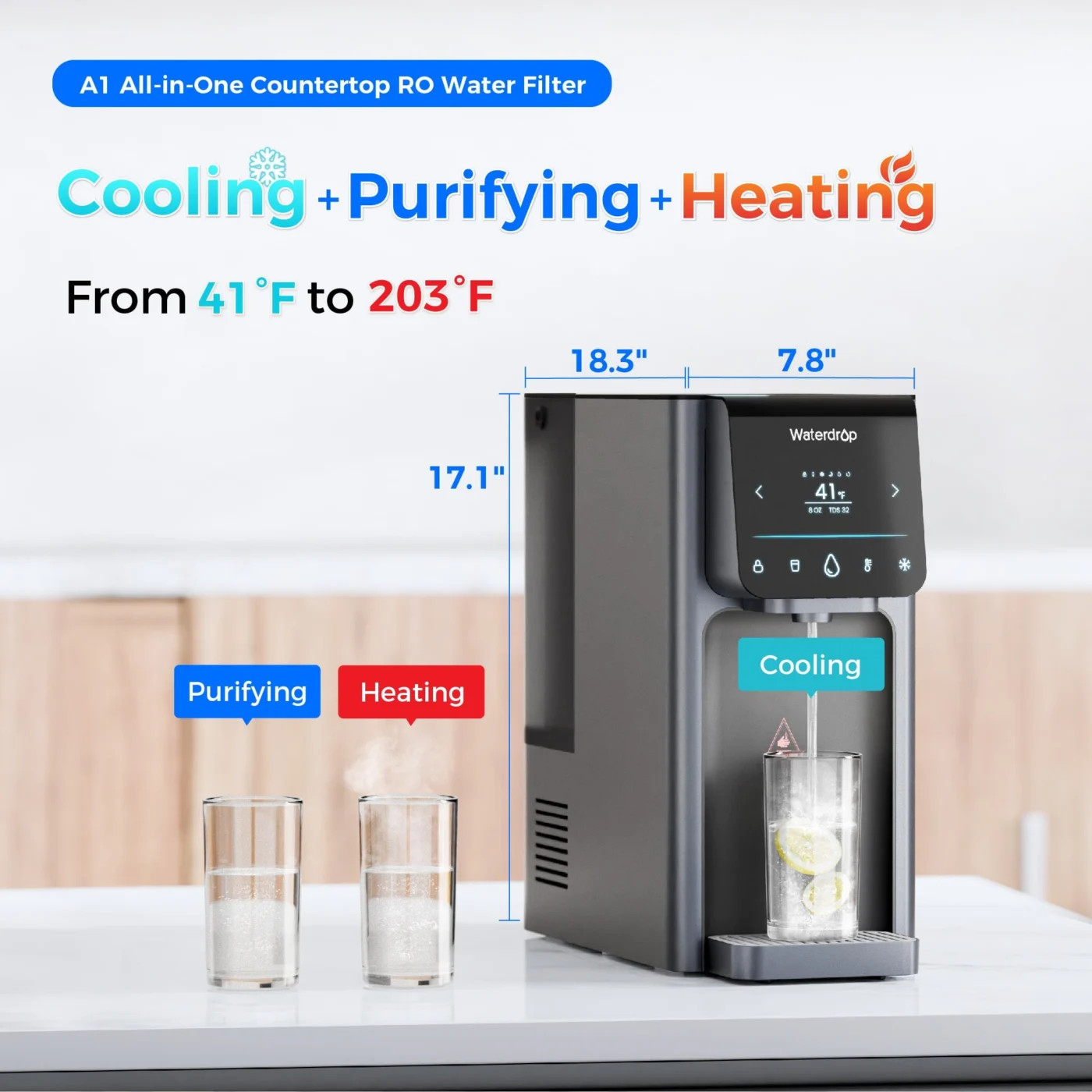
| Temperatures | Six selections: chilled, ambient, 113°F, 140°F, 185°F and 203°F | Choose a drinking or brewing temperature; the cold range in the manual is 41–50°F. |
| Dispensing sizes | 4, 8, 16 or 20 fl oz, plus MAX | Match the setting to your cup. MAX depends on the water available inside. |
| Dimensions / weight | 18.3″ L × 7.8″ W × 17.1″ H; 38.5 lb | Measure the depth and the space needed for ventilation and tank removal. |
| Side clearance | Manual specifies 8″ on each side | Allow roughly 23.8″ across including the appliance and both side gaps. |
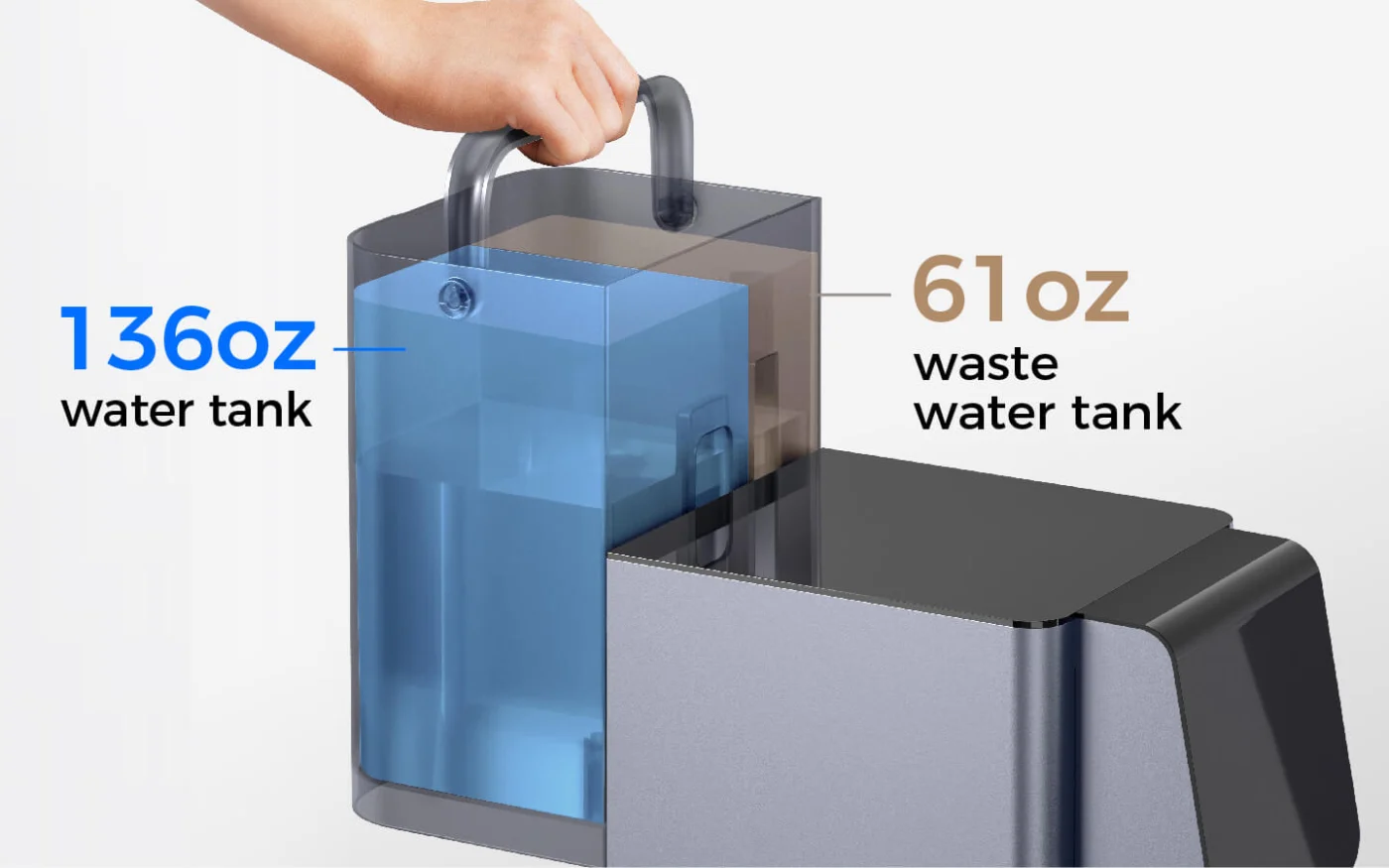
| External tank | 1.06-gallon feed compartment + 0.48-gallon waste compartment | Refill tap water and empty concentrate separately; these are not drinking-water storage volumes. |
| Internal storage | 0.2-gallon purified-water tank + 0.26-gallon cold-water tank | A large run of cold drinks can require cooling recovery. |
| RO production / recovery | 100 GPD; 2:1 purified-to-drain ratio under rated conditions | These are filtration ratings, not instantaneous pouring speed or guaranteed household results. |
| Power | 110–120 V AC, 60 Hz; 1,700 W rated | It needs a suitable powered countertop location. Rated wattage is not continuous energy use. |
| Certification / warranty | NSF/ANSI 372 lead-content certification; one-year limited warranty | Review the separate reduction test sheet and warranty conditions for the exact A1. |
← Slide right & left to see the full table →
Hot tea. Chilled water. Fewer steps.
The strongest reason to choose this dispenser is the routine around the filter: a morning mug, a room-temperature glass at your desk and a cold drink later. Here is where the features help, along with the limits to keep in mind.
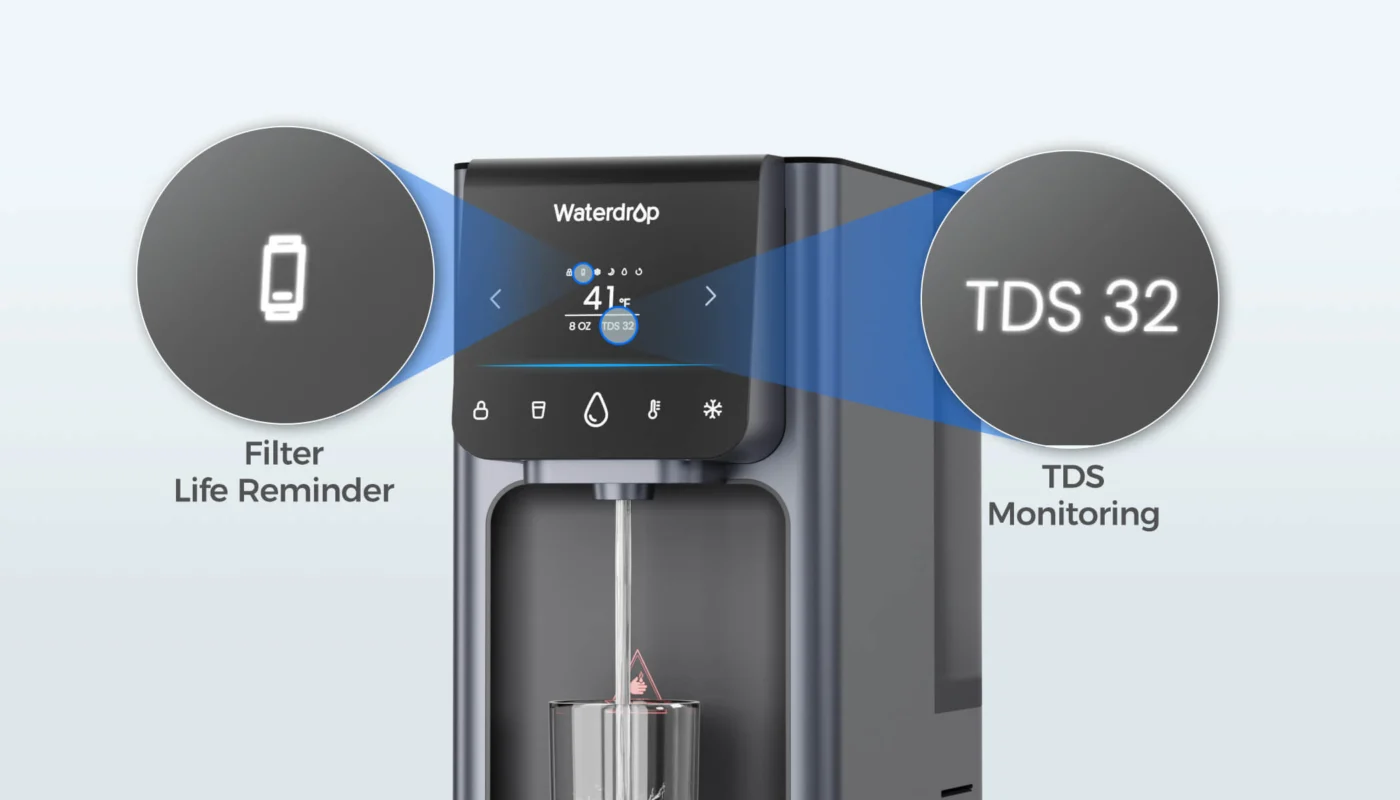
Temperature and serving controls
The display lets you choose the temperature and a serving volume before dispensing. That is useful if you regularly fill the same mug or bottle. Use a vessel large enough for the setting, and treat the volume as a convenience rather than a precision measuring tool.
Waterdrop advertises hot water in three seconds. The manual also notes that hotter settings reduce flow and that the first few seconds may not reach the selected temperature. For a large pot of boiling water, we would still keep a kettle.
A refillable tank, with separate waste
The large outer compartment holds tap water; the smaller compartment collects the concentrated water produced during RO filtration. Fill and empty the correct sides rather than topping up both together.
This is the tradeoff for avoiding plumbing. Plan a convenient route to the sink, especially if more than one person will use the A1. The waste compartment is not an extra supply of drinking water.
Cold water has a reserve
The internal cold tank holds roughly 33 fl oz. Several cold drinks in succession can use that reserve, so allow time for the compressor to cool more water. A 100-GPD filtration rating does not promise endless chilled water.
Hot water needs care
The child lock must be released for hot dispensing. It is a useful safeguard, but keep hot drinks and the machine out of children’s reach and supervise use.
Night and away settings
Night mode stops cooling during the selected period; a first drink may need cooling recovery. Off-home mode helps drain the internal tanks before an extended absence. Follow the manual’s return-to-use procedure.
Before you give it a place on the counter
Installation-free does not mean unpack-and-drink. Choose the location first, then allow time for the initial flush and cooling startup.
1. Measure more than the width
The manual calls for 8 inches of space on each side for heat dissipation. Together with the 7.8-inch body, that means roughly 23.8 inches across. Leave access above and around the rear tank so you can lift it out comfortably.
At 38.5 lb before adding water, this is better treated as an appliance with a settled home than something you put away after every glass. Check the counter depth and a suitable outlet as well.
2. Plan the first-use routine
The manual specifies an initial flush of about 30 minutes using three to four tanks of water; discard that water. It also describes a two-hour cooling startup delay to protect the compressor. Have drinking water available while setup finishes.
The specified source is municipal tap water, with feed-water TDS below 500 ppm. This is not a general treatment solution for an unknown or unsafe water supply.
3. Be realistic about water use and cleaning
The advertised 2:1 purified-to-drain ratio means two parts filtered water for about one part concentrate under rated conditions. For example, producing two gallons of drinking water would create roughly one gallon of concentrate at that ratio. Flushing and real operating conditions add to the water you use.
Keep the tank and drip tray clean, follow the filter-replacement prompts, and use the routine-flush instructions after more than three consecutive days without use. The display helps you keep track; it does not replace that maintenance.
What does the A1 filter, and what is verified?
There are three different things to consider: the filtration design, laboratory reduction results and certification. They answer different questions about the same appliance.
RO and carbon filtration
The A1 uses a CF cartridge and an RO membrane cartridge. Waterdrop’s CF description includes sediment filtration and carbon for chlorine, taste and odor. The RO membrane addresses dissolved substances as part of the complete system.
The current page calls it seven-stage filtration, while parts of the supporting material say six-stage. We would compare the cartridge functions and evidence rather than use stage count as a quality score.
A published reduction sheet
Waterdrop’s A1 sheet reports third-party laboratory results for TDS, fluoride, lead, arsenic, PFOA/PFOS and other substances. The PFAS figures are identified as measurements at the start of sample operating life.
Those are useful data points, but they are not our test results or a guarantee of identical performance throughout every filter’s life. Match the specific substance in your water report to the exact A1 documentation.
Certification with a defined scope
The A1’s published NSF/ANSI 372 certification concerns the lead content of materials in contact with water. It does not, by itself, certify lead removal or every contaminant-reduction claim.
Likewise, the TDS display tracks dissolved solids; it cannot tell you whether every contaminant of concern is absent. Use the appropriate test or water report for that question.
Replacement filters and upkeep
The A1 comes with a CF filter and an RO filter. After that, the shorter CF schedule and longer membrane schedule need separate reminders. The model names matter: order A1 replacements, rather than assuming another Waterdrop cartridge fits.
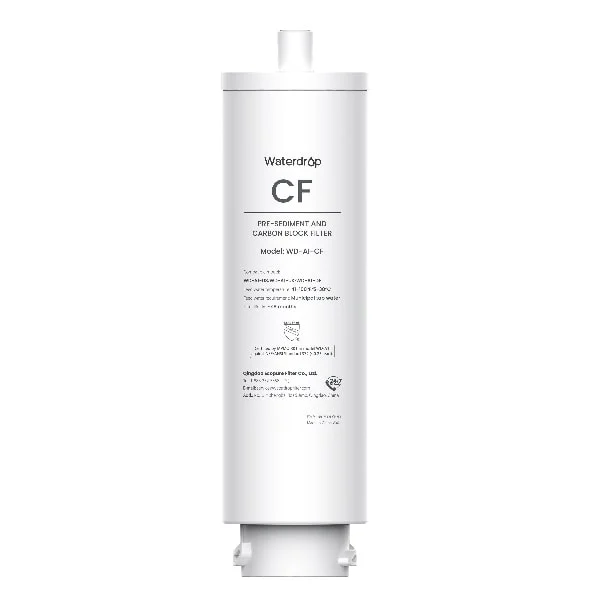
A1-CF: the earlier replacement
Waterdrop lists up to six months or 550 gallons for this cartridge. Keep its replacement reminder separate from the longer-life RO membrane, and follow the current A1 replacement instructions.
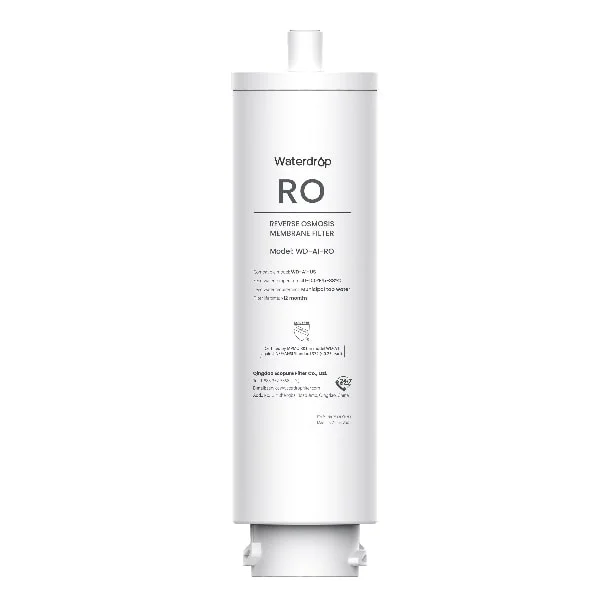
A1-RO: the membrane
The listed limit is up to 12 months or 1,100 gallons. Keep its replacement schedule separate from the CF filter; changing one does not renew the other.
Who should buy the Waterdrop A1?
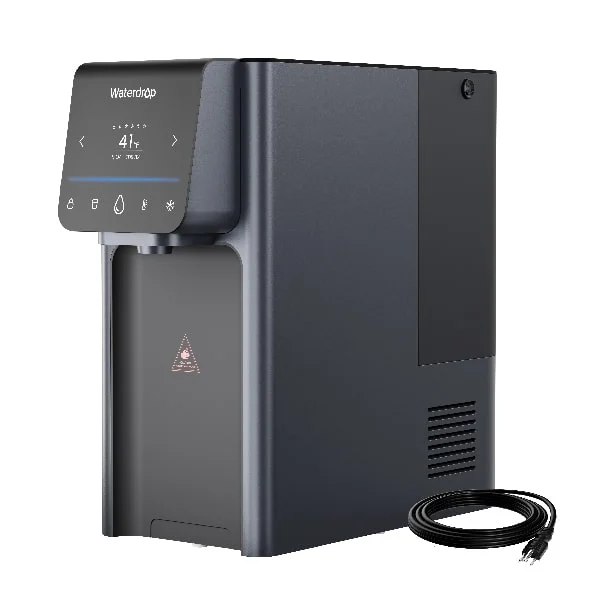
A strong fit
Consider it if your household regularly wants both hot and chilled water, you are comfortable refilling a tank, and you have a permanent spot with the required clearances. Avoiding a plumbing project is a meaningful advantage in that situation.
Consider a simpler filter
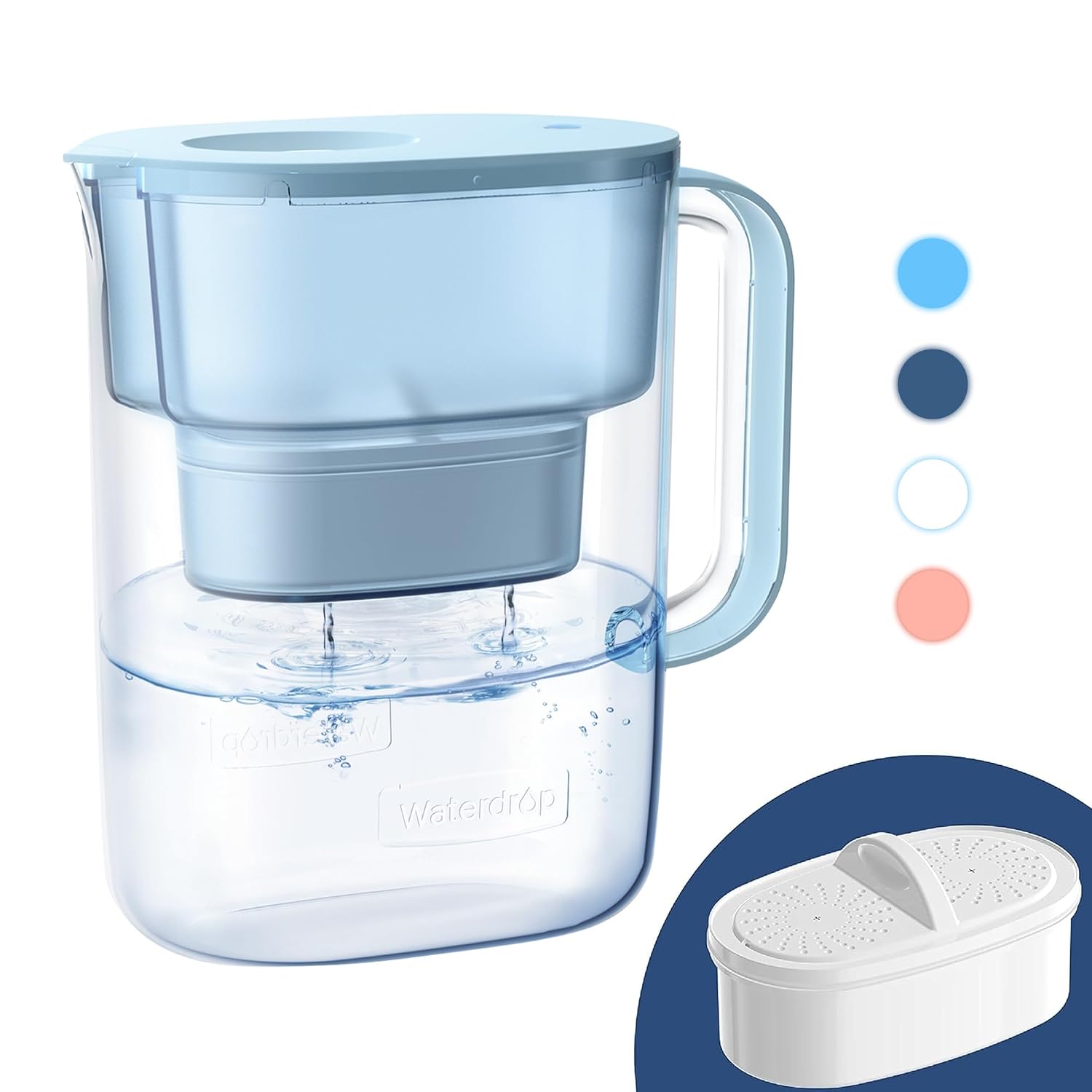
If you mainly want better-tasting cold water from the fridge, a pitcher may be easier to own. Start with our best water filter pitchers and compare the reductions you actually need.
Compare a different RO format
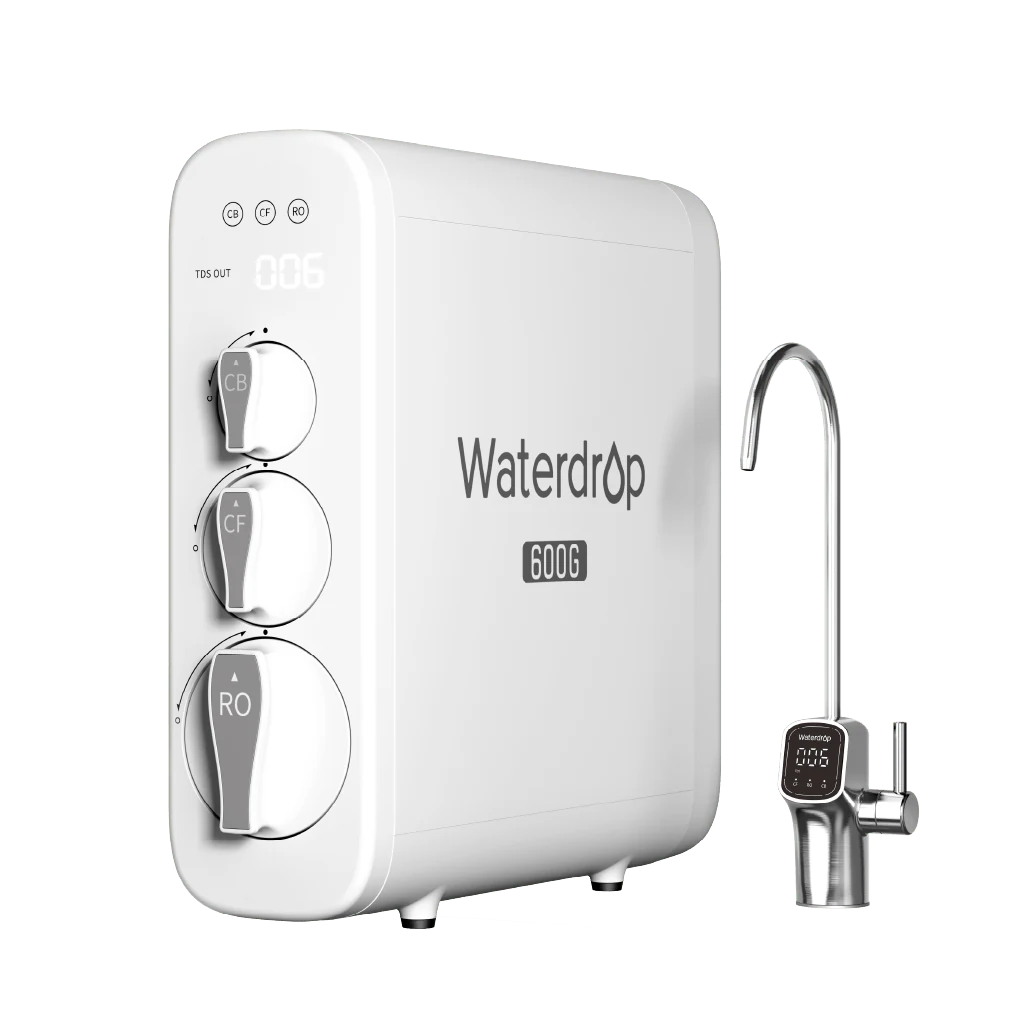
If you want to fill larger quantities without carrying a tank, compare a plumbed under-sink system. Our Waterdrop water filters review covers other formats, while our best water filters guide broadens the comparison.
THE KITCHLIT TAKE
Buy it for the routine you will use.
The Waterdrop A1 offers a persuasive combination for a household that wants RO filtration alongside hot drinks and chilled water. We like the convenience of one dispensing point and the freedom from a permanent water connection.
Our reservation is the space and upkeep behind that convenience. If you can give it proper ventilation, manage the refill routine and keep up with its two filter schedules, it is worth considering. If you only want occasional filtered water, a simpler format may suit you better.
At Waterdrop · Check included filters and return terms.
Frequently asked questions
The details readers most often need before choosing the A1.
Does the Waterdrop A1 need plumbing?
No. It is a refillable countertop RO dispenser rather than a plumbed under-sink system. It needs electricity, tap water in the feed tank, periodic emptying of the separate wastewater compartment and the initial setup flush.
How hot and cold does the A1 get?
Waterdrop advertises temperatures down to 41°F and up to 203°F. The manual describes chilled water in a 41–50°F range. Actual dispensing temperature depends on the selected setting, starting conditions and whether the cold tank has had time to recover.
Is the Waterdrop A1 NSF certified?
The A1 materials identify NSF/ANSI 372 certification for lead content. That certification is separate from Waterdrop’s laboratory contaminant-reduction results. Do not treat the 372 mark as certification of all advertised removal claims.
Does it remove fluoride or PFAS?
Waterdrop’s A1 reduction sheet reports laboratory reductions for fluoride and for PFOA/PFOS. The PFAS entries describe results at the start of sample operating life. Check the latest exact-model report for your concern; we have not independently tested these reductions.
How often do the A1 filters need replacing?
The listed limits are up to six months or 550 gallons for A1-CF and up to 12 months or 1,100 gallons for A1-RO. Actual service life varies with consumption and water quality. Follow the unit’s prompts and the current replacement instructions.
Can the A1 provide unlimited cold water?
No. The manual lists a 0.26-gallon cold-water tank. After several drinks, the compressor may need time to chill more water. The 100-GPD figure is a rated filtration-production capacity, not an unlimited cold-water dispensing rate.
Why is my new A1 not producing cold water yet?
The manual describes a two-hour cooling startup delay for compressor protection. After that, check that cooling is enabled and that night mode is not preventing refrigeration. Follow the A1 troubleshooting guide if the problem continues.
Does the A1 add minerals back to the water?
The standard A1 listing describes CF and RO filtration, not a remineralization stage. Do not assume a mineral feature from another Waterdrop model is included. Compare exact-model cartridge details if remineralization is a priority.
What warranty comes with the A1?
The manual provides a one-year limited warranty for qualifying defects, with conditions covering purchase source, operation and maintenance. Routine replacement filters are excluded. Read the current seller’s full warranty and return terms before ordering.
Sources and research notes
Research checked November 9, 2026. We used the Waterdrop A1 product listing, its linked WD-A1 user manual and “Specification Sheet for Reducing Harmful Substances - A1,” plus the A1-CF and A1-RO replacement-filter listings for cartridge service intervals. The manual is the source for clearance, electrical requirements, tank volumes, startup, flushing and operating modes.
NSF’s technical explanation of NSF/ANSI/CAN 372 informs our distinction between lead-content certification and contaminant reduction. Product images and feature illustrations are from Waterdrop’s materials; kitchen scenes illustrate the setup. This is a document-based assessment, with no original laboratory results or measured performance scores. Bundles and specifications may change; check current exact-model documentation.