
WATER FILTER BUYING GUIDE
Culligan Water
Filters Review
Pitchers, dispensers & gravity
systems compared
Which system fits your kitchen, and what will the filters cost over time?
By KitchLit · Updated November 2026
Research-based review
We may earn a commission when you buy through our links.
Key takeaways
1
Choose by water needs
Match the format to your household size and how you use filtered water.
2
Allow for filter costs
Replacement filters are an ongoing cost, so factor them into your choice.
3
Check compatibility
Be sure to get the right replacement filter for your specific system.
On this page
Find your everyday fit
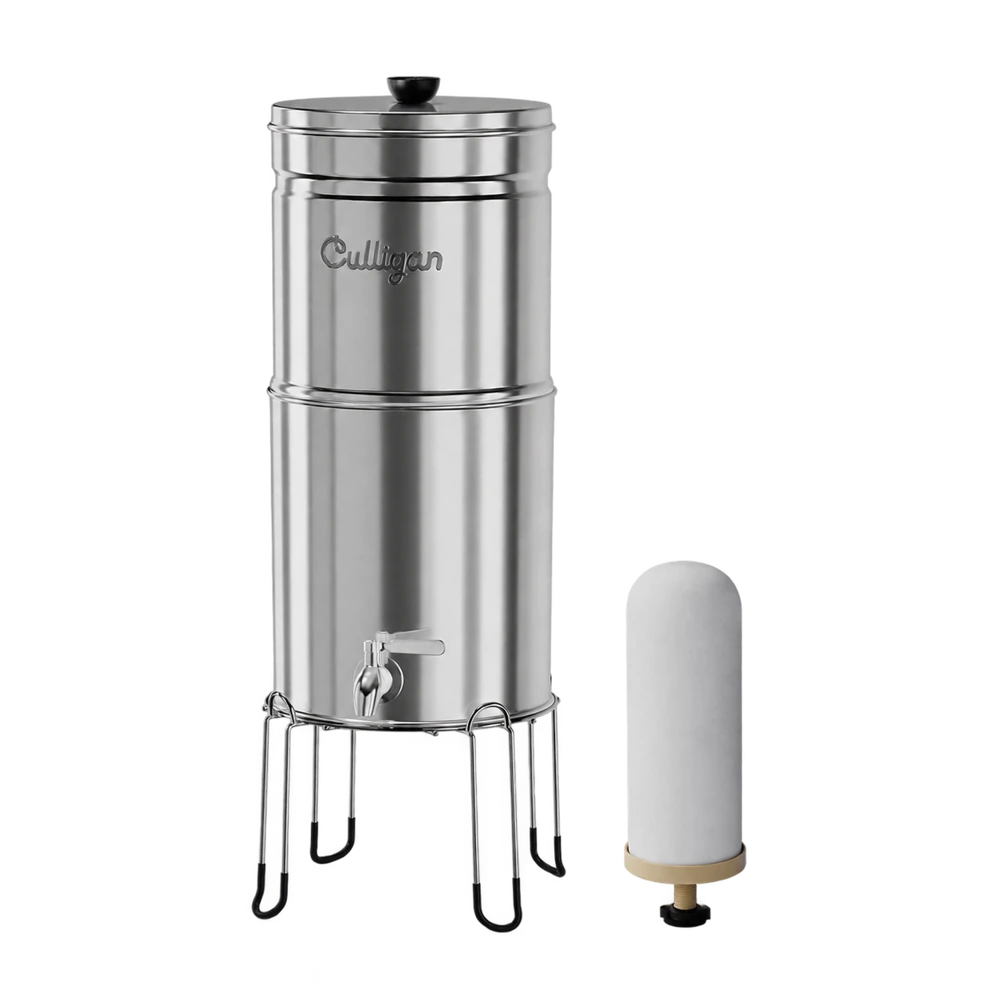
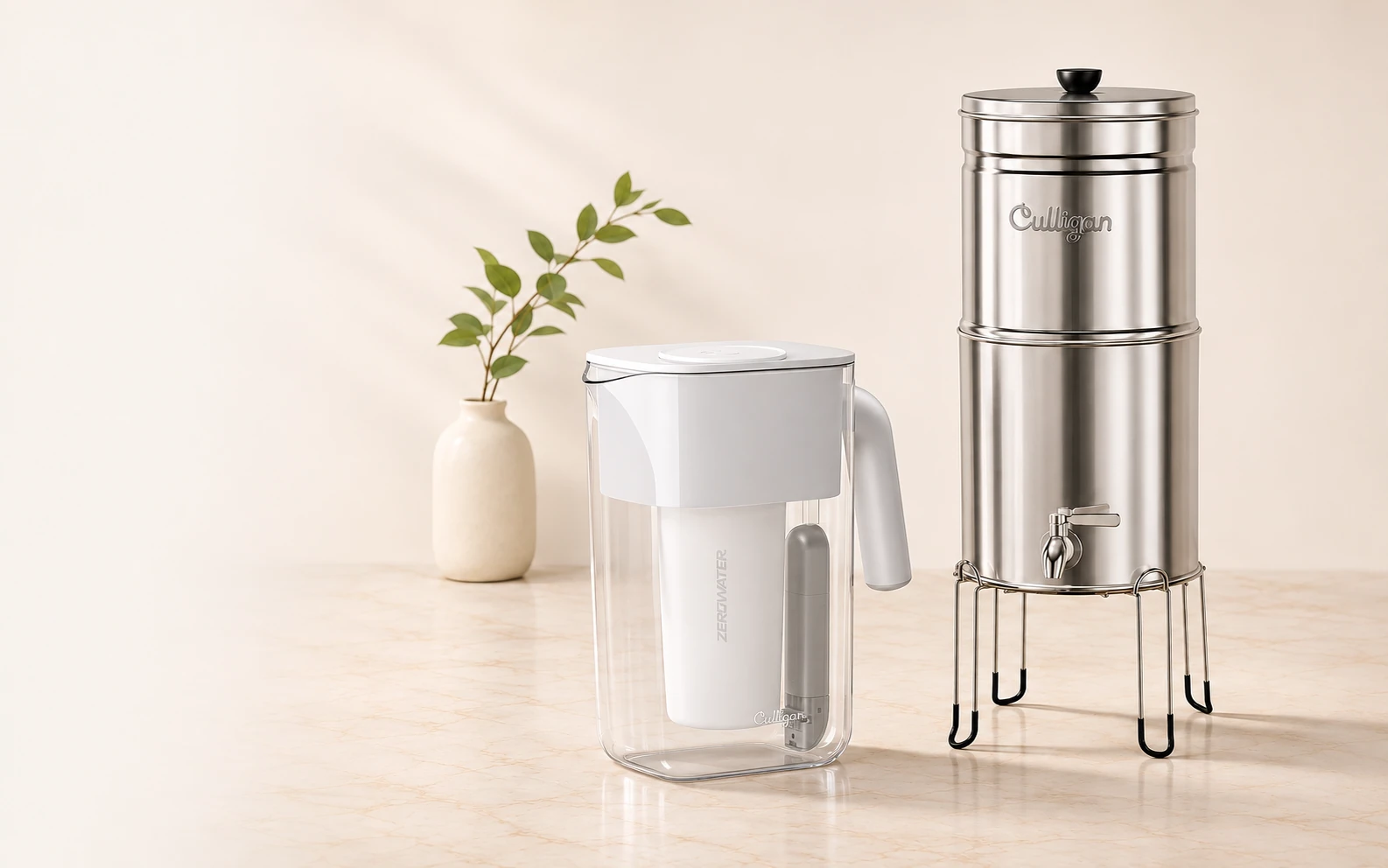
A stainless-steel setup
A durable, gravity-fed system for everyday use at home.
Compare at a glance
| Feature | ZeroWater | MaxClear |
|---|---|---|
| Formats | Pitchers & dispensers | Gravity countertop systems |
| Materials | Plastic or glass options | Stainless-steel chambers |
| Installation | No plumbing | No plumbing |
| Consider | Filter cost and fit | Flow rate and counter space |
ZeroWater
Format
Pitchers & dispensers
Materials
Plastic or glass
Consider
Filter cost and fit
MaxClear
Format
Gravity countertop systems
Materials
Stainless steel
Consider
Flow rate and counter space
Explore the Culligan range
Pick a format, then choose the capacity you need.
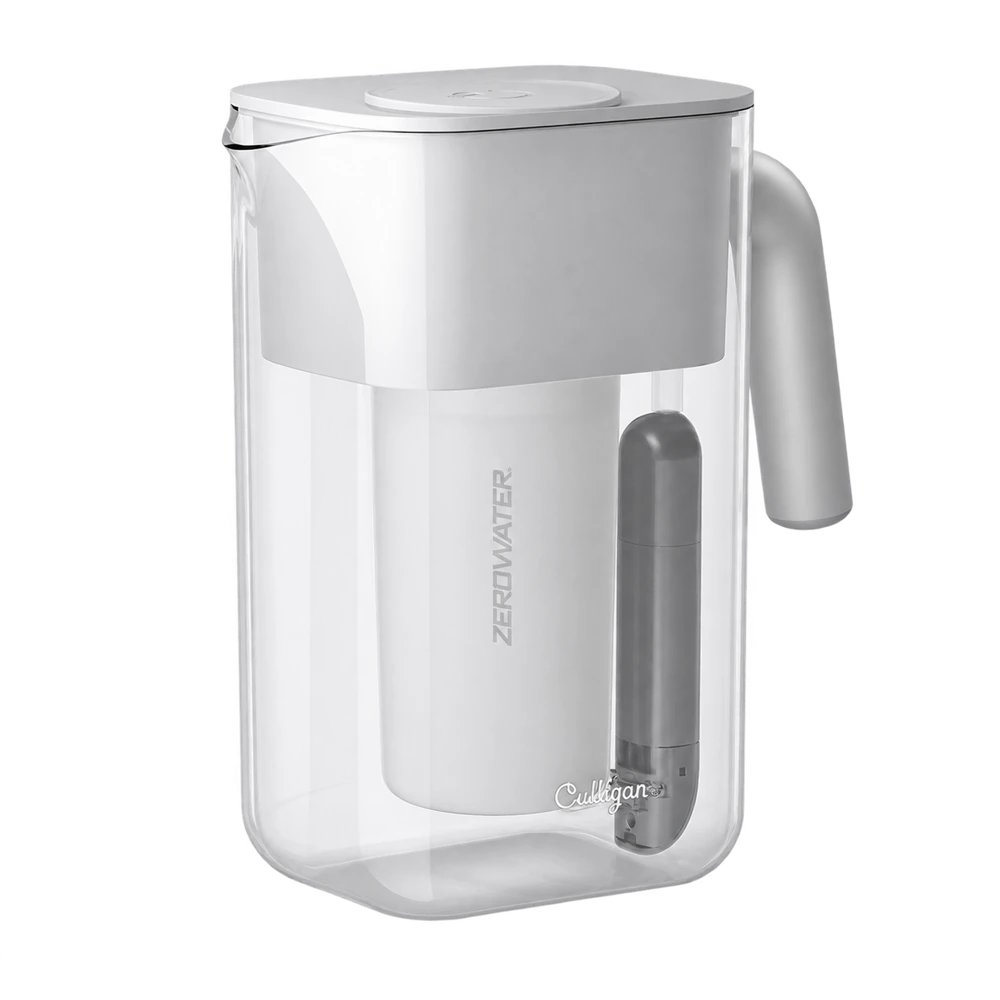
COMPACT KITCHENS
ZeroWater Pitchers
7 cup · 10 cup · 12 cup
Easy-pour format for everyday use.
→ No plumbing needed
→ Multiple capacities
→ Check replacement filter costs
At Culligan
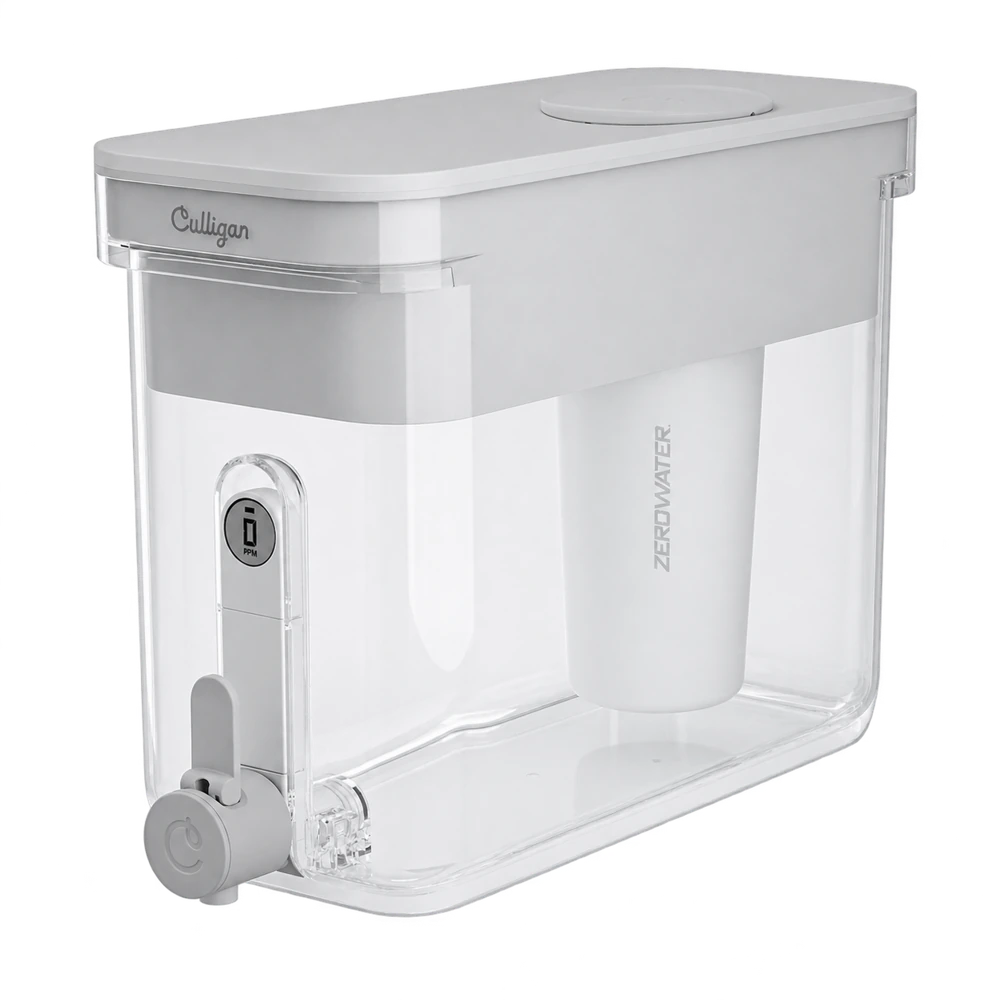
MORE CAPACITY
ZeroWater Dispensers
22 cup · 32 cup · 52 cup
Spigot serving for the fridge or counter.
At Culligan
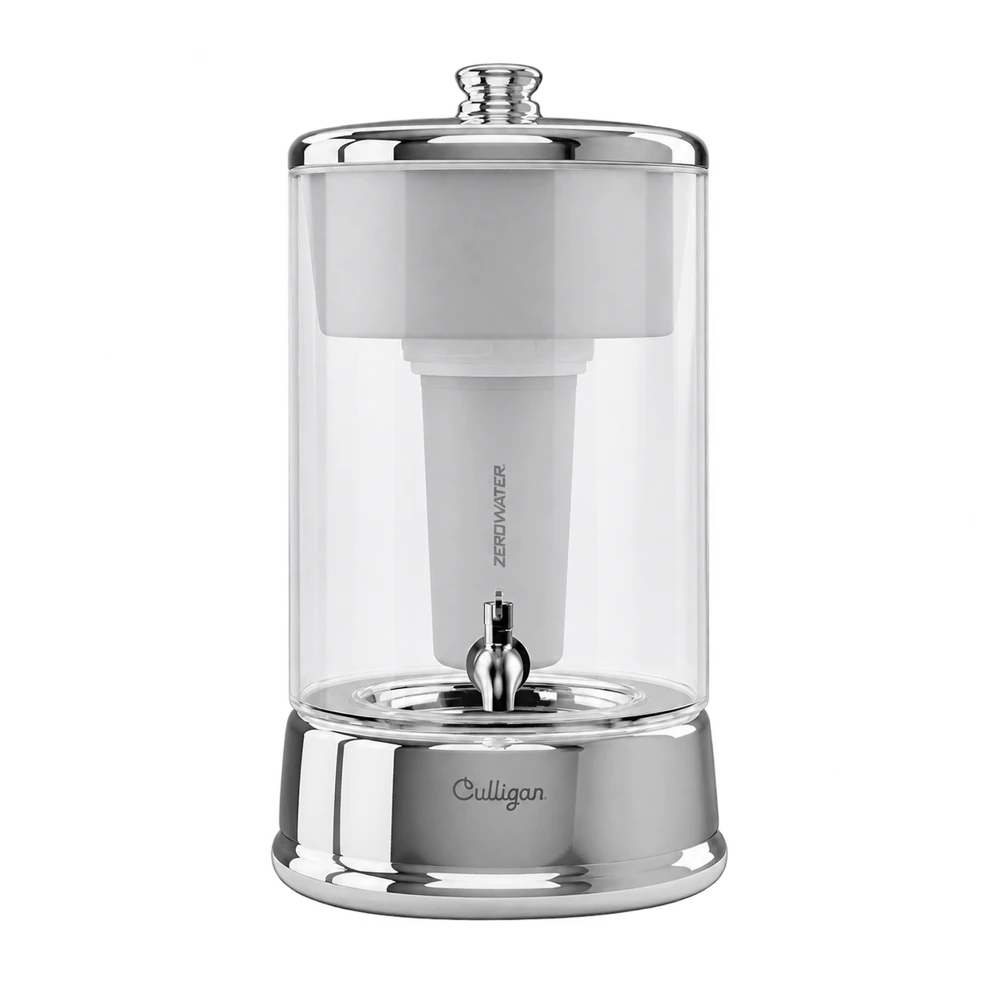
GLASS COUNTERTOP
40-Cup Glass Dispenser
Glass vessel with a metal stand.
At Culligan
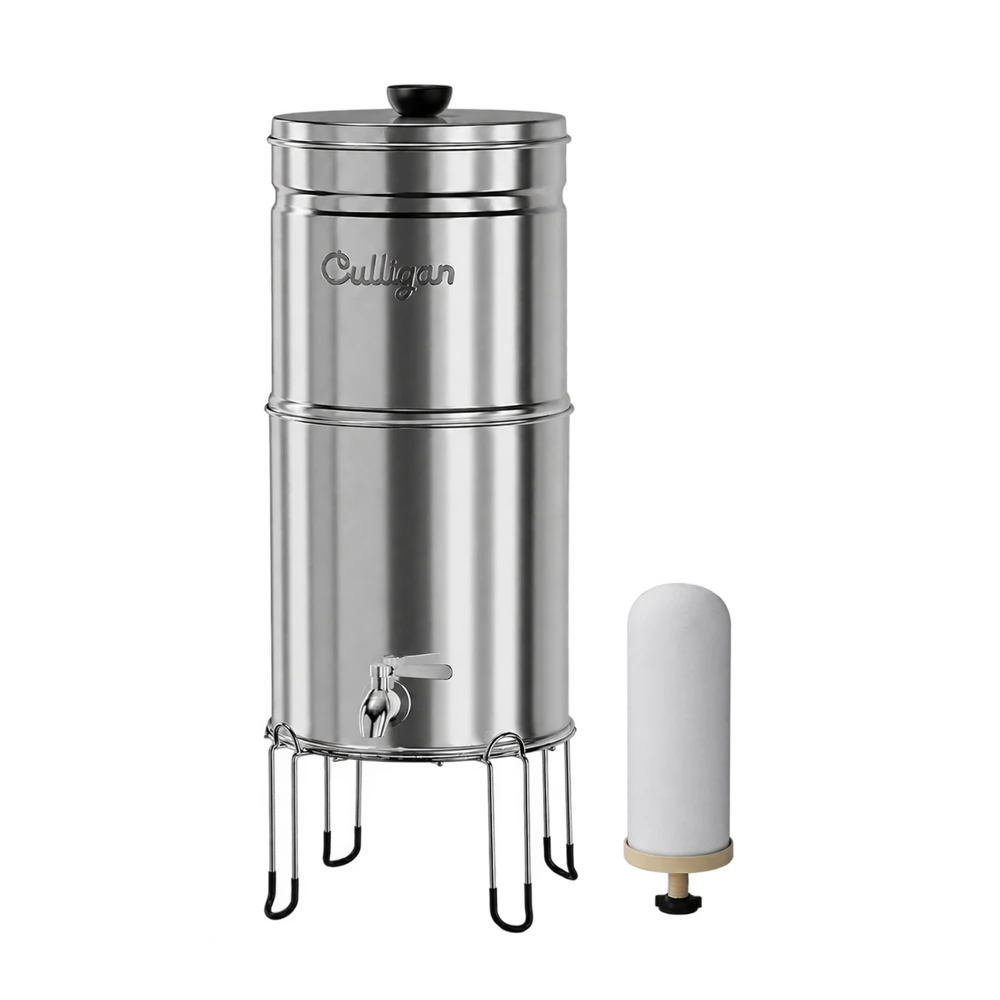
STAINLESS STEEL
MaxClear Scout
2.25 gallons
Gravity filtration without plumbing.
At Culligan
LARGER HOUSEHOLDS
MaxClear Venture
3 gallons
More capacity for the countertop.
At Culligan
ONGOING CARE
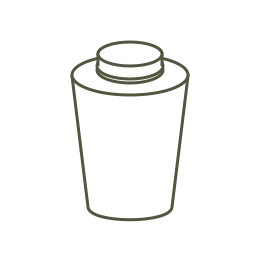
Replacement Filters
New ZeroWater
Legacy ZeroWater
MaxClear
Match the filter to your system.
At Culligan
ZeroWater or MaxClear?
Start with how you want to use filtered water. ZeroWater offers pitcher and dispenser formats; MaxClear creates a larger stainless-steel station on the counter. The right choice comes down to your water concerns, your routine and the cost of maintaining it.
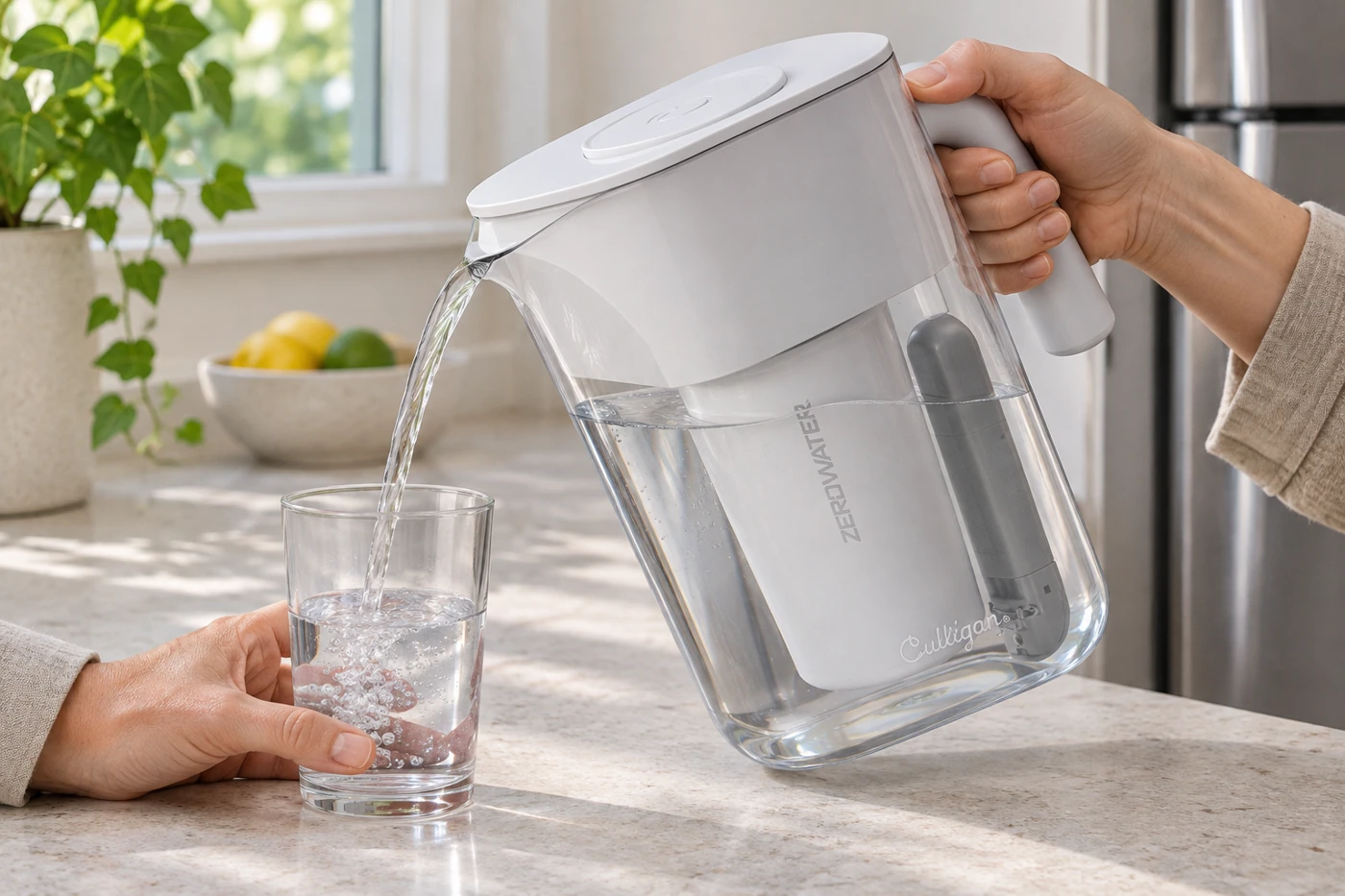
ZeroWater: fridge-friendly convenience
Choose ZeroWater if you want filtered water that fits into your existing fridge-and-pour routine. A pitcher is easy to bring to the table; a rectangular dispenser gives you spigot serving. The glass dispenser offers a countertop option within the same filter family.
The five-stage filter reduces dissolved solids as well as the contaminants listed for that system. Its TDS meter helps you follow filter-replacement guidance. A TDS reading measures dissolved solids; it does not identify individual contaminants or establish drinking-water safety.
The ownership trade-off: the current performance data sheet lists a 20-gallon filter capacity. Factor replacement cartridges into your budget, especially if you use a lot of filtered water. Follow the meter and the model’s instructions as well as its published capacity.
A useful fit: you prefer to pour chilled water from the fridge and want several vessel sizes to choose from.
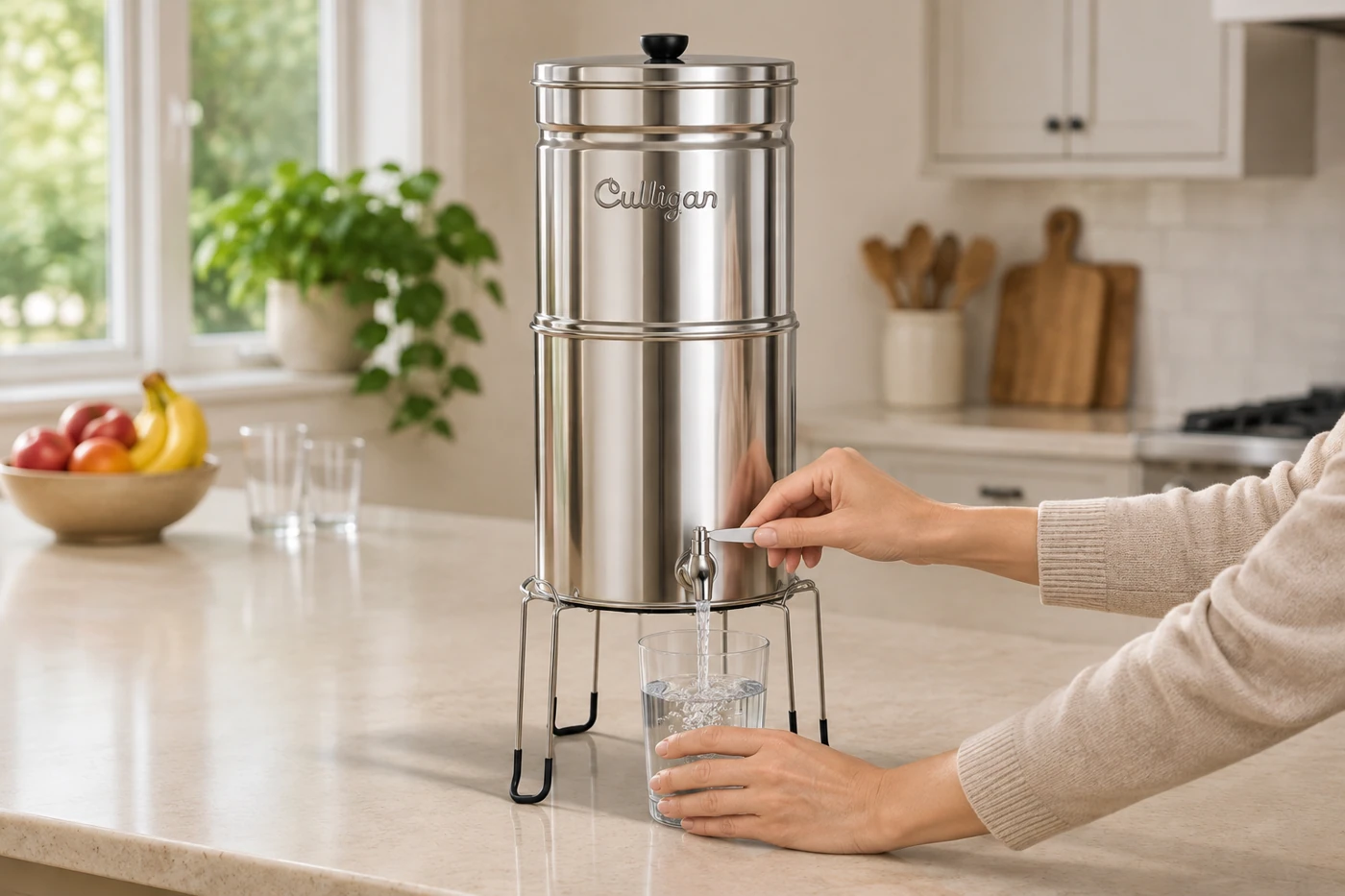
MaxClear: a countertop water station
Choose MaxClear if you want a stainless-steel water station that stays on the counter. The 2.25-gallon Scout takes up to two filters; the 3-gallon Venture takes up to three. A larger storage vessel can suit a household where several people fill glasses and bottles throughout the day.
Its ceramic-and-carbon filtration has published reduction claims for contaminants including lead, the listed PFAS compounds and microplastics. Compare those claims with your water needs, then consider how much space you can give the system.
The ownership trade-off: leave room to lift the lid, refill the upper chamber and place a glass under the spigot. Gravity filtration takes time. The published rated service life is 50 gallons for one filter, 100 for two and 150 for three, so plan replacements using water volume and the model’s guidance.
A useful fit: you have room for a permanent counter setup and want several people to serve themselves from a tap.
Before you buy
Use these three checks to narrow the choice before comparing prices.
Match it to your water
Start with your municipal water report, or a water test for a private well. Identify the substances you want to reduce, then check the exact model’s performance sheet. These systems are intended for potable water; microbiologically unsafe water requires appropriate disinfection.
Fit it to your routine
Decide whether you prefer chilled fridge water or a shared countertop station. Measure the footprint, shelf or cabinet height, refill access and space for a glass under the tap. Think about who will refill it and how much water your household uses each day.
Budget for replacements
Check cartridge pricing before choosing the device. Compare rated capacity and replacement guidance with your expected use, and allow for your source-water conditions. Confirm the filter family before ordering: new ZeroWater, legacy ZeroWater and MaxClear use different cartridges.
Our buying shortcut: choose ZeroWater for a pitcher or dispenser routine, and MaxClear for a larger stainless counter setup. If both fit your space, let the certified reductions you need and the replacement-filter cost decide.
The filter is part of the price
Compare replacement cost, rated capacity and your own water conditions.
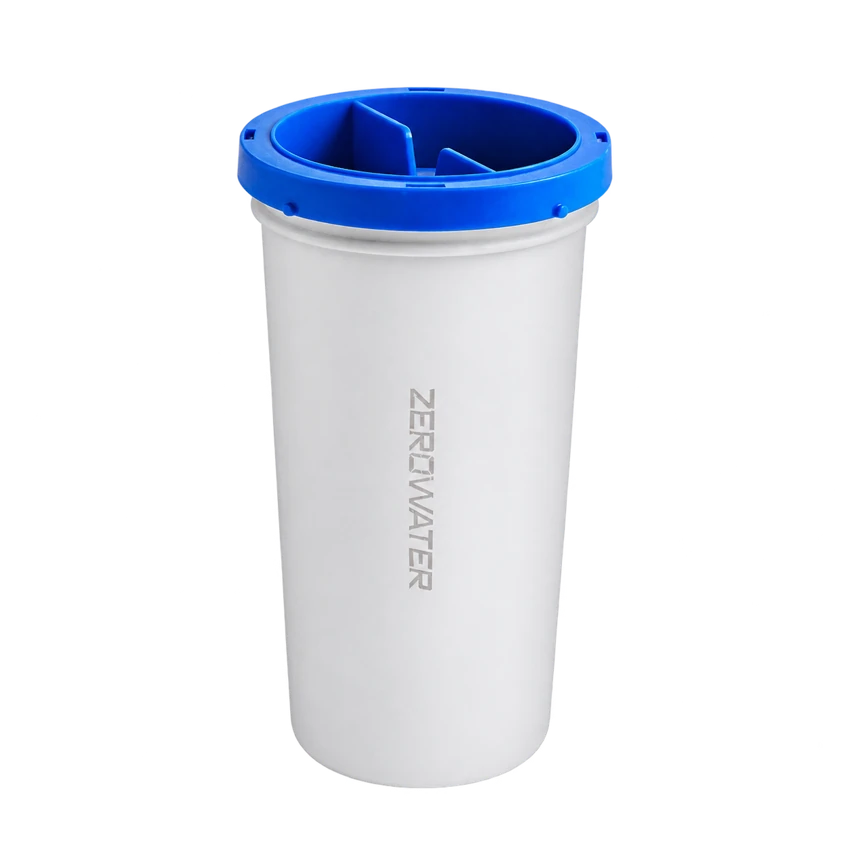
New ZeroWater
A newer, drop-in filter design used in current ZeroWater pitchers and dispensers.
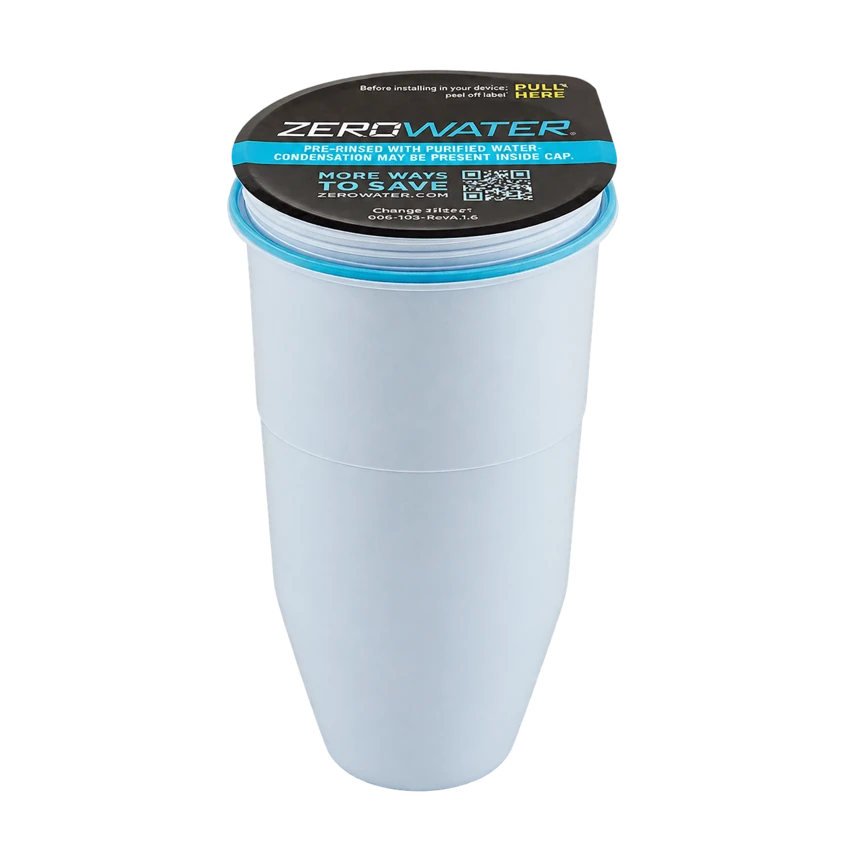
Legacy ZeroWater
A screw-in filter used in select earlier ZeroWater systems.
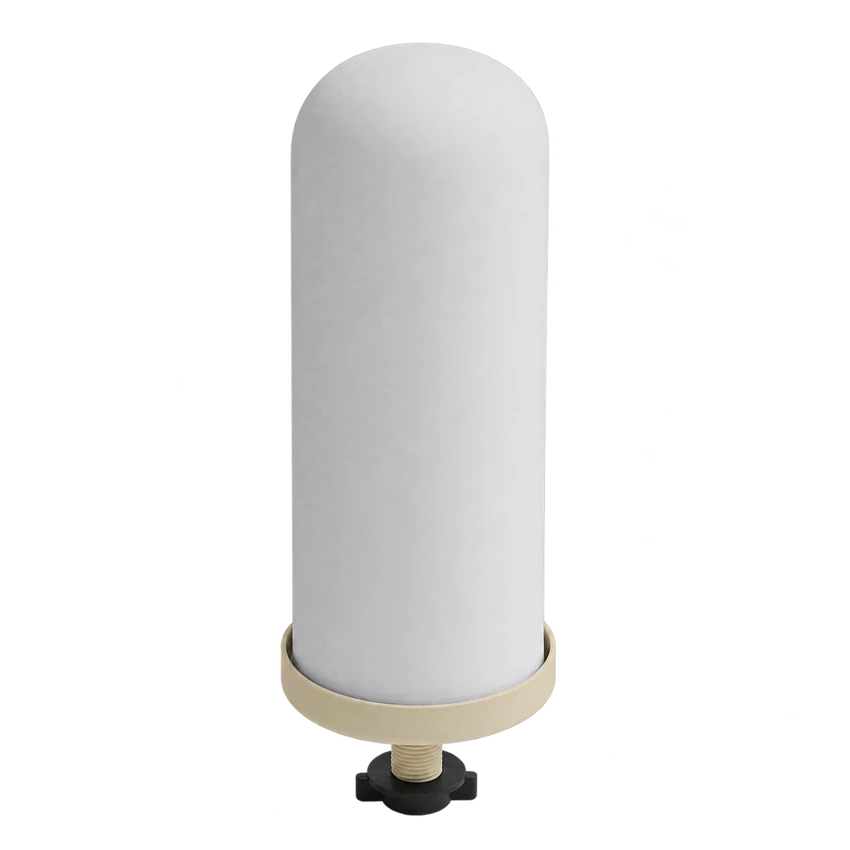
MaxClear
Replacement filters for MaxClear gravity systems.
New drop-in filters and legacy screw-in filters are not interchangeable.
Why Culligan?
Specific performance claims, independent certification and a choice of practical formats give you useful reasons to consider the range.
Certification applies to each model’s listed contaminants and tested conditions. Check the current data sheet when choosing.
Independent certification
Culligan’s ZeroWater and MaxClear systems are independently certified by IAPMO for their listed NSF/ANSI reduction claims. The performance sheets set out the specific substances and test conditions, giving you evidence you can check before buying.
Filtration for named concerns
Current performance sheets list reductions such as lead and specified PFAS compounds. MaxClear also lists microplastics reduction. Use the claims for your chosen model to match the filter to the concerns identified in your water.
Published care and compatibility
The range includes documented replacement cartridges, rated capacities and operating guidance. Those details make ongoing care easier to plan. Choose the correct cartridge and follow the system’s replacement instructions to maintain its specified performance.
Sources: Culligan’s filtration guide and certified performance information, including the linked model-specific performance data sheets.
Frequently asked questions
Which Culligan filter should I choose?
Start with the format and capacity that suit your kitchen. ZeroWater pitchers suit pouring and fridge storage; dispensers serve through a spigot. MaxClear offers a stainless-steel gravity setup for the counter. Compare the system’s certified contaminant reductions with your water-quality needs, and include replacement filters in your budget.
How often do filters need replacing?
Follow the instructions for your exact filter. For Culligan with ZeroWater Technology, use the included TDS meter and replace the filter when the filtered water reads 006 ppm or higher. MaxClear follows its own replacement guidance. Actual filter life depends on the water you put through it, so one household’s replacement interval may differ from another’s.
Are new and legacy ZeroWater filters compatible?
No. New Culligan with ZeroWater Technology systems use a drop-in filter, while legacy ZeroWater systems use a screw-in design. These are not interchangeable. Check the model and filter fit before ordering a replacement.
Does a low TDS reading mean the water is safe?
A TDS meter measures total dissolved solids; it does not identify individual contaminants or establish that water is safe to drink. Use it as the manufacturer directs for filter monitoring, and check the system’s specific certified reduction claims against your water report.