
Home / Buying Guides / Water Filters
THE KITCHLIT BUYING GUIDE
The Best Water
Filters of 2026
Six practical picks for your kitchen, from glass dispensers and gravity systems to countertop and under-sink reverse osmosis.
By KitchLit | Updated November 7, 2026 | Research-based buying guide
As an Amazon Associate, KitchLit earns from qualifying purchases. We may also earn a commission through other affiliate links, at no extra cost to you.
Key takeaways
Match the filter to your water.
Check the exact model’s documented reduction claims against the concerns in your water report or test results.
Choose for your daily routine.
Decide between a refillable counter station, a plug-in RO machine and a dedicated under-sink faucet.
Budget beyond the first purchase.
Compare cartridge costs, replacement guidance, cleaning and any installation work.
The shortlist
Start with the format that fits your kitchen, then explore the full picks below.
Best glass dispenser
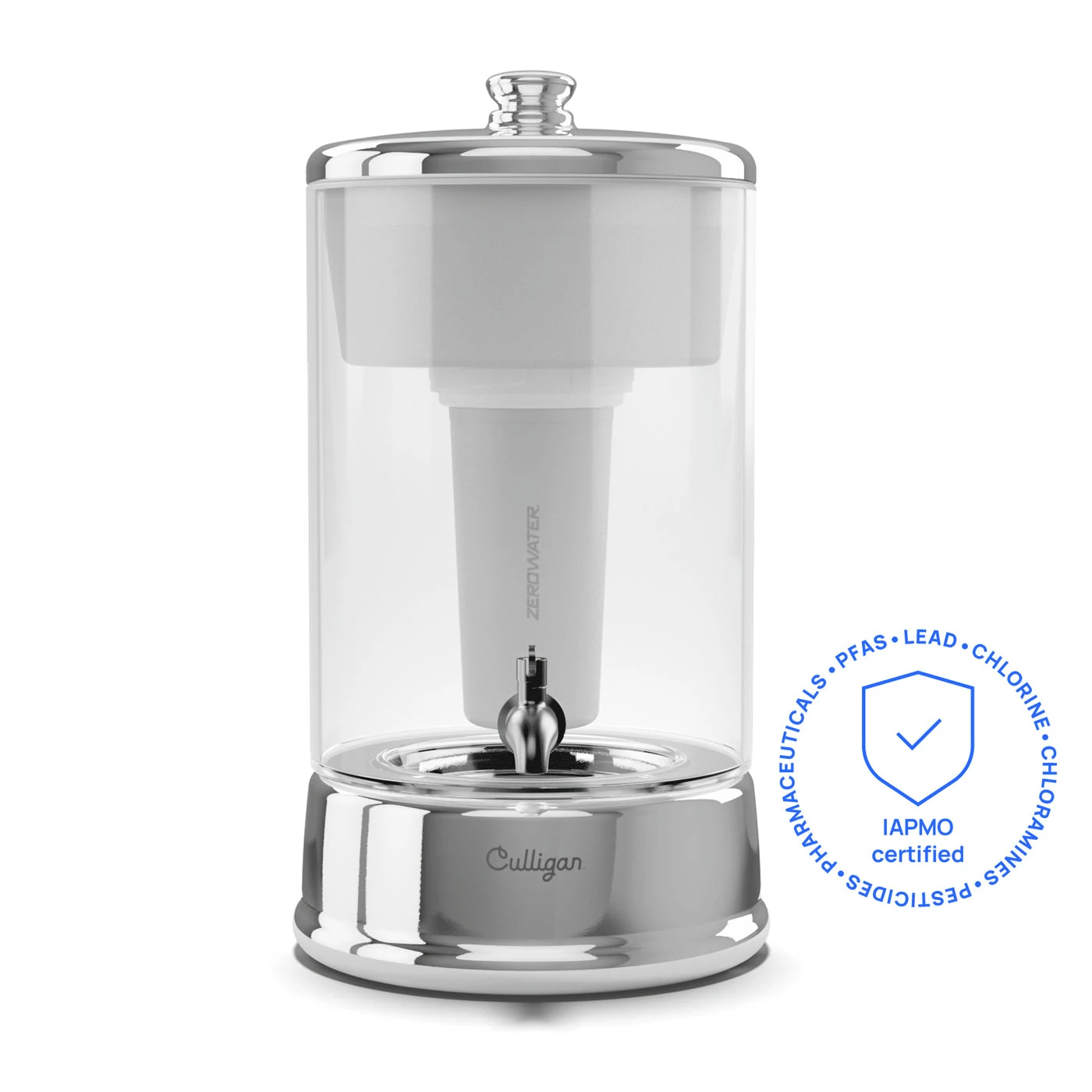
Culligan ZeroWater 40-Cup
A generous glass water station for the kitchen counter, with simple tap serving.
At Culligan
Best countertop RO option
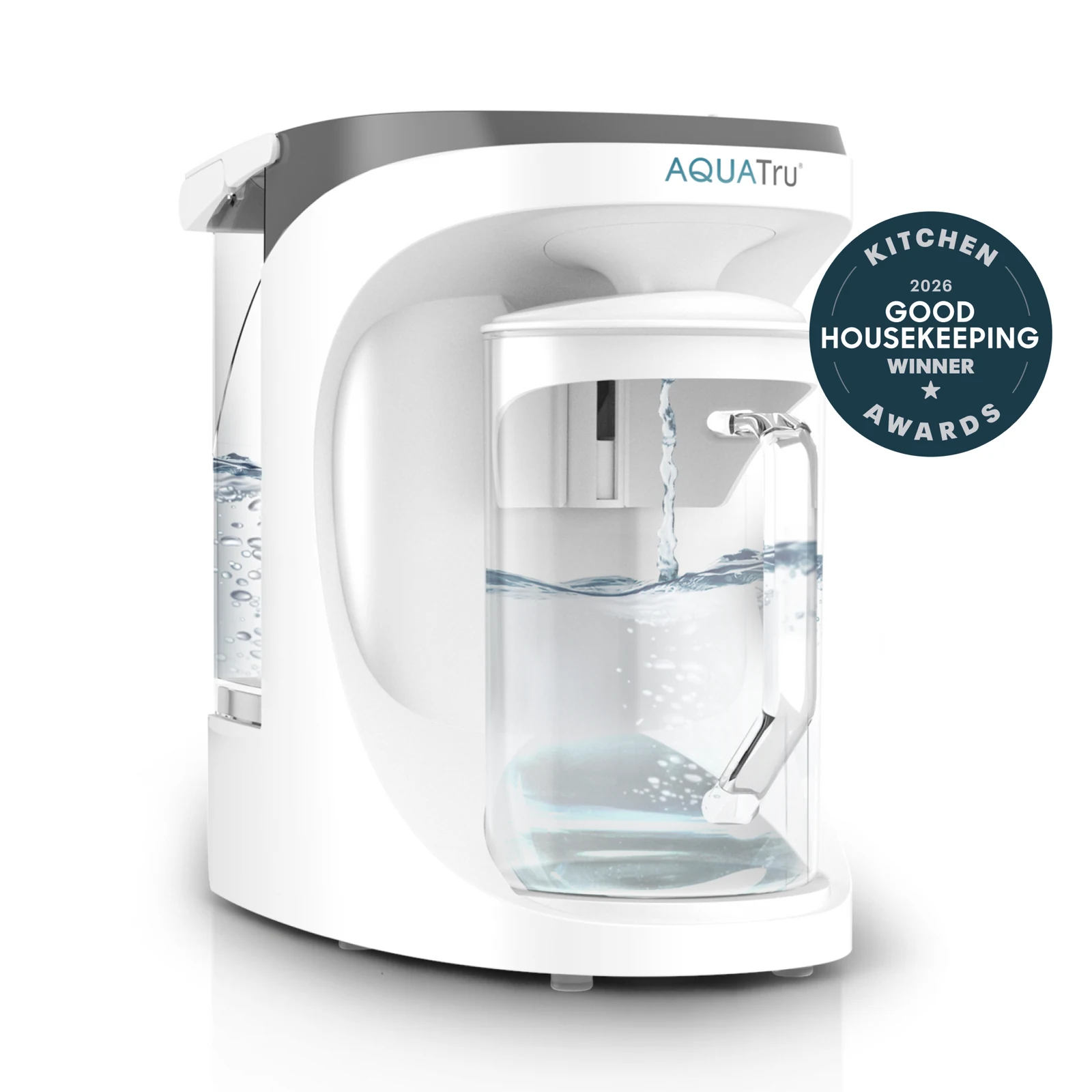
AquaTru Carafe
Countertop reverse osmosis with a removable glass carafe and no plumbed installation.
At Amazon
Best large gravity water station
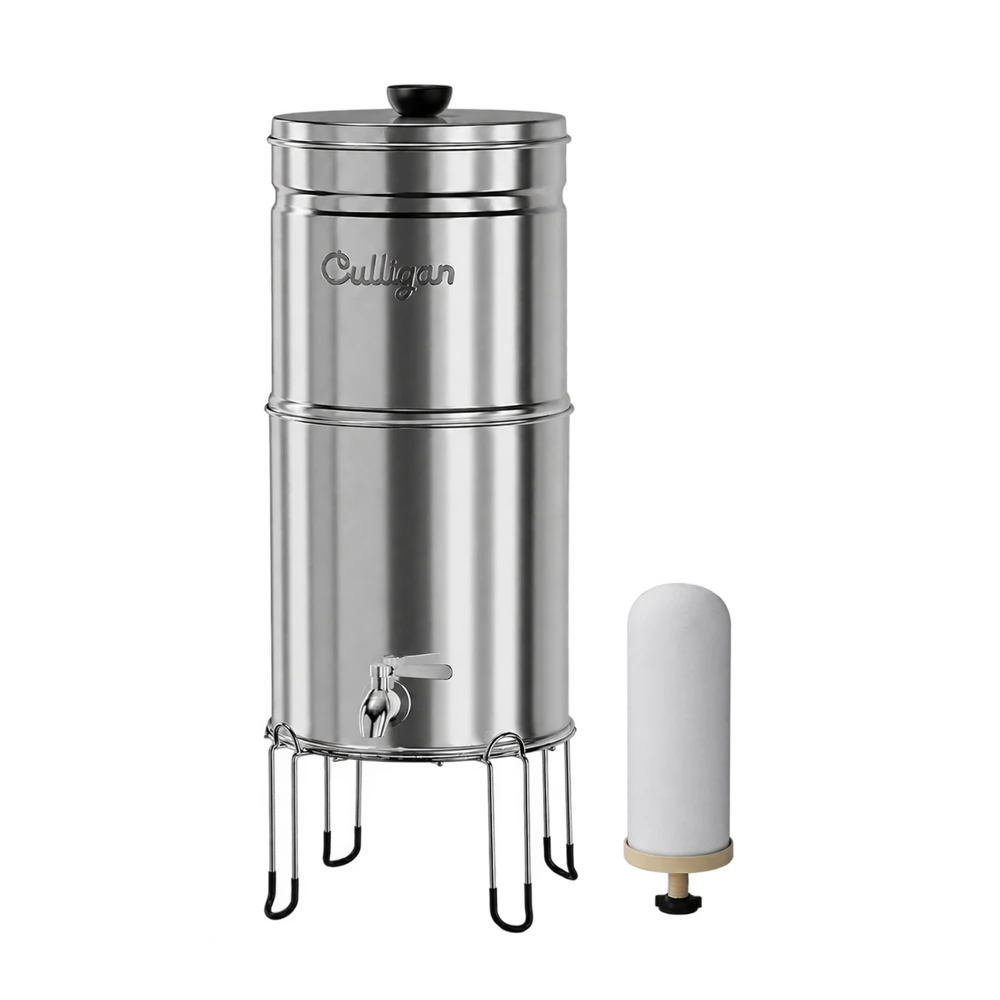
Culligan MaxClear Venture
A 3-gallon stainless-steel station for a household that serves water throughout the day.
At Culligan
Best compact RO option
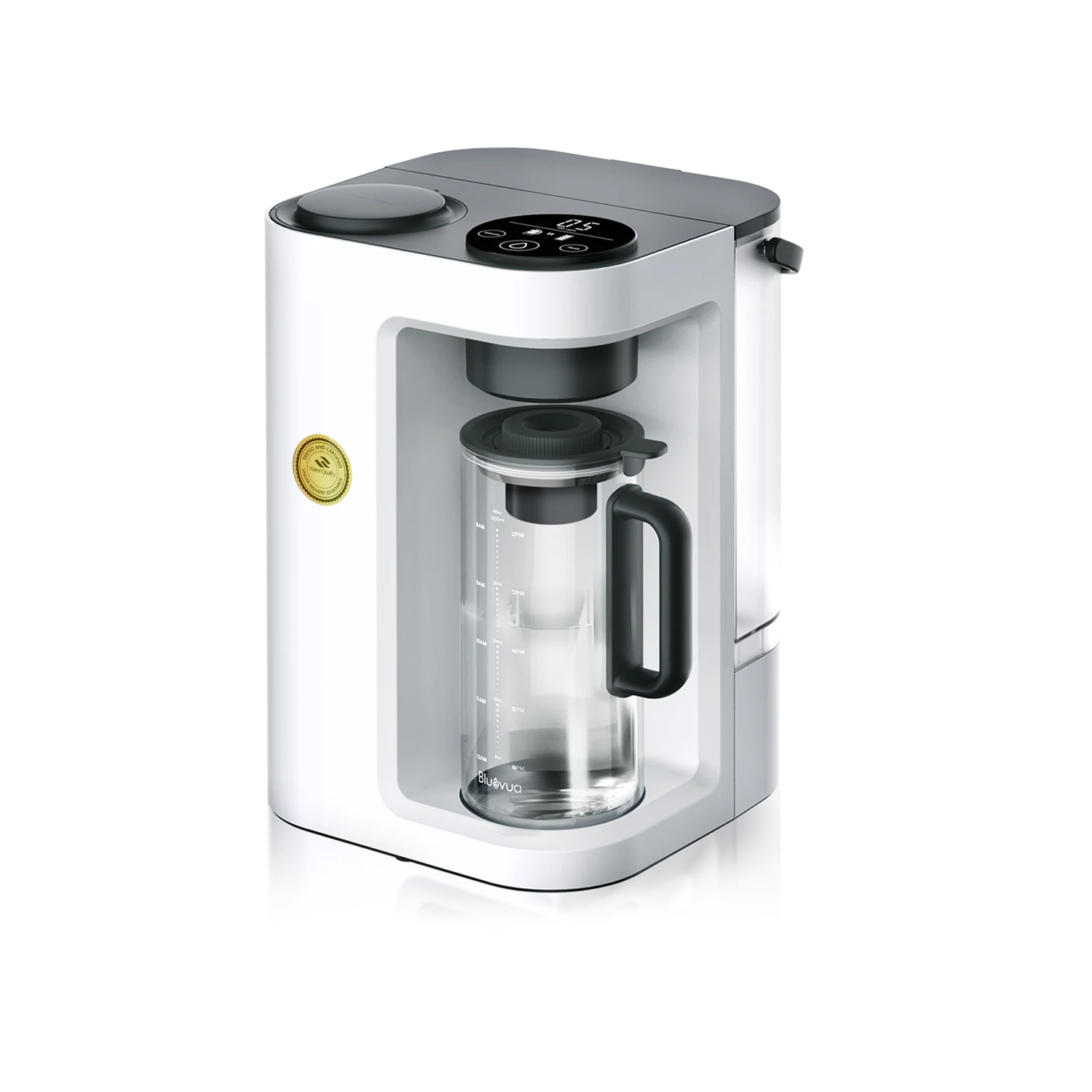
Bluevua ROPOT-Lite UV
A compact countertop RO machine with a glass carafe, UV cycle and TDS display.
At Amazon
Use the arrows or swipe to explore these four picks. All six products are compared below.
Compare the essentials
The main differences are format, capacity and how much setup each system needs.
| Product | A useful fit for | Format | Capacity / output | Keep in mind |
|---|---|---|---|---|
| Culligan ZeroWater 40-Cup | Countertop serving without plumbing | Glass dispenser | 40 cups / 320 oz | Glass weight and replacement-filter cost |
| AquaTru Carafe | RO filtration without a plumbed installation | Countertop reverse osmosis | 64 oz / 1.9 L carafe | Manual tank refills and reject water |
| Waterdrop G3P600 | A dedicated filtered-water faucet | Tankless under-sink RO | 600 GPD rated output* | Installation, cabinet clearance and power |
| Culligan MaxClear Venture | A shared stainless-steel countertop station | Stainless-steel gravity system | 3 gallons | Counter height and gravity-filtration time |
| British Berkefeld 12L | A large ceramic-filter gravity setup | Stainless-steel gravity system | 12 L nominal; 11.5 L filtered | Tall vessel and cartridge-specific claims |
| Bluevua ROPOT-Lite UV | Smaller countertop batches | Countertop reverse osmosis + UV | 40 oz glass carafe | Smaller carafe and regular refilling |
← Swipe left or right to compare →
*GPD means gallons per day under rated test conditions. It describes production, not a storage tank. Carafe and vessel capacities are different measurements; actual performance varies with operating conditions.
Our Top Water Filters
Six different setups, with the strengths and compromises that matter in everyday use.
01
Best glass dispenser
Glass dispenser / 40 cups / 320 oz
Culligan ZeroWater 40-Cup Glass Dispenser
Our first pick suits a kitchen where filtered water stays on the counter. The 40-cup glass vessel makes the water level easy to see, and the spigot lets everyone fill a glass without lifting a pitcher. Choose it for convenient serving and a substantial reserve, rather than fridge storage.
Capacity / output
40 cups / 320 oz
Format
Glass dispenser
Setup
No outlet needed
What works
+ Glass vessel with a visible water level
+ No plumbing or powered filtration
+ Large 40-cup serving capacity
Keep in mind
− Heavy when full; measure its permanent position
− Replacement-filter spending can add up
More about this pick
The included five-stage ZeroWater cartridge is designed to reduce dissolved solids, alongside the model's listed contaminant reductions. Use its TDS meter according to the instructions; a low reading does not establish drinking-water safety. Confirm the current drop-in filter family before ordering replacements. This is a glass dispenser with plastic components, so it should not be described as a completely plastic-free system.
At Culligan
02
Best countertop RO option
Countertop reverse osmosis / 64 oz / 1.9 L carafe
AquaTru Carafe
AquaTru Carafe is our countertop RO pick for readers who want a removable glass serving vessel. Its four-stage system collects filtered water in a 64-ounce carafe you can take to the table or refrigerate. It requires an outlet, but avoids connecting a machine to your kitchen plumbing.
Capacity / output
64 oz / 1.9 L carafe
Format
Countertop reverse osmosis
Setup
120V outlet
What works
+ Removable borosilicate glass carafe
+ No drilling or permanent water connection
+ Published, model-specific performance data
Keep in mind
− Smaller batches than the large dispensers
− Refill the feed tank and empty concentrate
More about this pick
AquaTru lists a 2.5-litre tap-water tank and a 1.9-litre clean-water capacity, with a typical filtration cycle of about 10–15 minutes. Allow room to remove the tank, not just enough counter space for the base. Carafe filters differ from those used in AquaTru's other machines. The linked choice is the Carafe; Smart and alkaline-filter bundles are separate options, so check the selected listing before ordering.
At Amazon
03
Best under-sink RO option
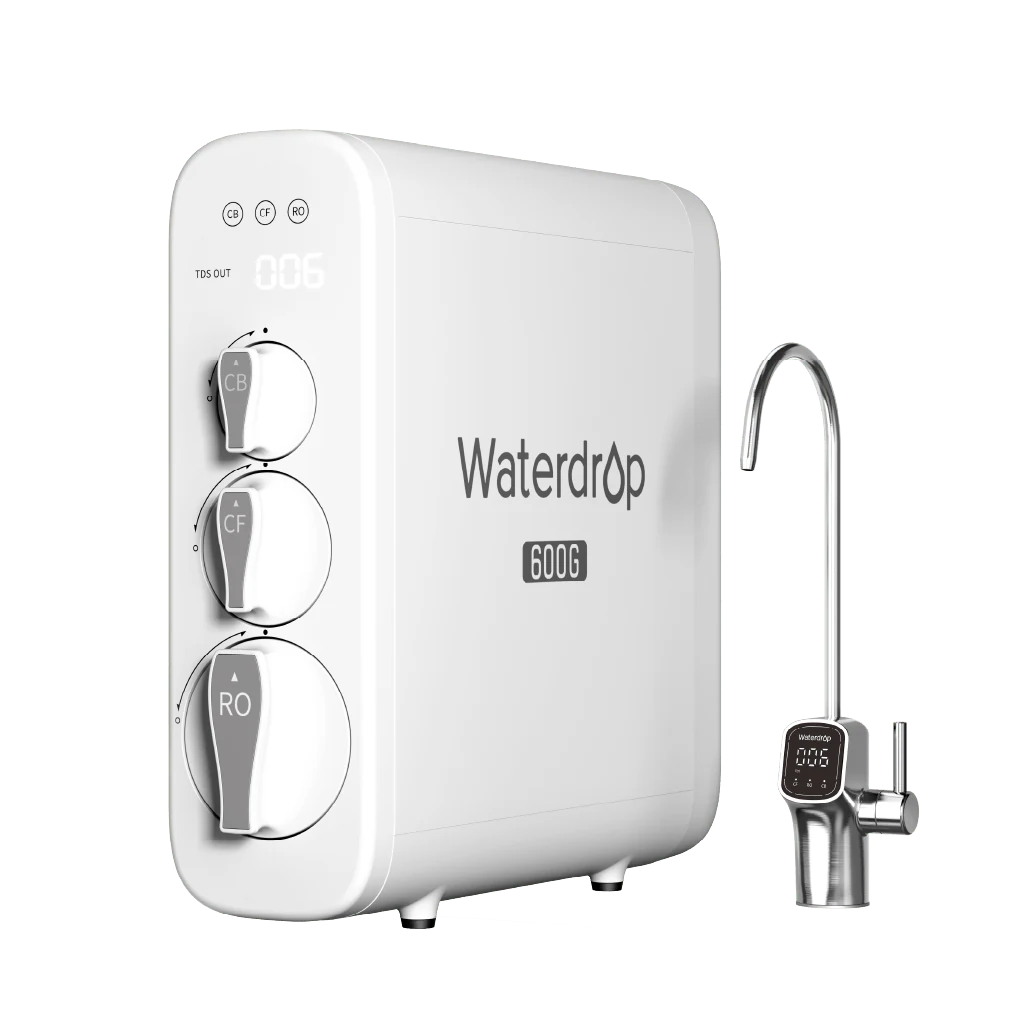
Tankless under-sink RO / 600 GPD rated output*
Waterdrop G3P600
Choose the G3P600 if you want filtered water from a dedicated faucet and would rather keep equipment below the sink. Its tankless layout avoids a separate storage tank. Unlike the countertop picks, it needs a water connection, a drain connection, an outlet and a suitable faucet position.
Capacity / output
600 GPD rated output*
Format
Tankless under-sink RO
Setup
Outlet + water/drain connections
What works
+ Keeps the main equipment off the counter
+ Tankless design frees space otherwise used by a tank
+ Smart faucet displays TDS and filter status
Keep in mind
− Installation is a larger commitment
− Needs suitable plumbing and cabinet access
More about this pick
Waterdrop rates this model at 600 gallons per day under specified test conditions; that is production output, not stored water or a promise of your actual tap flow. Its stated 2:1 purified-to-drain ratio is also condition-dependent. Check feed-water requirements, dimensions and filter-change clearances before buying. The G3P600 is the model here; do not assume details for a G3P800, alkaline bundle or UV add-on apply to the linked unit.
At Amazon
04
Best large gravity water station
Stainless-steel gravity system / 3 gallons
Culligan MaxClear Venture
The Venture is the large gravity-system choice in this roundup. Its 3-gallon stainless-steel vessel, spigot and raised stand create a shared serving station without plumbing or an electrical outlet. It makes sense when several people refill glasses and bottles, and you have room for a permanent counter setup.
Capacity / output
3 gallons
Format
Stainless-steel gravity system
Setup
No outlet needed
What works
+ Large vessel with tap serving
+ Ceramic-and-carbon MaxClear filtration
+ Supports one, two or three MaxClear filters
Keep in mind
− Needs overhead clearance for filling
− Filter count affects capacity and ongoing cost
More about this pick
The current starter configuration includes one filter; do not confuse space for three with three being included. Culligan lists rated service capacities of 50 gallons with one filter, 100 with two and 150 with three. The vessel's 3-gallon capacity is a separate measurement. Compare the specific certified reductions with your water concerns, and allow time for gravity filtration. See our Culligan review for the differences between MaxClear and ZeroWater.
At Culligan
05
Best ceramic gravity alternative
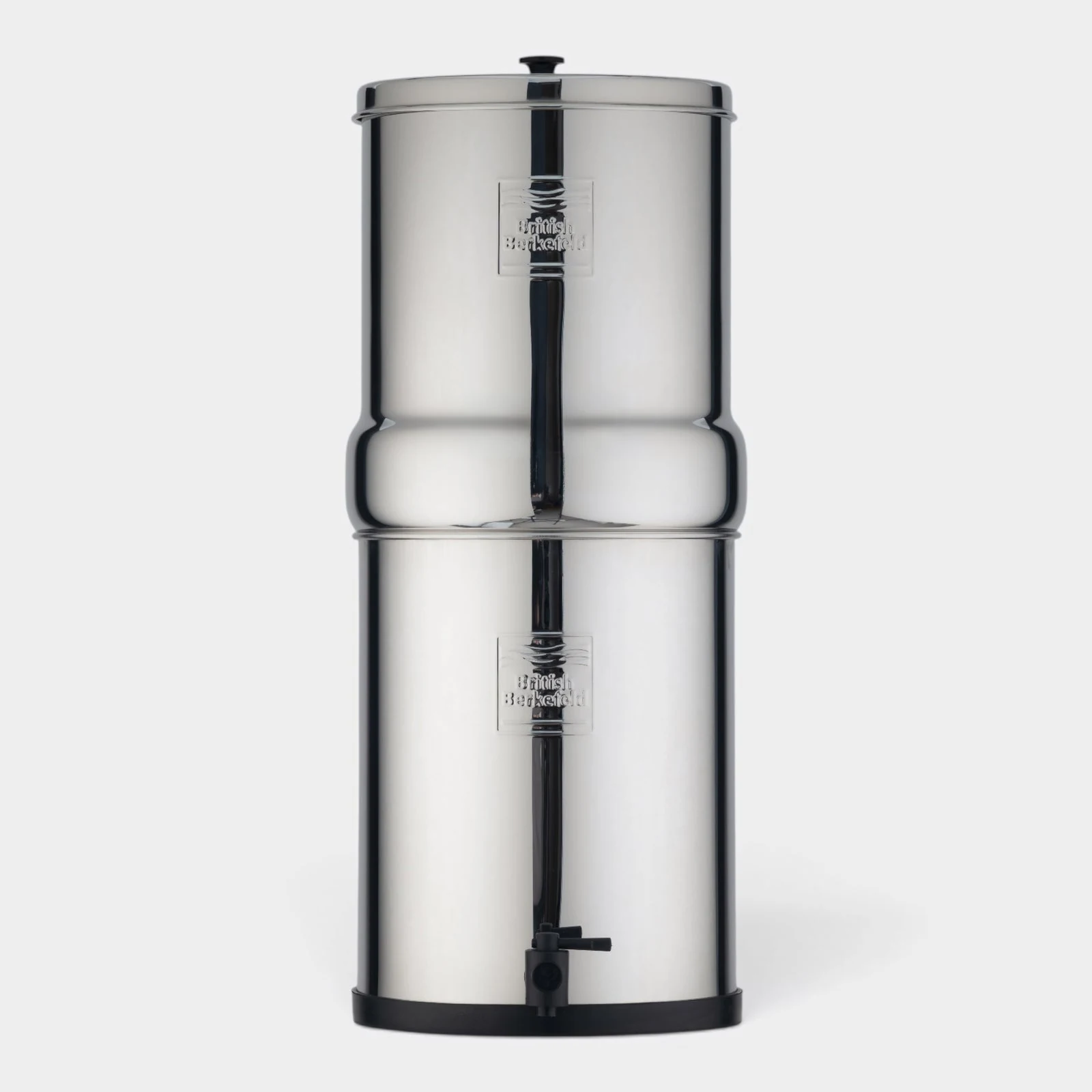
Stainless-steel gravity system / 12 L nominal; 11.5 L filtered
British Berkefeld 12L Ultra Sterasyl
The British Berkefeld offers another route to a large stainless-steel water station. The linked 12-litre configuration uses Ultra Sterasyl ceramic elements and works without electricity or a plumbed connection. It is worth comparing with the Venture if you prefer this cartridge system and can accommodate a tall vessel.
Capacity / output
12 L nominal; 11.5 L filtered
Format
Stainless-steel gravity system
Setup
No outlet needed
What works
+ No power or plumbing required
+ Replaceable ceramic filter elements
+ Large household serving capacity
Keep in mind
− Needs space for a roughly 60 cm tall system
− Ultra Sterasyl is different from Ultra Fluoride
More about this pick
Doulton lists the 12-litre system at 603 mm high and 246 mm in diameter, with 11.5 litres of filtered-water capacity. Check usable capacity rather than treating every size label as the same measurement. Cartridge choice matters: Ultra Sterasyl and Ultra Fluoride have different claims, and the manufacturer advises against mixing them in one system. Follow the ceramic elements' cleaning and replacement instructions instead of assuming a scrub restores every aspect of filter performance.
At Amazon
06
Best compact RO option
Countertop reverse osmosis + UV / 40 oz glass carafe
Bluevua ROPOT-Lite UV
Bluevua ROPOT-Lite UV is the compact countertop alternative in our selection. It combines reverse osmosis with a UV cycle and collects water in a 40-ounce glass carafe. Consider it for smaller batches when you want a plug-in machine without changing the sink plumbing.
Capacity / output
40 oz glass carafe
Format
Countertop reverse osmosis + UV
Setup
Electrical outlet
What works
+ Removable borosilicate glass carafe
+ Countertop setup without plumbing changes
+ TDS display and automatic UV cycle
Keep in mind
− Smaller serving reserve than AquaTru Carafe
− Needs tank care, refilling and filter replacement
More about this pick
The glass carafe can go from the machine to the fridge or table, but its smaller volume means more cycles for a busy household. Compare the Lite UV model specifically: non-UV ROPOT-Lite models and larger ROPOT systems are different products. Check the selected bundle for included mineral filters and accessories. A UV feature or a low TDS display is not a blanket assurance that the system can treat any source of unsafe water.
At Amazon
BUYING WELL
Choose around
your kitchen.
The best water filter is the one that addresses your water concerns and works with the way you cook, drink and refill.
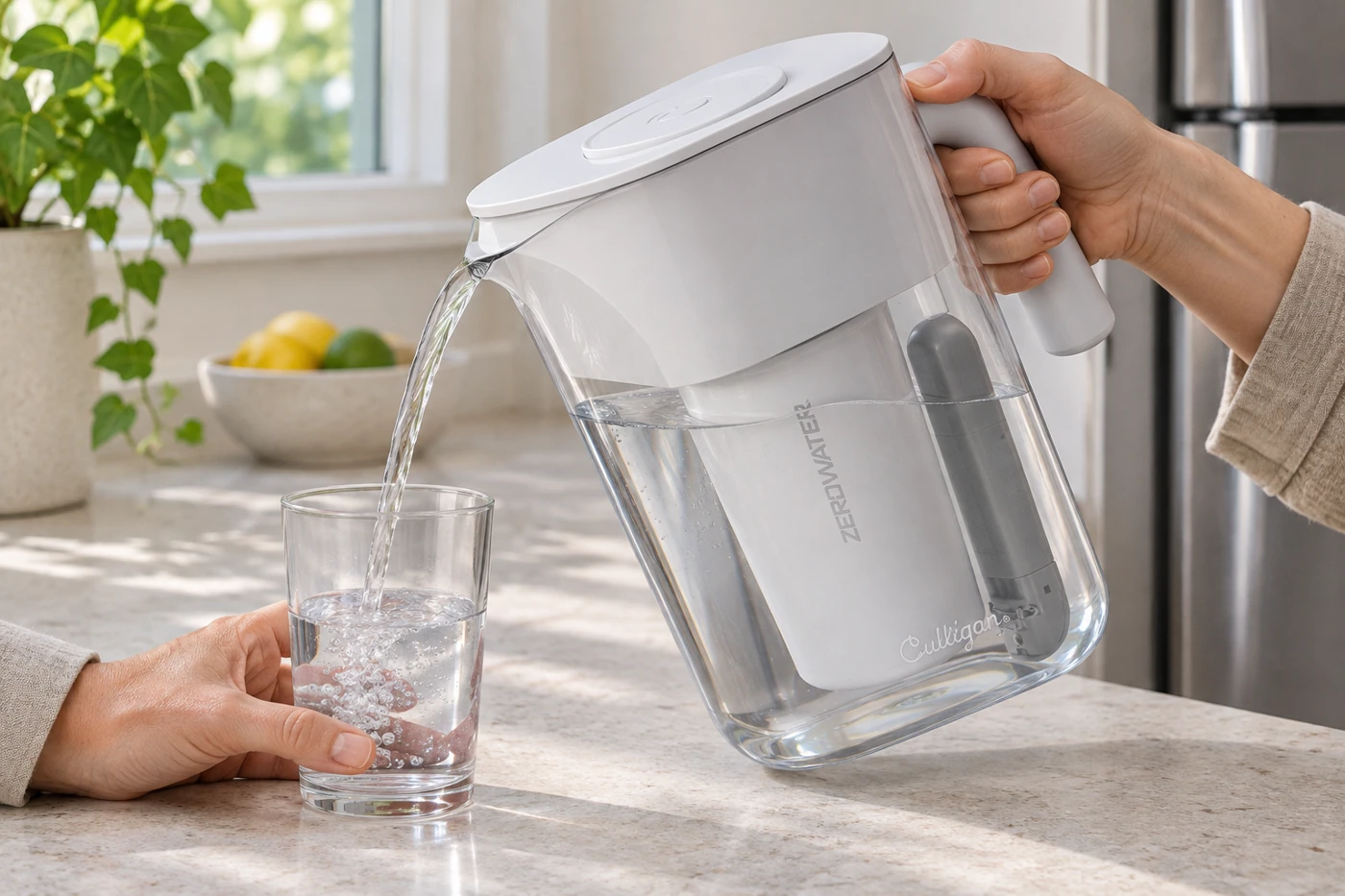
1
Start with the water you have
Use your local water report as a starting point, and investigate concerns specific to your home, such as older plumbing. For a private well, arrange appropriate testing. Identify what you want to reduce before choosing a filter. Taste, odour and a TDS reading cannot identify every contaminant.
2
Choose the right kind of system
A gravity dispenser is a refill-and-serve station that avoids plumbing and powered filtration. A countertop RO machine uses an outlet and a feed tank; it also produces concentrated reject water that needs emptying. An under-sink RO system connects to the supply and drain, making filtered water available at a dedicated faucet.
3
Measure the whole setup
Allow room above a dispenser to lift the lid and refill it, and below the tap for a glass or bottle. For a countertop RO machine, check tank-removal clearance as well as the footprint. Under the sink, leave space to change filters, reach the outlet and service the connections.
4
Read certification claims precisely
Certification applies to a named system, cartridge and claim. NSF/ANSI 42 concerns aesthetic effects; 53 covers specified health-related reductions; 58 relates to RO systems; and 401 addresses listed emerging contaminants. Certification to one standard does not mean a filter removes everything. NSF/ANSI/CAN 372 concerns lead content in components; it is not a lead-removal claim.
The purchase price is just the start.
For every model in this guide, compare replacement filters, installation and maintenance against your household’s water use.
Refillable dispensers
For glass dispensers and stainless-steel gravity systems, compare each cartridge’s price, rated capacity, cleaning instructions and replacement interval. Confirm the correct filter family and the number of cartridges required.
Countertop RO
Allow for replacement filters or membranes, cleaning and any descaling the manufacturer requires. You will also refill the feed tank and empty concentrated reject water. Compare these tasks alongside the machine’s footprint.
Under-sink RO
Include installation, replacement cartridges and membrane life in the budget. Check the drain-water specification and feed-water requirements. Paying more for installation may suit a household that prefers a permanent faucet setup.
A useful comparison: estimate a year of replacement cartridges for your expected water use, then add installation or other maintenance costs. Check current retailer pricing rather than assuming one format is always cheaper.
We compare documented filtration claims, format, capacity, installation, everyday handling and ongoing maintenance. Those factors tell you more about fit than a star rating alone.
Our selections cover different routines: a glass dispenser, two large gravity systems, two countertop RO machines and an under-sink RO system. Each earns a use-case recommendation rather than an invented numerical score.
Our research basis
Manufacturer documentation and product specifications. This is a research-based guide; we do not present original laboratory results or claim hands-on testing.
Sources and research notes
Research checked November 7, 2026. Product specifications and operating guidance were checked against Culligan’s 40-Cup ZeroWater and MaxClear Venture product pages and documentation; AquaTru’s Carafe product information, performance data sheet and capacity guide; Waterdrop’s G3P600 specifications; Doulton’s British Berkefeld and Ultra Sterasyl information; and Bluevua’s ROPOT-Lite UV product information and certification documents.
General selection guidance draws on NSF’s explanations of home water treatment standards and CDC guidance on choosing home water filters. Listings, bundles and specifications can change; confirm the exact product and included cartridges before ordering.
Frequently asked
questions
The details worth clearing up before you choose.
What is the best water filter for most kitchens?
The best choice depends on the water concern and the routine. Our first pick, the Culligan 40-Cup Glass Dispenser, suits a shared countertop station. Choose AquaTru Carafe or Bluevua ROPOT-Lite UV for countertop reverse osmosis, and Waterdrop G3P600 if you want an installed under-sink RO faucet. A useful recommendation starts with matching the exact model’s documented reductions to your water.
Is reverse osmosis better than a gravity filter?
They solve different problems. RO uses a membrane, produces reject water and generally needs power in the systems listed here. Gravity systems avoid plumbing and an outlet, but their specific cartridge claims determine what they reduce. Compare the contaminants you need to address, maintenance and practical setup instead of assuming one format is always better.
Which options avoid a plumbed installation?
The Culligan 40-Cup Glass Dispenser, MaxClear Venture and British Berkefeld are refillable gravity setups. AquaTru Carafe and Bluevua ROPOT-Lite UV also avoid a plumbing connection, but need electricity. The Waterdrop G3P600 connects under the sink to water and drain lines.
Does a low TDS reading mean my water is safe?
No. TDS measures total dissolved solids; it does not identify every contaminant or establish drinking-water safety. Use a meter for the purpose specified by the manufacturer, such as monitoring a ZeroWater cartridge or RO system. For a specific concern, check your water report or appropriate test results and the filter’s relevant reduction claims.
Does a 40-cup or 3-gallon vessel tell me filter life?
No. Those figures describe the serving vessel. Filter service life is a separate rating that depends on the cartridge, operating conditions and the water treated. Likewise, Waterdrop’s 600 GPD figure is a rated production measure, not the amount stored under the sink.
Do these filters make any water source safe to drink?
Do not assume that they do. Follow the exact model’s source-water requirements and instructions. A kitchen filter, UV feature or certification mark does not by itself make a system suitable for microbiologically unsafe water. During a drinking-water advisory, follow the instructions of your local water authority.