
Home / Buying Guides / Grain Mills
THE KITCHLIT BUYING GUIDE
Best Grain Mill
for Home Use
Two NutriMill picks for fresh flour, with a practical guide to choosing around your baking routine.
By KitchLit | Updated November 9, 2026
Research-based buying guide. We may earn a commission when you buy through our links.
Key takeaways
1
Choose for texture
Harvest offers fine flour and coarser textures for cracked-grain recipes.
2
Choose for the workflow
Impact suits bread-focused batches, with flour collected in a covered canister.
3
Plan for everyday use
Check grain compatibility, cleanup and room for the complete setup.
The shortlist
Start with the job you want your mill to do. These two electric NutriMill options take different approaches to making flour at home.
Best for versatility

NutriMill Harvest
Stone milling with adjustable textures for flour, coarser meals and cracked grain.
At NutriMill
Best for bread-focused milling
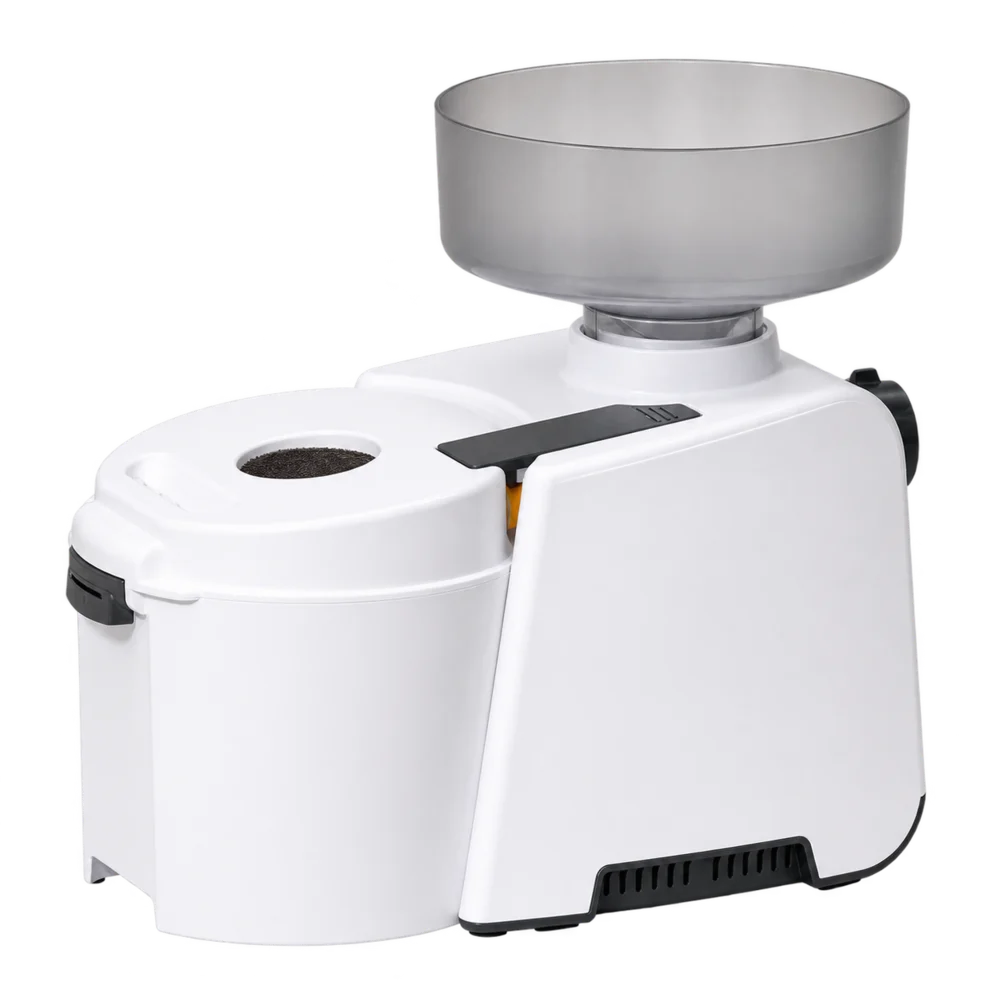
NutriMill Impact
An accessible route into fresh bread flour, with covered collection and nesting storage.
At NutriMill
Compare the essentials
Look at the milling method, the textures you want and how you will collect and clean up the flour.
| Grain mill | Best suited to | Milling and texture | Flour collection | Cleaning | Warranty |
|---|---|---|---|---|---|
| NutriMill Harvest | Flour plus coarser textures and cracked grain | Corundum stone milling; fine flour to cracked grain | Mills into your own bowl; position the bowl beneath the spout | Dry stone care with a brush and the recommended rice-cleaning routine | 5 years for qualifying manufacturing defects |
| NutriMill Impact | Bread-focused flour batches and covered collection | Stainless steel impact heads; fine flour to coarser meal | Covered canister; current listing: 7 cups of grain, up to 11 cups of flour* | Removable collection parts are dishwasher safe; wipe the motor base | 5 years for qualifying defects; limited lifetime coverage on motor and milling heads |
← Slide right & left to see the full table →
*Impact capacity follows NutriMill’s current product listing. Flour volume varies with grain and grind; older charts give different cup figures. Follow the fill limits and instructions supplied with your unit.
Our top grain mills
Harvest leads our list for texture flexibility. Impact is our bread-focused alternative. Both can make bread flour; the better choice depends on what you want to mill and how you want to work.
01
Best for versatility
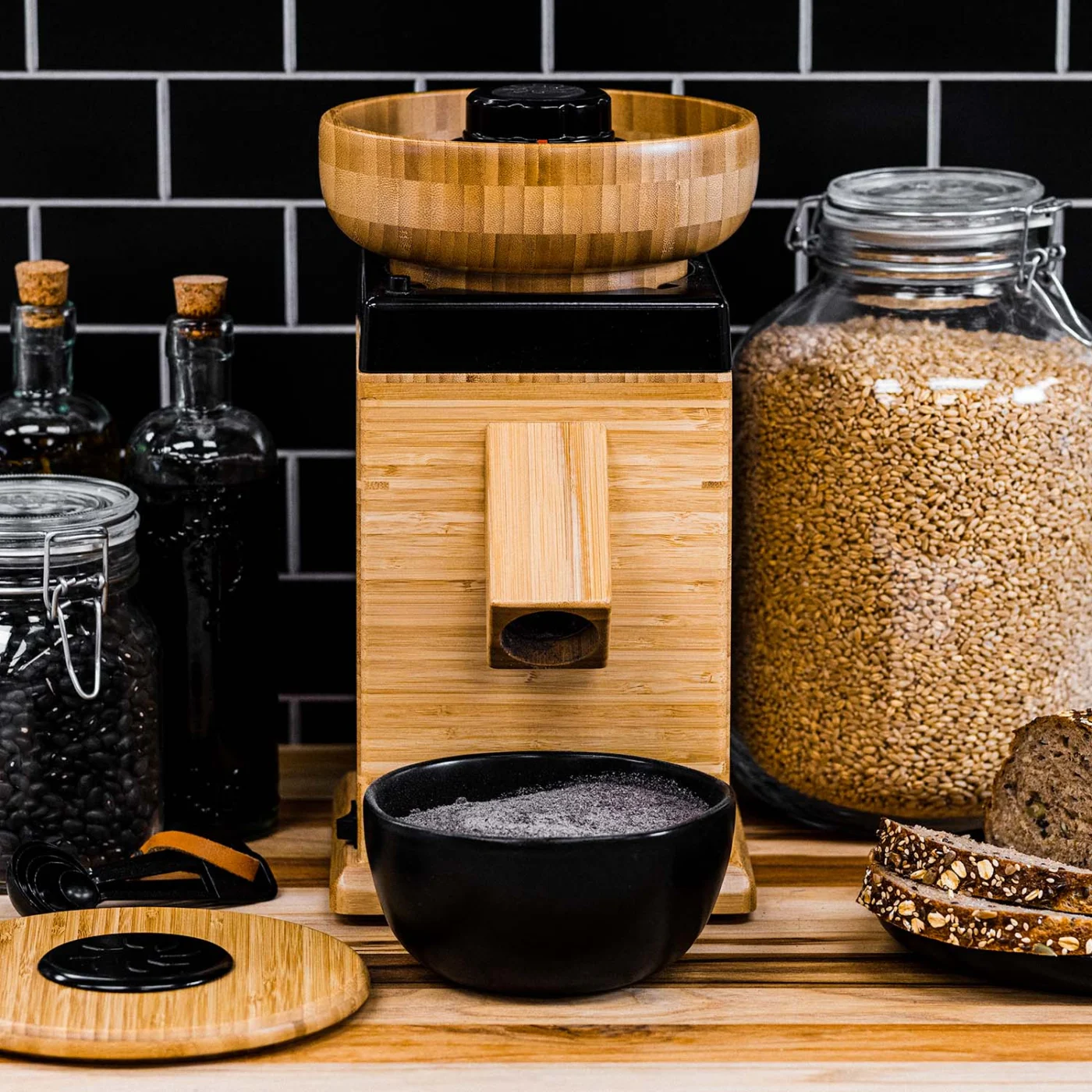
Manufacturer product photo.
NutriMill Harvest Grain Mill
Choose Harvest if you want to experiment with texture. Its corundum stones and adjustment knob give you a route from fine flour to cracked grain, making it useful for bakers who also prepare coarser grain recipes.
Flour leaves the front spout into your own bowl. The bamboo housing also makes sense for a mill you plan to keep on the counter, ready for the next recipe.
Milling method
Corundum stones
Texture range
Fine to cracked
Collection
Your own bowl
What works
+ Adjust texture for different recipes
+ Open collection makes the flour easy to see
+ Bamboo housing suits a permanent counter spot
Keep in mind
− Allow room for a collection bowl
− Keep the stones dry and follow the cleaning routine
More about this pick
Harvest is the option we would explore first for a kitchen that wants several textures from one mill. Getting the setting right takes some practice; keep notes on the grain, setting and result rather than expecting every grain to behave identically.
NutriMill lists a 450-watt motor and five years of coverage for qualifying manufacturing defects. Wattage alone is not a measure of flour quality. Use the approved dry, non-oily ingredients and follow the current Harvest instructions.
At NutriMill
02
Best for bread-focused milling
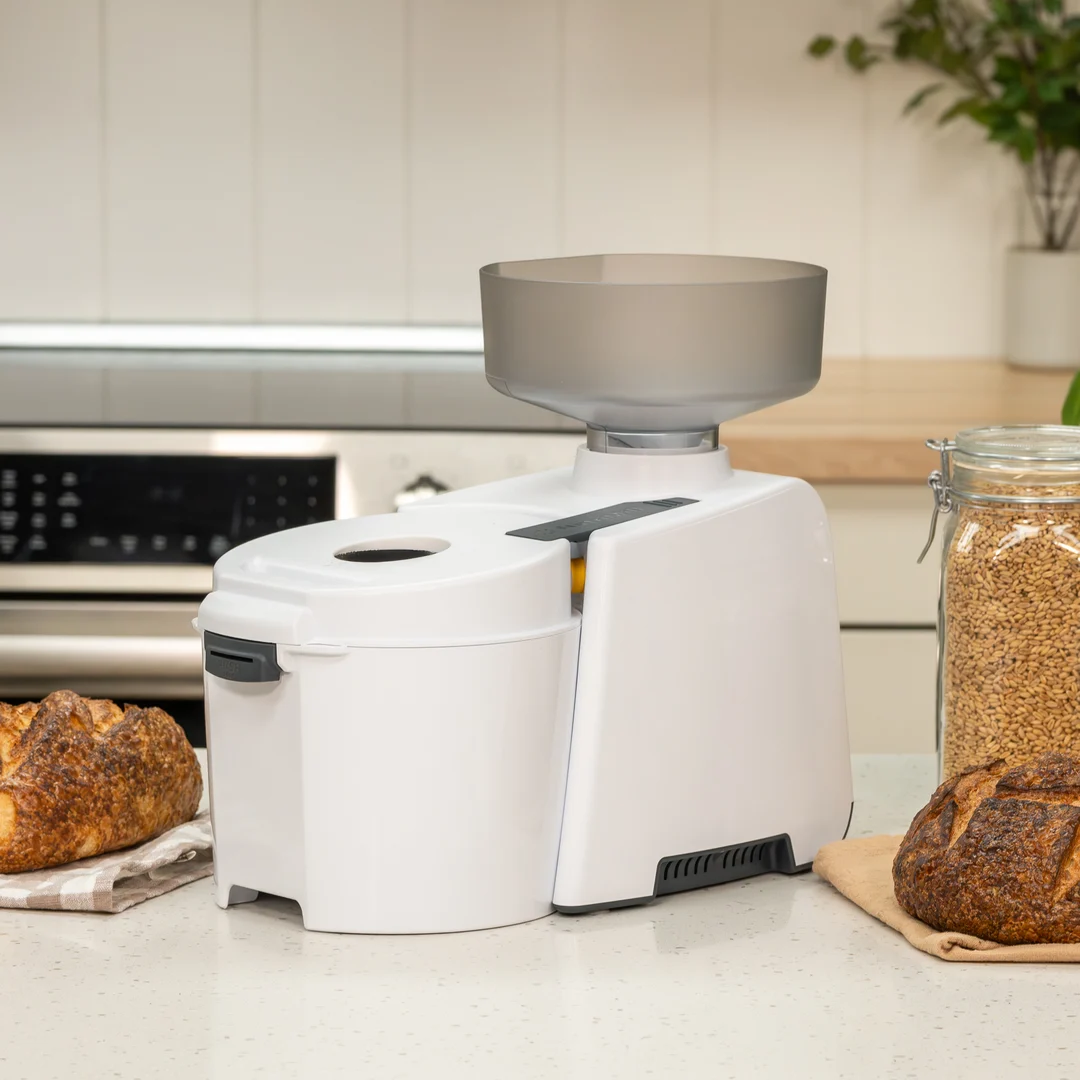
Manufacturer product photo.
NutriMill Impact Grain Mill
Choose Impact when flour for bread is the main reason you want a mill. Stainless steel impact heads mill the grain, while a covered canister collects the flour for carrying to your mixing bowl or scale.
It is the lower-priced option in this pair at the time of research. Its nesting parts are worth considering if you want to put the machine away between baking sessions.
Milling method
Stainless steel heads
Grain hopper*
7 cups listed
Flour batch*
Up to 11 cups listed
What works
+ Covered canister collects the flour
+ Feed-rate control adjusts the milling workflow
+ Parts nest for storage between bakes
Keep in mind
− Measure the complete assembled setup
− Flour and meal are its focus; choose Harvest for cracked grain
More about this pick
The Impact feed dial controls how quickly grain enters the milling heads. NutriMill’s resources explain that slower feeding generally produces finer flour; the setting that feeds reliably depends on the grain. Avoid treating a dial number as a guarantee of an identical result with every ingredient.
The current listing specifies a 1,200-watt motor. Warranty terms cover qualifying manufacturing defects for five years, with limited lifetime coverage on the motor and milling heads. Keep the receipt and follow the maintenance instructions.
At NutriMill
How to Choose the Best Grain Mill for Your Home
Start with your recipes and the way you use your kitchen. The questions below turn specifications into choices you can make before buying.
What do you want to bake?
Write down the three things you expect to make most often. A weekly loaf, pizza dough and an occasional batch of pancakes create a different shopping brief from flour, cracked-grain cereal and several alternative-grain recipes.
For mostly bread flour, start by comparing the Impact’s collection routine with the Harvest’s open bowl. If changing texture is central to your cooking, Harvest deserves a closer look. Both can be part of a bread-baking kitchen.
Start here: buy for the recipes you repeat. You can explore more grains once the everyday routine works.
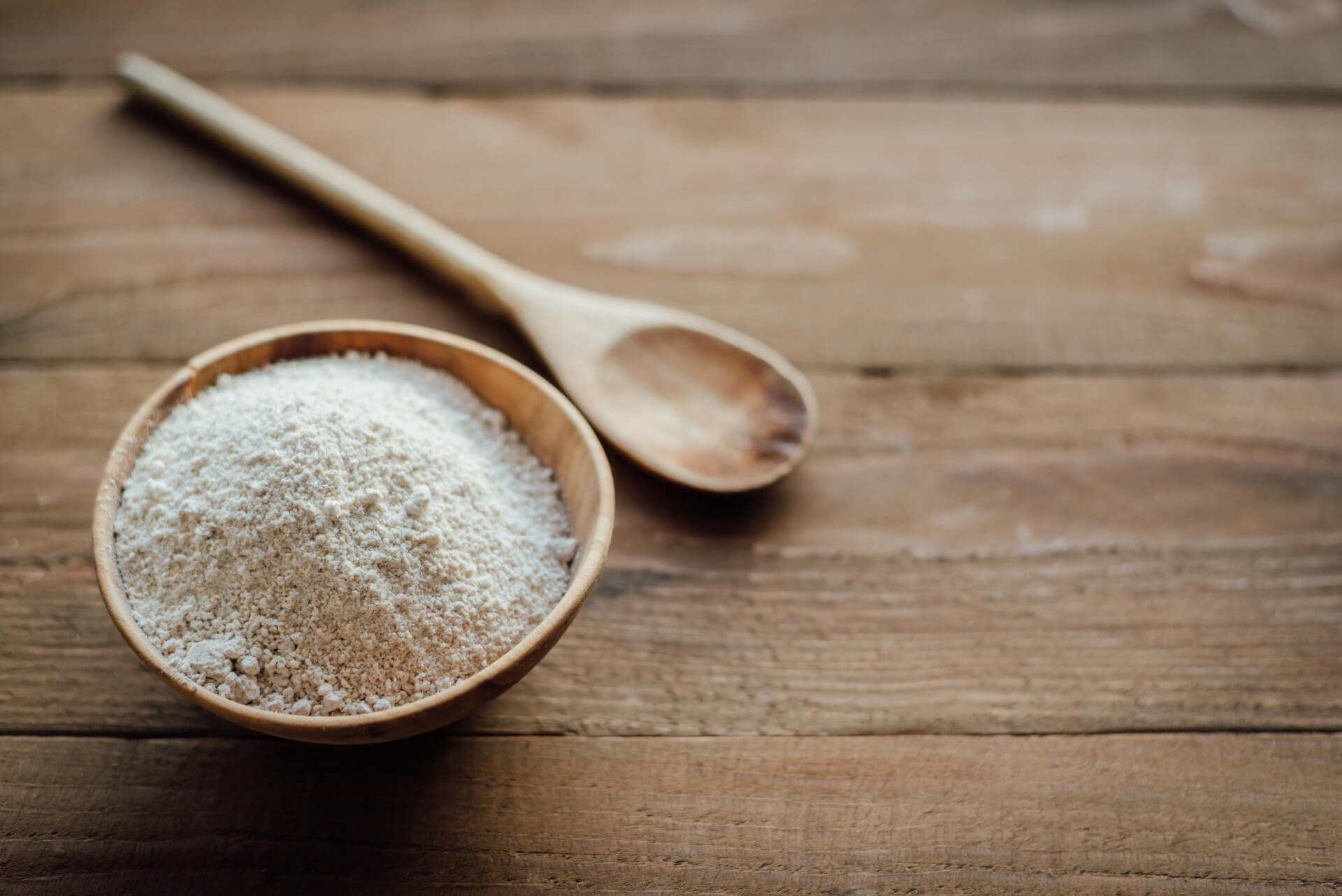
Think about the flour and textures your recipes call for.
Stone or impact milling?
The mechanism changes the workflow. Compare what each system helps you do, then look at the exact model’s instructions.
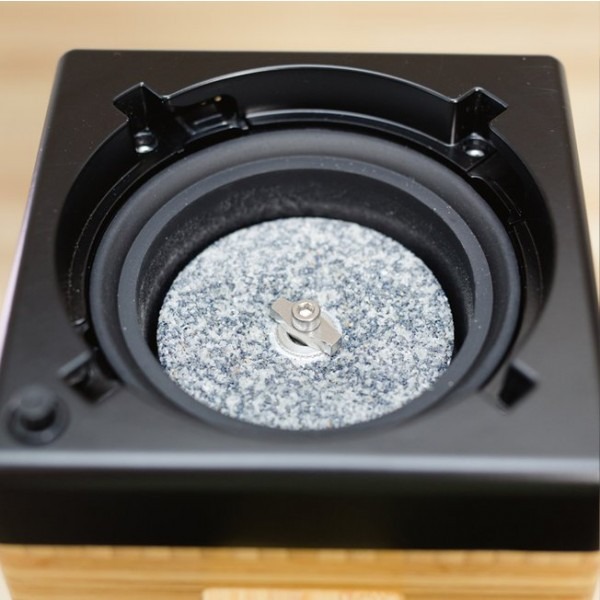
Harvest: stone milling
Grain passes between corundum stones, with the adjustment controlling the texture. Harvest’s fine-to-cracked range is its main attraction for someone who wants more than flour alone.
The flour exits through the front spout. Position your bowl before starting and leave room to move it when it fills.
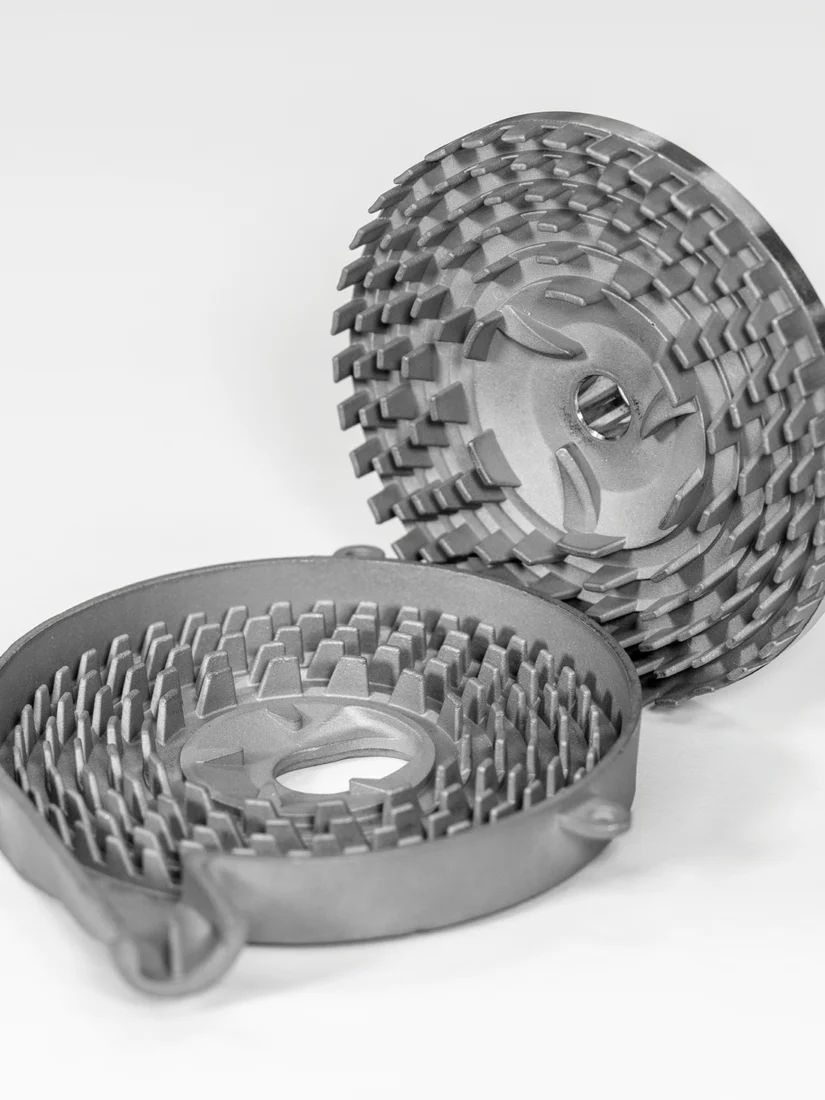
Impact: stainless steel heads
High-speed impact heads break the grain into flour and meal. On this model, feed-rate adjustment is part of achieving the result you want, and the flour travels into a covered canister.
Compare the texture and handling you need. A higher motor-wattage figure does not, by itself, tell you which mill will suit your recipes.
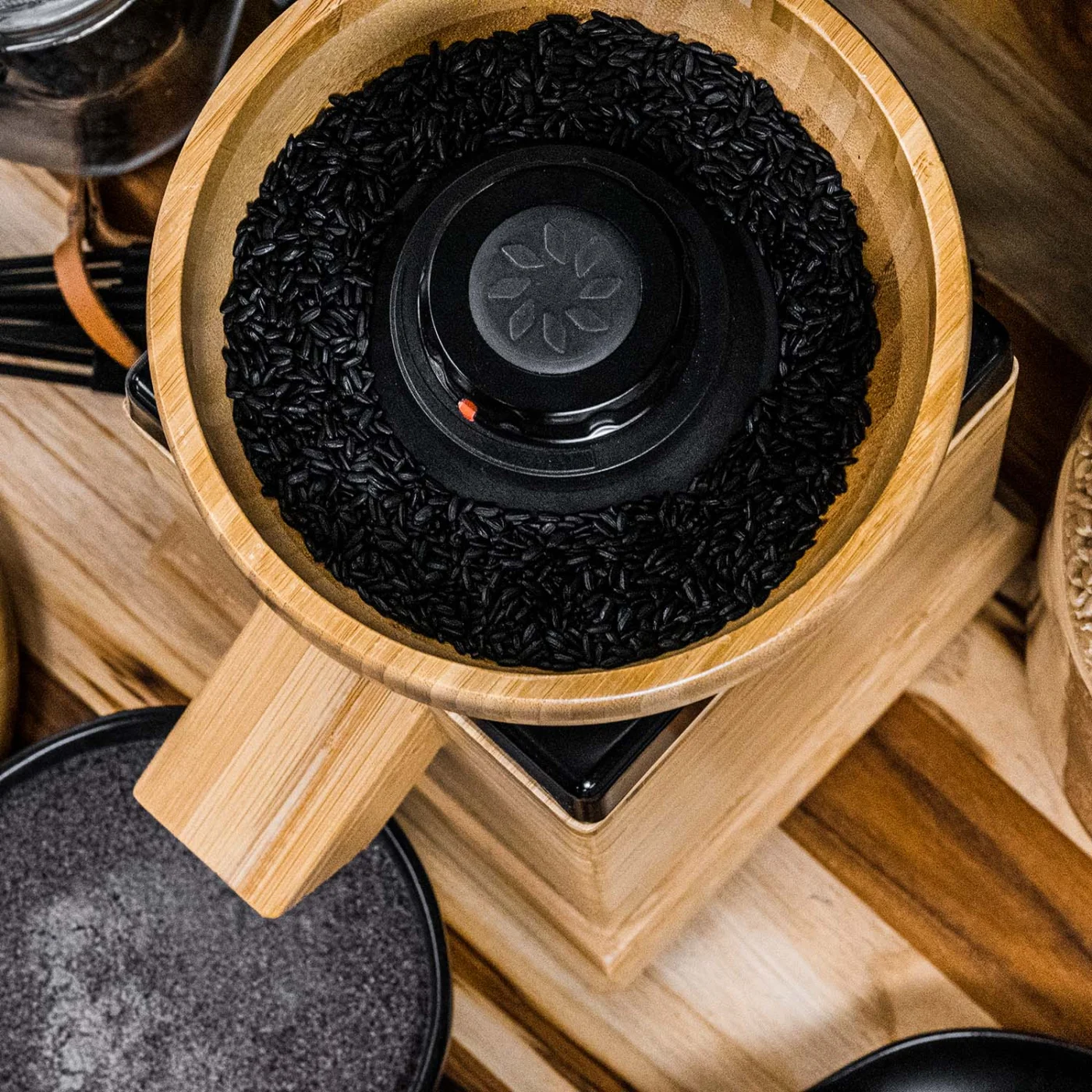
Check the approved ingredient list for your exact mill before trying a new grain.
Which grains will you grind?
Start with ingredients you genuinely plan to buy: wheat berries, rye, rice or a particular legume. Check each against the model’s current approved list, including any preparation or size restrictions.
Dryness matters. Moist ingredients and oily nuts or seeds can cause problems in these mills. Large legumes may also need a different approach, and some may not feed through the Impact’s opening.
For a model-by-model starting point, see what you can grind in the Harvest and Impact.
For gluten-free milling: a mill used for wheat can carry traces into later batches. NutriMill recommends a dedicated mill and certified gluten-free grains when strict gluten avoidance is required.
How much flour do you need?
Think in recipes and baking sessions. Weigh the flour needed for a typical bake, then consider whether you want to collect it directly into a bowl or transfer a canister to your scale. Cup measurements are useful for capacity, but flour volume changes with grind and aeration.
Harvest uses an open collection bowl; Impact collects a batch in its canister. Neither workflow is automatically easier for every baker. Picture where you will put the grain, the flour and the mixing bowl while you work.
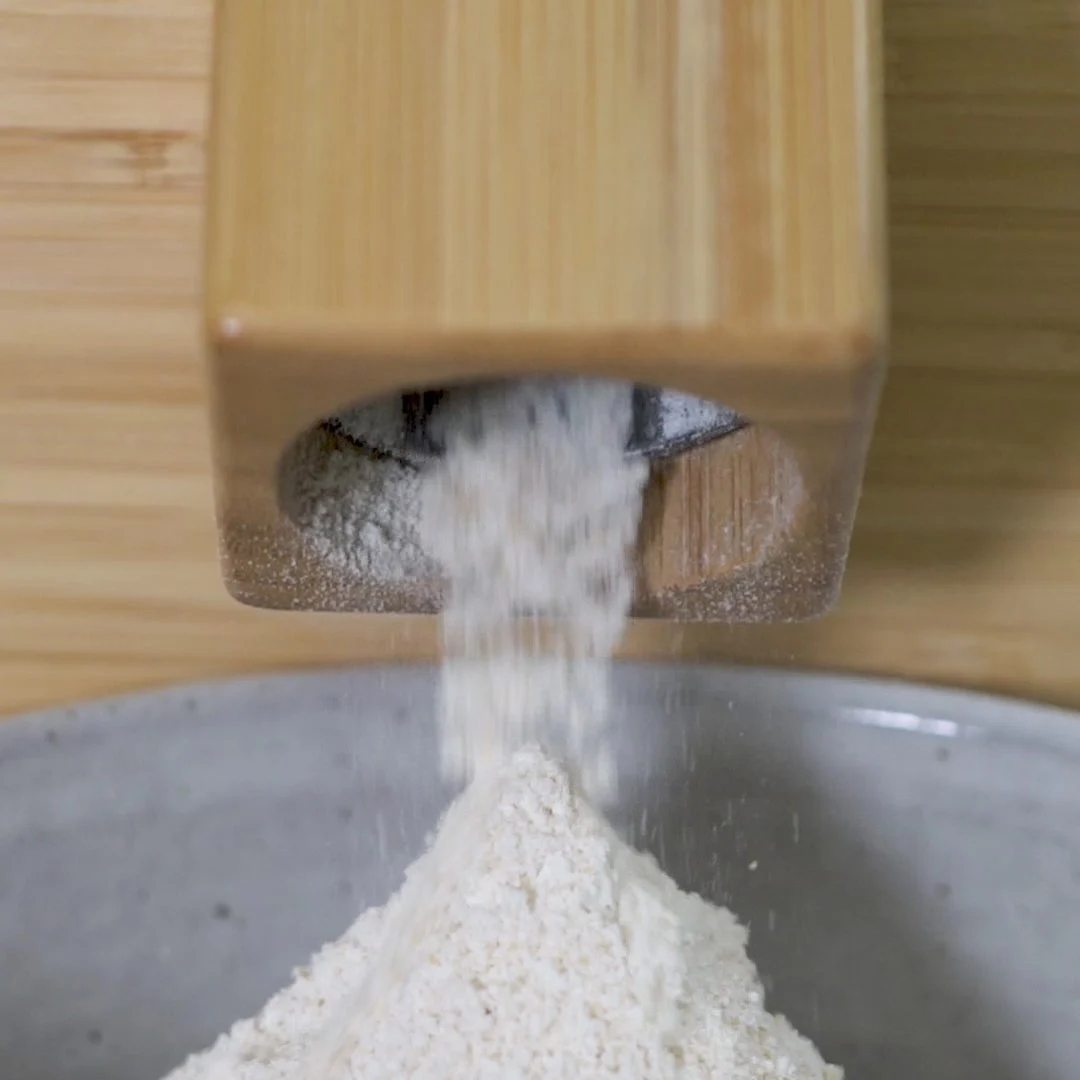
Open collection: the Harvest mills flour into a bowl beneath its spout.
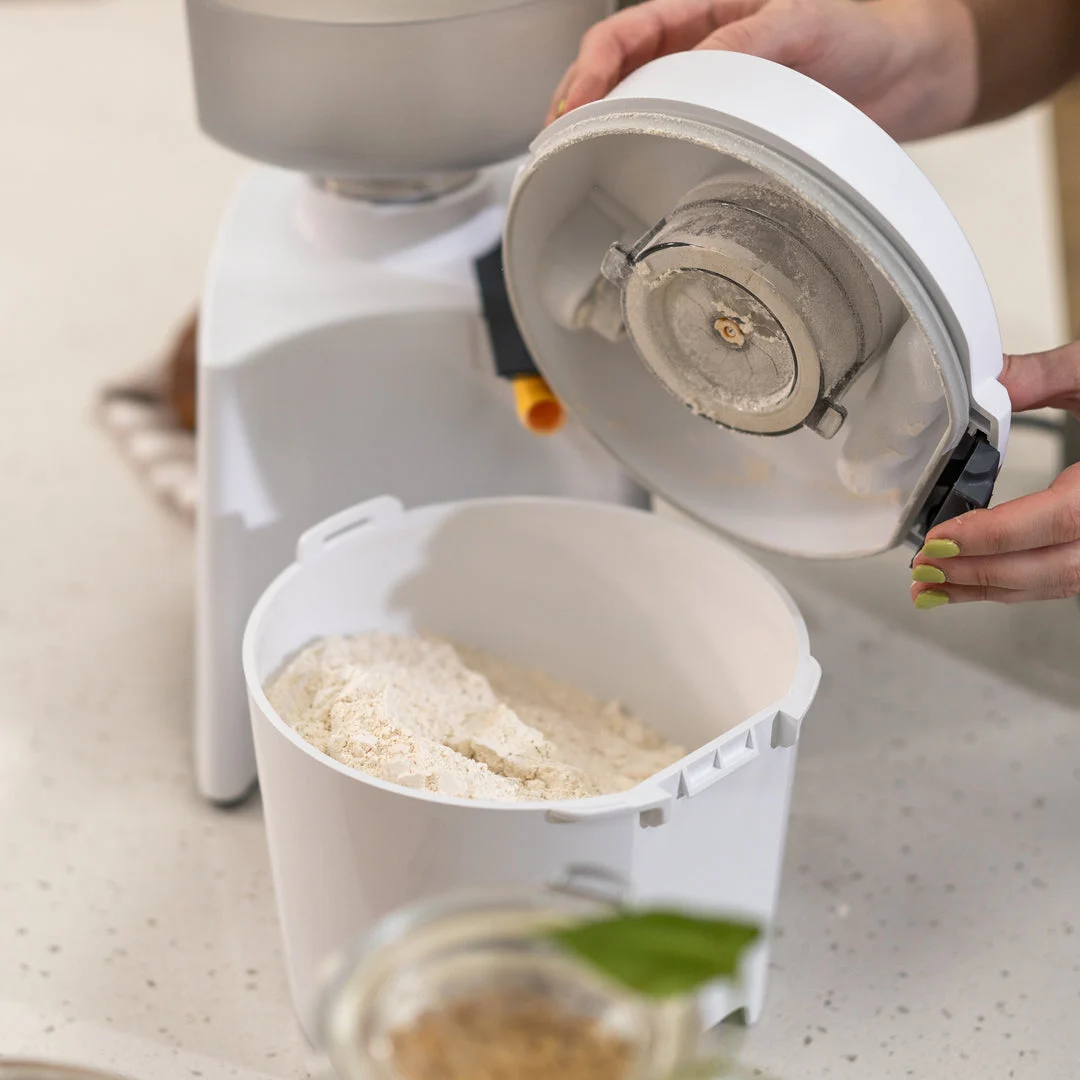
Covered collection: remove the Impact canister to weigh or transfer the flour.
Will it stay on the counter?
Measure the complete working setup, including a bowl or canister, access to the hopper and a convenient outlet. A narrow machine can still need a useful area of clear counter around it.
If you plan to store the mill, check the shelf opening and the space needed for every removable part. The Impact’s nesting arrangement is useful to investigate. If you prefer to leave it ready to use, consider how the Harvest’s bamboo body fits your counter.
Choose a location that makes milling an easy part of baking, with somewhere nearby for clean, dry grain storage.
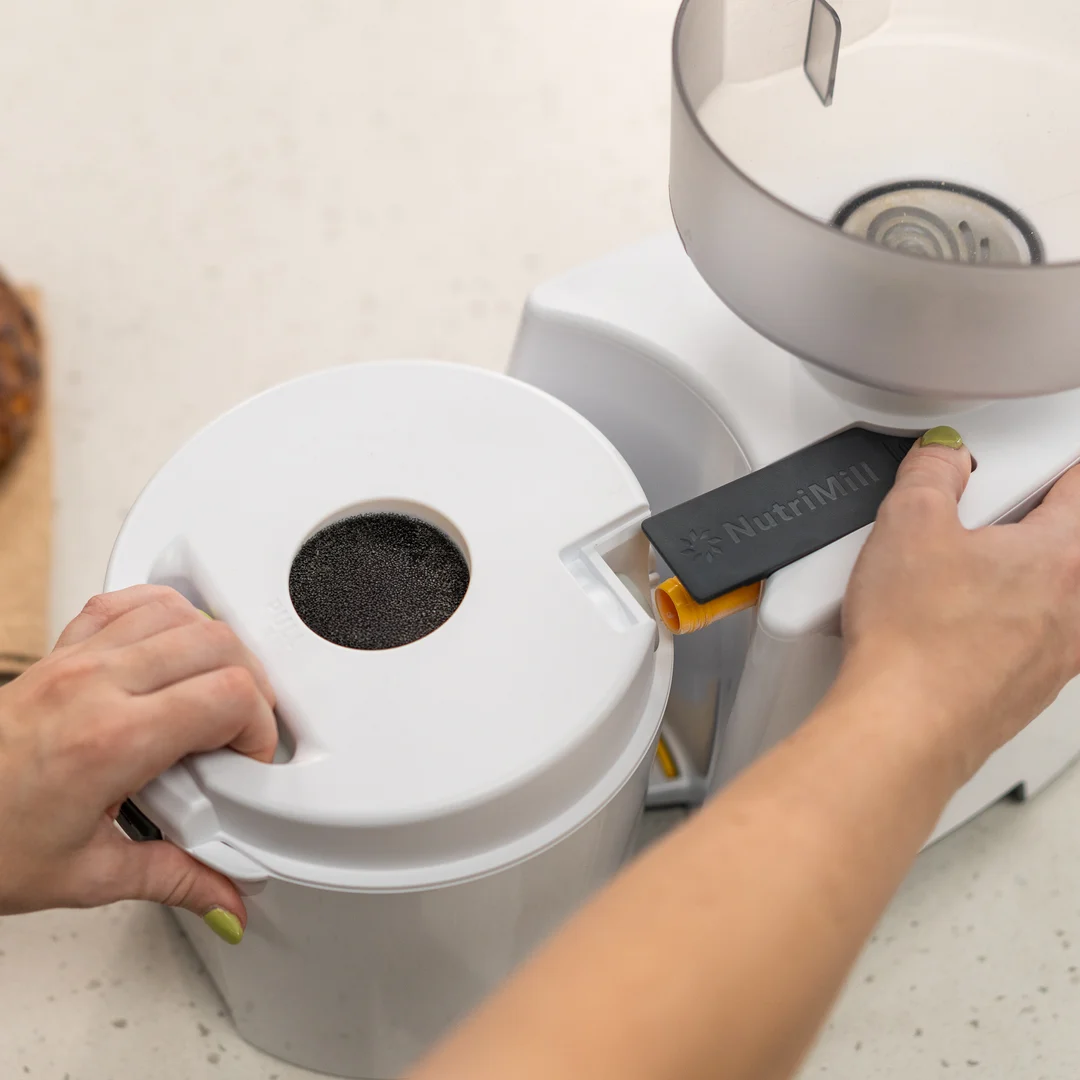
Allow space to connect, remove and carry the flour collector.
How much cleaning is involved?
Look at the tasks you will repeat after a bake, along with the occasional deeper clean. Follow the instructions supplied with the exact model.
Harvest care
Keep the stones dry. NutriMill recommends brush care and milling white rice on a coarse setting when cleaning is needed. Wipe the bamboo exterior carefully; do not wash the mill or wet its stones.
Impact care
The current product resources identify dishwasher-safe removable collection parts. The motor base is wiped clean, while the filter needs separate care. All washed components must be thoroughly dry before milling again.
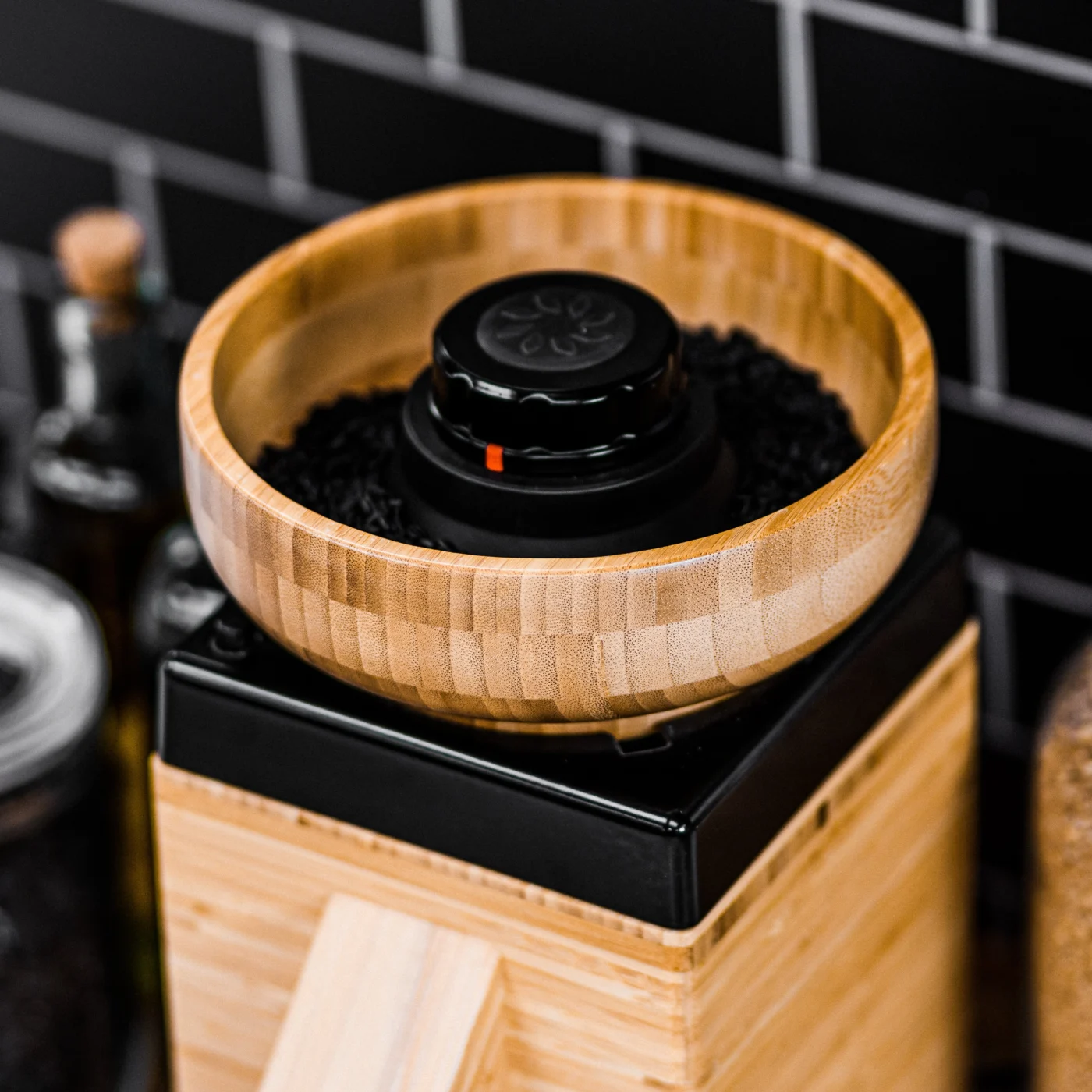
Controls, access and routine care are part of the ownership experience.
What makes a mill worth the investment?
Compare the current price for the same configuration and included accessories, then consider how often you will actually use it. A mill that stays convenient for your weekly bake has a clearer role than one bought for recipes you rarely make.
Storage, cleanup, ingredient supply and warranty support all belong in the decision. Home milling does not guarantee a particular saving: grain prices, delivery charges and how much flour you use affect the result.
Our guide to whether milling your own flour is worth it can help you weigh those tradeoffs.
Your fit: flexible textures
Start with Harvest if your plans include fine flour, coarser recipes and cracked grain.
Your fit: bread-flour batches
Start with Impact if covered collection and a bread-focused routine appeal to you.
How we choose our picks
This guide focuses on two electric NutriMill options. We compare milling method, usable texture range, flour collection, approved ingredients, cleaning, storage and warranty coverage, then explain how those differences affect a home baking routine.
Harvest is our versatility pick because of its fine-to-cracked texture range. Impact is our bread-focused pick because of its flour-making workflow and covered collector. This is a research-based assessment of manufacturer documentation, with links to our individual reviews for more detail.
Sources and research notes
Research checked November 9, 2026. We used the NutriMill Harvest product information and NutriMill Impact product information, their linked user guides, manufacturer resource pages and ingredient/cleaning guidance. Current product listings take precedence for quoted listing specifications; older capacity charts can differ, so follow the fill limits and manual supplied with the unit.
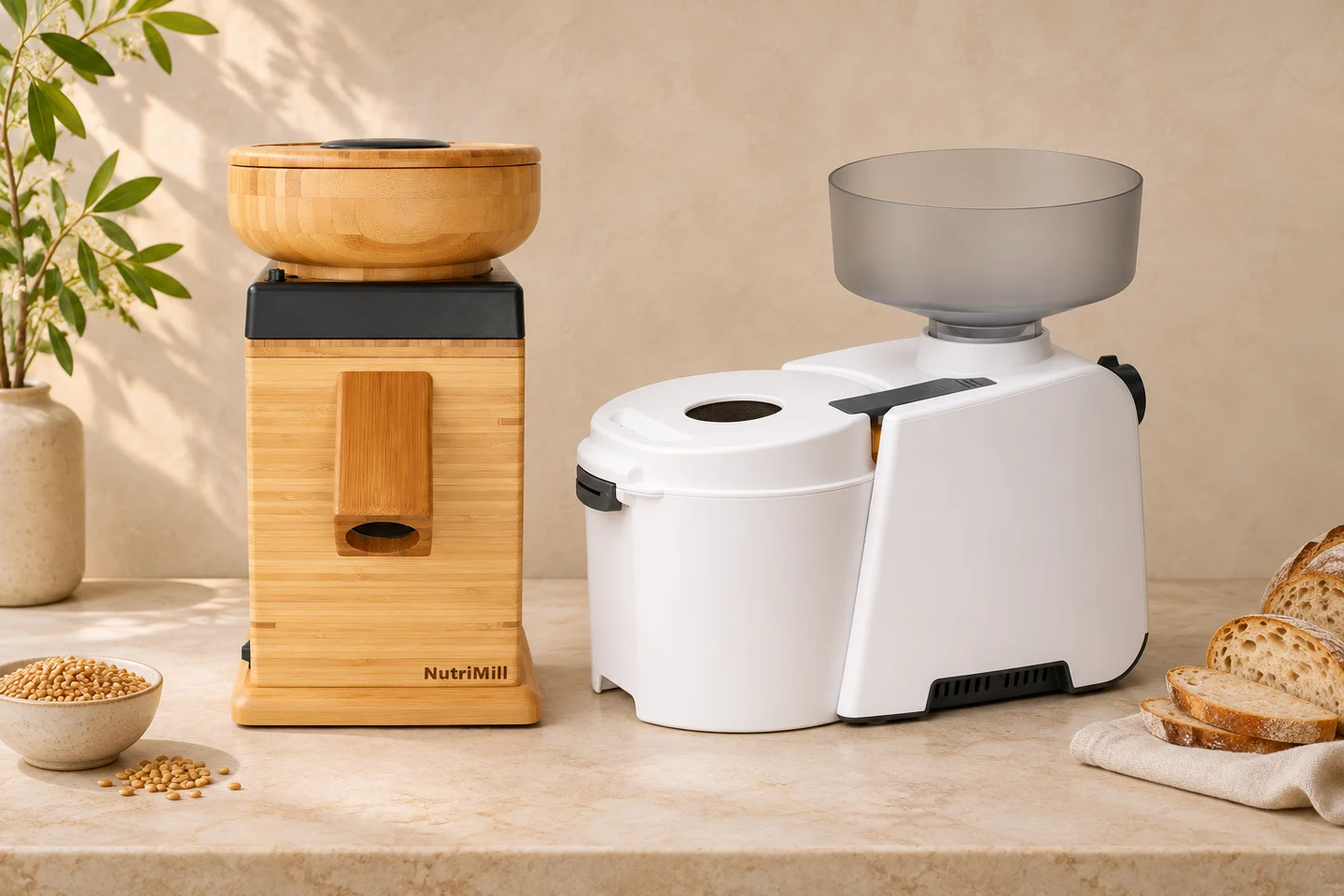
Manufacturer photos show the products and components. The opening kitchen scene illustrates the two formats together. We have not performed a side-by-side milling-speed, noise, flour-temperature or baking test. Recommendation labels describe practical use cases, not measured performance rankings.
Frequently asked questions
The details to settle before choosing a mill for your kitchen.
What is the best grain mill for home use?
For the two NutriMill options covered here, choose Harvest when flexible textures and open-bowl collection matter most. Choose Impact when you mainly want flour for bread and prefer a covered canister. Consider the ingredients you will mill, the room available and the cleaning routine before deciding.
Can both the Harvest and Impact make bread flour?
Yes. Both can mill suitable dry grains into flour for bread. NutriMill positions Impact around bread flour, while Harvest adds a fine-to-cracked texture range. Our labels describe those different strengths; they are not the result of a comparative loaf test.
Which one should I choose for cracked grain?
Harvest is the option to investigate for cracked grain, because NutriMill lists that as part of its texture range. Impact is described as fine-to-coarse flour and meal. Check the instructions for the particular grain and texture you want before milling.
Can I grind nuts, seeds or coffee in these mills?
Use the approved dry, non-oily grains and legumes for the exact model. Do not assume these machines are suitable for oily nuts, seeds, coffee or every dry pantry ingredient. Check the current manual or contact NutriMill before milling an ingredient that is not approved.
How much flour can the Impact make in a batch?
The current product listing gives a 7-cup grain capacity and up to 11 cups of flour. Flour volume varies with the grain and setting, and older NutriMill charts show different figures. Follow the maximum fill limits and instructions supplied with the specific unit, and weigh flour for recipes.
Can I use one mill for wheat and gluten-free flour?
A mill used for wheat can carry traces of gluten into later batches. NutriMill recommends a mill dedicated to gluten-free grains and certified gluten-free ingredients when strict gluten avoidance is required. Cleaning a wheat-used mill should not be treated as a guarantee against cross-contact.
Which mill is easier to clean?
The tasks differ. Harvest needs dry stone and spout care, including the manufacturer’s rice-cleaning routine when needed. Impact has removable collection parts that its current resources identify as dishwasher safe, while the filter and motor base require separate care. Choose the routine you will consistently follow.
Is milling your own flour always cheaper?
No saving is guaranteed. Compare the mill’s purchase price, the delivered cost of suitable grains, how often you bake and how much flour you use. Texture control, ingredient choice and the enjoyment of the routine may also influence whether a mill is worthwhile for your household.